Online NewsHour reports:
PAUL SOLMAN: Dr. Erminia Valenzuela is a cardiac surgeon with a message.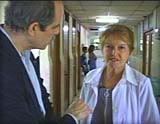 DR. ERMINIA VALENZUELA: I don't want to end this interview without asking the people of the United States to help us to end with the block.
PAUL SOLMAN: The blockade.
DR. ERMINIA VALENZUELA: The blockade.
PAUL SOLMAN: The embargo.
DR. ERMINIA VALENZUELA: The blockade, the embargo. So I'm asking the people of the United States to help us to end the blockade.
PAUL SOLMAN: She runs this ward at Havana's top pediatric hospital, where children with serious heart defects come for surgery they can't get in the provinces. The care tops anything in the third world, she says, but could be much broader.
DR. ERMINIA VALENZUELA: If we are able to operate on 500 patients in a year, it would be enough in order not to have a waiting list.
Cuban health care
PAUL SOLMAN: They used to do 500 operations a year back when the Soviet Union subsidized the Cuban economy, including its medical care. They don't, however, blame the Russian pullout for the waiting list, but the U.S. blockade, or "block."
DR. ERMINIA VALENZUELA: With all these difficulties of the block, we had less money, and we had to decrease the number of operations to 50 percent or 60 percent.
PAUL SOLMAN: "Stop the blockade." It's a refrain we heard at almost every stop in Cuba, including Lenin High School.
STUDENT: Cuba is open to the world, and the world is almost open to Cuba, but we have, how can I say, a door closed for us.
PAUL SOLMAN: But isn't it socialism that prevents Cuba from becoming richer, we asked.
STUDENT: We got education, hospitals, medicines, all free, and if we want to be richer, we don't have to stop to get all of that. We only have to... You only have to stop this blockade.
The U.S. position
PAUL SOLMAN: We could go on, but you get the point: Even though Cuba now gets goods from all over the world, the U.S. embargo is still the number one excuse for Cuba's economic failings. Now, Cuba has actually lived with the embargo about as long as it's lived with socialism. In fact, the two are inseparable. When Fidel Castro first descended from the hills and toppled the Batista dictatorship in 1959, the Republican Eisenhower administration never imagined Cuba would soon be sleeping with the ideological enemy.
But within a year, Castro began nationalizing U.S. businesses. President Eisenhower-- a longtime friend of Batista-- retaliated by severing diplomatic relations, while the CIA initiated plans to assassinate Castro and invade Cuba. Eisenhower also set in motion an embargo on trade, made law by President Kennedy and Congress in 1962.
There have been opponents, like Jimmy Carter and the UN, which condemned it just last year by a vote of 163 to 3. But Miami's Cuban exile community and its allies in Congress have always prevailed. In 1996, Congress passed, and President Clinton reluctantly signed, the Helms-Burton Act, which among other provisions extended the penalties on trade with Cuba to companies and nations outside the U.S.
SEN. PHIL GRAMM: Our position has always been a commitment to isolation, the isolation of Cuba, and a commitment to overthrowing Fidel Castro. Today, with this bill, we go back to that policy and we hit Fidel Castro where it hurts the most. We hit him in the pocketbook.
PAUL SOLMAN: It's been a 40-year campaign, then, of U.S. economic pressure to topple Castro and install democratic capitalism, a campaign Castro has used for dramatic effect.
FIDEL CASTRO (Translated): What the imperialists want for us is nothing but capitalism, and worse still, the capitalism of the third world, of Guatemala and Honduras. But we'll defend our socialism at any cost.
PAUL SOLMAN: And defend it he has. But if Castro isn't quitting, neither is his opposition. (Crowd chanting) The key, according to anti- Castro forces outside Cuba, is to support anti-Castro forces inside the country-- build an anti-socialist opposition, like solidarity in Poland.
REP. LINCOLN DIAZ-BALART: There is a growing internal opposition movement that is being oppressed and repressed, thrown in dungeons on a day-in and day-out basis, and yet it has demonstrated extreme courage and is growing. That has to be the focus of our policy.
PAUL SOLMAN: To find out what the internal opposition itself makes of this approach, we went to see Cuba's best-known dissident. Elizardo Sanchez spent eight years in prison for crimes against the state. And yet, this is what he said:
ELIZARDO SANCHEZ (Translated): For 15 years, I have been in a group that has opposed these sanctions. They're unilateral actions of Washington against Cuba. For a long time, I was alone among dissidents in this view, but now nearly all of us oppose the U.S. policy.
PAUL SOLMAN: Arrested at gunpoint in the middle of the night for opposing Castro, Sanchez also opposes the policy on which his U.S. supporters pin their hopes.
ELIZARDO SANCHEZ (Translated): I believe the embargo is the best ally this totalitarian government has, because it justifies its failures. When there's no medicine or transport, or food, everyone says, "it's Washington's fault."
Blaming the embargo
PAUL SOLMAN: Indeed, the embargo is widely blamed for many, if not all of the country's economic woes. We heard that argument, among other places, at Cuba's version of the Federal Reserve, its Central Bank, where revolutionary hero Che Guevara once presided as the country's first Alan Greenspan. Francisco Soberon is now in charge, and maintains the embargo has cost Cuba decades of development.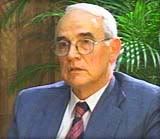
FRANCISCO SOBERON: It's a terrible cost, you see. It has to be measured in hundreds of billions, already.
PAUL SOLMAN: Hundreds of billions, you mean cumulatively?
FRANCISCO SOBERON: Accumulated during these 40 years.
PAUL SOLMAN: Soberon reorganized the bank to help implement market reforms after the Soviet Union-- and its huge subsides-- vanished in the early '90s. But he's still a devout socialist who blames the embargo for crippling Cuba's economy.
FRANCISCO SOBERON: We cannot go to an American bank to ask for a loan. But not only that, foreign banks, a lot of them have very close links with the American markets, and a lot of them feel that if they do business with Cuba, it could hamper their relations with the United States, and then they don't want to do business with us.
PAUL SOLMAN: Finance from abroad is key, says Soberon, because Cuba's own major investments have been in health care and in education; investments, that is, in "human capital," in Cuba's people, an asset of professional talent just waiting for the financial capital to make it world-class productive.
FRANCISCO SOBERON: 700,000 professionals, we have.
PAUL SOLMAN: 700,000 professionals.
FRANCISCO SOBERON: 700,000. And when I say "professionals," I mean people who have a university degree, you see?
PAUL SOLMAN: At a baseball game one night in Havana, we got yet another example of the embargo's cost.
MAN (Translated): You know, we've got this fight with the U.S. to buy oil, we have to get it all the way from Russia. Imagine if we could just get it from you, 90 miles away, how much easier and cheaper it would be.
PAUL SOLMAN: So then, the embargo would seem to be working, just as its supporters claim. But when we trekked to a far-off Havana neighborhood to interview another dissident, we again heard the message that the embargo is letting socialism off the hook and that trade with the U.S., according to Marta Beatriz Roque, would actually speed economic and political reform.
MARTA BEATRIZ ROQUE: I'm against the embargo. I would like that the embargo will be lifted.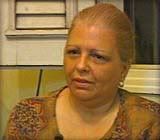
PAUL SOLMAN: Because?
MARTA BEATRIZ ROQUE (Translated): Because I believe Cuban society needs contact with North American society. We need to be in touch with capitalism.
Supporting the economy
PAUL SOLMAN: To the extent that Cuba is changing, many think, it's because of contact with the capitalist U.S., for better, or sometimes worse. And certainly, says Roque, economic contact with U.S. capitalism keeps the dissident community alive.
MARTA BEATRIZ ROQUE (Translated): I have family outside. I have support. Many friends in the U.S., especially in Miami, help us.
PAUL SOLMAN: As it happens, it's not just dissidents who get help from friends and family in the U.S. In Miami's Little Havana neighborhood, business at Western Union is brisker than ever these days.
MAN (Translated): With Western Union, you can send up to $100 a month to any one person.
PAUL SOLMAN: This Cuban exile, who preferred not to give his name, came to the states 12 years ago and has been sending dollars back home ever since.
MAN (Translated): I sent money to my parents so they could come and visit, and they did. Now I have to wait three more months before I can send any more.
PAUL SOLMAN: Again, back in Havana, dissident Elizardo Sanchez:
ELIZARDO SANCHEZ (Translated): I would say that 20 percent to 30 percent of what Cubans manage to get to survive comes from remittances -- my family included.
PAUL SOLMAN: What percent of your income-- family income-- comes from remittances?
MAN (Translated): Eighty percent. It's been that way for 20 years.
PAUL SOLMAN: Remittances-- what the Cubans call ramesas-- may actually be the single biggest source of dollars in what's becoming a dollarized country. You can use them to buy your own car, or to take a taxi instead of waiting for the so-called "camels," the trucks modified to haul people that most Cubans are forced to rely on.
If you pay in dollars at Coppelia's ice cream parlor, you can skip the long peso line and sit in comfort with the tourists. The burgeoning well-stocked supermarkets are dollars-only, which relegates those without dollars to the state's own meager food stores, where the pickings are generally slim and where they wouldn't let us take pictures. What's more, the dissidents say, the government itself relies indirectly on remittances, via heavy taxes on the dollar economy, to help finance, among other things, the costly Cuban safety net in health care and education.
PAUL SOLMAN: Do you think remittances are keeping the government in business?
ELIZARDO SANCHEZ (Translated): Definitely. Remittances coming from the U.S. have substituted in part for the huge subsidy we got from the Soviet Union. Today the remittances represent more than sugar exports and tourism. They're the principle source of income for the government. The total now comes to between $800 million and a billion dollars a year.
PAUL SOLMAN: Moreover, exile economic support doesn't stop with wiring dollars from the U.S. While some who fled have vowed never to return, many do come back, as tourists, and tourism now makes up fully 5 percent of the Cuban economy. And furthermore, when the exiles return, they bring not just first world cash, but bundles of first world stuff for their families-- TV's, toasters, VCR's.
When you add it all up-- the purchases, the care packages, the tourism, the remittances-- it seems the exile community is tossing a lot of money over the wall they themselves helped build-- between 5 percent and 10 percent, by some estimates, of the entire Cuban economy. So Castro's foes outside Cuba support the embargo politically while perhaps undermining it economically. And Castro's supporters inside Cuba condemn the embargo, though it arguably serves as their best excuse.
ELIZARDO SANCHEZ (Translated): For decades, the government has liked to present an image of itself as a little David against a giant Goliath. The day they lift the embargo and normalize relations as you've done with Hanoi, for example, or China, that will be the beginning of the end for this government.
PAUL SOLMAN: Now, it's possible that dissidents like Sanchez may be wrong about the embargo's effects, that the government's efforts to end the blockade are genuine. At the same time, the message we kept hearing-- from street level to the highest ranks of government-- was that the policy intended to bring Cuba to its knees may in fact have done quite the opposite.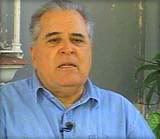
FRANCISCO SOBERON: The blockade, or the economic war of the United States, has been terrible for us, no? But the good part of it is that it has made us stronger, because we have... When you have to fight, when you have to face more big challenges, then you become stronger.
PAUL SOLMAN: A sobering thought on a U.S. policy that Cuba, after four decades, appears not only to have survived, but to have turned to at least rhetorical advantage.
JIM LEHRER: On Tuesday, President Bush announced he would not enforce a section of the 1996 Helms-Burton Act. It allows Americans to sue foreigners who invest in properties confiscated by the Cuban government.
Wednesday, July 18, 2001
| [+/-] |
Blaming The Blockade |
Tuesday, July 17, 2001
| [+/-] |
Capitalism in Cuba |
Paul Solman reports from Cuba on the growing role of capitalism in the country's socialist system: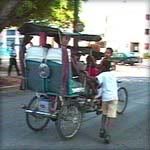
PAUL SOLMAN: For the newcomer, Cuba, and especially Havana, is a surprise. Yes, there are plenty of the expected third-world vignettes: The make-work jobs, the makeshift travel arrangements, a public transportation system bursting at the seams, the occasional beggar in the street-- this one was deaf. Reminders that as recently as a decade ago when the Soviet Union collapsed and its subsidies vanished, people were nearly starving here. But today a major makeover is in progress.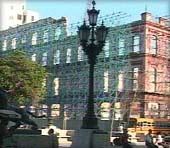 Opening doors to tourism
Cuba has decided to sell its culture, its climate, its beaches to foreigners, and so tourists are pouring in all over the country, from all over the world. Hotels abound, especially in Havana, and new ones are going up, built by everyone from the Spanish to the Chinese. Joint ventures with the Japanese and Koreans have brought in household gear you might see at Electronic Eddie's or Home Depot, and supermarkets offer an almost all-Cuban clientele everything from Brazilian diet Jell-O to Jack Daniels and Johnnie Walker Red. This year's sales at the Super Mercado...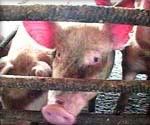
ALBERTO LOTTI, Supermarket Manager (Translated ): Up to this moment, they are $6,324,000. The average bill per customer is $17.36.
PAUL SOLMAN: That's right. Here you pay not in Cuban pesos but in U.S. dollars, officially allowed after the Russians pulled out. Tourism and foreign investment contribute to dollars now reaching, it's estimated, more than half the Cuban population. In short, it seems like capitalism is taking root. (Pig snorting) on the other hand, many Cubans still think capitalists are pigs, business is dirty, and that all production should be sold to and through the state as these real pigs will be as soon as they fatten up.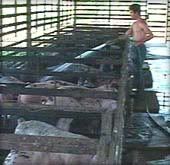
PIG FARMER (Translated ): The state gives me everything I need-- the grain, the breeding stock-- so my commitment is to them. Sometimes the private guys show up, but I don't trust their scale. With the state, I always have confidence.
PAUL SOLMAN: The state, meanwhile, still tries to command the economy. Every family gets subsidized food with a national ration book. Fidel Castro has banned billboard advertising, making Havana look like some sort of Soviet throwback featuring Che Guevara, and slogans like "This is the socialist revolution right under the nose of the U.S." And when we tried to interview a would-be emigrant, the police stopped us, took our documents, and wanted to take us downtown. We sneaked these shots from our van. True, the government itself didn't object to our interviewing prominent dissidents like Elizardo Sanchez, but the dissidents themselves insisted Cuba's less free than ever.
ELIZARDO SANCHEZ, Dissident (Translated ): What we have here is closer to the Soviet totalitarian system, an absolute state monopoly that controls virtually everything down to the barbershops.
PAUL SOLMAN: In Cuba, then, an economics correspondent can feel whipsawed. At some moments you think Castro has saved Socialism, and right under Uncle Sam's nose. At other times it seems clear the free market is burrowing irresistibly from within. This elite Lenin High School, we figured, might be one place to sort things out. Only one in 100 is admitted here in a country with a whopping 99 percent literacy rate. At Cuba's training ground for the next generation, a group of English speakers awaited them.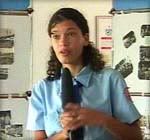
STUDENT: Schoolmates, I tell you, you're welcome, and I hope you get satisfied with our school, with out students, with us. Thank you.
PAUL SOLMAN: Well, thank you.
PAUL SOLMAN: We got the red carpet treatment and it kept getting redder.
STUDENT: We don't want capitalism. We have... We want socialism, because we want equality to all the people.
STUDENT: We don't want to be like the United States because right now we have fewer children in streets... I mean, I would say, almost anywhere, almost no kids in street asking for money.
STUDENT: We are the same people. We have the same clothes, the same things. It's not that the other countries that you're better than me because you have a new Adidas and I don't.
PAUL SOLMAN: The kids at Lenin High seem determined to sustain socialist equality at almost any cost. As for the market changes Cuba has made?
STUDENT: We don't want those changes. We have to put them there... They're there because we need them. When we don't... If we don't need them anymore, we will fade it.
PAUL SOLMAN: Fade it.
PAUL SOLMAN: They will fade it-- that is, phase out the market reforms of the post-Soviet special period. Now maybe the reforms are temporary, and schools like this will restore Cuba's purist past, or maybe instead Cuba's many private markets are already beyond a point where anyone can fade them. Food production has exploded, for instance, because of free market incentives that let farmers sell privately some of what they produce. So incentives work.
MAN (Translated): Clearly, yes. It's obvious. That's the way it works everywhere.
Stark contrast in ideologies
PAUL SOLMAN: Incentives not only mean more food more available without waiting on line, they also mean better food at the private markets.
SALESMAN (Translated): It's better quality. This is what people are looking for. There's less fat. There's less bone. Do you understand?
PAUL SOLMAN: The more we saw of Cuba, the starker the contrast between capitalist experiment and socialist ideology. Alberto Lotti, for instance, who runs this state-owned dollar store, plays by market rules like pursuing profits in competition with similar stores.
ALBERTO LOTTI (Translated): Competition exists, and it's good for the consumer. Competition is about who offers the best product, the best quality, at the best price in the battle to lower costs. That's what satisfies consumers' needs.
PAUL SOLMAN: But of course, needs are always being redefined more broadly in an economy where there's more to buy. Do you worry that you'll become too much of a consumer society if you have more and more of these things?
ALBERTO LOTTI (Translated): I think this is not a consumer society. Economic development itself requires monetary mercantile exchange.
PAUL SOLMAN: Muchas gracias.
PAUL SOLMAN: So not capitalist, but not really socialist either; in fact, a distinctly Cuban straddle concluded with a distinctly Cuban sendoff. Meanwhile, in Lotti's parking lot, there was more evidence that Cuba may become a consumer society as soon as it can afford to. In Cuba's famous health care system, we heard a similar mixed message. On the one hand, the head of the country's national cancer hospital says he devoutly believes in socialized medicine.
DR. ROLANDO CAMACHO, Cancer Specialist: Health is something that is the right of a human being. If you put it in the hands of the one depending of your pocket, that's terrible.
PAUL SOLMAN: Free health care and free education were recently hailed by the World Bank-- no friend of Castro's-- as model investments, yet this doctor thinks the forced move to the free market was good economic medicine.
DR. ROLANDO CAMACHO: In that sense, I believe it's a good thing. It starts to make people to face the reality and not to... Because we were so accustomed that the government provided everything. You just have to ask, 'I need this, I need this.' And we don't know from where it comes, how it costs, nothing like that.
PAUL SOLMAN: You even see socialism versus capitalism down at the old ballpark. Omar Linares is a slugging superstar who's had million dollar offers from U.S. teams, but turned them all down. Why?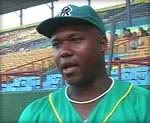
OMAR LINARES, Baseball Player (Translated ): I prefer to stay in Cuba because this is my country. Everything I've accomplished I owe to the revolution.
PAUL SOLMAN: On the field, the socialist party line; in the stands, however, entrepreneurship run rampant. Get a load of this transaction.
PAUL SOLMAN: Donde?
SALESMAN: Cuanto? Five dollars.
PAUL SOLMAN: Five dollars.
SALESMAN: Omar Linares?
PAUL SOLMAN: No, it doesn't say Linares. There's a different name.
SALESMAN: ( Speaking Spanish ) ( translated ): It's the way he signs. He does it real fast.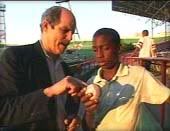
PAUL SOLMAN: He signs with another name?
SALESMAN: ( Translated ): I don't know. Maybe he was in a hurry.
Encouraging and resisting capitalism
PAUL SOLMAN: In fact, capitalists were budding everywhere we looked. Bottle collectors moonlighting from state jobs who wouldn't talk on camera, stilt walkers who wouldn't tell us what they earned. It's about art, they sniffed, not commerce; then complained when we made a donation that we'd underpaid them. And then there was this paledar, one of the small private dollar-only restaurants that dot Havana. When it comes to moving the merchandise here, Cuba's favorite cocktail, say, the mojito, owner Juan Carlos uses very clear market incentives.
JUAN CARLOS (Translated ): If my waiters sell more mojitos, they get paid more money. But if they bring the mojito to the table and it's not properly prepared, I fine them.
PAUL SOLMAN: You could call this capitalism with a vengeance. The government tolerates it, but puts legal hurdles in the paledar's path to protect the many state-owned restaurants.
JUAN CARLOS (Translated ): A private restaurant can only sell certain things. You can't sell beef or lobster. You can only have 12 seats.
PAUL SOLMAN: Some paledars like this one, whose identity we promised not to reveal, have responded with hidden rooms. Others have simply given up. And that makes Elizardo Sanchez believe the capitalist experiment in Cuba is about to end.
ELIZARDO SANCHEZ: Ahora. (Translated ) Today there's less free enterprise than there was three years. Paledars are closing down. They can't survive. Their workers are unemployed or working for the state.
PAUL SOLMAN: Sanchez spent eight years in prison for his politics. He's sure Cuba won't let capitalism do its thing.
ELIZARDO SANCHEZ (Translated ): The situation has changed in Cuba, but sadly it has changed for the worse rather than the better-- especially with regard to human rights.
PAUL SOLMAN: But you're now not in prison...
ELIZARDO SANCHEZ (Translated ): True. There have been some small steps, but nobody can be sure that tomorrow things won't change back.
PAUL SOLMAN: And yet capitalism continues to make inroads, it seems, almost everywhere; even in Cuba's creaky sugar industry, with nearly half a million workers, the country's largest. Having arrived in 1511, the Spanish decided to satisfy Europe's sweet tooth by transplanting sugar cane from the East Indies and slaves from Africa.
At this factory they lived in these very barracks. Sugar has been the backbone of the Cuban economy ever since. At this mill outside Havana, the propaganda was as abundant as the cane, but here, too, they've changed to market practices like incentive pay. They just insist the changes won't change them.
JOSE ANTONIO SANCHEZ, Sugar Mill Foreman (Translated}): The more we produce, the more we can offer salary and other benefits to our workers.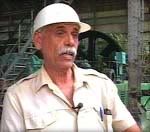
PAUL SOLMAN: This sounds like capitalism.
JOSE ANTONIO SANCHEZ (Translated ): Hey, we're surrounded by capitalism. We don't have much choice but to apply some of the formulas of capitalism to resolve our problems.
PAUL SOLMAN: Do you worry that the more capitalist techniques you use, the less socialism you'll have?
JOSE ANTONIO SANCHEZ (Translated): No. These are just methods of organizing production. We still have our benefits: Social equality, health care and education for all. We are not making any concessions to capitalism; all we're doing is applying certain techniques.
PAUL SOLMAN: But can social equality hold out as the market marches in? Our search for an answer brings us back to the émigré we were trying to interview when the police stopped us. Medical Dr. Giselle Castro-- no relation-- lost her job when she applied to leave for the U.S. Lord knows she's no fan of Socialism. But what did she complain to us about? Growing market inequality in Cuba.
DR. GISELLE CASTRO, Physician (Translated ): What's happening here is that those who have now have more, and those that don't continue to slide. Right here on this block you can see the inequality. Look at the differences between that house across the street and the one down the block-- that house and that house, they're different classes.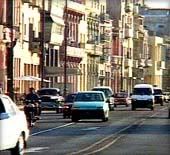
PAUL SOLMAN: You can see the inequalities, says Giselle Castro, and we could and did. In the end, this new fact of Cuban life-- the growing gulf between those with access to dollars and those without-- may well prove to be the core of the country's dilemma. It's a dilemma now so widespread it provides the punch line to what may be Cuba's hottest joke, about a girl who dumps her boyfriend. "He swore he'd struck it rich at the Hotel Nacional," she gripes, "claimed he'd actually landed the job of doorman." But she dropped him when she learned the bitter truth, that he was just another Cuban neurosurgeon -- a state job, that is, with no ties to the dollar economy.
So, in the end we were left with one big question: can Cuba, or any planned economy for that matter, encourage the free market and resist it at the same time? The only sure bet is that Cuba will grapple with that question for some time to come.
Monday, July 16, 2001
| [+/-] |
The Helms-Burton Act |
Today, President Bush enacted a six-month waiver of provisions of the 1996 Helms-Burton Act that would allow lawsuits against foreign companies who deal with Cuban businesses once claimed by U.S. nationals.
The Online NewsHours reports:
The act, sponsored by U.S. Sen. Jesse Helms (R-N.C.) and Rep. Dan Burton (R-Ind.), also formalized the U.S. trade embargo of the island nation, in effect by presidential order since the Kennedy administration.
Helms-Burton's lawsuit provision has been one of the act's most controversial components. It was meant to keep foreign investors away from nearly 6,000 formerly American-owned companies in Cuba brought under government control following the 1959 Cuban revolution. Those companies are now valued at over $6 billion.
President Clinton signed the legislation less than a month after Cuban air force jets shot down two American planes over international waters - dealing yet another blow to U.S. relations with Cuba. Four Cuban exile activists died in the incident.
Despite the broad powers in Helms-Burton, no one has ever filed suit under the law because former President Clinton suspended that portion of the legislation before it took effect in Aug. 1996. He renewed his suspension every six months, as the law allows, until the end of his term.
Opposition
Clinton's decision to hold off on the lawsuit proposals came after the European Union and Canada announced their opposition to the act. They argued the provisions violate international trade treaties by punishing foreign companies for business conducted outside U.S. borders. The E.U. brought its case to the World Trade Organization, but dropped its legal challenge in 1998. The U.S. and E.U. are still working toward an agreement on the issue.
Among the companies that could be affected are some Mexican and Italian firms with a stake in Cuba's telephone network -- originally built by an American company in the 1950s. Some executives from Canada's Sherritt International Corp., that invested in a nickel mine once operated by an American mining company, have already been prohibited from traveling to the U.S. in accordance with the act.
Large-scale foreign investment in Cuba is a relatively recent development. Canadian, Mexican and European firms moved in after Cuban President Fidel Castro opened the island nation to foreign investment in 1991. Foreign companies have invested billions of dollars in Cuba, much of it going into hotels, utilities, and other businesses formerly once controlled by Americans or Cubans now living in the U.S.
Provisions of the 1996 Helms-Burton Act
Title I: Formalizes the U.S. embargo on trade and financial transactions.
Title II: Outlines American policy and economic assistance towards a future transition or democratic Cuban government.
Title III: Allows lawsuits in American courts against foreign companies who invest in businesses once owned by Americans or by Cubans now living in the U.S. The president can suspend the lawsuit provision for 6-month periods.
Title IV: Authorizes the banning of executives of the foreign companies targeted in Title III from entering the U.S. Also allows denial of entry to the executives' families and the companies' shareholders.
Wednesday, May 9, 2001
| [+/-] |
Fallout |

San Francisco Weekly reports:
John Gessleman spent his post-adolescent years as a gunner's mate in the United States Navy. Between 1955 and 1959, he was stationed on the USS Cahokia, a tug that shipped out of San Francisco Naval Shipyard at Hunters Point. Part of his regular job was to escort a barge carrying radioactive waste under the Golden Gate Bridge and out into the Gulf of the Farallones. There, the bottom of the barge would open to release containers of radioactive waste into the sea.
Now, Gessleman lives in Pennsylvania; his speech is slurred, and his wife, Ann, often has to translate what he's saying on the phone. In 1980, Gessleman was diagnosed with a form of multiple sclerosis, which has left him in a wheelchair, with limited use of his left arm and sight in only one eye. John Gessleman believes his time in the Navy, working near radioactive waste, contributed to his present condition. He remembers, for example, sleeping on the starboard side of his ship -- the side next to the barge's loading gate -- but as with most claims by atomic veterans, the government disagreed, and refused to pay him for a service-related disability.
Gessleman says that the carcasses of dead animals constituted much of the cargo on the barge his tug regularly towed; those animals had been used in experiments at the Naval Radiological Defense Laboratory at Hunters Point, the military's leading laboratory for applied nuclear research, and at the University of California's Lawrence Laboratories. There were other kinds of waste inside 55-gallon drums that were loaded onto the barge, but Gessleman doesn't remember what that waste was; in fact, he's not sure, now, that he ever knew what was in the barrels.
The routine was always the same: Barrels were collected on the barge until it was full, and then it sailed out the Golden Gate and dropped its load into the sea. On a few occasions, Gessleman remembers, a representative from the Atomic Energy Commission came on board the ship and told the captain that measurements showed the radiation levels were too high, and the ship should be cleaned up before the next load.
Another part of Gessleman's job was to shoot holes in the barrels that didn't immediately sink, so that they would. He says he did his job -- shooting about 10 to 20 barrels once or twice each week -- which means that many of the Navy's radioactive waste containers were breached before they ever reached the bottom of the sea, and became part of what is known as the Farallon Islands Nuclear Waste Site.
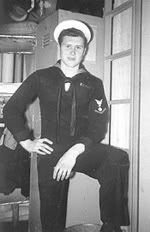 As a young Navy gunner's mate, John Gessleman's job was to shoot holes in the barrels of radioactive waste to make them sink.
The Farallon waste site is a triangle-shaped piece of seascape that sits about 30 miles west of San Francisco. It encompasses most of the Gulf of the Farallones National Marine Sanctuary, a gorgeous refuge of marine and other wildlife that includes some of the most fertile commercial fishing waters in the Pacific. The islands themselves are home to one of the nation's largest populations of breeding seabirds, along with thousands of sea lions. The waters surrounding them are rich with fish and bottom-dwelling sea life. In fact, in recent decades, divers in the area have brought up at least 50 species of worms and crustaceans previously unknown to science.
Certainly, this seems a ridiculous place to situate the nation's first and largest sea dump of nuclear waste. In the mid-1940s, however, the Defense Department and, indeed, the federal government as a whole were much more concerned about keeping nuclear trash out of enemy hands than they were about the environment. The waters near the Farallones were seen as a convenient spot, far enough away to be out of sight, close enough to be under control.
Government officials have long acknowledged that the dump site contains some 47,500 barrels of low-level radiation waste generated by Navy and University of California nuclear laboratories. And yet, neither the Navy nor anyone else has ever been able to produce any kind of accounting or documentation that confirms the numbers of barrels dumped or describes the contents of the barrels. Government officials have speculated that the waste was trash, a mix of junk and laboratory accessories, some of which had been exposed to small amounts of radiation, none of which posed a threat to human health.
But such assertions grossly underestimate the extent of Cold War-era research in the Bay Area and the types of radioactive materials used in that research. Although official government statements continue to refer to the Farallon Islands Nuclear Waste Site as a "low-level" waste repository -- that is, a place containing radioactive materials that have short "half-lives," and that would therefore decay quickly and be diluted by sea water -- there is good reason to believe that something far more dangerous is parked at the bottom of the ocean near the Farallones.
Once-classified military documents and former government employees strongly suggest that the Navy's "low-level" designation is incorrect, and that significant amounts of high-level, extremely long-lived radioactive materials are sitting on the ocean bottom near the Farallones. To wit:
- The Navy's own documents, declassified at the request of SF Weekly, show that significant amounts of the nuclear bomb component plutonium, which has a half-life of 24,000 years, and similarly long-lived "mixed fission" products were used at the nuclear laboratory at Hunters Point. The Navy has asserted that all nuclear materials used at the NRDL were subsequently disposed of at the Farallon waste site.
- An entire radioactive ship, the 10,000-ton aircraft carrier USS Independence, is believed to have been sunk in or near the waste site. The carrier itself was clearly "hot" when it went down. It had been used as an atomic bomb target and a nuclear laboratory, and it was packed full of fresh fission products and other radiological waste at the time it sank.
- Two government officials say the Navy told them thousands of barrels containing "special" wastes -- that is, high-level, long-lived radioactive materials -- were dumped in the Farallon site.
In the decades since World War II ended, many scientific studies have shown that radioactive materials dumped at sea can enter the marine food chain through bottom-dwelling organisms, such as clams and mussels, and that radiation can accumulate in fish and other, higher-order animals that feed on the bottom-dwellers. It is also widely accepted that eating fish that have taken in significant amounts of radioactive material can be dangerous to humans, increasing the incidence of cancer and other radiation-linked diseases.
For as long as the public has known about the Farallon Islands Nuclear Waste Site, government officials and scientists alike -- including those who don't agree on the potential hazard of the Farallon dump -- have said that the area should be monitored. The U.S. Environmental Protection Agency's own contractors have said the site contains material that might be transported into the food chain, or even onto beaches or into San Francisco Bay.
Yet, more than 50 years after radioactive waste was dumped at the heart of a major fishery just off San Francisco, there has been no comprehensive study or regular monitoring of the site, the fish that swim there, or the fish that have been caught there and sold for human consumption.
Both the Navy and the U.S. Department of Energy have for years maintained a position that is internally inconsistent: They have repeatedly claimed that they do not know for certain what is in the Farallon Islands Nuclear Waste Site, and, simultaneously, they have repeatedly asserted that whatever was dumped in the Farallones is not dangerous. Not only does the position defy common sense, it ignores volumes of declassified government records detailing some of what was dumped in the Farallones. And the government has access to reams of documents that remain classified, and that would almost certainly describe radioactive materials used in government labs and dumped in the Farallones.
The simple truth is that no one can say with any degree of certainty whether the Farallon Islands Nuclear Waste Site and the fish taken there are safe, because no one has fully studied them. In fact, the U.S. government has gone out of its way to avoid learning or disclosing what it put on the sea floor 50 years ago.
The Naval Radiological Defense Laboratory was created at Hunters Point Shipyard in 1946 to handle and experiment with ships that were contaminated in the world's fourth atomic bomb explosion, which was part of the Operation Crossroads nuclear tests conducted at Bikini Atoll in the South Pacific. From humble, hasty beginnings, when it decontaminated ships that had been underneath the infamous mushroom cloud in the Pacific, the NRDL grew steadily bigger, and its work more complex.
The NRDL existed from 1946 until 1969; the Navy kept its very existence a secret until about 1950. At the peak of operations, the lab employed some 600 people -- mostly military and civilian scientists -- who researched the effects of nuclear weapons and how to mitigate those effects. The laboratory worked on projects for the Armed Forces Special Weapons Project and took part in almost every nuclear weapons test the military performed. Along the way, scientists exposed thousands of mice, dogs, and larger animals to long-lived radiation, often in nuclear tests in the Pacific and Nevada.
Wellard Guffy was a supply officer at the NRDL from 1957 to 1960. Part of his job was to oversee the disposal of the laboratory's radioactive waste. In fact, his name was on the Atomic Energy Commission license allowing the laboratory to dump near the Farallones during that time. He remembers what was sent out to sea this way: "Look at the dictionary of radioactive substances; we had it all. Plutonium, tritium, extremely dangerous stuff," he says, adding that "a lot of it was much less dangerous than that."
Guffy's recollections aside, there is voluminous documentation strongly suggesting that high-level, long-lived radioactive waste has been dumped in the Farallones.
Historical records obtained by SF Weekly show that the NRDL regularly acquired and used, among other things, uranium, plutonium, thorium, cesium, and strontium -- potentially deadly radioisotopes with half-lives from 30 to (in the case of thorium) several billion years. The lab also used mixed fission products (that is, highly radioactive substances akin to expended nuclear reactor fuel). Along with the radioactive waste the lab itself generated, the NRDL also handled nuclear disposal for other defense-related entities, including McClellan Air Force Base in Sacramento and the University of California, a leader in nuclear research. Government officials have asserted that all nuclear materials used at the NRDL were disposed of at the Farallon waste site. If this assertion is true, then the Farallones site must be home to a variety of long-lived, high-level radioactive poisons.
Then again, government officials have acknowledged that the site contains at least some long-lived nuclear material.
In a 1980 congressional hearing, David Hawkins, then-assistant administrator for the EPA, testified that the bulk of the nuclear waste in the Farallones consists of equipment, tools, lab clothing, and other materials contaminated with low-level, relatively short-lived radioactive substances. Still, he acknowledged that isotopes with the potential to adversely affect the environment for long time periods -- including strontium and cesium -- also had been dumped at the site.
"And, at times, they may have included small quantities of source materials such as uranium and thorium, or traces of special nuclear materials such as plutonium," Hawkins said, giving no indication of why he named those particular materials, and insisting that because there were no logs of what had been dumped, the government had no way to know for sure what is on the Farallones sea floor.
A decade later, another clue was dropped, this time during a meeting among representatives of state and federal agencies reviewing the Farallon site. At that meeting, according to two officials who were present, a U.S. Navy captain reported that the Navy was aware of having dumped some 9,000 containers of "special waste" into the Farallones area.
"Special waste" is a term that U.S. defense agencies use for high-level, long-lived radioactive materials, including uranium and plutonium, the latter of which, because of its long half-life, would be as dangerously radioactive today as it was 56 years ago, at the end of World War II. (Plutonium-239, the fuel of nuclear weapons, can cause cancer if even a tiny fragment makes its way inside the body, and has a half-life of 24,000 years. That is, half of a given mass of plutonium will decay in 24,000 years, or, to put it conversely, half the amount present today will still remain in 24,000 years.)
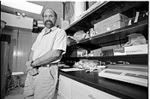
At the next meeting of the interagency group, U.S. Geological Survey geologist Herman Karl remembers, the Navy captain recanted his earlier report, saying that the Navy was not aware of any special waste dumped in the area. The subject was never discussed again in group meetings, Karl says. Another official who attended the meetings, and who requested anonymity, backs Karl's account of the two meetings. A third government official remembers the captain being part of the group, but nothing else.
Attempts to contact the Navy captain were unsuccessful.
In a prepared statement, Lt. Steve Curry of the Navy's Office of Information in Washington, D.C., responded to questions about the Farallon waste site this way: "The barrels in question contain mostly laboratory wastes generated during research activities and/or decontamination procedures." Curry said the EPA, in cooperation with the Navy, had investigated the site in 1975 and again in 1985. He went on to say, "A typical waste package observed during the 1985 investigation (after 30 years immersion) showed very little evidence of any effect of the deep sea environment other than a small area of mild implosion on the upper surface, and its concrete matrix showed very little spalling [chipping or flaking]."
Curry's statement fails to address the crucial distinction of whether these "laboratory wastes" are high-level, long-life radiation sources or lab equipment and materials that were slightly contaminated during NRDL research.
And the government's own research conclusively disproves Curry's suggestion that the waste containers in the Farallones remain largely intact. Studies by the EPA and other government-funded researchers, some of which have even been presented to Congress, clearly show that many of the 55-gallon barrels containing radioactive waste at the Farallon site have imploded, or are corroded and disintegrating.
The USS Independence was definitely sunk somewhere in the Pacific Ocean after it left Hunters Point Shipyard for the last time in 1951. It was definitely filled with radioactive waste -- some of it of the high-level variety -- when it went down. Although the Navy will not confirm the ship's whereabouts, the Independence is widely believed to rest in or near the Farallon undersea nuclear dump.
The 10,000-ton aircraft carrier was among the Navy's largest vessels when it was built in 1942, and had seen a great deal of action in World War II. Originally a cruiser, the Independence was converted into an aircraft carrier after it was hit by a Japanese torpedo at Tarawa. "The Mighty I," as the ship was nicknamed, participated in the October 1943 battle at Wake Island.
The ship's radioactive history began in 1946, when it was a target ship parked in the lagoon surrounded by Bikini Atoll during the United States' largest atom bomb test. The Independence was only 560 yards from the blast, so close that it caught fire, and its upper decks were mangled into a mess of misshapen metal.
Following the test, the highly contaminated Independence was one of 14 ships brought to the San Francisco Naval Shipyard at Hunters Point for experimental decontamination in exercises that gave birth to the Naval Radiological Defense Laboratory. After several months of trying to cleanse the giant vessel with everything from vegetables to detergent to kerosene, government scientists decided that sandblasting followed by a citric acid rinse was the way to get rid of radioactive contaminants.
Eventually, the NRDL brass determined that the Independence was so "dirty" it was beyond hope of being safe to sail again. At that point, parked in the bay at Hunters Point, the Independence became a guinea pig. The prevailing wisdom, as revealed in NRDL records, seemed to be that since the Navy was planning to sink the contaminated ship anyway, it was the perfect place for radiation experiments.
On one occasion, scientists sprayed mixed fission products across a portion of the ship. Eventually, the NRDL decided to turn some sections of the aircraft carrier into a radiation lab. The ship-as-lab is described in a November 1948 memo from the NRDL to the Army's chief of engineers:
Engineering Applications Division is in process of converting some of the interior compartments of the ship into an improvised hot-laboratory where high levels of activity can be used on fairly large-scale practical samples as a means of testing "quick and dirty" methods of decontamination.
... The big advantage of such an improvised hot-laboratory is that spills or other accidental contamination do not matter, since if the whole laboratory becomes contaminated it can either be moved to a new compartment or gross decontamination methods can be used on the laboratory without the necessity of careful disposal.
All the while, the ship was used for another purpose: Radioactive waste produced by both the NRDL and the University of California's nuclear laboratories was stowed on the Independence until shortly before its sinking in January 1951. Correspondence from the time indicates that the radioactive waste packed onto the ship went down with it. A Dec. 23, 1949, memo from C.J. Brown, assistant chief of the Navy's Bureau for Research and Medical Military Specialties, describes the situation this way:
During the past year, Independence has been used as a test laboratory for radiological decontamination studies. Large quantities of fresh fission product mixtures were introduced on board during these studies and subsequently were drained into empty tanks aboard the ship for stowage. Other contaminated materials that have been used in connection with the research program of the Naval Radiological Defense Laboratory also have been put on board the Independence.
Brown went on to explain that if the Navy wanted to salvage the Independence for scrap, it would have to remove and dispose of the contaminants on board, a process that would exceed the ship's scrap value. So Navy officials decided to sink the ship in a weapons test.
The exact circumstances surrounding the Independence's sinking have never been made public. At the time, Navy officials told reporters that the ship had been sunk in a weapons test some 200 miles off the coast. But the captain of a merchant ship claimed to have witnessed the Independence go down only 40 miles outside the Golden Gate, which would put it near the Farallon Islands Nuclear Waste Site. The Navy did not comment on the merchant captain's observations. But during a recent project aimed at mapping nuclear waste barrels dumped near the Farallones, government scientists found nothing where the Navy has said it sank the Independence, and a large shipwreck that fits the Independence's description close to the nuclear waste site.
Navy officials still refuse to comment on the location of the Independence, citing policies, aimed at preventing salvage or looting, that prohibit confirming the exact location of any sunken Navy ship. Regardless of where it is, the Independence, which remains the property of the U.S. Navy, has apparently not been monitored in regard to radioactive contamination.
Depending on what, precisely, they turn out to be, the "mixed fission" products on the USS Independence could represent as much radiation as all the barrels in the Farallon dump site, according to W. Jackson Davis, head of the International Environmental Policy program at the Monterey Institute of International Studies and an international environmental consultant. (SF Weekly contracted with a team of analysts working under Davis' direction to review environmental documents pertaining to the Hunters Point Shipyard. Their findings were included in Part One of this series.)
"You'd sure like to know what "mixed fission' products mean," Davis says. "Whether you could immediately tell by monitoring the surrounding area, I'm not sure. It could mean that the waste is still entombed within that ship."
That the waste might be mostly contained by the Independence is not necessarily a positive notion. Shipwrecks attract the very creatures that tend to absorb radiation into the food chain of sea life. Invertebrates such as clams and mussels are particularly attracted to the hard surface area provided by sunken ships.
The safety of nuclear waste dumped in the Gulf of the Farallones began to be questioned nearly as soon as dumping stopped in 1970. But the concern has been expressed publicly only in fits and spurts.
In 1974, the EPA conducted an investigation of the site but could locate only about 150 of the 47,500 containers the government has acknowledged dumping there. Most had imploded or were otherwise damaged. Three years later, government scientists retrieved one barrel, which showed only low levels of radiation. But a survey of the sediment surrounding containers at the sea bottom showed radiation 25 times higher than "background," or what is normally attributed to the fallout from atmospheric testing. More disturbing were underwater photographs taken at the site that showed sable fish feeding within inches of a leaking barrel of radioactive waste.
The barrels captured the attention of then-U.S. Rep. Leo Ryan, a San Francisco Democrat, who held the first congressional hearing on the Farallon Islands Nuclear Waste Site in 1976. At the time, EPA officials told Congress that the situation was potentially dangerous and would require more study. Then the Farallones faded from the spotlight.
Four years later, a group of environmentalists enlisted the support of Quentin Kopp, then a San Francisco supervisor, who rallied supervisors from several Northern California counties and formed the Ad Hoc Coastal Counties Supervisors Committee on Nuclear Waste. The group, which included Barbara Boxer, a Marin supervisor at the time, immediately engaged in battle with federal agencies, including the EPA, over information the supervisors deemed "incomplete, conflicting, and inaccurate."
Kopp introduced a resolution by the San Francisco Board of Supervisors calling for the release of EPA reports on the Farallon waste site. Robert Dyer, head of the EPA's Office of Radiation Programs, told reporters that he was a "one-man show" who had had neither the time nor the resources during the previous three years to complete reports on the Farallon waste site.
Later in 1980, another, more heated, congressional hearing was held in San Francisco. Included in the mix were then-Congressmen John Burton and Leon Panetta, and the stakes were higher than ever. At the time, the EPA and other government agencies were studying the possibility of resuming ocean dumping of nuclear waste. Needless to say, the long-term safety of the nation's largest sea dump was key to both sides of the debate.
Department of Energy officials told Congress that the Farallon ocean-floor dump contained only "low-level" waste, and that "natural dilution and dispersal" would result in safe levels of radiation in the environment.
The first assertion was untrue, and the second, unsubstantiated.Government officials had already owned up to having dumped "trace amounts" of elements, including plutonium, that were not considered "low-level." In fact, in the same hearing, the EPA's David Hawkins gave this vague statement on the matter: "[The containers in the Farallones] might have included highly radioactive materials, but not high-level wastes. It [sic] is a special definition for high-level waste." Hawkins was not asked for, and did not give, such a definition.
In the end, the congressmen verbally spanked various bureaucrats for the dearth of information on the situation at the bottom of the sea near San Francisco. Everyone seemed to agree that the matter should be studied more. It never really was.
One of the first men to take a serious look into the waste containers near the Farallones was the EPA radiation specialist, Robert Dyer. In 1974, Dyer and his crew surveyed the area, retrieved one of the barrels, and took it to Brookhaven National Laboratory in New York for a peek inside.
For safety reasons, Dyer purposely selected a barrel, located in the shallow part of the dump site, that seemed to be in particularly good condition. The barrel had no holes in it, was only minimally corroded, and wasn't leaking radioactive waste. Upon opening the drum, EPA scientists seemed somewhat puzzled to find cardboard, and concluded that the barrel likely contained trash that was either suspected of being contaminated, or was somehow accidentally tainted by short-lived radiation that had long since dissipated.
History would suggest a different explanation. NRDL records clearly spell out the lab's policy for handling radioactive waste. Among the regulations is the directive that liquid waste be placed in certain containers lined with cardboard until ultimate disposal. So, it's likely that the barrel came from the NRDL, and once contained radioactive liquid that either spilled or leaked out sometime prior to arriving at the Brookhaven Laboratory.
The barrel that apparently leaked its liquid radioactive contents into the ocean is hardly the worst of what's been seen at the Farallon dump site. The limited survey done by Dyer's team found the majority of containers at the dump to be imploded, corroded, and leaky.
In the late 1970s, two researchers from the University of Washington's College of Fisheries examined fish and sediment near the Farallon Islands in a study funded by the EPA. The pair found levels of plutonium and cesium in sediment near waste containers dumped by the Navy to be up to 20 times higher than what is expected because of fallout from above-ground nuclear weapons testing by the U.S., the former U.S.S.R., China, and other nuclear nations. Some of the organisms the researchers studied contained elevated levels of plutonium, although plutonium was not found in the edible, muscle parts of the fish. The finding suggested that plutonium was being picked up as the fish grazed in sediment for food, but was not being digested into the body of the fish, which is most of what humans eat.
In 1980, W. Jackson Davis, then an environmental scientist at UC Santa Cruz, found that data from the EPA's own reports on the Farallon waste site suggested a much greater potential for hazard than the government had previously admitted. Specifically, Davis found that plutonium levels in the samples collected by the EPA exceeded background levels by far more than had been reported. This prompted a war of interpretation between government and academic scientists that was never truly resolved.
A few years later, the state Department of Health Services hired UC Davis professors Thomas Suchanek and Manuel Lagunas-Solar to test fish around the waste dump site. Suchanek, a research ecologist and director of UC's Clear Lake Environmental Research Center, collected fish samples at various time periods between December 1986 and September 1987. Lagunas-Solar, a radiochemist at the UC Crocker Nuclear Laboratory, analyzed the results.
The researchers found plutonium, cesium, and americium -- an isotope that emits about three times as much radioactivity as radium -- in the fish. In particular, americium and one kind of plutonium were found at levels higher than has been reported at any other site in the world.
In their analysis, Suchanek and Lagunas-Solar also recalculated the results of samples taken earlier by Dyer and his EPA researchers and found certain radionuclides to be as high as 1,000 times what would be typically attributed to background levels from nuclear fallout, as opposed to the two-to-25-times-background conclusions reached by the EPA researchers.
After conducting their initial research, but before having published the results, Suchanek and Lagunas-Solar concluded that their findings warranted study of creatures lower in the food chain, and thus closer to the source of radiation. (Radioactivity multiplies as it moves up the food chain in such a way that creatures at the top of the chain -- fish that feed on fish, for example -- might contain 40 times more radioactivity than crustaceans or other prey on the bottom.)
Based on the findings of research he and Lagunas-Solar had conducted, Suchanek says he was approved for a $260,000 grant from the National Oceanic and Atmospheric Agency to study radioactive isotopes in crustaceans living near the Farallones. But then Suchanek and Lagunas-Solar published their findings about radiation contaminants at the nuclear dump.
And some strange things happened.
Suchanek says he met with Dyer, the EPA radiation specialist, who warned him to "stay away from the nation's nuclear waste dumps." Shortly after Dyer's visit, Suchanek says, he was notified by the NOAA that the agency's remotely operated vehicle -- the unmanned submarine that was key to Suchanek's proposed research -- would not be available, and, therefore, his research into the Farallon site would not be funded.
Dyer disputes Suchanek's account.
"I wasn't working on the West Coast in the 1980s, and I wouldn't have cared what was going on out there then," Dyer says. "I was accused of almost everything. This was such a political thing. I finally decided, "It's California, I have to get used to that.'"
A decade ago, Herman Karl, a USGS geologist, and Ed Ueber, the NOAA's director of the Gulf of the Farallones National Marine Sanctuary, began what would become the most extensive look at the mysterious barrels of radiation on the seabed undertaken to date, even though it only covered about 15 percent of the waste site. They and their crew sailed into the choppy waters near the Farallon Islands, set anchor, and carefully lowered a small, unmanned submarine -- that is, a remotely operated vehicle -- to the bottom of the sea. The idea was to definitively locate the containers of radioactive waste the Navy had dumped, and then determine what was leaking out of them.
Karl and his colleagues at the USGS had already mapped what appeared to be nuclear waste containers using sidescan sonar, a special type of sonar that projects a beam of sound into the environment and uses the returning echoes to form a picture of the surrounding area. Now it was time to see if those scans had, indeed, identified waste barrels, rather than rocks or other naturally occurring sea-floor phenomena. This was an important step in any further research of the area. The containers were not where Navy logs from the time said the barrels had been dumped. (The difficulty in locating the barrels may have been due to changes in navigational equipment over the last 50 years.) Without a map of some kind -- in this case, the sidescan sonar images -- there would be limited hope of knowing even where to start studying the waste site.
The weather was terrible, and the seas unforgiving. The first few attempts were a bust. The project quickly ran through its $1 million budget from the EPA and NOAA, leaving Karl and Ueber to beg, borrow, and steal from other projects to keep this one alive. "Herman and I were doing this on a handshake," recalls Ueber. "It was what we could add on to our normal work ... to get this project done."
At one point, Ueber went down in a manned submersible -- borrowed from the Navy -- and tooled around some barrels about 1,000 feet below. The sub's propeller got too close to the bottom and kicked up dirt, so Ueber had to wait for the dust storm to clear before heading back up. He says instruments on the sub measured radiation at three times higher than what is considered normal background levels in the atmosphere. That was the last time the researchers were able to use the sub, a particularly pricey piece of equipment that, were it contaminated or damaged, would cost more than $100 million to replace.
By 1997, Karl was talking with his counterparts in the British government, who had developed equipment that could measure radiation as far as 3,000 feet undersea. The British scientists were anxious to get in on Karl's study, and agreed to bring their equipment to the Farallones. But it took another year before the USGS's ship, already committed to other projects, became available.
In the end, the joint team of researchers was able to confirm the mapping that Karl's group at the USGS had done with the sidescan sonar, which is to say that there were barrels where the researchers predicted they would be, and no containers where they had not. And the British scientists reported only low levels of radiation. But the team was only able to study 15 percent of the area before also running out of time and money.
Which means that approximately 85 percent of the nation's largest undersea nuclear waste dump has never been observed or tested.
In the 1970s, a group of marine biologists working on Project Tektite, a public-private partnership created to study the behavior of sharks, spent a good deal of time diving near the Farallon Islands. The divers had no clue they were in the middle of an undersea nuclear waste dump. They saw a seabed littered with corroded 55-gallon drums and cement boxes, animal carcasses, and debris, but it wasn't until they saw a newspaper article about the site that they realized where they'd been. Shortly afterward, Dr. Harold Ross, who'd led the Tektite expedition, offered the government, through Congress, the use of his group's sophisticated diving and surveillance equipment to take a closer look at the area. His offer went unheeded.
For decades, scientists have said that the Farallon Islands Nuclear Waste Site ought to be monitored. As far back as 1960, the National Academy of Sciences took the official position that the site should be studied regularly. In two congressional hearings on the waste site, there was disagreement over the level of potential danger associated with the waste, but essentially everyone agreed that the site should be monitored to record the effects of radiation on the environment and fish.
At the 1980 hearing, then-Congressman Burton said, "There should be mandated as quickly as possible, through either committee language, appropriation, or authorizing language, a system of monitoring. ... We have to have a systematic, periodic monitoring of the fish and other aquaculture to find out what is happening."
His colleagues were equally passionate that the area be watched.
Even the EPA, which had by this time released a study that generally found the site to be an unlikely hazard, said that the dump ought to be kept under periodic surveillance. Hawkins, the assistant EPA administrator, told the congressmen, "It will now be necessary to collect additional samples for further analysis, and that is something that the government intends to see get done."
It did not.
In an exchange with EPA radiation specialist Robert Dyer, Burton asked how often the site should be monitored. Here is an excerpt of what followed:
Dyer: "Six-month type of period."
Burton: "Have you been doing that?"
Dyer: "No, we haven't."
Burton: "Do you plan to do it?"
At this point, Hawkins stepped into the fray, arguing that the agency had no resources for conducting a monitoring study of the Farallon site.
Burton: "Do you plan to ask for the resources?"
Hawkins: "We plan to pursue with NOAA and anyone else that we can pursue it with to see if we can get these resources ..."
Burton: "... you have got a responsibility to come to the Congress and ask for more money to do this."
No regular monitoring program followed.
In 1983, California legislators passed a law that funded investigation of the levels of radionuclides in some edible fishes from around the Farallon waste site. The state Department of Health Services subsequently contracted with the University of California -- Suchanek's group -- to monitor levels of radionuclides in bottom fishes and mussels in the area.
But the Legislature chose not to continue the law, and after 1987, there was no further monitoring.
On at least two occasions, federal agencies have hired contractors to look into potential hazards at the dump site. Both times the contractors have recommended that the area continue to be monitored. Neither time did government officials follow the advice of the contractors.
A May 1974 report done for the EPA by Interstate Electronics Corp. says:
Because the shallower site may be one that could provide radioactive material that can be transported into the productive zone [i.e., the food chain] and possibly onto the beaches or into San Francisco Bay itself, a program to study the status of containers at this site should be initiated as a first priority.
No such program was undertaken, other than Dyer's limited work for the EPA.
Nearly 20 years later, in 1993, the Hazardous Materials Response Branch of the NOAA hired another contractor, Tetra Tech Inc., to research "the present and future risks to resources in the vicinity of the Farallones."
Tetra Tech assumed in the study that risk was based on low-level waste, and concluded that any hazard to natural resources was "below the level of concern." The report also stated that plutonium and americium will reach maximum release rates 80 to 200 years after their disposal (that is, starting somewhere around 2030) and "are expected to persist in the environment for an extended period of time."
The contractor did not look at, or consider, any possible human health hazards in the scope of its investigation. Nonetheless, the report goes on to suggest that a monitoring program be put in place to evaluate future risk at the nuclear waste site: "Periodic sampling of commercial species from the vicinity of the FINWS or development of market place monitoring program may provide adequate warning of any human health risk."
Again, no such monitoring program was put in place.
Another contractor, Ecology and Environment Inc., reviewed the Farallon dump site in 1988 and found that it could qualify as a federal Superfund site, which would make it a priority for cleanup and federal funds. But EPA officials disagreed, and never sought a Superfund designation.
Now, the U.S. EPA has redefined history and is suggesting, incorrectly, that scientific study has found no elevated radiation levels at the Farallon site.
"We studied it years ago and found that there was nothing there above background radiation, nothing above what would be occurring naturally," says Lisa Fasano, spokeswoman for the EPA in San Francisco. "We haven't done anything and wouldn't do anything. There is no monitoring out there."
The Monterey Institute of International Studies' Davis and other academic scientists say that, at a minimum, the Farallon waste site should be regularly monitored. And, they say, such monitoring would be a relatively simple matter that involved the testing of blubber samples from sea lions and fish-eating birds that are high in the food chain and, therefore, accumulators of environmental toxins, including radiation.
Only a handful of people have ever seen the radioactive graveyard at the bottom of the Gulf of the Farallones National Marine Sanctuary. Fewer have studied it, and those who have tend to disagree on one another's findings. But they tend to disagree in a predictable way. That is to say: Academic scientists tend to believe the undersea nuclear dump poses a far greater potential danger than do their government-commissioned (and -paid) counterparts.
Without further study, there is no way to know, precisely, how much of a danger the Farallon site poses. Clearly, though, the government's position on the site is riddled with inconsistencies and outright falsehood.
The number of barrels in the Farallon waste site -- supposedly, 47,500 -- comes from an estimate done in 1974 by an Atomic Energy Commission researcher named Arnold Joseph, who never intended it to be a definitive count. In his report, Joseph cautioned that the number was based only on the limited information that he could find at the time.
Nonetheless, as years passed, the number somehow became a "fact" cited over and over by federal officials. So did the supposed "low-level" nature of the waste.
And as these "facts" are repeated, the Navy and the Department of Energy cling to the inherently contradictory position that, while they don't know a great deal about what was dumped in the Farallon Islands Nuclear Waste Site, what's there is not dangerous.
Documents obtained by SF Weekly appear to bring the federal government's position on the Farallon waste site into significant doubt. Government reports on the contents of the site do not take into account the aircraft carrier Independence, which was apparently packed with huge amounts of radioactive materials before it was sunk, very probably in the Farallones. The NRDL's own records strongly suggest that far larger amounts of plutonium, uranium, and other long-lived radioactive substances were dumped in the Farallones than the government has acknowledged. And two government officials say the Navy has acknowledged dumping thousands of barrels of high-level, long-lived, "special" nuclear waste at the site.
There are hundreds of boxes of records on the activities of the NRDL sitting in the National Archives and Records Administration in San Bruno and the Department of Energy's records repository in Las Vegas. Government files also contain information on the University of California laboratories that did nuclear research and shipped their waste to the NRDL at Hunters Point, which then dumped it in the Farallones.
Apparently, those records haven't been reviewed to assess what radioactive poisons made it to the bottom of the sea. Without such a review, followed by additional research in the Farallones, and some regime of monitoring of the undersea dump site, no government agency or academic researcher can say, definitively, whether the nuclear waste resting off the coast of San Francisco does or does not pose a danger to humans.
But this much is clear: The past -- and the future -- of the Hunters Point Shipyard, the Naval Radiological Defense Laboratory, and the Farallon Islands Nuclear Waste Site are utterly, inextricably linked. The long-lived radioactive materials that were used at the NRDL during the early days of the nation's nuclear research program have not gone away. They will pose a potential danger for thousands or tens of thousands of years. Whether they are at the bottom of the sea near the Farallon Islands, at a decommissioned shipyard that the city of San Francisco wants to remake as its newest neighborhood, or at some other location, these exceedingly long-lived poisons are still with us.
Thursday, March 29, 2001
| [+/-] |
Justices Defend Handling of Florida Election Case |
CNN reports:
U.S. Supreme Court justices Anthony Kennedy and Clarence Thomas told a congressional panel Thursday that it was the court's responsibility to decide last year's presidential election dispute in Florida.
The court's 5-4 ruling in Bush v. Gore December 12 halted a Florida recount sought by Democrat Al Gore and in effect handed the presidency to Republican George W. Bush.
The justices testified at a House Appropriations subcommittee hearing on the court's budget.
Rep. Jose E. Serrano (D-New York) asked the justices about the controversial ruling, saying the court "went and broke my heart by getting involved in a political decision."
Kennedy said the court is the only branch of government that must give reasons for its actions.
"Justice Thomas and I and our colleagues will be judged not by what we say after the fact in order to embellish our opinions or detract from what some of our collegues say, we will be judged by what we put in our appellate reports. That's the dynamic of the law," Kennedy said.
He said the court's power and prestige are built on trust.
"My colleagues and I want to be the most trusted people in America," Kennedy said. "How do you instill that trust? Over time you build up a deposit, a reservoir, a storehouse of trust. When we make a difficult decision in many areas -- and this was not the most difficult decision the court has made -- for many of us, you draw down on that capital of trust."
Kennedy pointed out that the justices did not file the lawsuit that brought the dispute to court.
"It involved a constitutional issue of the gravest importance decided 4-3 by a state court on a federal issue that it was our responsibility to take the case," Kennedy said. "Sometimes it is easy, so it seems, to enhance your prestige by not exercising your responsibility, but that's not been the tradition of our court."
He said that seven justices agreed that allowing manual recounts only in selected Florida counties violated the Constitution's equal protection clause, but they disagreed on the remedy. The decision blocked a statewide hand count of ballots because the tally could not have been finished in time for Florida to meet the deadline for selecting electors to the Electoral College.
Kennedy said disagreements among the justices are expected in the difficult questions the court often hears.
"In the European Court of Justice, there are no dissents and the European judges say, 'How can you do this, how can you have a system where you criticize each other? Isn't this bad for the institution?' We say no, it's good for the institution. We want to make it clear by our dynamic and our discipline and our tradition and by our dissenting opinions and by reasons that the issues we decide are very difficult ones."
Thomas said he would have preferred not to have gotten involved in the case, and that if he had wanted to be in politics, he knew where to go.
"If there was a way, and I only speak for myself, to have avoided getting involved in that very difficult decision and simultaneously living up to my oath, I would have done it," Thomas said.
Thomas and Kennedy also discussed plans to update the court's computer systems and replace the electrical, air conditioning and other systems in the Supreme Court building, which has not been remodeled in 65 years.
Thursday, January 4, 2001
| [+/-] |
Forbes' Faces: The Koch Brothers |
Forbes' reports:
When the federal government drops 86 felony charges against your company, it should be cause for celebration. Not so for brothers Charles and David Koch, who run family oil conglomerate Koch Industries.
When prosecutors reduced a list of the company's alleged environmental crimes from 97 to 11 items on Wednesday, the move generated little cheer from company headquarters in Wichita, Kans. Koch Industries still faces the harshest of the government's criminal charges, in which the petroleum giant is accused of spewing the toxic chemical benzene into the environment in 1995 and then trying to hide it from government investigators.
A federal grand jury indicted the privately held company and four of its employees in September on 97 related charges for alleged violations that took place at the company's refinery in Corpus Christi, Tex. Founded in 1940 by the late Fred Koch, father of Charles and David, Koch Industries faces up to $502 million in fines. Four former company executives face fines and possible prison terms.
It's just the latest in a string of mishaps for Charles, 64, the company's chairman, and David, 60, the executive vice president. In September 1999, Koch Industries paid $8 million in damages after a Minnesota oil spill. In January 2000, the company was slapped with the largest civil penalty ever against one company. It was forced to pay a $35 million settlement for 300 separate oil spills in six states, leaking 3 million gallons of crude oil from corroded pipelines into local waters.
Adding to all this is the backstabbing within the Koch family. Estranged brother William blew the whistle on the company for stealing oil from federal and American Indian lands in the 1970s; an Oklahoma jury found the company guilty last year and slapped it with a half million-dollar fine. Charles bought out William's shares in the company in 1983.
President-elect George W. Bush cooperated with the Justice Department's investigation of Koch Industries while serving as governor of Texas. But even though company executives contributed heavily to Bush's presidential campaign, they are unlikely to see benefits from having friends in high places.
U.S. District Judge Janis Jack of Corpus Christi prodded government lawyers to streamline their charges against Koch Industries, but that's not necessarily a good thing. Prosecutors dropped 86 relatively petty allegations--including charges that the Koch refinery used improper equipment to handle benzene--and in doing so may have strengthened their broader pollution case against the company.
Charles and David both have degrees from MIT and a net worth of over $3 billion each, but their continual brushes with the law lend an ironic tone to their company's slogan: "You know us better than you think."
Sunday, December 31, 2000
| [+/-] |
The Impact of the Economic Crisis and the US Embargo on Health in Cuba |
In the American Journal of Public Health, "The impact of the economic crisis and the US embargo on health in Cuba," R Garfield and S Santana, Columbia University School of Nursing, New York, NY 10032, USA:
OBJECTIVES: This paper examines the combined effects of a severe economic decline since 1989 and a tightening of the US embargo in 1992 on health and health care in Cuba.
METHODS: Data from surveillance systems for nutrition, reportable diseases, and hospital diagnoses were reviewed. These sources were supplemented with utilization data from the national health system and interviews with health leaders.
RESULTS: Changes in Cuba include declining nutritional levels, rising rates of infectious diseases and violent death, and a deteriorating public health infrastructure. But despite these threats, mortality levels for children and women remain low. Instead, much of the health impact of the economic decline of Cuba has fallen on adult men and the elderly.
CONCLUSIONS: To be consistent with international humanitarian law, embargoes must not impede access to essential humanitarian goods. Yet this embargo has raised the cost of medical supplies and food rationing, universal access to primary health services, a highly educated population, and preferential access to scarce goods for women and children help protect most Cubans from what otherwise might have been a health disaster.
