CBS News reports:
In February, Secretary of State Colin Powell made a surprising admission.
He told The Washington Post that he doesn't know whether he would have recommended the invasion of Iraq if he had been told at the time that there were no stockpiles of banned weapons.
Powell said that when he made the case for war before the United Nations one year ago, he used evidence that reflected the best judgments of the intelligence agencies.
But long before the war started, there was plenty of doubt among intelligence analysts about Saddam's weapons.
One analyst, Greg Thielmann, told Correspondent Scott Pelley last October that key evidence cited by the administration was misrepresented to the public.
Thielmann should know. He had been in charge of analyzing the Iraqi weapons threat for Powell's own intelligence bureau.
“I had a couple of initial reactions. Then I had a more mature reaction,” says Thielmann, commenting on Powell's presentation to the United Nations last February.
“I think my conclusion now is that it's probably one of the low points in his long, distinguished service to the nation."
Thielmann was a foreign service officer for 25 years. His last job at the State Department was acting director of the Office of Strategic Proliferation and Military Affairs, which was responsible for analyzing the Iraqi weapons threat.
He and his staff had the highest security clearances, and saw virtually everything – whether it came into the CIA or the Defense Department.
Thielmann was admired at the State Department. One high-ranking official called him honorable, knowledgeable, and very experienced. Thielmann had planned to retire just four months before Powell’s big moment before the U.N. Security Council.
On Feb. 5, 2003, Secretary Powell presented evidence against Saddam:
“The gravity of this moment is matched by the gravity of the threat that Iraq’s weapons of mass destruction pose to the world."
At the time, Thielmann says that Iraq didn't pose an imminent threat to the U.S.: “I think it didn't even constitute an imminent threat to its neighbors at the time we went to war.”
And Thielmann says that's what the intelligence really showed. For example, he points to the evidence behind Powell’s charge that Iraq was importing aluminum tubes to use in a program to build nuclear weapons.
Powell said: “Saddam Hussein is determined to get his hands on a nuclear bomb. He is so determined that he has made repeated covert attempts to acquire high-specification aluminum tubes from 11 different countries even after inspections resumed.”
“This is one of the most disturbing parts of Secretary Powell's speech for us,” says Thielmann.
Intelligence agents intercepted the tubes in 2001, and the CIA said they were parts for a centrifuge to enrich uranium -- fuel for an atom bomb. But Thielmann wasn’t so sure.
Experts at the Oak Ridge National Laboratory, the scientists who enriched uranium for American bombs, advised that the tubes were all wrong for a bomb program. At about the same time, Thielmann’s office was working on another explanation. It turned out the tubes' dimensions perfectly matched an Iraqi conventional rocket.
“The aluminum was exactly, I think, what the Iraqis wanted for artillery,” recalls Thielmann, who says he sent that word up to the Secretary of State months before.
Houston Wood was a consultant who worked on the Oak Ridge analysis of the tubes. He watched Powell’s speech, too.
“I guess I was angry, that’s the best way to describe my emotions. I was angry at that,” says Wood, who is among the world’s authorities on uranium enrichment by centrifuge. He found the tubes couldn’t be what the CIA thought they were. They were too heavy, three times too thick and certain to leak.
"Wasn't going to work. They would have failed," says Wood, who reached that conclusion back in 2001.
Thielmann reported to Secretary Powell’s office that they were confident the tubes were not for a nuclear program. Then, about a year later, when the administration was building a case for war, the tubes were resurrected on the front page of The New York Times.
“I thought when I read that there must be some other tubes that people were talking about. I just was flabbergasted that people were still pushing that those might be centrifuges,” says Wood.
The New York Times reported that senior administration officials insisted the tubes were for an atom-bomb program.
“Science was not pushing this forward. Scientists had made their determination, their evaluation, and now we didn’t know what was happening,” says Wood.
In his U.N. speech, Secretary Powell acknowledged there was disagreement about the tubes, but he said most experts agreed with the nuclear theory.
“There is controversy about what these tubes are for. Most U.S. experts think they are intended to serve as rotors in centrifuges used to enrich uranium,” said Powell.
“Most experts are located at Oak Ridge and that was not the position there,” says Wood, who claims he doesn’t know anyone in academia or foreign government who would disagree with his appraisal. “I don’t know a single one anywhere.”
Why would the secretary take the information that Thielmann’s intelligence bureau had developed and turn it on its head?
“I can only assume that he was doing it to loyally support the President of the United States and build the strongest possible case for arguing that there was no alternative to the use of military force,” says Thielmann.
That was a case the president himself was making only eight days before Secretary Powell's speech. In his State of the Union address, the president said: “The British government has learned that Saddam Hussein recently sought significant quantities of uranium from Africa. Our intelligence sources tell us that he has attempted to purchase high-strength aluminum tubes suitable for nuclear-weapons production.”
After the war, the White House said the African uranium claim was false and shouldn’t have been in the president's address. But at the time, it was part of a campaign that painted the intelligence as irrefutable.
“There is no doubt that Saddam Hussein now has weapons of mass destruction. There is no doubt he is amassing them to use against our friends, against our allies, and against us,” said Vice President Dick Cheney.
Powell said: “My colleagues, every statement I make today is backed up by sources, solid sources. These are not assertions. What we are giving you are facts and conclusions based on solid intelligence."
It was solid intelligence, Powell said, that proved Saddam had amassed chemical and biological weapons: “Our conservative estimate is that Iraq today has a stockpile of between 100 and 500 tons of chemical-weapons agent.”
He also said that part of the stockpile was clearly in these bunkers: “The four that are in red squares represent active chemical munitions bunkers. How do I know that, how can I say that? Let me give you a closer look.”
Up close, Powell said you could see a truck for cleaning up chemical spills, a signature for a chemical bunker: “It’s a decontamination vehicle in case something goes wrong.”
But Thielmann disagreed with Powell's statement: “My understanding is that these particular vehicles were simply fire trucks. You cannot really describe as being a unique signature.”
Satellite photos were also notoriously misleading, according to Steve Allinson, a U.N. inspector in Iraq in the months leading up to war.
Was there ever a time when American satellite intelligence provided Allinson with something that was truly useful?
“No. No, not to me. Not on inspections that I participated in,” says Allinson, whose team was sent to find decontamination vehicles that turned out to be fire trucks.
Another time, a satellite spotted what they thought were trucks used for biological weapons.
“We were told we were going to the site to look for refrigerated trucks specifically linked to biological agents,” says Allinson. “We found 7 or 8 of them, I think, in total. And they had cobwebs in them. Some samples were taken and nothing was found.”
If Allinson doubted the satellite evidence, Thielmann watched with worry as Secretary Powell told the Security Council that human intelligence provided conclusive proof.
Thielmann says that many of the human sources were defectors who came forward with an ax to grind. But how reliable was the defector information they received?
“I guess I would say, frequently we got bad information,” says Thielmann.
Some of it came from defectors supplied by the Iraqi National Congress, the leading exile group headed by Ahmed Chalabi.
“You had the Iraqi National Congress with a clear motive for presenting the worst possible picture of what was happening in Iraq to the American government,” says Thielmann.
But there was a good deal more in Secretary Powell’s speech that bothered the analysts. Powell claimed Saddam still had a few dozen Scud missiles.
“I wondered what he was talking about,” says Thielmann. “We did not have evidence that the Iraqis had those missiles, pure and simple.”
Last week, David Kay, the former chief U.S. arms inspector, said his team found no stockpiles of banned weapons. His assessment of 12 years of U.S. intelligence was this: "Let me begin by saying we were almost all wrong and I certainly include myself here. ... My view was that the best evidence that I had seen was that Iraq indeed had weapons of mass destruction."
Secretary Powell declined an interview for this broadcast. But as 60 Minutes II mentioned earlier, Powell told The Washington Post this week that he doesn't know if he would have recommended invasion if he'd know then that there were no stockpiles of weapons.
But Tuesday, he added this: "The bottom line is this. The president made the right decision. He made the right decision based on the history of this regime, the intention that this terrible leader, terrible despotic leader had the capabilities on a variety of levels. The delivery systems there were there, and nobody's debating that, the infrastructure that was there, the technical know-how that was there. The only thing we are debating are the stockpiles."
Thursday marks one year since Secretary Powell's U.N. speech. In that time, Thielmann has come to his own conclusion about the presentation. He believes the decision to go to war was made - and intelligence was interpreted to fit that conclusion.
"There's plenty of blame to go around. The main problem was that the senior administration officials have what I call faith-based intelligence. They knew what they wanted the intelligence to show," says Thielmann.
"They were really blind and deaf to any kind of countervailing information the intelligence community would produce. I would assign some blame to the intelligence community and most of the blame to the senior administration officials."
This week, President Bush said an independent commission will investigate the intelligence failures on Iraq.
Wednesday, February 4, 2004
| [+/-] |
Ex-Powell Aide: "Saddam-Weapons Threat Was Overstated" |
Thursday, January 22, 2004
| [+/-] |
"Bush's Iraq: An Appointocracy" |
Naomi Klein reports:
'The people of Iraq are free," declared U.S. President George W. Bush in Tuesday's State of the Union address. The day before, 100,000 Iraqis begged to differ. They took to the streets of Baghdad shouting "Yes, yes to elections. No, no to selection."
According to Iraq occupation chief Paul Bremer, there really is no difference between the White House's version of freedom, and the one being demanded on the street. Asked on Friday whether his plan to form an Iraqi government through appointed caucuses was headed toward a clash with Ayatollah Ali al-Sistani's call for direct elections, Mr. Bremer said he had no "fundamental disagreement with him."
It was, he said, a mere quibble over details. "I don't want to go into the technical details of refinements. There are, if you talk to experts in these matters, all kinds of ways to organize partial elections and caucuses. And I'm not an election expert, so I don't want to go into the details. But we've always said we're willing to consider refinements."
I'm not an election expert either, but I'm pretty sure there are differences here than cannot be refined. Ayatollah al-Sistani's supporters want every Iraqi to have a vote, and for the people they elect to write the laws of the country -- your basic, imperfect, representative democracy.
Mr. Bremer wants his Coalition Provisional Authority (CPA) to appoint the members of 18 regional organizing committees. The committees will then select delegates to form 18 selection caucuses. These selected delegates will then further select representatives to a transitional national assembly. The assembly will have an internal vote to select an executive and ministers who will form the new government of Iraq. That, Bush said in his address, constitutes "a transition to full Iraqi sovereignty."
Got that? Iraqi sovereignty will be established by appointees appointing appointees to select appointees to select appointees. Add to that the fact that Mr. Bremer was appointed to his post by President Bush and that Mr. Bush was appointed to his by the U.S. Supreme Court, and you have the glorious new democratic tradition of the appointocracy: rule by appointee's appointee's appointees' appointees' appointees' selectees.
The White House insists that its aversion to elections is purely practical: there just isn't time to pull them off before the June 30 deadline. So why have the deadline? The most common explanation is that Bush needs "a braggable" on the campaign trail: When his Democratic rival raises the specter of Vietnam, Mr. Bush will reply that the occupation is over, we're on our way out.
Except that the United States has absolutely no intention of actually getting out of Iraq. It wants its troops to remain, and it wants Bechtel, MCI and Halliburton to stay behind and run the water system, the phones and the oil fields. It was with this goal in mind that, on Sept. 19, Mr. Bremer pushed through a package of sweeping economic reforms that The Economist described as a "capitalist dream."
But the dream, though still alive, is now in peril. A growing number of legal experts are challenging the legitimacy of Mr. Bremer's reforms, arguing that under the international laws that govern occupying powers -- the Hague Regulations of 1907 and the 1949 Geneva Conventions -- the CPA can only act as a caretaker of Iraq's economic assets, not as its auctioneer. Radical changes such as Mr. Bremer's Order 39, which opened up Iraqi industry to 100 per cent foreign ownership, violate these laws and could therefore be easily overturned by a sovereign Iraqi government.
That prospect has foreign investors seriously spooked, and many are opting not to go into Iraq. The major private insurance brokers are also sitting it out, having assessed Iraq as too great an expropriation risk. Mr. Bremer has responded by quietly canceling his announced plan to privatize Iraq's 200 state firms, instead putting up 35 companies for lease (with a later option to buy). For the White House, the only way for its grand economic plan to continue is for its military occupation to end: only a sovereign Iraqi government, unbound by the Hague and Geneva Regulations, can legally sell off Iraq's assets.
But will it? Given the widespread perception that the United States is not out to rebuild Iraq but to loot it, if Iraqis were given the chance to vote tomorrow, they could well immediately decide to expel U.S. troops and to reverse Mr. Bremer's privatization project, opting instead to protect local jobs. And that frightening prospect -- far more than the absence of a census -- explains why the White House is fighting so hard for its appointocracy.
Under the current U.S. plan for Iraq, the transitional national assembly would hold onto power from June 30 until general elections are held no later than Dec. 31, 2005. That's 17 leisurely months for a non-elected government to do what the CPA could not legally do on its own: invite U.S. troops to stay indefinitely and turn Mr. Bremer's capitalist dream into binding law. Only after these key decisions have been made will Iraqis be invited to have their say. The White House calls this self-rule. It is, in fact, the very definition of outside-rule, occupation through outsourcing.
That means that the world is once again facing a choice about Iraq. Will its democracy emerge stillborn, with foreign troops dug in on its territory, multinationals locked into multiyear contracts controlling key resources, and an entrenched economic program that has already left 60-70 per cent of the population unemployed? Or will its democracy be born with its heart still beating, capable of building the country Iraqis choose?
On one side are the occupation forces. On the other are growing movements demanding economic and voter rights in Iraq. Increasingly, occupying forces are responding to these movements by using fatal force to break up demonstrations, as British soldiers did in Amarah earlier this month, killing six. Yes, there are religious fundamentalists and Saddam loyalists capitalizing on the rage in Iraq, but the very existence of these pro-democracy movements is itself a kind of miracle: After 30 years of dictatorship, war, sanctions and, now, occupation, it would certainly be understandable if Iraqis met further hardships with fatalism and resignation. Instead, the violence of Mr. Bremer's shock therapy appears to have jolted tens of thousands into action.
Their courage deserves our support. Last week, at the World Social Forum in Mumbai, India, author and activist Arundhati Roy called on the global forces that opposed the Iraq war to "become the global resistance to the occupation." She suggested choosing "two of the major corporations that are profiting from the destruction of Iraq" and targeting them for boycotts and civil disobedience.
In his State of the Union address, President Bush said, "I believe that God has planted in every heart the desire to live in freedom. And even when that desire is crushed by tyranny for decades, it will rise again." He is being proven right in Iraq every day -- and the rising voices are chanting, "No, no U.S.A. Yes, yes elections."
Sunday, January 11, 2004
| [+/-] |
Bush Sought ‘Way’ To Invade Iraq? |
O'Neill Tells '60 Minutes' Iraq Was 'Topic A' 8 Months Before 9/11
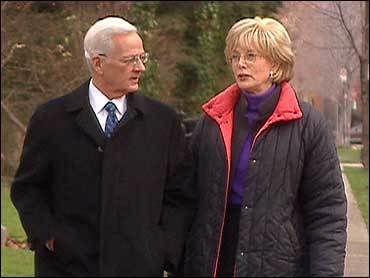 Former Treasury Secretary Paul O'Neill is the main source for an upcoming book about the Bush White House, "The Price of Loyalty
"From the very beginning, there was a conviction that Saddam Hussein was a bad person and that he needed to go." ~Paul O'Neill
CBS reports:
A year ago, Paul O'Neill was fired from his job as George Bush's Treasury Secretary for disagreeing too many times with the president's policy on tax cuts.
Now, O'Neill - who is known for speaking his mind - talks for the first time about his two years inside the Bush administration. His story is the centerpiece of a new book being published this week about the way the Bush White House is run.
Entitled "The Price of Loyalty," the book by a former Wall Street Journal reporter draws on interviews with high-level officials who gave the author their personal accounts of meetings with the president, their notes and documents. [Simon and Schuster, the book's publisher, and CBSNews.com, are both units of Viacom.]
But the main source of the book was Paul O'Neill. Correspondent Lesley Stahl reports.
Paul O'Neill says he is going public because he thinks the Bush Administration has been too secretive about how decisions have been made.
Will this be seen as a “kiss-and-tell" book?
“I've come to believe that people will say damn near anything, so I'm sure somebody will say all of that and more,” says O’Neill, who was George Bush's top economic policy official.
In the book, O’Neill says that the president did not make decisions in a methodical way: there was no free-flow of ideas or open debate.
At cabinet meetings, he says the president was "like a blind man in a roomful of deaf people. There is no discernible connection," forcing top officials to act "on little more than hunches about what the president might think."
This is what O'Neill says happened at his first hour-long, one-on-one meeting with Mr. Bush: “I went in with a long list of things to talk about, and I thought to engage on and as the book says, I was surprised that it turned out me talking, and the president just listening … As I recall, it was mostly a monologue.”
He also says that President Bush was disengaged, at least on domestic issues, and that disturbed him. And he says that wasn't his experience when he worked as a top official under Presidents Nixon and Ford, or the way he ran things when he was chairman of Alcoa.
O'Neill readily agreed to tell his story to the book's author Ron Suskind – and he adds that he's taking no money for his part in the book.
Suskind says he interviewed hundreds of people for the book – including several cabinet members.
O'Neill is the only one who spoke on the record, but Suskind says that someone high up in the administration – Donald Rumsfeld - warned O’Neill not to do this book.
Was it a warning, or a threat?
“I don't think so. I think it was the White House concerned,” says Suskind. “Understandably, because O'Neill has spent extraordinary amounts of time with the president. They said, ‘This could really be the one moment where things are revealed.’"
Not only did O'Neill give Suskind his time, he gave him 19,000 internal documents.
“Everything's there: Memoranda to the President, handwritten "thank you" notes, 100-page documents. Stuff that's sensitive,” says Suskind, adding that in some cases, it included transcripts of private, high-level National Security Council meetings. “You don’t get higher than that.”
And what happened at President Bush's very first National Security Council meeting is one of O'Neill's most startling revelations.
“From the very beginning, there was a conviction, that Saddam Hussein was a bad person and that he needed to go,” says O’Neill, who adds that going after Saddam was topic "A" 10 days after the inauguration - eight months before Sept. 11.
“From the very first instance, it was about Iraq. It was about what we can do to change this regime,” says Suskind. “Day one, these things were laid and sealed.”
As treasury secretary, O'Neill was a permanent member of the National Security Council. He says in the book he was surprised at the meeting that questions such as "Why Saddam?" and "Why now?" were never asked.
"It was all about finding a way to do it. That was the tone of it. The president saying ‘Go find me a way to do this,’" says O’Neill. “For me, the notion of pre-emption, that the U.S. has the unilateral right to do whatever we decide to do, is a really huge leap.”
And that came up at this first meeting, says O’Neill, who adds that the discussion of Iraq continued at the next National Security Council meeting two days later.
He got briefing materials under this cover sheet. “There are memos. One of them marked, secret, says, ‘Plan for post-Saddam Iraq,’" adds Suskind, who says that they discussed an occupation of Iraq in January and February of 2001.
Based on his interviews with O'Neill and several other officials at the meetings, Suskind writes that the planning envisioned peacekeeping troops, war crimes tribunals, and even divvying up Iraq's oil wealth.
He obtained one Pentagon document, dated March 5, 2001, and entitled "Foreign Suitors for Iraqi Oilfield contracts," which includes a map of potential areas for exploration.
“It talks about contractors around the world from, you know, 30-40 countries. And which ones have what intentions,” says Suskind. “On oil in Iraq.”
During the campaign, candidate Bush had criticized the Clinton-Gore Administration for being too interventionist: "If we don't stop extending our troops all around the world in nation-building missions, then we're going to have a serious problem coming down the road. And I'm going to prevent that."
“The thing that's most surprising, I think, is how emphatically, from the very first, the administration had said ‘X’ during the campaign, but from the first day was often doing ‘Y,’” says Suskind. “Not just saying ‘Y,’ but actively moving toward the opposite of what they had said during the election.”
The president had promised to cut taxes, and he did. Within six months of taking office, he pushed a trillion dollars worth of tax cuts through Congress.
But O'Neill thought it should have been the end. After 9/11 and the war in Afghanistan, the budget deficit was growing. So at a meeting with the vice president after the mid-term elections in 2002, Suskind writes that O'Neill argued against a second round of tax cuts.
“Cheney, at this moment, shows his hand,” says Suskind. “He says, ‘You know, Paul, Reagan proved that deficits don't matter. We won the mid-term elections, this is our due.’ … O'Neill is speechless.”
”It was not just about not wanting the tax cut. It was about how to use the nation's resources to improve the condition of our society,” says O’Neill. “And I thought the weight of working on Social Security and fundamental tax reform was a lot more important than a tax reduction.”
Did he think it was irresponsible? “Well, it's for sure not what I would have done,” says O’Neill.
The former treasury secretary accuses Vice President Dick Cheney of not being an honest broker, but, with a handful of others, part of "a praetorian guard that encircled the president" to block out contrary views. "This is the way Dick likes it," says O’Neill.
Meanwhile, the White House was losing patience with O'Neill. He was becoming known for a series of off-the-cuff remarks his critics called gaffes. One of them sent the dollar into a nosedive and required major damage control.
Twice during stock market meltdowns, O'Neill was not available to the president: He was out of the country - one time on a trip to Africa with the Irish rock star Bono.
“Africa made an enormous splash. It was like a road show,” says Suskind. “He comes back and the president says to him at a meeting, ‘You know, you're getting quite a cult following.’ And it clearly was not a joke. And it was not said in jest.”
Suskind writes that the relationship grew tenser and that the president even took a jab at O'Neill in public, at an economic forum in Texas.
The two men were never close. And O'Neill was not amused when Mr. Bush began calling him "The Big O." He thought the president's habit of giving people nicknames was a form of bullying. Everything came to a head for O'Neill at a November 2002 meeting at the White House of the economic team.
“It's a huge meeting. You got Dick Cheney from the, you know, secure location on the video. The President is there,” says Suskind, who was given a nearly verbatim transcript by someone who attended the meeting.
He says everyone expected Mr. Bush to rubber stamp the plan under discussion: a big new tax cut. But, according to Suskind, the president was perhaps having second thoughts about cutting taxes again, and was uncharacteristically engaged.
“He asks, ‘Haven't we already given money to rich people? This second tax cut's gonna do it again,’” says Suskind.
“He says, ‘Didn’t we already, why are we doing it again?’ Now, his advisers, they say, ‘Well Mr. President, the upper class, they're the entrepreneurs. That's the standard response.’ And the president kind of goes, ‘OK.’ That's their response. And then, he comes back to it again. ‘Well, shouldn't we be giving money to the middle, won't people be able to say, ‘You did it once, and then you did it twice, and what was it good for?’"
But according to the transcript, White House political advisor Karl Rove jumped in.
“Karl Rove is saying to the president, a kind of mantra. ‘Stick to principle. Stick to principle.’ He says it over and over again,” says Suskind. “Don’t waver.”
In the end, the president didn't. And nine days after that meeting in which O'Neill made it clear he could not publicly support another tax cut, the vice president called and asked him to resign.
With the deficit now climbing towards $400 billion, O'Neill maintains he was in the right.
But look at the economy today.
“Yes, well, in the last quarter the growth rate was 8.2 percent. It was terrific,” says O’Neill. “I think the tax cut made a difference. But without the tax cut, we would have had 6 percent real growth, and the prospect of dealing with transformation of Social Security and fundamentally fixing the tax system. And to me, those were compelling competitors for, against more tax cuts.”
While in the book O'Neill comes off as constantly appalled at Mr. Bush, he was surprised when Stahl told him she found his portrait of the president unflattering.
“Hmmm, you really think so,” asks O’Neill, who says he isn’t joking. “Well, I’ll be darned.”
“You're giving me the impression that you're just going to be stunned if they attack you for this book,” says Stahl to O’Neill. “And they're going to say, I predict, you know, it's sour grapes. He's getting back because he was fired.”
“I will be really disappointed if they react that way because I think they'll be hard put to,” says O’Neill.
Is he prepared for it?
“Well, I don't think I need to be because I can't imagine that I'm going to be attacked for telling the truth,” says O’Neill. “Why would I be attacked for telling the truth?”
White House spokesman Scott McClellan was asked about the book on Friday and said "The president is someone that leads and acts decisively on our biggest priorities and that is exactly what he'll continue to do."
Wednesday, January 7, 2004
| [+/-] |
Amending U.S. Beef Business |
The Christian Science Monitorreports:
"There are two things you don't want to see being made," German Chancellor Otto von Bismarck reputedly said. "Sausage and legislation." The mad-cow episode in the United States illustrates that quip as no other story in recent memory.
Americans today are learning far more than they ever wanted to know about the process of turning cows into thousands of products that even a hard-core vegan would have trouble avoiding - cosmetics, pharmaceuticals, fire-extinguisher foam, lubricants, the glue that holds plywood together. Not to mention the steaks, roasts, hamburger, and other meat items that human carnivores regularly devour.
The process is necessarily violent and mechanical, involving slicing, grinding, and high-pressure blasting and compression. It's much safer than it was years ago - both for slaughterhouse and meat- processing workers, as well as for consumers. But it has also run the risk of mixing the potentially disease-causing parts of the cow (brain, spinal cord, and parts of the intestine) into the muscle meat and other food products - including sausage - that many Americans eat every day. Meat from the infected Holstein was mixed in with 20,000 pounds from other cows before being shipped to market.
Some doctors now suspect that people diagnosed with Alzheimer's may in fact have the human version of the neurological disease, which incubates years before appearing in the form of mental and physical degeneration. No one knows for sure if there is any possible link to animals with bovine spongiform encephalopathy or BSE (the scientific name for mad-cow disease), however. That's because until now the inspection system for cattle headed for the slaughterhouse has been relatively minimal.
The other part of von Bismarck's comment has also been illustrated in the mad-cow story. That's the way federal laws have been crafted to deal with a $175 million industry that feeds millions here and abroad while providing hundreds of thousands of jobs.
Cattle interests have given more than $20 million to political campaigns since 1990, according to the Center for Responsive Politics. Although the GOP has received about 80 percent of this largess, Democrats and Republicans alike - most from farm and ranching states - have been recipients.
Meanwhile, many top Bush appointees in the US Agriculture Department (USDA) come from the industry. Secretary Ann Veneman's chief of staff is the former chief lobbyist for the National Cattlemen's Beef Association, one of Washington's most powerful special-interest groups. The department's spokeswoman was the trade group's director of public relations.
Some say that having former beef- industry officials in senior positions brings a high level of expertise to the job. But critics claim that industry influence has led to the following: Defeats for federal-budget increases aimed at ramping up inspections. Loopholes in the Food and Drug Administration's 1997 ban on the use of cattle remains as an ingredient in feed for ruminants (cows, goats, and sheep). And a refusal - until now - to restrict the practice of allowing "downed" cattle (those injured or too sick to stand) as part of the food chain.
Five years after the 1997 ban, the General Accounting Office (the investigative arm of Congress) criticized the FDA for laxness in policing the use of cattle remains to feed other livestock.
"BSE may be silently incubating somewhere in the United States," the GAO warned in 2002. "If that is the case, then FDA's failure to enforce the feed ban may already have placed US herds and, in turn, human food supply at risk."
Critics say the USDA in particular has a conflict of interest. It's supposed to promote US agriculture while also protecting the health and safety of those who consume farm products.
Up until now, it seems the weight of this balance has favored the industry. But the USDA's quick response to the mad-cow scare is seen by all parties as moving the political scale back toward consumer protection. Last week, the USDA moved to restrict "mechanically separated beef" and ban the use of "downed" cattle for human food. And this week, federal officials announced plans to destroy 450 calves in Sunnyside, Wash., including a calf born to the heifer infected with BSE.
"Excluding cattle brains, eyes, spinal cord, and guts from the human food supply is certainly a step in the right direction," says Michael Greger, a medical doctor who studies BSE for animal rights and consumer groups. "Unfortunately," he adds, "the US still feeds those potentially risky tissues to pigs, pets, and poultry."
At the same time - more bad news for those who'd rather not know the origins of their sausage - the litter from chicken coops (grain, feathers, and manure) still can be swept up and fed to cattle under the new regulations. "The major concern in feeding rendered cattle remains to other animals," says Dr. Greger, "is that the cattle remains may directly, or indirectly, find their way back into cattle feed, which could potentially spark a British-style outbreak of mad-cow disease."
Friday, January 2, 2004
| [+/-] |
The Battle for Iraqi Oil |
In The Nation, Aram Roston reports:
David Horgan opposed the war on Iraq, but in other ways he is an antiwar protester's worst nightmare: The oil executive freely admits that he is in the bombed-out country "for greed and glory." His goal is a mammoth oil deal for the small Irish company he works for, Petrel Resources. Still, amid the shooting and kidnappings and chaos, the wiry 43-year-old Irishman says he will be satisfied with even crumbs. "A crumb in Iraq," he says eagerly, eyes widening, "would be hundreds of millions of dollars at present value. It is high risk, in every sense, but it is an excellent play."
Horgan is no newcomer to Iraq and to this particular "play." He dealt with the administration of Saddam Hussein and he is willing to do business with whoever comes next, even a US puppet, as he believes it will be. "We'll deal with the puppet," he said one day at the Baghdad Sheraton, as a group of Nepalese Gurkha warriors clomped past loaded with body armor and rifles. "Any puppet will have exactly the same objectives and worries. His first priority is to get the oil flowing." That may sound cynical, but at least it sounds honest--which is more, as Horgan points out, than the Bush Administration can say about its justification for invading Iraq.
A little time with Horgan in Baghdad opens up a window on one of the most important but confusing elements of postwar Iraq: the upcoming battle for control of its vast oil reserves. Before the war, US Defense Secretary Donald Rumsfeld famously announced that this war had "literally nothing to do with oil," while antiwar protesters chanted "no blood for oil," in the streets. Since then there has been very much blood, and surprisingly little oil. New exploration of Iraq's untapped fields is at a virtual standstill; the repair of the old fields has been notoriously slow. A little-known statistic: According to international oil traders, the United States is currently importing 500,000 barrels of Iraqi oil per day (a type of oil charmingly called "Basrah Light"), down from more than 700,000 per day last February, before the war started. I caught up with Horgan one day outside the Iraqi Oil Ministry. He was dressed in a gray suit that flapped in the dry hot wind. More and more, amid the chaos, power over oil seems to be slipping back into the hands of the Iraqi bureaucracy. The ministry is an eleven-story edifice of the typical squat Stalinist design, the color of desert dirt. The place is bristling with coils of razor wire slung like giant slinkies, and a machine-gun bunker protected by sandbags is set on each side of the entrance. Inside it has the bustling ambience of a run-down betting parlor. Most maps and contracts are off-limits, and mustached bodyguards lounge about on the plush executive floor, with pistols of various makes and calibers in their belts.
But there are rarities here, tidbits of information that would make an oilman's nose twitch. The well-lit library is full of dusty tomes with titles like The Sedementology of the Euphrates Formation and Floraminera and Biostratratology of Some Late Cretacean Sediment of Northern Iraq. That day Horgan was dropping off a series of seismic readings he had carried back with him to Ireland from the last visit, and he was picking up some large-scale maps, which, he said, "had heretofore been military secrets, believe it or not."
Perhaps Horgan finds it easy to do business in Iraq because the bombed-out buildings of Baghdad and the nightly shootings and explosions are somewhat reminiscent of the Belfast of his youth. He and the other children would throw rocks at the British soldiers, he said. "Sometimes they'd charge at you in the armored vehicles and scatter the kids." In 1999, Horgan and other Petrel executives made their first visit to Baghdad, where they joined the herd of international companies tugging at Saddam Hussein's sleeve. Sure, UN sanctions were in place, but companies were jostling for position when the walls eventually would come tumbling down. The Iraqis were glad to talk. "More than eighty-five companies were negotiating with us at that time," recalled Ali Hammadi, an executive at the Iraqi Oil Ministry. In an interview, he dressed in a well-ironed blue shirt and sat behind an expansive wooden desk. Through the window was a view of the sprawling derelict Iraqi Olympic compound once headed by Saddam Hussein's son Uday. "We had plans, tremendous plans," Hammadi said, waving his hand to show the size. Hammadi has a cosmopolitan air and wears tinted glasses. "I negotiated with Russians, Italians, Germans and Canadians." Even American firms pursued their prospects, through European interests, as did the Chinese, the Indonesians and the Indians.
Ali Hammadi says many of the shoppers in this international oil bazaar were interested in a vast region known only as the "Western Desert"--inhabited by nomadic tribesman and virtually unexplored. The Western Desert is what one international oil consultant, his voice mockingly falling to a worshipful murmur, called the "Holy Grail" of the oil industry. Iraqi oil is miraculously cheap to pump out of the ground, costing about a dollar a barrel. Iraqis in general seem to have a touch of pride about their oil. "It comes up to the ground," one man told me, smiling. "I've seen it seeping up." Another one laughed one day: "You put a pipe in the ground and oil comes out." The chief wells are to the North, near Kirkuk, where sabotage keeps production down, and to the South, near Basra. But the Western Desert offers untold riches. Horgan says Petrel Resources reached an agreement under Saddam to explore a chunk of the Western Desert known as Block 6. It was, he says, signed by a high-ranking Iraqi official, although, crucially, it was not ratified by Saddam Hussein. "We think it's a valid agreement," he insists.
Iraq's current American rulers are studiously noncommittal about contracts signed under Saddam. For to understand Iraqi oil development, it's clear that there is not just the one Iraqi Oil Ministry but a parallel "shadow" ministry run by American advisers. To get to the Coalition Provisional Authority's shadow ministry of oil requires a trip to the "Green Zone"--a giant sprawl smack in the middle of Baghdad. Here, one would have no idea that Iraq is populated by Iraqis. At the perimeter, an Iraqi man manages to wander through toting a shopping bag with bootleg pornographic DVDs for sale, but on this compound air-conditioned minibuses take US contractors and soldiers and civilian government officials to their work sites. There is a three-mile running track, a swimming pool, a fitness center, even a barber shop and beauty salon run by Halliburton's Kellogg Brown & Root. And deep inside Saddam Hussein's former palace, where the top coalition supervisors have burrowed in, is the bustling air-conditioned office where the American advisers run their oil operation. They are on personal-services contracts, like hockey players who have signed to a team. One man, who spoke on condition of anonymity, dismissed Horgan's claims of an agreement with a shake of his head. "A lot of people believe they have agreements," he said. Which is to say, in reality, that no one knows what will happen to the deals made before the invasion. The CPA says that any contract that violated the old UN rules is illegal, but that leaves a lot of wiggle room.
David Horgan doesn't care what the coalition thinks in any case. "The weird thing is," he said, "the CPA, they have no clue. They never go anywhere. They never go out. We ignore them. Why would we even talk to the coalition?" He has never ventured into the Green Zone. Much of the world thought the war would result in a flurry of business activity, with the world's oil giants sweeping through Iraq like a killer whale through a school of fat salmon. That didn't happen. One reason is that it's probably the most dangerous place in the world for an oil executive right now. The Exxons and the Shells and BPs don't want to deal with the physical risk to their executives. In the barricaded hotels that house expatriates there are a swarm of former Gurkhas, French Foreign Legionnaires and Special Forces veterans trained in every army between New Zealand to the Netherlands. Still, the supply doesn't meet the threat. Horgan is one of the few Western oilmen to be found in Iraq, and he shuns the security guards, whom he dismisses as goons and mercenaries. "They're going to draw attention to you. The best thing is just to use humor, make eye contact with people, smile at them."
Horgan's happy theory is that the rebels who have been attacking US troops and their allies use discretion: "The working assumption is that there's some sort of discipline and control over these rebels and they distinguish between friendly neutrals and coalition nationals." He nodded, "That's our working assumption."
But an even more significant reason the big boys from the oil industry are staying clear is the legal black hole into which they'd be stepping. After all, until there is a legitimate sovereign government in Iraq, it is unclear whether any new long-term oil exploration deals will stand. As one American attached to Paul Bremer's shadow ministry told me one day, "We're not a legitimate government." That means most of that untouched oil underneath the desert sand is off-limits--and all the oil giants can only stare, like alcoholics looking at liquor bottles in a shuttered shop. No one, at present, has the shop keys.
Sunday, December 28, 2003
| [+/-] |
The Relatively Charmed Life of Neil Bush |
Despite Silverado and Voodoo, Fortune Still Smiles on the President's Brother
The Washington Post reports:
Ah, it's nice to be Neil Bush.
When you're Neil Bush, rich people from all over the world are eager to invest money in your businesses, even though your businesses have a history of crashing and burning in spectacular fashion.
When you're Neil Bush, you'll be sitting in a hotel room in Thailand or Hong Kong, minding your own business, when suddenly there's a knock at the door. You answer it and a comely woman strolls in and has sex with you.
Life sure is fun when you're Neil Bush, son of one president, brother of another.
Just how much fun was revealed in a deposition taken last March, during Bush's very nasty divorce battle. Asked by his wife's attorney whether he'd had any extramarital affairs, Bush told the story of his Asian hotel room escapades.
"Mr. Bush," said the attorney, Marshall Davis Brown, "you have to admit that it's a pretty remarkable thing for a man just to go to a hotel room door and open it and have a woman standing there and have sex with her."
"It was very unusual," Bush replied.
Actually, it wasn't that unusual. It happened at least three or four times during Bush's business trips to Asia, he said: "I don't remember the exact number."
"Were they prostitutes?" asked Brown.
"I don't -- I don't know," Neil replied.
"Did you pay them?"
"No."
Not surprisingly, the revelation made headlines around the world. Equally unsurprisingly, the sex story overshadowed the curious financial revelations that came out in the same deposition.
In 2002, for instance, Bush signed a consulting contract with Grace Semiconductor -- a Shanghai-based company managed in part by the son of former Chinese president Jiang Zemin. Bush's contractual duties consist solely of attending board meetings and discussing "business strategies." For this, he is to be paid $2 million in company stock over five years, plus $10,000 for every board meeting he attends.
"Now, you have absolutely no educational background in semiconductors, do you Mr. Bush?" Brown asked.
"That's correct," Bush responded.
Meanwhile, back home in Texas, Bush serves as co-chairman of a company called Crest Investment. Crest, he revealed in the deposition, pays him $60,000 a year to provide "miscellaneous consulting services."
"Such as?" Brown asked.
"Such as answering phone calls when Jamal Daniel, the other co-chairman, called and asked for advice," Bush replied.
Ah, it's nice to be Neil Bush, who seems to be living the lifestyle immortalized in those famous Dire Straits lyrics: "Money for nothin' and chicks for free."
Unique, Relatively Speaking
Neil Bush is the latest manifestation of a long tradition in American life -- the president's embarrassing relative.
There was Sam Houston Johnson, who used to get drunk and start blabbing to the press until his brother, Lyndon, sicced the Secret Service on him.
And Donald Nixon, who dreamed of founding a fast-food chain called Nixonburgers and who accepted, but never repaid, a $200,000 loan from billionaire Howard Hughes. His brother, Dick, had the Secret Service tap his phone.
And Billy Carter, who drank prodigious quantities of beer, authored a book called "Redneck Power" and took $200,000 from the government of Libya.
And Roger Clinton, a party animal who spent a year in prison for cocaine dealing and who later appeared in a movie called "Pumpkinhead II" playing a pol called Mayor Bubba.
But Neil Bush has surpassed them all. Bush has done something that no other American has ever accomplished: He has become the embarrassing relative of not one but two presidents.
In the late '80s and early '90s, Bush embarrassed his father, George H.W. Bush, with his shady dealings as a board member of the infamous Silverado Savings and Loan, whose collapse cost taxpayers $1 billion.
Now Bush has embarrassed his brother George W. Bush with a made-for-the-tabloids divorce that featured paternity rumors, a defamation suit and, believe it or not, allegations of voodoo.
And Bush's career as an embarrassment may not be over. At 48, he is still relatively young and, judging from his deposition, still virile and vigorous. If his brother Jeb, governor of Florida, is ever elected president, Neil could conceivably embarrass him, too, pulling off an unprecedented hat trick of presidential embarrassment.
Obviously, it's time for a mid-career retrospective on the life and work of Neil Bush.
Or maybe not. His father, mother, brothers and ex-wife all declined to be interviewed. White House spokeswoman Claire Buchan uttered a curt "no comment."
Neil also declined to be interviewed, although he agreed to respond to e-mailed questions, provided they did not pertain to his divorce. He reports that he's too involved with Ignite!, his educational software company, to pay much attention to media coverage of his misadventures.
"Seriously," he writes via e-mail, "I'm too busy being a good father and promoting Ignite! to worry about that kind of thing."
The Wheeler-Dealer
Neil Mallon Bush was born in 1955 and named after his grandfather's Yale buddy Neil Mallon, the corporate CEO who gave George H.W. Bush his first job in the Texas oil business.
The third of the five Bush children, Neil was so thoughtful and helpful that siblings dubbed him "Mr. Perfect."
But Neil had trouble reading, and a counselor at St. Albans prep school in Washington told his mother he might not graduate. His problem was dyslexia, and his mother spent countless weekends taking him to special reading lessons.
It worked. He graduated, then went to Tulane University, where he received a degree in international economics and, in 1979, an MBA. That year, while working on his father's unsuccessful campaign for the 1980 Republican presidential nomination, Neil met Sharon Smith, whom his mother later described in her memoirs as "a darling young schoolteacher from New Hampshire."
They married in 1980 and moved to Denver, where Neil got a $30,000 job negotiating mineral leases for Amoco. Denver was an oil-fueled boomtown, and soon the handsome son of the vice president was charming the swells at the soirees of Denver's social set.
In 1982, Neil and two co-workers quit and formed an oil exploration company, JNB Exploration. His partners were geologists; Neil was in charge of raising money.
"Neil knew people because of his name," one partner, Evans Nash, said later.
Among the people Neil knew were two high-powered Denver real estate barons -- Bill Walters and Ken Good. Walters was a flamboyant Rolex-wearing, Rolls-driving mogul known as "the Donald Trump of Denver." Good owned the largest home in Colorado, a $10 million mansion with a special plumbing system that pumped Scotch, gin and vodka throughout the house.
After listening to Bush's sales pitch, Walters invested $150,000 and set up a $1.75 million line of credit for JNB at a bank he owned. Good invested $10,000 and pledged loans worth $1.5 million. Good also lent Bush $100,000 to gamble in the commodities market and said Neil didn't have to pay it back unless he made money.
"It was," Bush later admitted, "an incredibly sweet deal."
He set up an office, decorated it with a bust of his father and paid himself $66,000 a year -- double his Amoco salary. But JNB floundered. In five years, the company drilled 26 wells in four states, but it never found a drop of exploitable oil. JNB would have gone bankrupt if not for the money from Walters and Good.
But Bush was able to help the men who helped him. In 1985 he joined the board of Silverado Savings and Loan, which had already lent millions to Walters and Good. Over the next three years, Silverado lent an additional $106 million to Walters and $35 million to Good, although the two men's real estate empires were collapsing.
Good used some of that money to buy JNB, although it was still losing money. He raised Bush's salary to $120,000 and awarded him a bonus of $22,000. He also hired Bush as a director of one of his companies, at a salary of $100,000.
Neither Good nor Walters ever repaid a nickel of their Silverado loans, and in 1988 Silverado went belly up, leaving U.S. taxpayers holding the bag for $1.3 billion in debts.
Picking through the wreckage, regulators from the federal Office of Thrift Supervision concluded in 1991 that Bush's deals with Good and Walters while serving on Silverado's board constituted "multiple conflicts of interest." Bush became a public symbol of the $500 billion savings and loan scandal. Protesters picketed his home and pasted mock wanted posters around Washington: "Jail Neil Bush."
Bush proclaimed his innocence, declaring at a news conference that "self-serving regulators" were persecuting him because he was the president's son. But when he appeared before the House Banking Committee in 1990, he admitted that some of his deals looked "a little fishy."
Ultimately, Bush paid $50,000 as his part of a federal lawsuit against Silverado and was reprimanded by the OTS. Good and Walters ended up declaring bankruptcy, and JNB, which had never found oil or made money, quietly perished.
Today, Bush maintains that he did nothing wrong.
"I happened to be one of hundreds of other American businessmen and women who served as an outside director on the board of a savings and loan institution that failed during the 1980s," he writes in an e-mail. "I regret that the institution's failure cost taxpayers so much money."
Strictly Business
During his high-rolling days in Denver, Neil had told reporters that he was thinking of running for Congress. At home, he spoke with his brothers about running for governor.
"They'd talk about how GW was going to run for governor of Texas and Jeb would run for governor of Florida and Neil would run for governor of Colorado," recalls Douglas Wead, a Bush family friend who served as a special assistant in the first Bush White House. "The family would have bet on Jeb, but if you just observed their personalities, you'd say Neil."
Neil was the most charming of the Bush brothers, Wead says. "He's relaxed, he's funny, he's a better speaker than anybody in the family. . . . He could easily have been a congressman."
The Silverado scandal killed Neil's dream of a political career. But, thanks to his father's friends, it had little effect on his business career.
Thomas "Lud" Ashley, an ex-congressman and bank lobbyist, "came to the rescue," Barbara Bush wrote in her memoirs, and raised money to pay Neil's legal bills.
"I'm a family friend," Ashley explains today, "and he was in real difficulty."
With Silverado and JNB both belly up, Bush started Apex Energy, a methane gas exploration company. He invested $3,000 of his own money and got $2.3 million from two companies run by his father's friend Louis Marx, heir to the Marx toy fortune.
Neil used Marx's money to pay himself a salary of $160,000, and he sold a Wyoming gas lease that he owned to Apex for $150,000. The lease proved worthless -- no methane there. In fact, Apex, like JNB, never found anything worth pumping.
After two years, Apex went broke. Bush had received more than $300,000 in salary but Marx got zip, and the Small Business Administration, which had backed Marx's investments, was left holding the empty bag.
An investigation by the House Small Business Committee found nothing "illegal or improper" but noted that a $2 million federally guaranteed investment to an applicant who risked only $3,000 of his own money seemed like "a very high leveraging of funds."
A few months after Apex crashed in 1991, Bush was rescued by another of his father's rich friends. Bill Daniels, a multimillionaire cable TV baron who raised $330,000 in 1987 for George H.W. Bush's presidential campaign, hired Neil to a $60,000 job at TransMedia Communications.
"Anyone who hires Neil Bush is going to get some heat," Daniels said at the time, "but somebody had to do it."
TransMedia was headquartered in Texas, so Bush sold his $500,000 house in Denver and moved Sharon and their three kids -- Lauren, Pierce and Ashley -- to Houston.
Peter Wehner of Colorado Business magazine called TransMedia to find out exactly what Bush would be doing for the company.
"I'm trying to find a title for him, if you want to know the truth," said Dick Barron, TransMedia's president. "He'll be learning the business, basically."
Traveling Salesman
In April 1993, shortly after leaving the White House, George H.W. Bush flew to Kuwait, accompanied by his wife, his sons Marvin and Neil, and his former secretary of state, James Baker.
The ex-president received a hero's welcome, a medal from the emir and an honorary degree from the university. After he left, Baker and Neil Bush went to work, attempting to win contracts from the Kuwaiti government. Ultimately, Bush's efforts failed to bear fruit. But over the next decade, he frequently traveled to the Middle East, Europe and Asia to negotiate deals and raise capital for various businesses. In 2000 he made $1.3 million, according to his deposition testimony -- $642,500 of it paid as a commission for introducing an Asian investor to the owners of an American high-tech company.
During his travels, he met with several Arab princes and enjoyed a private dinner with Jiang Zemin, then China's president, who serenaded Bush with a military song.
"I probably have access to people who wouldn't meet with a development-stage company," Bush told an Associated Press reporter in 2002, "but I feel I'm held to a higher standard."
For the last several years, Bush's main business interest has been Ignite!, the educational software company he co-founded in 1999. To fund Ignite!, Bush has raised $23 million from U.S. investors (including his parents), as well as businessmen from Taiwan, Japan, Kuwait, the British Virgin Islands and the United Arab Emirates, according to documents filed with the Securities and Exchange Commission.
Last year, Ignite! also entered into a partnership with a Mexican company, Grupo Carso Telecom. The partnership enabled Ignite! to lay off half of its 70 employees and outsource their jobs to Mexico.
"That's turned out to be great," says Ignite! President Ken Leonard.
But Ignite!, which pays Bush $180,000 a year, is not his only business interest. Last year, Winston Wong -- a Taiwanese businessman and an investor in Ignite! -- signed Bush to that $2 million consulting deal with Grace Semiconductor, the company that Wong founded in partnership with the Chinese government. Bush has not yet received any compensation because the contract calls for him to be paid after board meetings and, he said by e-mail, "I was unable to attend their one and only board meeting."
A spokesman for Grace declined to comment.
Kevin Phillips, historian and author of the forthcoming book "American Dynasty: Aristocracy, Fortune and the Politics of Deceit in the House of Bush," sees Neil Bush as a man who has made a career of cashing in on his famous name.
"He's incorrigible," Phillips says. "He seems to be crawling through the underbelly of crony capitalism."
Bush vehemently denies that contention. "I have never used my family name to 'cash-in,' " Bush wrote by e-mail. "Unfortunately, such ridiculous charges come with the territory of coming from a famous and public family."
Fire and Disdain
"We create these prisonlike environments," Neil Bush said, "then we take our hunter-warrior types and label them attention-deficit disordered and put them on drugs."
It was the spring of 2002 and Bush was speaking about education at Whitney High School in Cerritos, Calif., considered one of the best public schools in America. He was touting Ignite!, which was being tested there. In the audience was writer Edward Humes, taking notes for his book on Whitney, "School of Dreams," published last summer.
Ignite! is designed, Bush said, to make learning fun for "hunter-warrior" kids who don't like reading. It's a computer curriculum that uses music, graphics and animation to teach middle school kids.
The program's first course -- eighth-grade American history -- was tested over the last two years in schools in a dozen states. Available commercially for the first time this year, it is being used by about 40,000 students in 120 school districts, mostly in Texas, at a cost of about $30 per pupil.
One school that uses Ignite! is Mendez Middle, a predominantly poor and Hispanic school in Austin. After three years of using the program, says Principal Connie Barr, the number of students who passed the state's eighth-grade history test has risen from 50 percent to 87 percent. "That's incredible," says Barr. "It doesn't replace the teacher or the textbook. What it does is give the teacher another way to deliver the information."
However, Ignite! has been attacked by other educators for dumbing down history. Among its controversial aspects is a lesson that depicts the Seminole Wars in a cartoon football game -- "the Jacksons vs. the Seminoles" -- the animated Indians smashing helmets with animated white settlers. The Constitutional Convention is taught in a rap song:
It was 55 delegates from 12 states
Took one hot Philadelphia summer to create
A perfect document for their imperfect times
Franklin, Madison, Washington -- a lot of the cats
Who used to be in the Continental Congress way back.
Ignite! is working well, Bush wrote in an e-mail: "Teachers and students have given anecdotal feedback that confirms the powerful impact our program is having on student achievement, student focus and attitudes, and teacher success in reaching all of their students."
But at Whitney reviews were less laudatory. "The kids felt pretty strongly that what this was about was lowering the bar," says Humes.
Humes wasn't impressed, either. "There was a lot of rhyming and games," he says. "It reminded me of what my son uses -- but he's in kindergarten."
When Bush spoke at Whitney, several students began arguing with him.
"He was very surprised," Humes recalls. "You had to see the look on his face when one young woman got up and said she liked calculus. He said it was useless. This is the branch of mathematics that makes space travel possible, and he said it was useless."
Tabloid Heaven
Even before the voodoo story and the paternity rumor and the defamation suit about the paternity rumor, Neil Bush's divorce was a candidate for the Nasty Breakup Hall of Fame.
It all began in 2002, when Bush informed his wife -- via e-mail -- that he no longer loved her and wanted a divorce.
At least that's the way Sharon Bush told the story back when she was still talking to reporters. Neil has never discussed the divorce in public, except in that now-famous deposition, in which he described his marriage as "loveless" with "no affection" and "very little sexual activity over the past 10 or 12 years."
Sharon, 51, claimed she was shocked to learn that her husband of 22 years had taken up with Maria Andrews, 40, a volunteer helping Neil's mother, former first lady Barbara Bush, with her correspondence. Andrews is the ex-wife of a Houston oil executive and the mother of three children.
Andrews is "very pretty -- petite is the best word for her," says John Spalding, a Houston lawyer and a friend of Neil Bush's. "She's just great, and she and Neil are great together."
Sharon Bush did not want a divorce, particularly on her husband's terms, which she considered insufficiently generous. She launched a counterattack by hiring New York PR whiz Lou Colasuonno, a man who knows tabloids, having served as the editor of both the New York Post and the New York Daily News.
Colasuonno's opening gambit was a sure-fire attention-getter: In April 2003, he announced that Sharon was seeking a publisher for a tell-all book about the Bush family.
"This is a woman who has had some wonderful times with the Bushes," Colasuonno told the New York Observer. "But she has seen the dark side, too. And she intends to provide a view of the family that everyone will want to read."
Next, Colasuonno arranged -- and publicized -- a lunch date between Sharon and Kitty Kelley, the celebrity biographer from Hell, who is working on a book on the Bush dynasty.
"I learned a great deal about the Bush family from Sharon," Kelley told The Washington Post after the lunch. "She told me he's only offering $1,000 a month in support -- take it or leave it. . . . She said that when she told Neil she needs more to live on, Neil Bush said, 'Just get remarried.' Sharon was sobbing as she told me, 'Kitty, I just won't sell my body!' "
Whew! After that, Colasuonno says, Neil increased his offer considerably, and the final settlement gave Sharon about $30,000 a year in alimony, plus $750 a month for her two minor children, Pierce, 17, and Ashley, 14. (The couple's oldest child, Lauren -- a Princeton student and a fashion model -- is 19.)
But on the day the divorce was to be finalized -- April 28 -- Sharon told the judge that she wasn't sure she wanted to go through with it. "I believe in working through a marriage," she testified, "and I don't believe in divorce with three children."
Then, under oath, Sharon asked the judge to order "a DNA sampling of Maria Andrews's youngest child," a 2-year-old boy, because she "had cause for believing that it could possibly be his [Neil's] child."
The judge denied the request. The divorce became final that day, but the battle raged on.
In July, Sharon appeared on Houston's KHOU-TV News, telling her tale of woe. Somehow the station obtained a videotape of Neil Bush's deposition and aired juicy bits from his account of his Asian hotel exploits.
That upped the ante in the publicity war. Soon, Neil's friend Spalding was calling reporters with a choice morsel of his own: Sharon had yanked hair out of Neil's head, Spalding said, so she could make a voodoo doll and put a curse on her ex-husband.
"It was bizarre," Spalding says. "She literally pulled his hair and yanked it out of his head. He told me about it."
Sharon admitted doing that and also said she collected some from his hairstylist's floor. But it was not for voodoo, she told the Houston Chronicle. Neil was acting so erratically, she said, that she wanted to test the hair for signs of drug use. The tests were inconclusive, she said.
Neil responded by authorizing his lawyer to say he didn't use drugs.
At that point, it looked like the Bush divorce couldn't get much cheesier. But in September, Robert Andrews, ex-husband of Maria Andrews, sued Sharon Bush for defamation over her claims that Neil is the father of the 2-year-old. She spread the rumor, his lawsuit alleged, to news outlets, friends and "fast food restaurant employees." He demanded $850,000 in damages.
Then Sharon responded by asking the court to order Neil as well as Robert Andrews to provide DNA samples.
Then Andrews's attorney, Dale Jefferson, suggested a novel Texas-style "put-up-or-shut-up" solution: "We'll put up $850,000 and Sharon Bush can put up $850,000," Jefferson said. "And if she's right and Neil Bush is the father of that child, she gets Mr. Andrews's $850,000, and if we're right, we get her $850,000."
Then . . . no, that's enough of this folly. It's time to stop wallowing in the gutter. It's time to take the high road, to raise the sensitive questions worthy of high-minded people.
Like: How is Neil Bush holding up under the relentless onslaught of embarrassing publicity? How is the son of one president and the brother of another doing these days?
Just fine, thank you, his friends say.
"He's very optimistic and he's got very thick skin," says Spalding. "He's a very happy guy and he's in a great relationship, and he says, 'This will all blow over.' "
"He has real pluck about him," says Lud Ashley. "He keeps his chin up."
These days Bush divides his time between Texas -- home of his children and Ignite! -- and Paris, where Maria Andrews is living so her children can learn French.
"Neil is very much in love," says Rex John, a Houston PR man who is the godfather of Bush's daughter Lauren. "As his friend, I just really enjoy seeing him so happy because for so many years he was not happy."
"Neil and Maria are incredibly affectionate with each other and with friends," says Spalding's wife, Laura, who is Maria Andrews's attorney. "It's fun to watch them together because they're so in love."
Somehow, even after all his travails, it's still nice to be Neil Bush.
Wednesday, December 10, 2003
| [+/-] |
Iraq's Health Ministry Ordered To Stop Counting Civilian Dead From War |
The AP reports:
Iraq's Health Ministry has ordered a halt to a count of civilians killed during the war and told its statistics department not to release figures compiled so far, the official who oversaw the count told The Associated Press on Wednesday.
The health minister, Dr. Khodeir Abbas, denied in an email that he had anything to do with the order, saying he didn't even know about the study.
Dr. Nagham Mohsen, the head of the ministry's statistics department, said the order was relayed to her by the ministry's director of planning, Dr. Nazar Shabandar, who said it came on behalf of Abbas. She said the U.S.-led Coalition Provisional Authority, which oversees the ministry, also wanted the counting to stop.
"We have stopped the collection of this information because our minister didn't agree with it," she said, adding: "The CPA doesn't want this to be done."
Abbas, whose secretary said he was out of the country, sent an email denying the charge.
"I have no knowledge of a civilian war casualty survey even being started by the Ministry of Health, much less stopping it," he wrote. "The CPA did not direct me to stop any such survey either."
"Plain and simple, this is false information," he added.
Despite Abbas' comments, the health ministry's civilian death toll count had been reported by news media as early as August, and the count was widely anticipated by human rights organizations. The ministry issued a preliminary figure of 1,764 deaths during the summer.
Shabandar's office said he was attending a conference in Egypt and wouldn't return for two weeks. A spokesman for the CPA said it had nothing to add to Abbas' response, which came after the CPA reached him by telephone.
The U.S. and British militaries don't count civilian casualties from their wars, saying only that they try to minimize civilian deaths.
A major investigation of Iraq's wartime civilian casualties was compiled by The Associated Press, which documented the deaths of 3,240 civilians between March 20 and April 20. That investigation, conducted in May and June, surveyed about half of Iraq's hospitals, and reported that the real number of civilian deaths was sure to be much higher.
The Health Ministry's count, based on records of all hospitals, promised to be more complete.
Saddam Hussein's regime fell April 9, and President Bush declared major combat operations over on May 1.
The ministry began its survey at the end of July, when shaky nationwide communication links began to improve. It sent letters to all hospitals and clinics in Iraq, asking them to send back details of civilians killed or wounded in the war.
Many hospitals responded with statistics, Mohsen said, but last month Shabander summoned her and told her that Abbas wanted the count halted. He also told her not to release the partial information she had already collected, she said.
"He told me, 'You should move far away from this subject,'" Mohsen said. "I don't know why."
Abbas, the minister, said he had nothing to do with the order, and suggested the study wouldn't be feasible anyway.
"It would be almost impossible to conduct such a survey, because hospitals cannot distinguish between deaths that resulted from the coalition's efforts in the war, common crime among Iraqis, or deaths resulting from Saddam's brutal regime," he wrote.
Mohsen insisted that despite communications that remain poor and incomplete record-keeping by some hospitals, the statistics she received indicated that a significant count could have been completed.
"I could do it if the CPA and our minister agree that I can," she said in an interview in English.
Under Saddam's government, the ministry counted 1,196 civilian deaths during the war, but was forced to stop as U.S. and British forces overran southern Iraqi cities. Over the summer, the ministry compiled more figures that had been sent in previously, reaching a total of 1,764.
But officials said those numbers account for only a small number of the hospitals in Iraq, and none provided statistics through the end of the war.
The number of U.S. soldiers killed in the war is well documented. The Pentagon says 115 American military personnel were killed in combat from the start of the war to May 1, when President Bush declared major combat over, and 195 since.
Iraq kept meticulous records of its soldiers killed in action but never released them publicly. Military doctors have said the Iraqi military kept "perfect" records, but burned them as the war wound down.
