Excerpt from the book by Molly Ivins and Lou Dubose:
Young political reporters are always told there are three ways to judge a politician. The first is to look at the record. The second is to look at the record. And third, look at the record.
The method is tried, true, time-tested, and pretty much infallible. In politics, the past is prologue. If a politician is left, right, weak, strong, given to the waffle or the flip-flop, or, as sometimes happens, an able soul who performs well under pressure, all that will be in the record.
So here we are, with a record about property-tax abatement and tort reform, and if that's not a by-God recipe for bestsellerdom, you can cut off our legs and call us Shorty. Can't you see it now, poor ol' Random House touting this book: "Read all about George W Bush's thrilling adventures with the school-equalization formula, his amazing reversals on the sales tax, and most exciting of all, his tragic failure to take a stand on the matter of 150 versus 200 percent for the CHIP program."
The political career of W Bush is a fairly funny yarn, on account of being the son of a former president is not ... how to put this ... not actually sufficient job training for the governance of a large state. Fortunately, in Texas, this makes no difference.
Unqualified to govern Texas? No problem! The single most common misconception about George W is that he has been running a large state for the past six years. Texas has what is known in political science circles as "the weak-governor system." You may think this is just a Texas brag, but our weak-governor system is a lot weaker than anybody else's.* Although the governor does have the power to call out the militia in case of an Indian uprising, by constitutional arrangement, the governor of Texas is actually the fifth most powerful statewide office: behind lieutenant governor, attorney general, comptroller, and land commissioner but ahead of agriculture commissioner and railroad commissioner. Which is not to say it's a piddly office. For one thing, it's a bully pulpit. Although truly effective governors are rare in Texas history, a few have made deep impressions and major changes. Besides, people think you're important if you're the governor, and in politics, perception rules. Of course Texans still think their attorney general, the state's civil lawyer, has something to do with law enforcement too.
During Bush's first term, the lieutenant governor was a wily old trout named Bob Bullock. By virtue of the constitution and the Senate rules, plus knowing where all the bodies were buried and outworking everyone else, Bullock was the major player in state government. Dubya got along just fine by doing pretty much what Bullock told him to; Bullock became Dubya's mentor, almost a father-son deal. The day Bullock announced his retirement, Bush stood in the back of the room with tears running down his face. Bullock, after a lifetime in the Democratic Party, endorsed Bush for reelection in 1998. Bullock died in June 1999, to mixed emotions from many. At his funeral, one fatuous commentator said of the rainy weather, "The skies of Texas are weeping because we bury Bob Bullock today." This caused a state senator to inquire sotto voce, "So what did Bullock have on the weather god?"
A political record is a flexible creature, and by custom the pol is permitted to burnish his own and to denigrate his opponent's. The record is often used to fool voters. You say your man was for a certain bill, but was he for it before the amendments or after the amendments? Did the amendments gut the bill or strengthen it? In the case of an executive, you can say your man favors such-and-such a measure, but if he does nothing to help it pass-no phone calls, no face-to-face, no threats, no promises, no pleading about how we really, really need to win this one for the Gipper or the greater good; indeed, if the pol quietly lets it be known that no mourning will ensue in his office should the thing die a premature death-then of what merit is his public statement of support?
It's not easy to find the point at which the acceptable stretcher becomes a flat-out whopper, or when emphasizing the positive goes so far it becomes a hopeless distortion of reality. In Bush's case, largely because of the weakness of his office, the hardest task is to find any footprints at all. He has walked most lightly on the political life of the state. And where one can find his mark on a bill or a policy, it often turns out to have been more strongly shaped by others.
What does emerge from Bush's record is that he has real political skills, and those are not to be despised. Politicians rank so low in the public esteem these days, practically the easiest way to get elected is by claiming you are not a politician. "I'm an undertaker! I know dog about politics! Vote for me! " Bush's resume in office may be slim, but he has worked in and around campaigns for years, knows a lot about the political side of politics, and is good at it. The extent to which credit for his performance should actually go to Karl Rove, the political consultant known as "Bush's brain," is simply unknowable.
Bush's shrewdest political stroke has been a careful wooing of the Hispanic vote. Texas becomes majority minority (now, there's a phrase) in 2008, meaning that blacks and Chicanos combined will outnumber Anglos, according to the demographers at Texas A&M. So wooing the Hispanic vote may seem like a no-brainer, but as you know, Republicans have not, traditionally, bothered much with people of hue. And as that doofus Pete Wilson proved in California, not all Republican governors are bright enough to see the opportunity there.
Bush's second masterstroke has been to straddle the divide between the Christian right and the economic conservatives in the Republican Party, and that is a doozy of a split. In Texas, the Republican Party is owned by the Christian right: the party chair, the vice chairs, and everybody on down. When they won in 1994 they kicked out all the old-guard Texas Republicans, those in the school of George Bush the Elder-somewhat patrician, WASP, faintly elitist or Eastern. On the Christian right, such folks are known sneeringly as "country club Republicans." Republicans don't like to talk about class, but there's clearly a class subtext to their internal fights.
W. Bush is himself a born-again Christian who wants a constitutional amendment outlawing abortion, although he seldom mentions that in front of a general audience. During his father's presidential campaigns, W. Bush was detailed to handle the Christian right, so he has years of experience in working with them. In addition, Rove has positioned him carefully toward the Christian right on a series of nasty but largely symbolic issues in the Texas Legislature.
On the other hand, if Bush were perceived as being a creature of the Christian right, he'd have a hard time in a general election, so the masterful straddle has been keeping a moderate face on the Texas Republican Party while keeping the Christian right happy. Bush's record is actually more to the right on social issues than his image suggests, and that includes some of his more eye-popping appointees to what would be a cabinet if we had a cabinet form of government in Texas, which we don't.
Of Bush's credentials as an economic conservative, there is no question at all-he owes his political life to big corporate money; he's a CEO's wet dream. He carries their water, he's stumpbroke-however you put it, George W. Bush is a wholly owned subsidiary of corporate America. We don't think this is a consequence of political calculation; it is more a consequence of his life experience, political thinking, and party affiliation. We can find no evidence that it has ever do what occurred to him to question whether it wise to big business wants. He is perfectly comfortable, perfectly at home, doing the bidding of big bidness. These are his friends, and he takes care of his friends-sign of a smart politician. That this matches up nicely with his major campaign contributions is a happy synergy for Governor Bush.
Where Bush is weak is on the governance side of politics. From the record, it appears that he doesn't know much, doesn't do much, and doesn't care much about governing. The exception is a sustained effort on education, with only mixed results. In fact, given his record, it's kind of hard to figure out why he wants a job where he's expected to govern. It's not just that he has no ideas about what to do with government-if you think his daddy had trouble with "the vision thing," wait till you meet this one. For a Republican, not wanting to do much with government is practically a vision in itself. Trouble is, when you aren't particularly interested in the nuts and bolts of governing, you end up with staff-driven policy. When someone comes in to see you about the gory details of home health-care payments or jobtraining outreach, it's all very well to give a disarming gesture of "I give up," as Bush is wont to do, and announce, "I don't know a thing about it; you'll have to talk to So-and-So on my staff." Delegation is a many-splendored thing for any executive, but it only works if old So-and-So understands the problem himself and has any idea what you expect him to do about it.
To this end, it is helpful if you, the chief executive officer of the political entity, do not, as a regular thing, take a couple of hours off in the middle of the day to work out and play video games.
Tuesday, October 3, 2000
| [+/-] |
Shrub: The Short but Happy Political Life of George W. Bush |
Wednesday, August 23, 2000
| [+/-] |
White House E-Mail Administrator Says He Never Told Clinton About Missing Messages |
CNN reports:
The Clinton administration official who oversees the troubled White House e-mail system testified Wednesday he never told President Clinton about the computer problem that prevented thousands of White House e-mails from being properly stored and archived.
Mark Lindsay, the assistant to the president for Management and Administration, also told a court he did not threaten White House workers with jail if they went public with the problem that arose at the height of the Monica Lewinsky scandal.
Lindsay's comments came in testimony before U.S. District Judge Royce C. Lamberth, who is holding hearings into allegations of obstruction of justice by White House officials concerning the computer problem and the delayed reconstruction of the missing e-mails.
The e-mails, many of which were captured on back-up tapes, might be covered by subpoenas issued by the Office of the Independent Counsel, congressional committees and Judge Lamberth. Thousands of other messages, including those from the office of Vice President Al Gore, were not captured on tape and are irretrievable.
Lamberth is hearing a case brought by the conservative legal group Judicial Watch. The group is suing the White House in a related matter concerning a batch of errant FBI files found inside the Clinton White House.
Lindsay -- who invoked executive privilege Tuesday when asked if he discussed the problem with President Clinton -- said Wednesday he had discussed the problem as high as then-Deputy Chief of Staff John Podesta and White House Counsel Charles Ruff, but never brought it directly to the attention of the president.
Lindsay also said he did not tell Hillary Rodham Clinton about the computer failure.
Lindsay described the White House computer system as "antiquated" and "unstable." He said his job required him to lurch from one computer crisis to the next while using the time in between to beg for more money from Congress to upgrade the system.
Lindsay said he did not understand the magnitude of the e-mail problem when he first learned of it, and his mischaracterization of the problem may have led others to inaccurately portray the situation to investigators.
But, as he did when he testified before Congress earlier this summer, Lindsay maintained that he had "absolutely not" threatened contracted White House computer technician Betty Lambuth when the problem surfaced in June 1998. He said he only spoke to Lambuth for a few seconds and never told her to keep the issue to herself.
Lambuth testified before Congress earlier this year that she and other Northrop Grumman technicians feared for their jobs because of the problem and held secret meetings in Lafayette Park across the street from the White House to discuss their situation.
Lindsay did testify that he wanted the extent of the problem limited to those working to fix it but he said that group could have included "5, 50, or 5,000" people so long as the problem was fixed.
Thursday, April 27, 2000
| [+/-] |
What's Life Really Like In Cuba? |
The BBC reports:
Ever since his arrival in the US, Elian Gonzalez - the six-year old Cuban boy at the centre of an international custody battle - has been stuck in a war of words over whether it is better to live in Florida or Cuba.
So what does await him on the island?
In Cuba, the island's defenders say, Elian will have free education and healthcare.
Now 73, Fidel Castro may not be in charge when Elian grows up
He is highly unlikely to get attacked, abducted or shot on his way home from school, although rising crime rates mean that it is now quite likely that his house would get burgled or his bicycle would get stolen.
Almost all Cuban teenagers go to boarding schools in the countryside where they have to do some farm work.
The education system does not encourage free thought outside the framework of Cuba's Communist system.
US influence
However, in practice the influence of the latest US fashions from peers is as strong as revolutionary politics.
Nike trainers and the Back Street Boys dominate many teenagers' tastes.
Boarding school can only be avoided by getting into a local arts school.
Many parents push their children to learn music so they will not have to go away.
Two economies
The difficulties start when it comes to earning a living.
Elian's father, Juan Miguel Gonzalez, works in Cuba's lucrative tourism industry
Since circulation of the dollar was legalised in 1994, Cuba has had two economies.
A minimum food ration, gas, electricity, water and housing are massively subsidised in Cuban pesos.
However, many other basic products like cooking oil and soap are offered at US prices and charged in dollars.
The average Cuban peso salary converts to less than $10 a month, which buys very little.
So Cubans spend a great deal of their time trying to "resolve" their shortages.
Many Cubans get dollars sent by family abroad, usually Florida. The division in Elian's family is the exception, not the rule.
Careers in tourism
The state is finding it harder to attract Cuban students to become doctors, teachers or other professionals with peso salaries.
Instead many want to work in jobs with access to dollars - especially tourism. Elian's father worked in a tourist resort.
A day's tips for a waiter can be many times a doctor's monthly salary.
Only a limited number of self-employed trades are allowed.
No private businesses are permitted where one Cuban employs another.
There are strict controls against Cubans moving from one province to another.
Many looking for work in tourist areas marry a local for convenience, to get around the rules.
If Elian were to decide one day that he wants to change Cuba's politics, his options are limited.
Opposition parties are banned and organising public protest is illegal.
Fidel Castro is, of course, now 73-years-old. His opponents hope that by the time Elian grows up, there will be a new, more open, leadership.
Saturday, January 1, 2000
| [+/-] |
Right Web's Profile of Richard Perle |
Richard Perle is widely considered a core representative of the neoconservative political faction; he played a central role in championing the war in Iraq and an aggressive war on terror centered on the Middle East in the wake of 9/11. Once dubbed the “Prince of Darkness” because of his advocacy of extremely hawkish anti-Soviet policies while in Ronald Reagan's Department of Defense, Perle's former post as chairman of then-Defense Secretary Donald Rumsfeld' s Defense Policy Board (DPB) in the years leading up to the Iraq War gave him a privileged perch from which he helped shape Bush administration foreign policies.
Echoing the efforts of the Project for the New American Century (PNAC), a leading neoconservative advocacy group with which Perle was closely associated, and former Pentagon number two Paul Wolfowitz, who was the most vocal administration proponent for attacking Iraq in the immediate aftermath of 9/11, Perle convened a meeting of the DPB shortly after the attacks to produce policy alternatives for the administration. Perle invited as a guest to the classified meeting Ahmed Chalabi, the Iraqi exile who was a longtime confidant of Perle's and served as the head of the Iraqi National Congress, which had for years been pushing for regime change in Iraq. Commenting on this apparent coordination in and outside the administration, Jim Lobe and Michael Flynn wrote: “It appears that after 9/11, the network of hawks and neoconservatives that had coalesced around PNAC's founding agenda had mobilized in a highly coordinated way to fashion the administration's response to the terrorist attacks and rally the public behind their new agenda” (see “The Rise and Decline of the Neoconservatives,” Right Web Analysis, November 17, 2006).
In late 2006, however, Perle split with many of his neocon cohorts and began expressing a change of heart regarding the policies he had vociferously championed. In a widely noted interview with Vanity Fair in late 2006, Perle argued that the war in Iraq had turned out to be a mistake. He said: “I think if I had been delphic, and had seen where we are today, and people had said, 'Should we go into Iraq?,' I think now I probably would have said, 'No, let's consider other strategies for dealing with the thing that concerns us most, which is Saddam supplying weapons of mass destruction to terrorists.' ... I don't say that because I no longer believe that Saddam had the capability to produce weapons of mass destruction, or that he was not in contact with terrorists. I believe those two premises were both correct. Could we have managed that threat by means other than a direct military intervention? Well, maybe we could have.”
Responding to Perle's change of heart, Gary Schmitt, a founder of PNAC and a Perle colleague at the American Enterprise Institute (AEI), told the BBC: “I do not agree with Richard Perle that we should never have gone in. I do argue that the execution should have been better. In fact, I argued in late 2003 that we needed more troops and a proper counterinsurgency policy” (BBC, December 21, 2006).
Also in seeming opposition to most neoconservatives, Perle gave an equivocal reaction to the controversial decision by President George W. Bush in early 2007 to “surge” the number of troops in Iraq. While most neoconservatives were supportive of the surge plan, though eager for a larger commitment than 20,000 additional troops, Perle expressed doubt that more troops was the answer. He told the New York Sun (January 11, 2007): “I don't think the additional troops are the key to the strategy [Bush] has announced, it is how effectively those troops are managed.” He added: “The big question in my mind is whether we can implement some practical and prudent measures. I don't know if we can. It will depend significantly on the command in the country.”
Perle's pessimism on Iraq stands in stark contrast to his trademark hard-nosed militarism, which has been a staple of his rhetoric for more than two decades. Reflecting core aspects of what many regard as the neoconservative worldview, Perle's discourse typically reflects a combination of warrior worship, existential conflict, and extreme moral righteousness. As the Australian journalist John Pilger reported shortly before the war in Iraq: “One of George W. Bush's 'thinkers' is Richard Perle. I interviewed Perle when he was advising Reagan; and when he spoke about 'total war,' I mistakenly dismissed him as mad. He recently used the term again in describing America's 'war on terror.' 'No stages,' he said. 'This is total war. We are fighting a variety of enemies. There are lots of them out there. All this talk about first we are going to do Afghanistan, then we will do Iraq ... this is entirely the wrong way to go about it. If we just let our vision of the world go forth, and we embrace it entirely and we don't try to piece together clever diplomacy, but just wage a total war ... our children will sing great songs about us years from now'” (December 12, 2002).
Like many neoconservatives, Perle seems to have been particularly influenced by his views of the Holocaust, a theme that has repeatedly popped up in his rhetoric. Said Perle in a 2003 interview with BBC: “For those of us who are involved in foreign and defense policy today, my generation, the defining moment of our history was certainly the Holocaust. It was the destruction, the genocide of a whole people, and it was the failure to respond in a timely fashion to a threat that was clearly gathering. We don't want that to happen again; when we have the ability to stop totalitarian regimes we should do so, because when we fail to do so, the results are catastrophic” (Jim Lobe, “Moral Clarity of Moral Abdication?” TomPaine.com, May 11, 2005). Similarly, in his 2004 book An End to Evil , he and coauthor David Frum argued: “For us, terrorism remains the great evil of our time, and the war against this evil, our generation's great cause ... There is no middle way for Americans: It is victory or holocaust” (Jim Lobe, “From Holocaust to Hyperpower,” Inter Press Service, January 26, 2005).
This radical outlook on foreign affairs deeply influenced both Perle's reaction to 9/11 and his initial response to the growing turmoil in the Middle East in the wake of the U.S. invasion of Iraq. For example, despite the growing violence in Iraq by late 2005, Perle remained committed to a larger “regime change” strategy for the Middle East that included both Syria and Iran. On Syria, Perle hosted meetings in late 2005 between Chalabi and Syrian exile Farid Ghadry, who was head of the Syrian Reform Party. Ghadry told the Wall Street Journal: “[Chalabi] paved the way in Iraq for what we want to do in Syria.” Said Perle: “There's no reason to think engagement with Syria will bring about any change,” adding that Syrian President Bashar al-Assad “has never been weaker, and we should take advantage of that” (cited in H.D.S. Greenway, “The Return of the Neocons,” Boston Globe, December 13, 2005).
On Iran, Perle lambasted the State Department and Condoleezza Rice for being weak on the “mullahs.” In a July 21, 2006 piece for AEI (a version of which appeared in the June 25, 2006 Washington Post) titled “Why Did Bush Blink on Iran? (Ask Condi),” Perle contended that the offer of negotiations with Iran over its nuclear program amounted to “appeasement.” He wrote: “Proximity is critical in politics and policy. And the geography of this administration has changed. Condoleezza Rice has moved from the White House to Foggy Bottom, a mere mile or so away. What matters is not that she is further removed from the Oval Office; Rice's influence on the president is undiminished. It is, rather, that she is now in the midst of—and increasingly represents—a diplomatic establishment that is driven to accommodate its allies even when (or, it seems, especially when) such allies counsel the appeasement of our adversaries.”
During the summer 2006 conflict in Lebanon, Perle also remained on message, arguing that Israel was involved in an “existential struggle” with Hezbollah. In an op-ed for the New York Times, Perle wrote: “Israel must now deal a blow of such magnitude to those who would destroy it as to leave no doubt that its earlier policy of acquiescence is over. This means precise military action against Hezbollah and its infrastructure in Lebanon and Syria, for as long as it takes and without regard to mindless diplomatic blather about proportionality. For what appears to some to be a disproportionate response to small incursions and kidnappings is, in fact, an entirely appropriate response to the existential struggle in which Israel is now engaged” (New York Times, July 22, 2006).
Perle has for decades supported the work of a number of hardline think tanks and advocacy groups, including the Committee on the Present Danger, PNAC, AEI, the Jewish Institute for National Security Affairs, the Hudson Institute, and the Center for Security Policy.
In 1996, Perle participated in a study group that produced a report for the incoming Likud-led government of Prime Minister Benjamin Netanyahu in Israel that urged the country to break off then-ongoing peace initiatives and suggested strategies for reshaping the Middle East. Among the group's arguments was the idea that “removing Saddam Hussein from power in Iraq [was] an important Israeli strategic objective in its own right.” The report—titled “A Clean Break: A New Strategy for Securing the Realm” and coauthored by Douglas Feith, David Wurmser, and Meyrav Wurmser—also recommended working closely with “Turkey and Jordan to contain, destabilize, and roll back” regional threats and using “Israeli proxy forces” based in Lebanon for “striking Syrian military targets in Lebanon.” If that should “prove insufficient, [Israel should strike] at select targets in Syria proper.” Further, “Israel can shape its strategic environment, in cooperation with Turkey and Jordan, by weakening, containing, even rolling back Syria.” This would create a “natural axis” between Israel, Jordan, a Hashemite Iraq, and Turkey that “would squeeze and detach Syria from the Saudi Peninsula.” This “could be the prelude to a redrawing of the map of the Middle East, which could threaten Syria's territorial integrity.”
In 1998, Perle signed a PNAC letter to President Bill Clinton that argued, “Current American policy toward Iraq is not succeeding, and that we may soon face a threat in the Middle East more serious than any we have known since the end of the Cold War.” The threat from Iraq was characterized as being of such a magnitude that the “only acceptable strategy is one that eliminates the possibility that Iraq will be able to use or threaten to use weapons of mass destruction. In the near term, this means a willingness to undertake military action as diplomacy is clearly failing. In the long term, it means removing Saddam Hussein and his regime from power.” Other signatories included future Bush administration officials Elliott Abrams, Richard Armitage, John Bolton, Zalmay Khalilzad, Peter Rodman, Robert Zoellick, Rumsfeld, and Wolfowitz.
In 2001, Perle also signed the now notorious post-9/11 PNAC letter to President Bush arguing that “even if evidence does not link Iraq directly to the attack, any strategy aiming at the eradication of terrorism and its sponsors must include a determined effort to remove Saddam Hussein from power in Iraq. Failure to undertake such an effort will constitute an early and perhaps decisive surrender in the war on international terrorism. The United States must therefore provide full military and financial support to the Iraqi opposition. American military force should be used to provide a 'safe zone' in Iraq from which the opposition can operate. And American forces must be prepared to back up our commitment to the Iraqi opposition by all necessary means.”
Perle has been heavily criticized for his abrasive tone and sometimes questionable business interests, which have been the focus of several investigative reports by journalists. When the New Yorker's Seymour Hersh documented Perle's business dealings in the Middle East with the venture capital firm Trireme, Perle threatened to sue the journalist, saying that he was the “the closest thing American journalism has to a terrorist” (Extra!, May/June 2003).
Hersh's article, “Lunch with the Chairman,” discussed possible conflicts of interest resulting from Perle's dual role as chairman of the Defense Policy Board and as a partner for Trireme, a company that invests in homeland security and defense-related industries. Hersh recounted how Perle met with Adnan Khashoggi, a Saudi arms dealer, and another Saudi businessman in early 2003. Various people interviewed by Hersh, including Khashoggi, indicated that Perle and Trireme seemed to be sending the message that in return for Saudi investment backing, the “Chairman” would use his Pentagon connections to influence U.S. policy (New Yorker, November 4, 2003).
Soon after the Hersh piece was published, columnist Maureen Dowd and other journalists documented Perle's relationship to Global Crossings, a bankrupt communications giant and defense contractor that was seeking Pentagon permission to be sold to the Asian company Hutchinson Wampoa (the same Hutchinson Wampoa whose interests in Panama sparked an anguished round of right-wing hand-wringing about a Chinese attempt to take control of the Panama Canal). Although Perle denied any wrongdoing, he admitted through his attorney that he was hired by Global Crossings to consult with a reluctant Department of Defense about the deal (Newsmax.com, March 24, 2003).
In late March 2003, Perle announced that he was stepping down from his post as chairman of the Defense Policy Board, writing in his resignation letter to Rumsfeld: “I have seen controversies like this before and I know that this one will inevitably distract from the urgent challenge in which you are now engaged. I would not wish to cause even a moment's distraction from that challenge. As I cannot quickly or easily quell criticism of me based on errors of fact concerning my activities, the least I can do under these circumstances is to ask you to accept my resignation as chairman of the Defense Policy Board” (Newsmax.com, March 24, 2003).
Affiliations:American Enterprise Institute: Resident Fellow
Foundation for the Defense of Democracies: Member, Board of Advisers
Jewish Institute for National Security Affairs: Member, Board of Advisers
Hudson Institute: Member, Board of Trustees
Center for Security Policy: Member, National Security Advisory Council
U.S. Committee for a Free Lebanon: Golden Circle Supporter
Council on Foreign Relations: Chairman, Study Group on Nonlethal Options in Overseas Contingencies (report published in 1995)
Project for the New American Century: Letter Signatory
Committee for the Liberation of Iraq: Member
Committee on the Present Danger: Member
Middle East Forum/U.S. Committee for a Free Lebanon: Signed 2000 document sponsored by both groups calling on the United States to force Syria from Lebanon
American Committee for Peace in Chechnya: Member
Government Service
Department of Defense: Former member, Defense Policy Board (Chairman until 2003); Assistant Secretary of Defense (1981-1987)
U.S. Senate: Staff (1969-1980); served on the staffs of Sen. Henry M. "Scoop" Jackson, the Senate Committee on Government Operations, the Committee on Armed Services, and the Arms Control Subcommittee
Private Sector
Hollinger International: Former Co-Chairman
Trireme Partners L.P.: Managing Partner
Global Crossings: Consultant
Morgan Crucible: Co-Chairman
Jerusalem Post: Former Co-Chairman
Education:Princeton University: M.A., Political Science (1967)
University of Southern California: B.A., International Relations (1964)
London School of Economics: Honors Examinations (1962-1963)
Sources
American Enterprise Institute, Biography of Richard Perle, www.aei.org/scholars/scholarID.49,filter./scholar.asp.
Jim Lobe and Michael Flynn, “The Rise and Decline of the Neoconservatives,” Right Web Analysis, November 17, 2006.
David Rose, “Neo Culpa,” Vanity Fair, November 3, 2006.
Paul Reynolds, “End of the Neocon Dream,” BBC, December 21, 2006.
Eli Lake, “Bush Warns Iranians,” New York Sun, January 11, 2007.
John Pilger, “Two Years Ago a Project Set up by the Men Who Now Surround George W. Bush Said What America Needed Was 'A New Pearl Harbor,'” December 12, 2002.
Jim Lobe, “Moral Clarity of Moral Abdication?” TomPaine.com, May 11, 2005.
Jim Lobe, “From Holocaust to Hyperpower,” Inter Press Service, January 26, 2005.
H.D.S. Greenway, “The Return of the Neocons,” Boston Globe, December 13, 2005.
Richard Perle, “Why Did Bush Blink on Iran? (Ask Condi),” American Enterprise Institute, July 21, 2006.
Richard Perle, “An Appropriate Response,” New York Times, July 22, 2006.
Study Group on a New Israeli Strategy Toward 2000, “A Clean Break: A New Strategy for Securing the Realm,” Institute for Advanced Strategic and Political Studies, www.israeleconomy.org/strat1.htm.
Richard Ryan, “When Journalism Becomes 'Terrorism,'” Fairness and Accuracy in Reporting, Extra!, May/June 2003.
Seymour Hersh, “Lunch with the Chairman,” New Yorker, November 4, 2003.
Charles R. Smith, “Perle Responds to Dowd and Other Critics,” Newsmax.com, March 24, 2003.
Friday, November 5, 1999
| [+/-] |
Congress Passes Wide-Ranging Bill Easing Bank Laws |
NY Times reports:
Congress approved landmark legislation today that opens the door for a new era on Wall Street in which commercial banks, securities houses and insurers will find it easier and cheaper to enter one another's businesses.
The measure, considered by many the most important banking legislation in 66 years, was approved in the Senate by a vote of 90 to 8 and in the House tonight by 362 to 57. The bill will now be sent to the president, who is expected to sign it, aides said. It would become one of the most significant achievements this year by the White House and the Republicans leading the 106th Congress.
''Today Congress voted to update the rules that have governed financial services since the Great Depression and replace them with a system for the 21st century,'' Treasury Secretary Lawrence H. Summers said. ''This historic legislation will better enable American companies to compete in the new economy.''
The decision to repeal the Glass-Steagall Act of 1933 provoked dire warnings from a handful of dissenters that the deregulation of Wall Street would someday wreak havoc on the nation's financial system. The original idea behind Glass-Steagall was that separation between bankers and brokers would reduce the potential conflicts of interest that were thought to have contributed to the speculative stock frenzy before the Depression.
Today's action followed a rich Congressional debate about the history of finance in America in this century, the causes of the banking crisis of the 1930's, the globalization of banking and the future of the nation's economy.
Administration officials and many Republicans and Democrats said the measure would save consumers billions of dollars and was necessary to keep up with trends in both domestic and international banking. Some institutions, like Citigroup, already have banking, insurance and securities arms but could have been forced to divest their insurance underwriting under existing law. Many foreign banks already enjoy the ability to enter the securities and insurance industries.
''The world changes, and we have to change with it,'' said Senator Phil Gramm of Texas, who wrote the law that will bear his name along with the two other main Republican sponsors, Representative Jim Leach of Iowa and Representative Thomas J. Bliley Jr. of Virginia. ''We have a new century coming, and we have an opportunity to dominate that century the same way we dominated this century. Glass-Steagall, in the midst of the Great Depression, came at a time when the thinking was that the government was the answer. In this era of economic prosperity, we have decided that freedom is the answer.''
In the House debate, Mr. Leach said, ''This is a historic day. The landscape for delivery of financial services will now surely shift.''
But consumer groups and civil rights advocates criticized the legislation for being a sop to the nation's biggest financial institutions. They say that it fails to protect the privacy interests of consumers and community lending standards for the disadvantaged and that it will create more problems than it solves.
The opponents of the measure gloomily predicted that by unshackling banks and enabling them to move more freely into new kinds of financial activities, the new law could lead to an economic crisis down the road when the marketplace is no longer growing briskly.
''I think we will look back in 10 years' time and say we should not have done this but we did because we forgot the lessons of the past, and that that which is true in the 1930's is true in 2010,'' said Senator Byron L. Dorgan, Democrat of North Dakota. ''I wasn't around during the 1930's or the debate over Glass-Steagall. But I was here in the early 1980's when it was decided to allow the expansion of savings and loans. We have now decided in the name of modernization to forget the lessons of the past, of safety and of soundness.''
Senator Paul Wellstone, Democrat of Minnesota, said that Congress had ''seemed determined to unlearn the lessons from our past mistakes.''
''Scores of banks failed in the Great Depression as a result of unsound banking practices, and their failure only deepened the crisis,'' Mr. Wellstone said. ''Glass-Steagall was intended to protect our financial system by insulating commercial banking from other forms of risk. It was one of several stabilizers designed to keep a similar tragedy from recurring. Now Congress is about to repeal that economic stabilizer without putting any comparable safeguard in its place.''
Supporters of the legislation rejected those arguments. They responded that historians and economists have concluded that the Glass-Steagall Act was not the correct response to the banking crisis because it was the failure of the Federal Reserve in carrying out monetary policy, not speculation in the stock market, that caused the collapse of 11,000 banks. If anything, the supporters said, the new law will give financial companies the ability to diversify and therefore reduce their risks. The new law, they said, will also give regulators new tools to supervise shaky institutions.
''The concerns that we will have a meltdown like 1929 are dramatically overblown,'' said Senator Bob Kerrey, Democrat of Nebraska.
Others said the legislation was essential for the future leadership of the American banking system.
''If we don't pass this bill, we could find London or Frankfurt or years down the road Shanghai becoming the financial capital of the world,'' said Senator Charles E. Schumer, Democrat of New York. ''There are many reasons for this bill, but first and foremost is to ensure that U.S. financial firms remain competitive.''
But other lawmakers criticized the provisions of the legislation aimed at discouraging community groups from pressing banks to make more loans to the disadvantaged. Representative Maxine Waters, Democrat of California, said during the House debate that the legislation was ''mean-spirited in the way it had tried to undermine the Community Reinvestment Act.'' And Representative Barney Frank, Democrat of Massachusetts, said it was ironic that while the legislation was deregulating financial services, it had begun a new system of onerous regulation on community advocates.
Many experts predict that, even though the legislation has been trailing market trends that have begun to see the cross-ownership of banks, securities firms and insurers, the new law is certain to lead to a wave of large financial mergers.
The White House has estimated the legislation could save consumers as much as $18 billion a year as new financial conglomerates gain economies of scale and cut costs.
Other experts have disputed those estimates as overly optimistic, and said that the bulk of any profits seen from the deregulation of financial services would be returned not to customers but to shareholders.
These are some of the key provisions of the legislation:
*Banks will be able to affiliate with insurance companies and securities concerns with far fewer restrictions than in the past.
*The legislation preserves the regulatory structure in Washington and gives the Federal Reserve and the Office of Comptroller of the Currency roles in regulating new financial conglomerates. The Securities and Exchange Commission will oversee securities operations at any bank, and the states will continue to regulate insurance.
*It will be more difficult for industrial companies to control a bank. The measure closes a loophole that had permitted a number of commercial enterprises to open savings associations known as unitary thrifts.
One Republican Senator, Richard C. Shelby of Alabama, voted against the legislation. He was joined by seven Democrats: Barbara Boxer of California, Richard H. Bryan of Nevada, Russell D. Feingold of Wisconsin, Tom Harkin of Iowa, Barbara A. Mikulski of Maryland, Mr. Dorgan and Mr. Wellstone.
In the House, 155 Democrats and 207 Republicans voted for the measure, while 51 Democrats, 5 Republicans and 1 independent opposed it. Fifteen members did not vote.
Tucked away in the legislation is a provision that some experts today warned could cost insurance policyholders as much as $50 billion. The provision would allow mutual insurance companies to move to other states to avoid payments they would otherwise owe policyholders as they reorganize their corporate structure. Many states, including New York and New Jersey, do not allow such relocations without the consent of the insurer's domicile state. But the legislation before Congress would pre-empt the states.
Both the Metropolitan Life Insurance Company and the Prudential Life Insurance Company are in the midst of reorganizing into stock-based corporations that are requiring them to pay billions of dollars to policyholders from years of accumulated surplus. In exchange, the policyholders give up their ownership in the mutual insurance company.
The legislation would permit any mutual insurance company to avoid making surplus payments to policyholders by simply moving to states with more permissive laws and setting up a hybrid corporate structure known as a mutual holding company.
The provision was inserted by Representative Bliley at the urging of a trade association. It attracted little opposition because it was attached to a provision that forbids insurers from discriminating against domestic-violence victims.
In a letter sent to Congress this week, Mr. Summers said that the provision ''could allow insurance companies to avoid state law protecting policyholders, enriching insiders at the expense of consumers.''
Monday, August 16, 1999
| [+/-] |
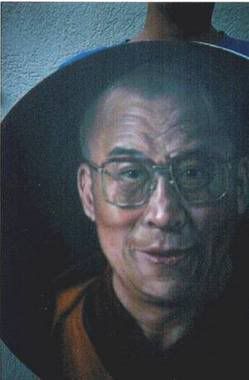
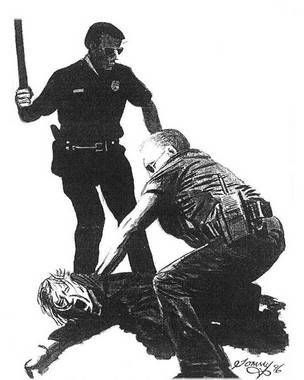
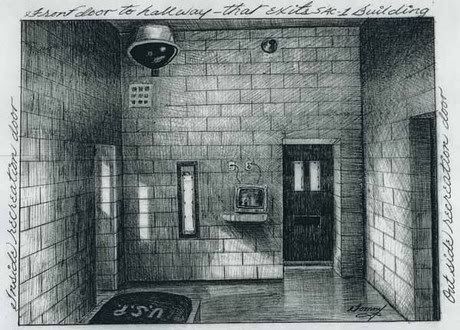
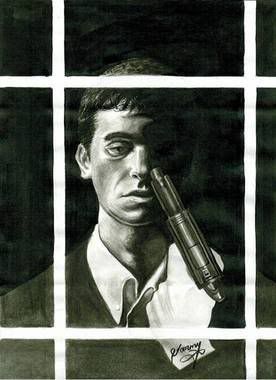
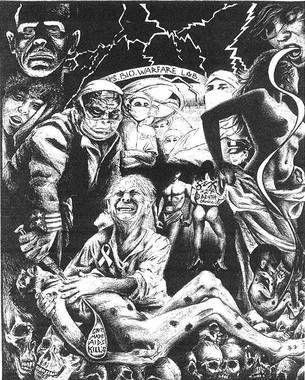
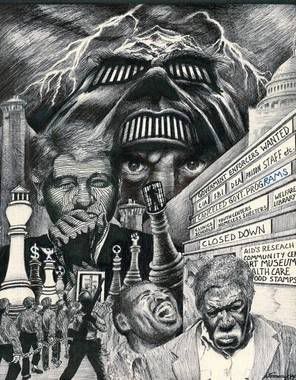
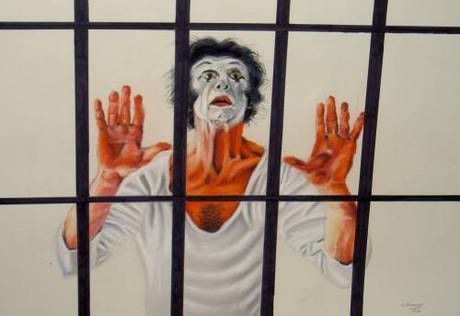
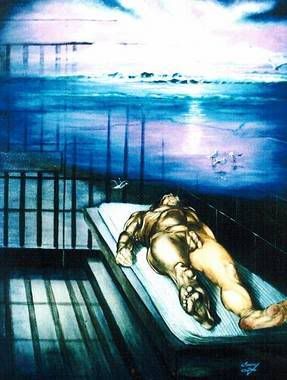
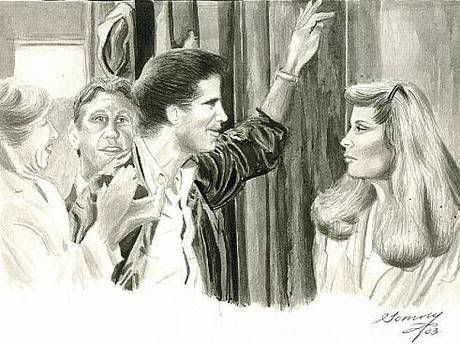
The Art of Federal Prisoner #14634-116, Z-13-040-L |
aka Tom Silverstein




Friday, February 12, 1999
| [+/-] |
Senator Sam Brownback: "I Vote To Remove Bill Clinton From Office For Perjury" |
Following is a statement from the Senate's closed deliberations on the articles of impeachment against President Clinton, excerpts of which senators were allowed to publish in the Congressional Record for Friday, February 12, 1999:
I find that William Jefferson Clinton did commit perjury and obstruct justice; that these offenses rise to the level of `high Crimes and Misdemeanors;' that William Jefferson Clinton should be convicted under the Articles of Impeachment; and that he must be removed as President of the United States.
This is a sad chapter in our nation's long and illustrious history. A man of extraordinary talent took a mistake and turned it into a tragedy. William Jefferson Clinton is no ordinary man. Gifted and charismatic, brilliant and refined, he took raw ability and focus and turned it into a Presidency. Such is the stuff of story books and heroes. Sadly for this tale, the hero had a habit he would not break, and, when it called him back to darkness, he sought to hide it at all cost. And there the tragedy occurred.
President Clinton repeatedly chose to lie and obstruct justice rather than tell the truth and comply with court orders throughout this ordeal. By his words and deeds he chose to place himself above the law. By his words and deeds he has undermined the rule of law in America to the great harm of this nation. By his own words and deeds, he has undermined the truth-finding function of the judiciary, at great harm to that branch of our government. By his words and deeds, he had done great harm to the notions of honesty and integrity that form the underpinnings of this great republic.
The following represents the specific facts upon which I find William Jefferson Clinton is guilty of perjury before a Federal Grand Jury and obstruction of justice, and must be removed as the President of the United States:
ARTICLE I--PERJURY BEFORE A FEDERAL GRAND JURY
In his conduct while President of the United States, William Jefferson Clinton, in violation of his constitutional oath faithfully to execute the office of President of the United States and, to the best of his ability, preserve, protect, and defend the Constitution of the United States, and in violation of his constitutional duty to take care that the laws be faithfully executed, has willfully corrupted and manipulated the judicial process of the United States for his personal gain and exoneration, impeding the administration of justice, in that:
On August 17, 1998, William Jefferson Clinton swore to tell the truth, the whole truth, and nothing but the truth before a Federal grand jury of the United States. Contrary to that oath, William Jefferson Clinton willfully provided perjurious, false and misleading testimony to the grand jury concerning the nature and details of his relationship with a subordinate Government employee:
A. Testimony that conflicts with Ms. Lewinsky's account of the relationship:
Ms. Lewinsky testified as to the extent of her sexual relationship with President Clinton, and her statements were corroborated by numerous individuals with whom she contemporaneously shared the details of her encounters with the President, including two professionals. Her testimony indicated direct contact by the President with certain areas of her body. The conduct described by Ms. Lewinsky clearly falls within the definition of sexual relations as President Clinton understood the term to be defined in the Paula Jones case and during his grand jury testimony.
In his prepared statement to the grand jury, President Clinton stated that the sexual encounters between he and Ms. Lewinsky `did not constitute sexual relations as I understood that term to be defined at my January 17th, 1998 deposition.' President Clinton acknowledged that the type of activity described by Ms. Lewinsky constituted sexual relations as he understood the term to be defined during the Paula Jones' deposition: `I understood the definition to be limited to, to physical contact with those areas of the bodies with the specific intent to arouse or gratify.' However, during questioning under oath, President Clinton repeatedly denied engaging in the activities described by Ms. Lewinsky.
President Clinton was even asked by a grand juror whether `if Monica Lewinsky says that while you were in the Oval Office area you touched [certain area of her body that falls within the definition of sexual relations as understood by the President in the Paula Jones case], would she be lying.' President Clinton responded: `That is not my recollection. My recollection is that I did not have sexual relations with Ms. Lewinsky and I'm staying on my former statement about that.'
If Ms. Lewinsky's testimony is true, President Clinton committed perjury during his grand jury testimony. I have had the opportunity to read the portions of grand jury testimony provided by both President Clinton and Ms. Lewinsky concerning their characterizations of their sexual relations. I also had the opportunity to watch Ms. Lewinsky's videotaped deposition in which she reaffirmed her previous grand jury testimony concerning the extent of their sexual relations. Based upon (1) the corroboration of Ms. Lewinsky's testimony by numerous witnesses with whom she had spoken contemporaneously, (2) the detailed nature of Ms. Lewinsky's testimony, (3) the evasiveness of President Clinton's testimony, (4) the apparent sincerity of Ms. Lewinsky in her videotaped deposition before the Senate, and (5) the President's refusal to be deposed by the Senate, I find that the President provided false and misleading testimony before a federal grand jury that constitutes perjury.
B. Testimony concerning his account of the relationship to Betty Currie:
On January 18, 1998, President Clinton met with Mrs. Currie at the White House and told her `there are several things you may want to know' about the President's relationship with Monica Lewinsky. During his grand jury testimony, President Clinton stated that `I was not trying to get Betty Currie to say something that was untruthful.' However, as discussed further in the obstruction of justice charges, President Clinton said to Mrs. Currie `Monica came on to me, and I never touched her, right?' Based upon both Ms. Lewinsky and President Clinton's testimony concerning their intimate contact, and upon Ms. Lewinsky's Senate deposition, I must conclude that Ms. Lewinsky's account of their intimate activity is accurate. As a result, I must further concluded that President Clinton was lying when he told Mrs. Currie that he had not touched Ms. Lewinsky, and that the President permitted perjury when he testified before the grand jury that he had not asked Mrs. Currie `to say something that was untruthful.'
Mr. Clinton further testified that his only interest in speaking to Mrs. Currie that day after the President was deposed in the Paula Jones' case was to `refresh [his] own recollection' and `not to impart instructions on how she was to recall things in the future.' As will be discussed further below, I conclude that President Clinton made a series of statements to Betty Currie in an attempt to improperly persuade her to provide false testimony. As a result, based upon the evidence presented in the record, I believe that President Clinton's interest in talking to Mrs. Currie the day after he was deposed by Paula Jones' attorneys was to impart instructions on how Mrs. Currie was to recall events concerning the President's illicit affair and not to refresh the President's memory. The President's statements before the grand jury concerning his interest in talking to Mrs. Currie would thus constitute perjury.
C. Testimony concerning his account of the relationship to Sidney Blumenthal and John Podesta:
In his grand jury testimony, President Clinton asserted in his conversations with Mr. Blumenthal and Mr. Podesta, that `I said things that were true. They may have been misleading.' President Clinton further states that `what I was trying to do was give them something they could--that would be true, even if misleading in the context of this deposition.' Mr. Clinton told Sidney Blumenthal that `Monica Lewinsky came at me and made a sexual demand on me' and that the President had rebuffed her. Mr. Blumenthal also testified that the President claimed that Ms. Lewinsky threatened the President, saying `that she would tell people they'd had an affair, that she was known as the stalker among her peers, and that she hated it and if she had an affair or said she had an affair then she wouldn't be the stalker any more.' When Mr. Blumenthal asked the President whether Mr. Clinton had been alone with Ms. Lewinsky, the President replied `I was within eyesight or earshot of someone.'
Even President Clinton acknowledges that he was alone with Monica Lewinsky, and, therefore not within eyesight or earshot of anybody, on numerous occasions. Mr. Clinton also acknowledges that he and Ms. Lewinsky engaged in `inappropriate intimate contact' which, if Ms. Lewinsky's testimony is true, amounted to sexual relations as President Clinton understood the term to be defined in the Paula Jones case. As a result, the President lied, not simply misled Mr. Blumenthal, when Mr. Clinton stated that he had `rebuffed her.'
John Podesta testified that President Clinton had told Mr. Podesta that the President `had never had sex with her [Ms. Lewinsky] in any way whatsoever.' Mr. Podesta further testified that President Clinton elaborated that the President and Ms. Lewinsky `had not engaged in [sexual activity that falls within the definition of sexual relations as President Clinton understood the term to be defined in the Paula Jones case].'
During Mr. Clinton's grand jury testimony, he refused to directly contradict Mr. Podesta's characterization of their conversation: `I'm not saying that anybody who had a contrary memory is wrong.' President Clinton was asked `[i]f [the White House aides] testified that you denied sexual relations or relationship with Monica Lewinsky, or if they told us that you denied that, do you have any reason to doubt them?' The President responded `no.'
Based on the evidence concerning the extent of the sexual relationship between President Clinton and Ms. Lewinsky, and based on the President's own admission concerning the accuracy of statements made by his aides, I conclude that President Clinton committed perjury when he characterized the manner in which he conveyed false statements to Mr. Podesta and Mr. Blumenthal. President Clinton did not simply mislead his aides, he lied to them about his relationship with Ms. Lewinsky.
ARTICLE II--OBSTRUCTION OF JUSTICE
In his conduct while President of the United States, William Jefferson Clinton, in violation of his constitutional oath faithfully to execute the office of President of the United States and, to the best of his ability, preserve, protect, and defend the Constitution of the United States, and in violation of his constitutional duty to take care that the laws be faithfully executed, has prevented, obstructed, and impeded the administration of justice, and has to that end engaged personally, and through his subordinates and agents, in a course of conduct or scheme designed to delay, impede, cover up, and conceal the existence of evidence and testimony related to a Federal civil rights action brought against him in a duly instituted judicial proceeding.
The means used to implement this course of conduct or scheme included:
A. On or about December 28, 1997, William Jefferson Clinton corruptly engaged in, encouraged, or supported a scheme to conceal evidence that had been subpoenaed in a Federal civil rights action brought against him.
Ms. Lewinsky testified that on December 28, 1997 she told President Clinton that she had been subpoenaed and that the subpoena required her to produce gifts given her by the President. According to Ms. Lewinsky, she asked the President `should I--maybe I should put the gifts away outside my house somewhere or give them to someone maybe
Betty.' Ms. Lewinsky testified that President Clinton responded `I don't know' or `Let me think about that.'
Later that day (December 28), Ms. Lewinsky testified that she received a phone call from Mrs. Currie, who stated `I understand you have something to give me' or `the President said you have something to give me.' Mrs. Currie then retrieved the gifts that President Clinton had given to Ms. Lewinsky and hid them under her bed. Based upon the fact that Mrs. Currie was clearly acting under instructions from President Clinton, I find that President Clinton obstructed justice by attempting to hide evidence requested in a subpoena in a federal civil rights case.
B. Beginning on or about December 7, 1997, and continuing through and including January 14, 1998, William Jefferson Clinton intensified and succeeded in an effort to secure job assistance to a witness in a Federal civil rights action brought against him in order to corruptly prevent the truthful testimony of that witness in that proceeding at a time when the truthful testimony of that witness would have been harmful to him.
At President Clinton's request, Vernon Jordan met with Monica Lewinsky in November of 1997 to discuss assistance that Mr. Jordan could provide Ms. Lewinsky in securing a job in New York. However, Mr. Jordan took no action until December 11, 1997, five days after President Clinton learned that Monica Lewinsky was on the witness list in the Paula Jones case and that Mr. Jordan had not yet provided Ms. Lewinsky with any assistance in securing a job in New York. On the day that Mr. Clinton learned that Ms. Lewinsky was on the witness list, the President assured her that he would talk to Mr. Jordan to ensure that Mr. Jordan stepped up his efforts to secure her a job in New York.
Mr. Jordan stepped up his activities on December 11, 1998, because, on that date, Judge Susan Webber Wright ordered that Paul Jones was entitled to information concerning any government employee with whom the President had sexual relations. On January 7, 1998, Ms. Lewinsky signed a false affidavit, stating that she had not engaged in a sexual relationship with the President. On January 8, 1998, after Ms. Lewinsky believed that her interview with MacAndrews and Forbes in New York had gone poorly, Mr. Jordan called the company's CEO, Ron Perelman, to ask his assistance with securing employment for Ms. Lewinsky within Mr. Perelman's company. All of this activity was done in order to ensure that Ms. Lewinsky did not provide damaging testimony against President Clinton and thus constituted an effort to obstruct justice in the Paul Jones case.
C. On or about January 18 and January 20-21, 1998, William Jefferson Clinton related a false and misleading account of events relevant to a Federal civil rights action brought against him to a potential witness in that proceeding, in order to corruptly influence the testimony of that witness.
Mrs. Currie was summoned to the White House on Sunday, January 18, 1998 for a private meeting with President Clinton. The President was under court order not to talk about the case to anyone. Nonetheless, after telling Mrs. Currie that he had been deposed in the Paula Jones case and that Ms. Jones' attorneys had asked the President several questions about Ms. Lewinsky, President Clinton then made a series of statements to Mrs. Currie:
I was never really alone with Monica, right?
You were always there when Monica was there, right?
Monica came on to me, and I never touched her, right?
You could see and hear everything, right?
The testimony of Mrs. Currie and President Clinton demonstrate that these statements were an attempt to influence the future testimony of Mrs. Currie regarding the President's relationship with Monica Lewinsky. President Clinton admitted being alone with Ms. Lewinsky. Mrs. Currie also testified that the President and Ms. Lewinsky had been alone. Given the fact that President Clinton and Ms. Lewinsky had been alone on a number of occasions, a fact that President Clinton would be unlikely to forget considering the intimate nature of their encounters, the President was not refreshing his memory when he stated to Mrs. Currie that he and Ms. Lewinsky had never been alone. President Clinton was attempting to improperly persuade Mrs. Currie to testify that he and Ms. Lewinsky were never alone.
Mrs. Currie testified that President Clinton and Ms. Lewinsky were alone a number of times. Despite the legal hairsplitting engaged in by the White House, I interpret the statement `You were always there when Monica was there, right?' to mean that President Clinton was attempting to improperly persuade Mrs. Currie to testify that Ms. Lewinsky was always within Mrs. Currie's sight during her visits to the President.
Based upon Ms. Lewinsky's testimony, President Clinton's statement that `Monica came on to me, and I never touched her, right?' would clearly be false. In addition, because even President Clinton admitted to `inappropriate intimate contact,' I assume that President Clinton is at least admitting to having touched Ms. Lewinsky. As a result, I must conclude that President Clinton did touch Ms. Lewinsky. I must then further conclude that, because Mr. Clinton was making a statement to Mrs. Currie that the President knew to be false, he could only have made such a claim in order to improperly persuade Mrs. Currie to testify that President Clinton had never touched Ms. Lewinsky.
In his grand jury testimony, President Clinton admitted that he did not allow Mrs. Currie to `watch whatever intimate activity [the President] did with Ms. Lewinsky.' In addition, when asked whether he would `not have engaged in those physically intimate acts if [the President] knew that Mrs. Currie could see or hear that,' President Clinton responded `[t]hat's correct.' However, on the Sunday after he was deposed in the Paula Jones' case, Mr. Clinton told Mrs. Currie `You could see and hear everything, right?' I find these two concepts to be inherently contradictory. President Clinton could not, on the one hand, shield Mrs. Currie from seeing or hearing any intimate activity, while, on the other hand, be sincerely stating that Mrs. Currie could see and hear everything. I must then conclude that President Clinton made this statement in an attempt to improperly persuade Ms. Currie to testify that President Clinton and Ms. Lewinsky engaged in no activity that
Mrs. Currie could neither see nor hear.
D. On or about January 21, 23, and 26, 1998, William Jefferson Clinton made false and misleading statements to potential witnesses in a Federal grand jury proceeding in order to corruptly influence the testimony of those witnesses. The false and misleading statements made by William Jefferson Clinton were repeated by the witnesses to the grand jury, causing the grand jury to receive false and misleading information.
On January 21, 1998, President Clinton met with Sidney Blumenthal, a senior White House aide. During the course of their conversation, Mr. Blumenthal asked President Clinton what the President had done wrong. According to Mr. Blumenthal, the President responded `[n]othing' and `I haven't done anything wrong.'
Mr. Blumenthal asked the President why, if he had done nothing wrong, would the President want to appear on television and admit wrongdoing, which is what the President implied he wanted to do. At that point, according to Mr. Blumenthal, the President stated that `Monica Lewinsky came at me and made a sexual demand on me' and that the President had rebuffed her. Mr. Blumenthal also testified that the President claimed that Ms. Lewinsky threatened the President, telling him `that she would tell people they'd had an affair, that she was known as the stalker among her peers, and that she hated it and if she had an affair or said she had an affair then she wouldn't be the stalker any more.'
According to Mr. Blumenthal, President Clinton also stated that `I feel like somebody who is surrounded by an oppressive force that is creating a lie about me and I can't get the truth out.' When Mr. Blumenthal asked the President whether Mr. Clinton had been alone with Ms. Lewinsky, the President replied `I was within eyesight or earshot of someone.'
Based upon the grand jury testimony presented by Ms. Lewinsky and President Clinton, and upon the deposition provided to the Senate by Ms. Lewinsky as well as the President's failure to provide the Senate with a deposition, I have concluded that the statements made by President Clinton to Mr. Blumenthal are false. If the President had agreed to be deposed by the Senate, his testimony might have strengthened the credibility of the statements that he had to Mr. Blumenthal. However, the credibility of such statements have no foundation in the evidence presented to the Senate. As a result, I must conclude that President Clinton had a motive other than an interest in conveying the truth when he made these statements to Mr. Blumenthal.
President Clinton has tried to argue that the President made these statements to Mr. Blumenthal, not to obstruct justice, but merely to mislead him. However, when asked whether he knew that Sidney Blumenthal and John Podesta might be called into a grand jury, President Clinton responded `That's right.' Therefore, I must conclude that President Clinton lied to Sidney Blumenthal in order to plant false testimony on a potential grand jury witness, a witness the President himself admits he knew might be called.
John Podesta testified that President Clinton had told Mr. Podesta that the President `had never had sex with her [Ms. Lewinsky] in any way whatsoever.' Mr. Podesta further testified that President Clinton elaborated that the President and Ms. Lewinsky `had not engaged in [sexual activity that falls within the definition of sexual relations as President Clinton understood the term to be defined in the Paula Jones case].' As stated above, Mr. Clinton acknowledges that he knew that Mr. Podesta might be called as a witness by the grand jury. As also discussed above, it is my opinion, based on the evidence, that President Clinton and Ms. Lewinsky did engage in sexual activity that falls within the definition of sexual relations as President Clinton understood the term to be defined in the Paula Jones case. As a result, Mr. Clinton lied to Mr. Podesta. In addition, because President Clinton knew that Mr. Podesta might be called as a witness by the grand jury, I must conclude that the President lied to Mr. Podesta, not simply to mislead him and his White House colleagues, but in order to plant false testimony on a potential grand jury witness.
HIGH CRIMES AND MISDEMEANORS
Perjury before a Federal Grand Jury and Obstruction of Justice do rise to the level of being a `high crime or misdemeanor' that is the standard set forth in the Constitution for impeachment. Indeed in recent years the United States Senate has impeached two federal judges for perjury. Where we not to remove the President for the same offense we would be breaking established precedent.
Furthermore, would it be right to set a lower standard for the President than the judges he appoints? I think not. The President must be held to the same standard, if not a higher one.
Perjury and obstruction of justice are crimes against the state. Perjury goes directly against the truth-finding function of the judicial branch of government. If the President can lie under oath, others will plead the same defense, sacrificing the truth.
The President is the Chief Law Enforcement Officer in the land. He or she should be the ultimate example of a law-abiding citizen, not one who willfully and repeatedly violates the law when it serves his or her narrow interest. The unlawful actions by the President will have the long term effect of reducing compliance with the law by others if the President can get away with it.
The Constitution states that impeachment and removal is to occur when `the President, Vice President and all civil officers' commit `treason, bribery, or other high crimes and misdemeanors.'
I find bribery and perjury to be offenses of the same nature. Both seek to thwart well established legal processes. Bribery seeks to produce an outcome different from justice by obscuring our priorities. Perjury seeks to produce an outcome different from justice by obscuring the truth.
Obstruction of justice committed by the President undermines the entire judicial system and is thus a crime against the nation falling clearly in the category of a `high crime.'
CONCLUDING COMMENTS
Whether or not the vote taken today is considered a victory for President Clinton, it will be, in many ways, a loss for America. We have lost many things over the past few months: trust in public officials, respect for the rule of law, confidence in the truth of the White House's public statements. But perhaps the most tragic loss has been the steady erosion of our societal standards.
It is hard to imagine that a generation or two ago, a majority of Americans would have greeted news of Presidential crimes and cover-ups with a shrug. We did not expect our leaders to be perfect, but we did expect them to provide moral leadership, and to obey the laws they were charged with upholding and executing. We expected Presidents to commit sins; but we would not allow them to commit crimes. We held the office of the Presidency, and the honor of the nation, in the highest esteem.
We looked to the leaders of our nation as examples to admire, rather than avoid. Parents would point to the President of the United States and tell their son or daughter that if they worked hard and did right, they might one day hold that office. That is not so today. Perhaps in the future the admiration of that office can be restored.
Our loss is compounded by the manner of our response. In many quarters, the news of Presidential perjury and obstruction of justice has been greeted with a shrug, if not a wink. We are no longer outraged by the outrageous. We have grown comfortable with presidential misconduct, even as we prosecute, convict, and imprison the less powerful for the same crimes.
If we are to believe the media, much of our reluctance to enforce the laws of our land springs from our material concerns. We have heard, from many quarters, the assertion that things are good in America, we are at peace, the stock market is doing well, so why rock the boat? Why shake things up?
We seem to have forgotten that all of our prosperity would be impossible without the rule of law, and without a cultural predisposition to honor and uphold the law. Reducing the administration of justice to opinion polls debases our country. Putting pocketbook concerns over standards of right and wrong impoverishes our culture. If we do not sustain the moral and legal foundation on which our system of government and our prosperity is based, both will surely and steadily diminish.
The great southern writer Walker Percy once stated that his greatest fear for our future was that of `seeing America, with all of her great strength and beauty and freedom . . . . gradually subside into decay through default and be defeated . . . from within by weariness, boredom, cynicism, greed, and in the end, helplessness before its great problems.'
I am optimistic about our future, but this point is an important one. America is at a place in history where our great enemies have been defeated. Our economy is strong, our incomes up, our expectations high. We are the only remaining world superpower.
Our future looks bright. But our continued success is not a historical certainty. It will be determined by the character of our nation--by the condition of our culture, as much as our economy. The standards we hold--for ourselves, and for our leaders--are a good indicator of what we soon shall be.
For all of the reasons described above, I have chose, with great sadness but firm resolve to vote for the conviction and removal of William Jefferson Clinton as President of the United States of America.
