The Washington Times reports:
Secretary of State Colin Powell has asked President Bush to reverse the
president's position on al Qaeda and Taliban detainees and declare them
prisoners of war under the Geneva Convention.
A four-page internal White House memorandum obtained yesterday by The
Washington Times shows that Mr. Powell made the request and that the
president's National Security Council plans to meet on the matter Monday
morning.
"The secretary of state has requested that you reconsider that decision,"
White House Counsel Alberto Gonzales wrote yesterday in a memo to Mr.
Bush. "Specifically, he has asked that you conclude that GPW [Geneva Convention
II on the Treatment of Prisoners of War] does apply to both al Qaeda and the
Taliban. I understand, however, that he would agree that al Qaeda and Taliban
fighters could be determined not to be prisoners of war (POWs) but only on a
case-by-case basis following individual hearings before a military board."
The memo provides a rare glimpse of a major dispute inside the Bush White
House on what has become one of the most contentious issues in the war in
Afghanistan. Mr. Powell wants the president to reverse his position. But Mr.
Gonzales and most, if not all, members of the president's national security
team are urging him not to retreat, according to the memo.
Mr. Bush decided Jan. 18 that hundreds of Taliban and members of Osama bin
Laden's al Qaeda army are detainees, not prisoners of war, and thus not subject
to rights in the Geneva Convention. Human rights groups and some European
politicians have protested the decision and have been especially critical of
the living conditions for 158 detainees at the U.S. Naval Base in Guantanamo
Bay, Cuba.
Administration sources last night expressed anger at Mr. Powell, whom they
accused of bowing to pressure from the political left. They said that if Mr.
Bush heeds his secretary of state's advice, the U.S. will have to provide
detained terrorists with all sorts of amenities, including exercise rooms and
canteens.
The four-page Gonzales memo to Mr. Bush comes with a signed cover sheet
from Condoleezza Rice, the president's national security adviser. The cover
page asks Vice President Richard Cheney; Mr. Powell; Defense Secretary Donald
H. Rumsfeld; Attorney General John Ashcroft; CIA Director George Tenet; and
Gen. Richard Myers, Joint Chiefs Chairman, to read Mr. Gonzales' memo and have
responses to her by today at 11 a.m.
"After receiving your comments, we will prepare a final memorandum for
presentation to the president Saturday afternoon," Miss Rice writes.
In his memo to the president, Mr. Gonzales lays out his and the Justice
Department's reasons for recommending that Taliban and al Qaeda are not Geneva
Convention prisoners of war. The White House counsel then lists what appear to
be the State Department's arguments for reversal.
Mr. Gonzales then writes, "On balance, I believe that the arguments for
reconsideration and reversal are unpersuasive."
The memo shows that Mr. Powell is not only running up against opposition
at the White house, but also at the Justice Department.
Mr. Gonzales writes that the department's Office of Legal Counsel "has
opined that, as a matter of international law and domestic law, GPW does not
apply to the conflict with Al Qaeda. OLC has further opined that you have the
authority to determine that GPW does not apply to the Taliban. As I discussed
with you, the grounds for such a determination may include ... a determination
that the Taliban and its forces were, in fact, not a government, but a
militant, terrorist-like group."
The White House counsel adds, "OLC's interpretation of this legal issue is
definitive. ... Nevertheless, you should be aware that the legal adviser to the
secretary of state has expressed a different view."
In addition to Mr. Gonzales and Justice, Mr. Powell is likely to run into
opposition from Mr. Rumsfeld. The defense secretary has vigorously defended the
treatment of captives in Guantanamo and the decision not to place them under
protection of the Geneva Convention. Mr. Rumsfeld often points out that the
detainees are willing to commit suicide in order to kill Americans.
"It should be noted that your policy of providing humane treatment to
enemy detainees gives us the credibility to insist on like treatment for our
soldiers," Mr. Gonzales wrote. "Moreover, even if GPW is not applicable we can
still bring war crimes charges against anyone who mistreats U.S. personnel.
Finally, I note that our adversaries in several recent conflicts have not been
deterred by GPW in their mistreatment of captured U.S. personnel, and
terrorists will not follow GPW rules in any event."
Mr. Gonzales also argues that invoking the Geneva Convention would make it
easier for adversaries to try to charge American servicemen with war crimes.
Noting that the president has called the war on terrorism "a new kind of
war," Mr. Gonzales wrote, "In my judgment, this new paradigm renders obsolete
Geneva's strict limitations on questioning of enemy prisoners and renders
quaint some of its provisions requiring that captured enemy be afforded such
things as commissary privileges, script (i.e., advances of monthly pay),
athletic uniforms, and scientific instruments."
Placing the detainees under the Geneva Convention would give them legal
protections and new creature comforts. The United States would be restricted
from conducting open-ended interrogations, for example, some of which have
given the FBI new insights into how the al Qaeda terror network operates.
Yesterday at Guantanamo, Republican Sen. James M. Inhofe of Oklahoma said
many of the detainees held there are likely to be returned to their homelands
after investigators complete interrogations that began Wednesday.
Officials would not say how long the interrogations of the al Qaeda and
Taliban fighters might last. It also was not clear whether the United States
would demand that detainees be returned on the condition they be put on trial
at home.
"I believe after the interrogation process there's going to be a
distinction made as to whether, No. 1, these people should be sent to their
country and, No. 2, be subjected to a military tribunal [at home] and, No. 3,
whether there should be U.S. military justice or, in some rare occasions, the
same as in what John Walker [Lindh] is receiving," Mr. Inhofe told the
Associated Press.
Lindh, a U.S. citizen, will be tried in federal court on charges of
helping the Taliban and al Qaeda target American civilians.
Mr. Inhofe was part of a delegation of eight representatives and three
senators who visited the detention center yesterday. U.S. lawmakers have said
they consider the detained fighters a danger to society who would kill again if
set free.
Meanwhile in Afghanistan, U.S. Special Forces troops uncovered a large
cache of Taliban weapons at a compound about 40 miles north of Kandahar after a
battle with holdout Taliban fighters, the Pentagon said yesterday.
Military interrogators are questioning 27 Taliban fighters captured in
Thursday's raid in Hazar Kadamon. Defense officials said at least 15 Taliban
were killed in the operation and that one U.S. Special Forces soldier was
wounded on the ankle.
The weapons were stored at several locations in the compound, which was
located in a remote part of Afghanistan, he said. The compound had three sets
of buildings, one of which had a fence around it.
Rear Adm. John Stufflebeem, deputy director of operations for the Joint
Staff, said the total number of detainees from Afghanistan is now 460 — 302 in
Afghanistan and 158 in Cuba.
Saturday, January 26, 2002
| [+/-] |
Powell Urges POW Status |
Friday, November 9, 2001
| [+/-] |
Frontline Interviews Richard Perle |
Richard Perle is the chairman of the Defense Policy Board, an advisory panel to the Pentagon made up of leading figures in national security and defense which backs laying the groundwork for overthrowing Saddam through military means. He previously served as assistant secretary of defense for international security policy in the Reagan Administration. In this interview Perle says, "There can be no victory in the war against terrorism if at the end of it Saddam Hussein is still in power." He argues that the second phase of the war against terrorism should consist of U.S. political and military support for the Iraqi opposition's efforts to overthrow Saddam Hussein. He was interviewed in mid-October 2001.
PBS interviews Richard Perle:
What must one understand about Saddam Hussein and Saddam Hussein's Iraq, even before entering the debate on how we should deal with Iraq?
Well, about Saddam Hussein, the essential point is that he's a thug who has been willing to murder some of the people closest to him, who has used chemical weapons against his own people, who has invaded his neighbors. He is probably the most dangerous individual in the world today.
Capable of?
Capable of anything. Capable of using weapons of mass destruction against the United States, capable of launching other military maneuvers as soon as he thinks he can get away with it.
You have stated in the past that this is not a fringe issue. What do you mean by that?
The question of Saddam Hussein is at the very core of the war against terrorism. There can be no victory in the war against terrorism if, at the end of it, Saddam Hussein is still in power -- not only because he supports terrorism, not only because he trains terrorists [Editor's Note: see the interview with a defector on Iraq's alleged terrorist training camp.] and gives them refuge -- but because he is the symbol of defiance of all Western values. He succeeded in throwing the United Nations out. He's violated all of the undertakings that followed the end of the Gulf War. As long as he is there, we are in danger, and we are in danger from terrorist activity.
We haven't dealt with this threat. This threat has been there for quite a while. What are some of the reasons why?
We made a fundamental mistake at the end of Desert Storm: we didn't finish the job. Finishing the job would have meant the destruction of Saddam Hussein's military power, which, in turn, would have led to the destruction of his regime. The people who made that mistake were loath to admit it, so they described the situation in unjustifiably sanguine terms. He was, to use the phrase they adopted, in a box, and safely in a box, and we need not be concerned about him. I think that was wrong. It's been wrong all along, and it is demonstrably wrong today.
Why is it wrong?
It's wrong because he has weapons of mass destruction, because he has expelled U.N. inspectors. He has violated all of the terms and conditions of the U.N. resolutions that had been allowed to fall into disuse. He is winning. Because he is winning, and because he has awesome capabilities, he poses a continuing threat to us and to others.
Have we not only ignored the situation, but in fact had several chances that we didn't do the job?
We didn't do the job, in part because we didn't understand the dangers. I think after Sept. 11 those dangers are now much better understood. But we have passed up one opportunity after another to take action against Saddam, even action that would have been led by his own Iraqi opposition.
Saddam Hussein is hated throughout Iraq. There is a small group of people who benefit from his regime, but the vast majority of Iraqis suffer terribly under his regime. There is an opposition. The opposition is eager to take action against him. Instead of supporting that opposition, we have held them back.
There seems to be a bit of a schizophrenic attitude toward the Iraqi National Congress in Washington. Can you define that for us and what it means?
Yes. The INC is highly regarded on Capitol Hill, and I believe highly regarded by a number of people who know the INC leadership well. It is not held in high regard by the Department of State and the Central Intelligence Agency, who are, together, the architects of the failed Iraq policy, including the mistakes of 1991 and repeated failures to deal with Saddam since then.
So how has that translated into the debate that is ongoing in Washington right now over future moves?
It's very clear that the CIA and the State Department are energetic opponents of support to the Iraqi opposition, partly because they believe that we are safe. That's going to get serious reconsideration when we examine the prospect that Saddam Hussein could -- and very possibly will -- transfer weapons of mass destruction to anonymous terrorists, and thereby escape the retaliatory capabilities that have always been the basis for the theory that he's in a box and can't get out.
What is the threshold that needs to be reached before that is believable, or before that action might actually be taken?
I think sensible people looking at the dangers to the United States, recognizing how we failed adequately to contain terrorism before Sept. 11, will conclude that with [Saddam Hussein's] hatred of the United States, with his blood feud with former President Bush -- [which] could extend to George W. Bush as well -- to leave him in place and wait for him to take action against us is simply too dangerous.
So in very practical terms, what does that mean for our policy as of today?
I think we will need a new policy toward Iraq, because the current policy is to leave Saddam Hussein alone, to subject Iraq to sanctions which are ineffective. They're increasingly being violated by other countries. They're certainly not going to change Saddam's policy, and yet that is the policy of the last administration and, I'm sorry to say, has been the policy of this administration.
But the president has already stated that we're in a war against terrorism. We will not end until we weed it out, which include states that sponsor or help terrorists. So help a non-Washington audience; translate that for us.
If the president means what he says -- and I believe he does -- and if he has a disciplined administration support him -- a Department of State, a Central Intelligence Agency, a Department of Defense, a National Security Council -- who consider that it is their responsibility to implement his policies, then they will design a much more aggressive policy toward Iraq and we will no longer leave Saddam Hussein unencumbered. We'll take action against him.
As far as this war on terrorism, if you were designing it or advising the administration, would you do it differently? Is the war somewhat flawed at this point?
Well, we're conducting this war now in phases. Always bet on phase one, because phase one always happens. Phase two sometimes happens and sometimes it doesn't. I would have gone about this differently. I would have gone after Iraq immediately. I would not have relegated it to some subsequent phase. But it's all right, as long as we get to phase two. Phase two should be overwhelming support for the Iraqi opposition. They're eager, they're ready to go. I believe they can do it. We haven't done that until now, and the State Department opposes doing it.
[This should be] coupled with plans that could involve the direct application of American military power in support of the Iraqi opposition. Bombing targets in Iraq without any connection to a strategy seems to me unwise and ineffective. ...
I think the regime of Saddam Hussein is far weaker than most people believe, and what it would take to topple it is a tiny fraction of what was necessary to expel Iraq from Kuwait in 1991.
Some people will argue, I suppose, that it's not that simple, that it's another quagmire, the INC is not as easy to rely on, and democracy is not an easy thing that you set up quickly. What is your response to that opinion?
It's certainly true it's not easy. It's not simple. On the other hand, simply waiting until biological weapons show up in this country because we didn't take action against Saddam when we had the opportunity would be foolish and shortsighted, just as it was foolish and shortsighted to not act with vigor against terrorism in the period in which Al Qaeda was developing into the organization it became. Ten years ago, Al Qaeda was nothing. We watched it grow, because after each terrorist act, it was stronger than before. We never challenged it. We never took significant action against it. And these acts of terror were regarded as great triumphs and the basis upon which Al Qaeda became a magnet for people who want to destroy us....
Jim Woolsey told us basically he considers that the last decade of actions, in regards specifically to Iraq, has been feckless. What's your opinion about the policies they developed and why they developed in the way they have?
Jim's certainly right that the policies were feckless. Saddam Hussein plots the assassination of a former American president. The American response: a cruise missile, in an unoccupied intelligence headquarters. And before the dust had cleared from that missile attack, American officials were at great pains to explain that we had deliberately chosen the middle of the night so nobody would be hurt. We looked ridiculous; we looked ineffective; we looked weak. Saddam must have enjoyed that night.
And the other occasions were similar -- a few missiles here or there. We said we would take action to keep the inspectors in Iraq. We didn't. We didn't take effective action. Even Desert Fox, which was a slightly more aggressive bombing of Iraq, which was intended to restore the inspection regime, ended without ever restoring the inspection regime. One encounter after the other, and the winner in each round was Saddam Hussein. I don't think there's any doubt about that.
What's your opinion on the use of courts to deal with terrorism?
I don't think you can use the courts against sovereign states. You certainly can't use them against thugs like Saddam Hussein. If you manage to get your hands on an individual terrorist, I suppose you could try it. But these fellows are not working for themselves; they're working for governments like Saddam Hussein's Iraq. To focus our attention on the individuals who are hired to commit murder rather than the people who hire them is a great mistake....
The secretary of state's policies seem to be, to some extent, based on the fact that you need the coalition, and the coalition is endangered if one, for instance, goes after Iraq. What is correct or wrong about that belief?
First of all, I have serious doubts about the extent to which we need a coalition. I don't know what this coalition is, who's in it, who's out of it, where you get your membership card. Can you be expelled if you're not doing certain minimum things? Are the Saudis in it? Are they out of it? The Syrians support terror -- are they in, are they out? It's a very vague concept, and an insubstantial one.
Under the best of circumstances, a coalition is a means to an end. If we confuse means and ends and the coalition becomes an end in itself, then we won't win the war on terror, because a broad coalition is not dedicated to winning the war on terror.
So why does Colin Powell believe this?
I think Colin Powell is simply wrong about this, just as I think he was wrong about the end of the Gulf War. He was in favor of leaving Saddam standing, and we now know that that was a very costly mistake. Tens of thousands of people have died since, and Americans are exposed to an unprecedented danger. I think he's wrong now in believing that the coalition is more important than effectively going after those states that sponsor terrorism. If the coalition is going to protect a terrorist state like Saddam, then to hell with the coalition.
Some will say that a coalition is necessary for intelligence reasons, for financial closing down of systems....
All of these claims about the benefits of coalition are subject to detailed analysis. Are we getting intelligence that we can rely on that we would not get if it were our policy to go after Iraq? I haven't seen anyone demonstrate that any country is giving us valuable intelligence that would be withheld if it were our policy to replace Saddam Hussein. Indeed, some of the intelligence that we're getting is coming from countries who would be delighted if we went after Saddam Hussein.
In terms of the financial, the effort to control funds going to terrorists, I have not heard anyone identify a country that would be unwilling to cooperate in that regard, but is doing so today, if we were go after Saddam Hussein.
The INC maintains that, to some extent, the coalition of Arab nations -- friends of the United States, Saudi Arabia, for instance -- would not be very interested in seeing help to the INC, because you end up, perhaps, with then a democratic Iraq, [which might be detrimental to their own regimes]. Do you believe that that is part of what's going on here?
There may be an element of that. The Saudis certainly do not want to see the dominoes falling where the dominoes are leaders who use intimidation to stay in power, and [who] live very well at the expense of their own country. That's a fair description of the Saudis, in my opinion.
But I also think the Saudis realize that they are threatened by Saddam. If Saddam had not made the mistake in 1991 of stopping too soon, he would have overwhelmed Saudi Arabia too, and the Saudis knew that, which is why they were our coalition partners. So they want to see him out of the way.
What the Saudis fear, and what others in the region fear, is an insubstantial, ineffective, halfhearted effort against Saddam, because they are left in a dangerous neighborhood with Saddam still there, after having provoked him fecklessly. So it's the fecklessness of American policy that stands in the way of unifying the Gulf states against Saddam. ...
What would need to happen, in your viewpoint, for the administration to turn towards Iraq?
I think we're going to turn towards Iraq, because it's impossible to claim victory in the war against terrorism when a man who supports terror continues to occupy power in Iraq. But the important change came with the discovery that anthrax, a lethal biological weapon, can be delivered anonymously to Americans. It was done on a small scale, by posting letters with anthrax in them. But surely the lesson of that is that we can be attacked anonymously with biological weapons.
So the argument on which those prepared to accept Saddam Hussein forever have based their case -- which is that we can retaliate and punish him so severely that he won't attempt to use his weapons of mass destruction -- that argument is out the window, because it is now clear that he has the option of providing weapons of mass destruction to anonymous terrorists. That is a threat that this country would be foolish to accept.
But doesn't it then have to be proven that the anthrax in the hands of the terrorists in the United States that are sending it to our news media and to our government officials is Iraqi anthrax?
No, not at all. In fact, I rather doubt that it's Iraqi anthrax. But what the delivery of anthrax through the mail forces us to consider is a range of options available to Saddam Hussein that we didn't consider before. Because the argument that we could deter Saddam by threatening to destroy him if he used weapons of mass destruction against us is no longer relevant, if you allow the possibility that he could deliver weapons of mass destruction through anonymous third parties. And there's no question he has the capacity to do that....
Let me put it this way: Iraq's time will come. Either that, or we will end the war against terrorism without a victory, as we ended the war against Saddam Hussein in 1991 without a victory....
Does that mean that, once you've done with Iraq, you need to turn your attention to Iran and to Syria?
There are a number of countries that have been supporting terrorism. Many of them get very little benefit out of it. On the other hand, there's been no cost. So as they look at the costs and benefits of offering hospitality, safe haven to terrorists, they have concluded that on balance it's a good thing for them to do. If now we impose serious costs, if we say to them, "If you support terrorism, you're going to be at war with the United States, and you may be destroyed in the process," I think several of these governments will simply get out of the support of terrorism business. It will be too costly, the risks will be too great, and they will exercise some rational judgment and decide they're not going to do that anymore.
But isn't there an example of basically going after another terrorist state? The attacks on Libya during the Reagan administration didn't seem to dissuade other terrorist states.
It is true that when the Reagan administration went after Libya, it succeeded only in repressing Libyan terrorism. It wasn't followed up when terrorism began to show up elsewhere, and that was the mistake. Because we didn't say when we went after [Qaddafi] [that] we will go after anyone else who supports terrorism. The ball was dropped at that point, particularly during the long period of the Clinton administration.
...What's your opinion of what the evidence is out there [against Iraq], and why is it relevant?
There's a great deal of circumstantial evidence that Iraq was involved in the 1993 attempt on the World Trade Center. Ramzi Yousef, who sits in jail now, was traveling on an Iraqi passport. There were lots of communications back to Iraq that suggest there were people in Iraq who were at least cognizant of the operation and possibly even directing it. Laurie Mylroie has done some serious work on this, and it's very convincing. It's not conclusive at this stage. It was the view of the chief FBI officer who dealt with the case, who passed away, that Iraq was involved. We may never be able to prove conclusively whether Iraq was involved or not, but there's strong circumstantial evidence that suggests Iraq was indeed involved.
Why is that relevant to the decisions being made today?
I don't think it is relevant to the decisions being made today. What is relevant to the decisions being made today is one simple question: Does Saddam Hussein, in power in Iraq, in possession of weapons of mass destruction, pose a threat to the United States that is of such a magnitude that we had better take action before he takes action against us? That's the issue. It has little to do with the past history.
But we do know that he has connections with terrorist networks, that he has training facilities for terrorists. At Salman Pak, there's a facility that has mock-ups of a variety of aircraft so that hijackers can be trained. We know that he has motive; we know he has capability. It's a question of whether we wait and hope for the best.
We talked to a refugee from Iraq who INC has been working with, a gentleman who knows what's been happening at Salman Pak. How believable is the evidence that is out there? What we're told is that terrorists are being trained from many Arab nations, some fundamentalists. They're being trained in how to take over planes with knives and/or pens, and how to use them as a terrorist act. Is it believable? Is it relevant? Why is it important?
I think it's believable. Look. I don't believe that we will again experience an attack exactly like that of Sept. 11. For one thing, we now know that you never yield control of the aircraft. Instructions to pilots were exactly the opposite, before Sept. 11. So it isn't going to be a repetition.
We're always fighting the last war. I can't tell you what form a new terrorist attack will take. The one that troubles me the most is the use of biological weapons, disseminated not by Iraqi intelligence officials, but by terrorists who are prepared to commit suicide, who would cheerfully kill millions of Americans, if they could do it. All that remains is to organize their entry into the United States together with those biological agents. And that is something that Saddam Hussein and his intelligence apparatus is in a position to do.
So we can either hope he doesn't do what we know he can do, and wait, or we can consider that the threat is large enough to justify action today.
But is the threat alone enough? Doesn't evidence need to be compiled so that one understands that there is a tie to Iraq and terrorist acts, before making a move to include them this war on terrorism?
No. I don't know why we would say to ourselves, "Saddam Hussein has biological weapons. He has a well-known hatred of the United States. He spoke approvingly of the attacks on Sept. 11. But despite all of that, we will not take any action against him until we find evidence that he did what." This is a question of protecting ourselves, and we are in a situation where the only credible defense has to include a strong offense. It is too easy to get into the United States. It is too easy to recruit suicide bombers. It is too easy to disseminate weapons of mass destruction. So either we take this to the enemy, or we wait, and hope the enemy chooses not to take it to us. But if we wait, it will be his choice, and not ours.
There has been some reporting on the meetings of the Defense Policy Board and the importance of this very influential group of former and present day policy makers. You're still the chair, right?
Yes....
Can you in any way define the importance of the board, in general terms?
Well, I think the importance of the board is really the importance of the individuals who serve on it. When you have people like Henry Kissinger and James Schlesinger and Harold Brown and Newt Gingrich and Tom Foley and others applying their considerable intelligence and experience to a difficult issue, that counts for something. And they have done that, and they can all speak for themselves about their own views.
What is the relevance that there are representatives of the INC there, giving testimony to this influential group?
I wouldn't characterize that part of the deliberation in that way. We thought it was useful for them to meet some of the opposition, so that they would understand who among the opponents of Saddam might be available to help rid the world of Saddam.
Are we still basically at war with Iraq after ten years? We've been bombing them time and time again, here and there; we assume Iraq is back in the business of biological, chemical and nuclear, probably. Is this a war that's continuing? Or do we not understand, really, the reality of what's going on here?
What has happened is that, after the defeat of Saddam's forces in Kuwait in 1991, and the imposition of a number of U.N. resolutions aimed at protecting the world against his weapons of mass destruction, we have lost one engagement after another. The result is that those U.N. resolutions are now in the trash can. He's simply defied them, and gotten away with it. There are no inspectors in Iraq today, so we don't know what he is doing. But there's every reason to believe that he continues aggressively to pursue the acquisition of weapons of mass destruction.
So he's no longer in Kuwait. But he's very much in power in Iraq, because he is unchallenged in Iraq. It seems to me foolish in the extreme not to challenge his power and authority in Iraq, since so many Iraqis would gladly join in the effort to do that.
Why is it that we still haven't released the $90 million promised to them? Can you shed any light on that?
The money that was promised to the Iraqi opposition was never spent by the Clinton administration, because they were basically opposed to the policy. So far, that has been the attitude of the Department of State even in this administration, despite a very strong declaration in the platform on which President Bush ran, and despite, I think, the president's own instincts. So it's going to take a while before some parts of this government come to the inevitable conclusion that, as long as Saddam is in the position he's in, with the weapons he possesses, we are in danger. And I have no doubt that eventually even my friends at the State Department will come to that conclusion....
The attacks on the World Trade Center and the Pentagon, the anthrax attacks that are taking place now ... in some ways, were these inevitable?
... An attack on this scale was inevitable, because we failed to respond to lesser attacks, and the terrorists were emboldened by their successes. And make no mistake about it: every time they killed Americans or carried out an attack against American property abroad, they considered that they had achieved a victory. They determined to go from victory to victory, and we did not interfere with that....
Is there any point about Iraq one must understand so that an educated view can be made?
It's important to recognize that Iraq is a country with an enormously talented people, and that is well understood by the rest of the Arab world. So there is real concern when the rest of the Arab world observes suffering in Iraq, which is now widely attributed, I think wrongly, to the embargo that's been in effect for many years. That is very different from believing that the Arab world supports Saddam Hussein, or that it would not welcome the elimination of Saddam Hussein's regime. I think there would be dancing in the streets if Saddam were removed from power, and that reaction of the Iraqi people would be reflected in the attitude of the Arab world, generally. So the notion that if we go after Iraq we are somehow going to advance in the direction of a war against Islam that will turn out to be far worse for us, I think is really quite mistaken....
The common belief is that our soldiers are not welcomed very easily in any Arab nation today, even when there is no battle going on. It's hard for an American public to believe that the Arab allies will indeed welcome us with open arms in any endeavor against any other Arab nation. Is that a mistaken a view?
Yes, I think it's a mistaken view. This idea of Arab solidarity is complete nonsense. It's been nonsense for as long as I can remember. They're at each other's throats all the time. Saddam invades Kuwait. You have a war between Iraq and Iran. Although Iran is not an Arab nation, it's a Muslim nation. You have Jordan fighting Syria in the 1970s. It's just nonsense to suggest that there's solidarity. There is no solidarity there....
If we go into Iraq and we take down Hussein?
Then I think it's over for the terrorists.
Why so optimistic?
Because having destroyed the Taliban, having destroyed Saddam's regime, the message to the others is, "You're next." Two words. Very efficient diplomacy. " You're next, and if you don't shut down the terrorist networks on your territory, we'll take you down, too. Is it worth it?" Of course it isn't worth it. It isn't worth it for any of them.
The nightmare scenario is that we get bogged down in Afghanistan, we can't find bin Laden in some cave. We go into Iraq, we have problems, we're hit back at home with biological weapons or whatever; we lose the public, or start losing the public. Things start getting rattled. It's not clean. It's difficult. What happens?
...I think we will be vulnerable in a way that this country has never been vulnerable before. And this is not a war we cannot afford to lose.
So we have to win this war?
We have to win this war, which is why I'm confident that we will not seek to win it in the cheapest and easiest of all ways, which is to define it so that it is already won. There was that old line about Vietnam: that we should declare victory and go home. You can't do that in this war. Declare victory; but if you haven't won victory, you're as vulnerable as before you made the declaration. So that isn't an option.
Does Washington understand that?
I think the president understands that. I think the secretary of defense understands it. I think the vice president understands it, and I hope others understand it.
Does the State Department get won over, or does the State Department at some point argue their case to the death?
There are some very intelligent and talented people at the Department of State, and the secretary himself is immensely talented. They'll come to the right conclusion at the end. But they're going to have to work through a lot of historical beliefs before they get there.
Friday, October 26, 2001
| [+/-] |
Building The Case Against Iraq |
The Telegraph reports:
The Taliban regime may be the current target in America's war on terrorism but the Bush administration is already building a case against a much bigger foe - Iraq.
James Woolsey, a former director of the CIA, ambassador and Pentagon official who now describes himself as a "private citizen", is the man entrusted with investigating Iraqi involvement in the September 11 attacks and anthrax outbreaks.
The Iraqi National Congress, the exiled group that opposes Saddam Hussein, said it recently held meetings in London with Mr Woolsey. Administration sources have said his trip was funded and approved by Paul Wolfowitz, the deputy defence secretary.
Such is the sensitivity of the Iraq issue, Mr Woolsey will make no comment about the exact nature of his brief. He told The Telegraph: "I was in London and that's it."
But he made clear that he believed there were "substantial and growing indications" that a state was behind the attacks.
The milled, "weaponised" anthrax that virtually shut down Congress and killed two postal workers has increased his suspicions. So too have reports of meetings involving Mohammad Atta, a leading hijacker, in Prague.
Atta travelled to the Czech Republic at least twice and was refused entry to Prague airport on another occasion.
According to the Wall Street Journal, on one occasion Atta was observed meeting Ahmed Khalil Samir al-Ani, an Iraqi diplomat subsequently expelled for spying.
Mr Woolsey said: "I doubt very seriously if this was simply a social relationship or that they liked to drink Czech beer together."
It has also emerged this week that intelligence reports have stated that Osama bin Laden sent an al-Qa'eda delegation to Baghdad on April 25, 1998 to attend Saddam's birthday celebration.
Saddam's son Uday, it is claimed, agreed to train al-Qa'eda recruits and establish a joint force of bin Laden's elite fighters and the Iraqi intelligence unit 999.
All this, Mr Woolsey, said, made it imperative that America "should look under that rock" to establish whether Iraq helped al-Qa'eda to carry out the September 11 or anthrax attacks.
He said: "If a state is involved, obviously it seems to me to be important for us to know whom we're at war with."
Focusing solely on proof that would be admissible in a court of law would be a mistake.
He said: "Hearsay is not admissible as evidence and almost all intelligence is hearsay. Evidentiary standards are the wrong standards. I would talk about indications, information."
He added: "The United States has not yet decided it is at war with Saddam Hussein but Saddam Hussein may have decided he is at war with the United States."
The Clinton administration, he said, had had "a propensity sometimes to reason backwards from public relations to policy, to the facts one was looking at".
This had resulted in the question of Iraqi involvement in the World Trade Centre bombing of 1993 being pushed aside.
In Washington, the debate over global terrorism was continuing to develop as the effects of the anthrax attacks grow more serious.
Having suffered thousands of civilian casualties, most Americans would prefer a pre-emptive strike against a known enemy such as Saddam than risk a biological or chemical attack that could kill tens of thousands.
Mr Woolsey said: "We ought to seriously consider removing Saddam's regime, if he has been involved in any terror in recent years against us."
Saddam had attempted to assassinate President Bush Snr in 1993. He had also defied UN mandates by developing weapons of mass destruction.
He added: "In my judgment that's enough."
President Clinton's response to the assassination attempt was "to shoot some Cruise missiles back into empty buildings in the middle of the night" but this type of limited, ineffective action had been discredited by September 11.
Mr Woolsey said: "Some of the states, such as Iraq, and some of the people, such as bin Laden, saw our behaviour over the last decade or two and may have a false impression that they can bludgeon the United States into submission.
He added: "I think some day - hopefully soon - they will come to the same conclusion that Admiral Yamamoto did after Pearl Harbor, which was to remark that Japan had awakened a sleeping giant.
" If the government chooses, based on the information that it has, to take military action against any other state outside Afghanistan, I believe that the world will see our reaction in that case will be ruthless, relentless and devastating.
He concluded: "In the American vernacular - you ain't seen nothing yet."
Coming from the man entrusted with gathering that "information", Saddam would perhaps be well advised to mark Mr Woolsey's words.
Thursday, October 18, 2001
| [+/-] |
The Iraq Connection |
For the Wall Street Journal, former CIA director James Woolsey writes:
The professionally prepared and precisely sized anthrax spores that have infected some 30 congressional staffers and closed down the Capitol and the office of the governor of New York have made the point forcefully: When you are at war, the primary task should be to determine whom you are at war with.
In most wars this is not a problem. Saddam Hussein invaded Kuwait in 1990 the way the Japanese attacked us at Pearl Harbor--with flags flying. Even in our war two centuries ago with the Barbary Pirates, an enemy with some loose parallels to al Qaeda, we had no doubt which North African government sheltered them. Stephen Decatur knew whom to attack.
This time it's different. Although the administration's decision to move first against the obvious target--the Taliban and their demonic al Qaeda guests--is sound, there are rising doubts that even a victory in Afghanistan, and even the capture or death of Osama bin Laden and his cohorts, will solve the problem. And this is not only because of al Qaeda operatives and street demonstrations in other countries. Removing bin Laden and his associates may only amputate one hand of our enemy. There are substantial and growing indications that a state may, behind the scene, be involved in the attacks. This is hard for us to deal with because, as Sen. Dianne Feinstein said recently, "It's a very sobering thing for Americans, who tend to be upfront dealing with everything, to be faced with something so clandestine and unknown."
When an enemy has a face and a name, this country can be awesome in its ability to mobilize quickly for war and win, as we did in both world wars. But we are now facing an enemy from a part of the world where the major aspects of war, for many centuries, have been clandestine raids, assassinations, terror against civilians, and deception. In response to the challenge "Come out and fight like a man," we will get only smirks in the shadows and more anthrax, or worse.
Some hold the view that no degree of sophistication--precisely prepared anthrax, coordination across continents, sophisticated training, professionally-stolen identities--is enough to indicate the strong probability of a state's being involved. Such a position was most succinctly stated by an unnamed FBI official to Seymour Hersh (in the Oct. 8 New Yorker), speaking of the Sept. 11 attackers: "These guys look like a pickup basketball team. In your wildest dreams, do you think they thought they'd be able to pull off four hijackings?" But for those of a more suspicious cast of mind, the degree of complexity and the sophistication of the attacks against us suggest that we have enough indications of possible state involvement for the government to be carefully and vigorously investigating.
One central issue is state involvement in what? If we define the problem in such a way as to require proof (and make it proof beyond a reasonable doubt) of state involvement in the Sept. 11 attack itself, we will quite likely define ourselves out of being able to understand who is at war with us. Instead, we need to look at the pattern of terrorism against us over the last decade and reach a considered judgment in light of the whole picture, even if we cannot prove, to the demanding standards of criminal law, a state's involvement in the Sept. 11 atrocity itself.
The weakest argument against the possibility of state involvement is usually implicit--that since al Qaeda is clearly involved in the Sept. 11 and other attacks, a state probably is not. But haven't such people heard of joint ventures? Do they think that international law imposes some sort of sole-source contracting requirement for terrorism?
But which state? Well, whichever one turns up when you start looking. Iran, for example, has to be considered a possibility because--in spite of a rational president, a number of elected reformers, brave newspaper editors, and an electorate that solidly supports reform--murderous mullahs still run the country's intelligence services and instruments of state power. Iran sponsors Hezbollah and other terrorist groups that are targeted principally against Israel today but that have attacked us in the past, including quite possibly at Khobar Towers. Iranian involvement with al Qaeda, even across the bitter divide between extreme Wahhabi Sunnis and extreme Shiites, is not impossible.
But by far the more likely candidate for involvement with al Qaeda is Iraq, for several reasons.
Saddam has gone to great lengths to court Sunni Islamists in recent years, even restructuring the Iraqi flag to put Allahu Akbar ("God is great") in his own handwriting across its face. (Even Saddam's soulmate and fellow hater of religion, Joseph Stalin, didn't think of courting the Russian Orthodox Church when he needed it after Hitler's invasion by writing across the face of the Soviet flag in his own hand, "In the name of the Father, the Son, and the Holy Spirit.") This courtship has included terrorist meetings in Iraq and, according to press reports, at least one visit to the Taliban capital of Kandahar by the infamous Faruk Hijazi, a senior official in Iraqi intelligence although nominally the Iraqi ambassador in Ankara, Turkey.
Saddam has a festering sense of revenge for his humiliation of the Gulf War, and our conduct at, and after, the war's end has given him added hope, he believes, for vengeance. In the aftermath of the war, the Iraqi resistance controlled much of the country, but we watched from the skies while Saddam mobilized the Republican Guard that we had spared and used it to massacre the rebels. He is not grateful to us. He has concluded that we are weak and irresolute, and that we do not dare to confront him even when we are in a position as strong as we were in the spring of 1991. If he has confidence that he has successfully hidden his hand in attacking us, he doubtless has even more confidence in our fecklessness.
His confidence in our fecklessness has some reasonable basis. If the first Bush administration made one major mistake in not helping the Iraqi resistance, in the spring of 1991, to finish the job that we had started, the Clinton administration made eight years of them. In the spring of 1993, Iraqi Intelligence (i.e., Saddam) tried to assassinate former President Bush in Kuwait, as confirmed by both CIA and FBI investigations of an unexploded bomb. President Clinton responded by shooting some cruise missiles into an empty intelligence headquarters in the middle of the night. The message--we will ruthlessly use high technology weapons against cleaning women, night watchmen and masonry--may not have struck as much fear into Saddam's heart as the administration hoped.
There then began eight years of using law enforcement as the principal investigative tool and principal sanction against what came to be called "loose networks" of terrorists. For two reasons, neither one the fault of those who were doing their best to enforce the law, this had the effect of making it very difficult to establish any links between terrorists and foreign governments (although the FBI reportedly found ties between Iran and the Khobar Towers terrorists).
First, a prosecutor's team is not the right institution to use to look for an overall assessment of whether there is state sponsorship of a terrorist act. Indeed, the better the prosecutors are, the more likely they are to focus like a laser on proving that the people they can get their hands on have committed the elements of the crime set out by the law--not on a general search for background information useful to the rest of the government. A criminal trial is not a general search for truth but rather, in a sense, a legally circumscribed trial by combat. It makes as much sense to expect a prosecutor's team to make an overall assessment of state sponsorship of a terrorist event as it does to ask a Marine company commander, in the midst of taking a hill, to advise you about the international alliances of the enemy whose troops he is facing.
Second, Rule 6(e) of the Federal Rules of Criminal Procedure (perhaps now being modified by Congress) severely restricts the flow of information to the rest of the government from investigations when information is obtained pursuant to a federal grand jury's subpoena. A federal judge might approve some sharing with, say, a state prosecutor, but there is no provision that permits sharing with, e.g., the National Security Council or the CIA. Any such sharing must await the trial, creating a delay of months to years after the terrorist event.
As a result, during the many months of investigation and the trials of the defendants for the bombing of the World Trade Center in 1993, little was done to discover the implications of the fact that one of the indicted plotters, Abdul Rahman Yasin (who held Iraqi and American citizenship) fled to Baghdad after talking the FBI in New Jersey into releasing him. There are indications that both he and Ramzi Yousef, now in prison in Colorado, may be Iraqi agents, but on some important aspects the trail is very cold. Other investigations of terrorist incidents in the 1990s were similarly less than thorough on the question of state sponsorship. One can take the view that this was an unfortunate side effect of an otherwise desirable law enforcement focus.
The other, less generous possibility is that the Clinton administration was engaged here in its trademark behavior of focusing first and foremost on spin, expectation-adjustment, and short-term public relations, and deriving policy therefrom. If you assume that all terrorism flows from loose networks and not state action, then you will usually be able to find at least someone who was involved in a terrorist attack to convict. You can then claim success, get some good press and avoid confronting a state. The alternative approach--a thorough search for any state actor--presents two PR risks, neither attractive. If you find no state actor, there might be the appearance of an investigative failure. If, on the other hand, you find that a state was involved, you might then risk confrontation, even conflict, and possibly body bags on the evening news.
This may help account for the spate of recent stories in the press that seem to suggest that Iraqi government ties to terrorism are not being checked out, and that reports of such ties surprise senior government officials. It has been widely reported that the hijacker (some say the lead hijacker) Mohamed Atta met with Iraqi intelligence in Prague just before he came to the U.S. One report suggests that he met with senior Iraqi intelligence official Hijazi. And, as noted, another report puts Hijazi in the Taliban capital in 1998. Such reports are invariably followed by background statements from senior government officials to the effect that, "We don't know what they talked about so it doesn't prove anything."
Then on Oct. 1, William Safire wrote in the New York Times that al Qaeda's Abu Abdul Rahman, "financed by bin Laden and armed by Saddam," ambushed and killed 36 Kurds in Halabja in Northern Iraq. The Kurds retaliated, took 19 terrorists prisoner, and got valuable information from them about the terrorist-Iraqi connection. "Our top NSC officials," Mr. Safire wryly notes, "were unaware of this engagement until they read it in The Times."
Then on Oct. 12, Jim Hoagland wrote in the Washington Post that an Iraqi ex-intelligence officer has told the Iraqi National Congress of specific sightings of Islamic extremists training for hijacking a Boeing 707 in a suburb of Baghdad, Salman Pak, a year ago, but that he "was treated dismissively by CIA officers in Ankara this week. They reportedly showed no interest in pursuing a possible Iraq connection to Sept. 11." (I checked yesterday and essentially the same situation still obtains.)
What is going on here? Government bureaucracies do have a way of getting into comfortable ruts and staying there through inertia. In the present circumstances, we need to be especially sure that if any of our government agencies became infected during the 1990s with the Clinton administration malady of backward reasoning (start with the conclusion you want, then select the facts you'll look at), they are given the required curative as soon as possible.
The State Department, for example, negotiates with, and normally tries to make common cause with, foreign governments. And like any normal group of people, it seeks a role in the bigger picture for what it does. So it tends to push for the importance of coalition-building and cordial relations in the big scheme of things. No doubt we will have more and happier coalition partners (at least in the short run) if we don't raise the uncomfortable issue of a possible need to confront Saddam. But is a large coalition that doesn't move against a state that is at war with us better for the nation as a whole than a small coalition that moves effectively against a state that is attacking us? Isn't the first job learning the truth and not accommodating the views of our least staunch friends?
For its part, the CIA has always had an institutional bias in favor of information coming from recruited agents rather than volunteers and defectors. There are exceptions, but in a number of circumstances--some with which I have long personal familiarity--defectors especially have been dealt with in less than exemplary fashion by the Agency. Something similar might be said for democratic resistance groups--their occasional fractiousness makes them hard to discipline. Sometime during 1995, these tendencies seem to have joined to produce substantial hostility at Langley to the Iraqi National Congress. As one wag puts it, "If the INC showed up out there with Osama's and Saddam's heads on a plate, a number of people would say, 'I'll bet that's the Pope and the Dalai Lama.' " As in the case of the State Department, it would be a tragedy of the first order if bureaucratic inertia of this sort had any hand in keeping us from learning whom we are at war with.
One must have sympathy for the president as he tries to sort all of this out. The decision whether to move against Iraq after Afghanistan will be one of the most difficult and important decisions any American president has ever made. It is much harder than deciding, even in very difficult circumstances, whether to confront a clear enemy when there is no alternative--as after the Confederacy's firing on Fort Sumter, or after Pearl Harbor.
The best analogy may be--although our condition is far from this desperate--the choice faced by Churchill at the time of Dunkirk in May 1940, when Britain stood alone and Lord Halifax was pressing for accommodation, via Mussolini, with Germany. Churchill's decision to reject Halifax's advice and fight was, in many ways, the hinge of the 20th century. Early in this new century, President Bush already faces one of its most momentous choices. He needs the best information any of us can give him.
Mr. Woolsey, former director of Central Intelligence, is a lawyer in Washington.
Friday, September 28, 2001
| [+/-] |
Profile: FBI Chief Robert Mueller |
The BBC reports:
President George Bush's decision to nominate Robert Mueller for director of the Federal Bureau of Investigation came as no surprise.
He had long been considered the most likely choice to replace Louis Freeh, who announced his retirement in May, well ahead of the end of his term in 2003.
But Mr Mueller faces the task of rehabilitating the public image of a badly battered FBI.
Many questions about the efficiency of the security services have been raised in the wake of the devastating attacks on the World Trade Center and the Pentagon.
When the hijacked planes were deliberately crashed into the buildings the agency was still reeling from the Robert Hanssen spy scandal and a last-minute revelation that it failed to turn over thousands of pages of documents to lawyers defending Oklahoma bomber Timothy McVeigh.
Important backing
Mr Mueller gained the backing of Attorney-General John Ashcroft after serving as acting deputy attorney-general from January to May this year.
Mr Ashcroft's support was key because the Bush administration wants to bring the FBI under tighter control of the Justice Department.
The FBI made a blunder in the McVeigh case
Mr Mueller, a decorated Vietnam War veteran, is known as a strong manager, a trait the administration saw as necessary in rehabilitating the FBI.
He also is well respected in federal law enforcement circles, and he would bring a wide range of legal experience to the post.
Although a conservative Republican, he is known for his ability to win support from both parties.
California Senator Barbara Boxer, a liberal Democrat, recommended him for his previous post as the US Attorney for the Northern District of California.
He began his law career at a private law firm in San Francisco in 1973, and he took his first public post in 1976 when he became an assistant US attorney in San Francisco, where he served until 1982.
He then moved to Boston where he held several positions in the US Attorney's office there, including criminal division chief and deputy United States attorney.
Investigative experience
After spending 1988 and 1989 in private practice, he joined the staff of Attorney-General Richard Thornburgh, and his star rose at the Justice Department as the head of the criminal division under President George Bush's father from 1990 to 1993.
He supervised such high profile cases as the prosecution of Panamanian strongman Manuel Noriega and organised crime boss John Gotti.
And he led the investigations of the 1991 collapse of the Bank of Credit and Commerce International banking and the 1988 bombing of Pan Am 103.
He joined a private Washington firm in 1993, but in 1995, he left private practice, joining the US Attorney's Office for the District of Columbia as a senior litigation counsel in the homicide section.
Monday, September 24, 2001
| [+/-] |
Newsweek Magazine: September 24, 2001 |
List of articles from the September 24, 2001 edition of Newsweek:
A Peaceful Faith, A Fanatic Few: More than 1 billion faithful believers trust in the compassion and power of Allah. What is it in the religion of Islam that turns a few extremists to terrorism?(The Fallout), September 24, 2001
A President Finds His True Voice: Calm and commanding in private, warm and dignified in public, Bush rises to the occasion in the wake of terror.(George W. Bush's response to attacks on World Trade Center and Pentagon)(Fighting Back), September 24, 2001
Anguish on the Airwaves: Television was our electronic hearth, uniting us when tragedy pulled us apart.(World Trade Center and Pentagon attacks)(The Fallout)(Brief Article), September 24, 2001
Answering Questions: Now it's time for parents to put aside their own pain and comfort and reassure their children.(World Trade Center and Pentagon attacks)(The Fallout)(Brief Article), September 24, 2001
Bush: 'We're At War': As the deadliest attack on American soil in history opens a scary new kind of conflict, the manhunt begins.(Fighting Back), September 24, 2001
Bylines: How You Can Help.(relief efforts for World Trade Center and Pentagon bombings)(Brief Article), September 24, 2001
Economic Shockwaves: With business already sputtering, the attack may nudge an anxious country into a recession. But rebuilding just might promote recovery.(The Fallout)(Statistical Data Included), September 24, 2001
Grit, Guts and Rudy Giuliani: On the front lines, grieving more than the public knew, the mayor guides his city through hell.(Between the Lines)(Fighting Back)(Brief Article), September 24, 2001
Ground Zero: The bombing rippled out to touch all New Yorkers, who responded with bravery, generosity and a deep sense of community. How the city's longest day brought forth its finest hours.(World Trade Center attack)(Horror and Heroes), September 24, 2001
How To Strike Back: Americans want vengeance now. But this is a war like no other. Bush's first challenge: finding the enemy. He'll need the world's help.(Fighting Back), September 24, 2001
Imagining The Hanson Family: The end of the world as we know it provides a look at the force of evil and the power of good.(The Last Word)(Brief Article), September 24, 2001
Love and Loss: 'When they look down, they see your love.' --The Reverend Mychal Judge, consoling the bereaved at a memorial service last year. He died giving last rites to a firefighter at the WTC disaster.(The Victims), September 24, 2001
Patriotism vs. Ethnic Pride: An American Dilemma: Arab-Americans worry about a world of hate.(World Trade Center and Pentagon attacks)(The Fallout)(Brief Article), September 24, 2001
Perspectives.(quotes regarding World Trade Center and Pentagon attacks)(Brief Article), September 24, 2001
Processing a $25 Billion Claim: The insurance industry gears up for massive settlements.(The Fallout)(Brief Article)(Statistical Data Included), September 24, 2001
Requiem for an American Icon: The World Trade Center got a bad rap, but it became an indelible part of the Manhattan skyline.(Horror and Heroes)(Brief Article), September 24, 2001
September 11, 2001 9:03 A.M., September 24, 2001
Tech's Double-Edged Sword: The same modern tools that enrich our lives can be used against us. How bad will it get?(terrorism and technology)(Random Access)(The Fallout)(Brief Article), September 24, 2001
The End of the End of History: The great political fights were over. Or so we thought. Suddenly, government matters again.(historical aspects of World Trade Center and Pentagon attacks)(World View)(The Fallout)(Brief Article), September 24, 2001
The Mesmerizer: Born to wealth, bin Laden studied business administration--then turned to terror.(profile of Osama bin Laden)(Fighting Back)(Brief Article), September 24, 2001
Training for Terror: From credit-card fraud to the art of disguise, how bin Laden schools his recruits in mayhem. An inside look.(network of terrorist cells around the world)(Fighting Back)(Brief Article), September 24, 2001
Wall Street's Morality Play: With the markets closed, thoughts of going long were set aside in favor of getting along.(stock market in wake of attack on World Trade Center)(The Fallout)(Brief Article), September 24, 2001
We Shall Overcome: Oh, say, does that star-spangled banner yet wave O'er the land of the free and the home of the brave?(tide of patriotism after World Trade Center and Pentagon attacks)(September 11, 2001), September 24, 2001
Will We Ever Be Safe Again? In the wake of the terror attacks, experts in 'homeland defense' are scrambling to protect the nation's public places. A ban on curbside check-in is only the beginning.(World Trade Center and Pentagon attacks)(The Fallout), September 24, 2001
Sunday, September 23, 2001
| [+/-] |
Hijack 'Suspects' Alive and Well |
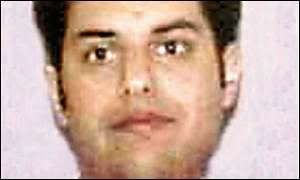 A man called Waleed Al Shehri says he left the US a year ago
Hijacking suspects
Flight 175: Marwan Al-Shehhi, Fayez Ahmed, Mohald Alshehri, Hamza Alghamdi and Ahmed Alghamdi
Flight 11: Waleed M Alshehri, Wail Alshehri, Mohamed Atta, Abdulaziz Alomari and Satam Al Suqami
Flight 77: Khalid Al-Midhar, Majed Moqed, Nawaq Alhamzi, Salem Alhamzi and Hani Hanjour
Flight 93: Ahmed Alhaznawi, Ahmed Alnami, Ziad Jarrahi and Saeed Alghamdi
Now he is protesting his innocence from Casablanca, Morocco.
The BBC reports:
Another of the men named by the FBI as a hijacker in the suicide attacks on Washington and New York has turned up alive and well.
The identities of four of the 19 suspects accused of having carried out the attacks are now in doubt.
Saudi Arabian pilot Waleed Al Shehri was one of five men that the FBI said had deliberately crashed American Airlines flight 11 into the World Trade Centre on 11 September.
His photograph was released, and has since appeared in newspapers and on television around the world.
He told journalists there that he had nothing to do with the attacks on New York and Washington, and had been in Morocco when they happened. He has contacted both the Saudi and American authorities, according to Saudi press reports.
He acknowledges that he attended flight training school at Daytona Beach in the United States, and is indeed the same Waleed Al Shehri to whom the FBI has been referring.
But, he says, he left the United States in September last year, became a pilot with Saudi Arabian airlines and is currently on a further training course in Morocco.
Mistaken identity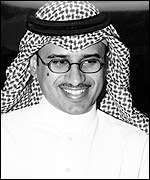 Abdelaziz Al Omari 'lost his passport in Denver'
Abdulaziz Al Omari, another of the Flight 11 hijack suspects, has also been quoted in Arab news reports.
He says he is an engineer with Saudi Telecoms, and that he lost his passport while studying in Denver.
Another man with exactly the same name surfaced on the pages of the English-language Arab News.
The second Abdulaziz Al Omari is a pilot for Saudi Arabian Airlines, the report says.
Meanwhile, Asharq Al Awsat newspaper, a London-based Arabic daily, says it has interviewed Saeed Alghamdi.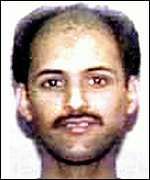 Khalid Al-Midhar may also be alive
He was listed by the FBI as a hijacker in the United flight that crashed in Pennsylvania.
And there are suggestions that another suspect, Khalid Al Midhar, may also be alive.
FBI Director Robert Mueller acknowledged on Thursday that the identity of several of the suicide hijackers is in doubt.
