The legendary linguist and activist explains why he's highly skeptical about Bush Administration involvement in perpetrating 9/11.
At Alternet.org, Adam Howard writes:
While acknowledging that he may be out-of-step with many of his colleagues on the left, Chomsky talks about why he doesn't believe that 9/11 was an "inside job." Among other things he believes that some aspect of the plan would have leaked and too many events on that day were too elaborate to have been planned to perfection and therefore would not have been worth the risk for the Bush Administration. However, he also speaks of how the attacks were the best thing to ever happen to corrupt regimes throughout the world.
Watch the video:
Showing posts with label 9/11/01. Show all posts
Showing posts with label 9/11/01. Show all posts
Tuesday, October 30, 2007
| [+/-] |
Noam Chomsky Weighs in on 9/11 Conspiracy Theories |
Saturday, September 8, 2007
| [+/-] |
John Edwards Returns To Pace University |
At CBS4 in New York city, Kelly Marshall writes:
Sen. John Edwards entered Pace University auditorium Friday afternoon to loud applause, the pop, pop of camera flashbulbs and possibly a sense of déjà vu.
In September 2003, Edwards took the school stage in one of the Democratic debates in the last campaign. This time he had the stage all to himself.
Pace University sits at the base of the Brooklyn Bridge and is just a few blocks from the World Trade Center. The sixth anniversary of 9/11 is just days away and it's a tough anniversary for some.
Edwards was introduced Friday by Kristin Breitweiser, whose husband, Ron worked in the World Trade Center and was killed on 9/11. After she lost her husband, Breitweiser and four other 9/11 widows formed the "Jersey Girls" and successfully lobbied Congress to form an investigative commission to look into the attacks. This blonde-haired single-mother calls Edwards and his wife, Elizabeth, friends and is supporting Edwards on the campaign trail for a second time. In 2004, Breitweiser said Edwards -- who wound up as John Kerry's vice presidential runningmate --was the only candidate offering solutions to the country's current problems.
Edwards spoke to an audience full of supporters and media, but not a large number of students. But Edwards reached out to young people just the same. Touching on the war in Iraq, his views on foreign policy, and oil dependency, Edwards said he was willing to sacrifice for America and asked that they do the same. It is "these sacrifices from you and other Americans that will restore this country's greatness," he said.
To enthusiastic applause, Edwards said that it was, "time to be patriotic about something other than war." He also challenged the students in the audience to, "hold yourself accountable for creating a better nation. That is what it means to be American."
Edwards left the stage to a standing ovation. Breitweiser said she thought Edwards gave a great speech and that his ideas for changing the way America fights terrorism and improving foreign relations would provide a safer future for everybody.
Friday, September 7, 2007
| [+/-] |
New Osama Bin Laden Tape |

Bin Laden tapes
October 6, 2001 - audio tape released, supposedly of bin Laden saying any US attack on Muslim world would be repaid "twofold".
November 12, 2001 - apparent video tape of bin Laden warning US allies against supporting "White House gang of butchers".
December 20, 2003 - audio tape, purportedly from bin Laden, accuses Arab governments responding to US calls for democracy of being "infidel" agents of US.
May 6, 2004 - audio recording, said to be from bin Laden, calls for a holy war against the US-led occupation of Iraq.
October 30, 2004 - Days before the US presidential election, bin Laden in a video tells Americans Bush has deceived them and that the US could face more strikes like September 11.
Al Jazeera English reports:
A videotape purporting to show Osama bin Laden has been released in which the al-Qaeda leader warns George Bush that he is repeating the "mistakes of the former Soviet Union".
US officials were studying the tape, which, if proved to be genuine, would be the first message from bin Laden for nearly three years.
In the tape, bin Laden purportedly said that US Democrats had failed to stop the Iraq war because of the power of US corporations.
"The mistakes of Brezhnev are being repeated by Bush," says Bin Laden on the tape, in a reference to the former Soviet invasion of Afghanistan, Reuters reported.
Bin Laden said that the war in Iraq was continuing for "the same reasons which led to the failure of former president [John F] Kennedy to stop the Vietnam war - those with real power and influence are those with the most capital", the Reuters news agency reported.
The tape, released on Friday, purportedly shows Bin Laden telling US citizens that they should join Islam if they want the war in Iraq to end, though it is said to contain no specific threats.
The videotape was issued just days before the 6th anniversary on the September 11 attacks on New York.
Commenting on the video, Bush said the tape was "a reminder about the dangerous world in which we live, and it is a reminder that we must pull together to protect our people against these extremists who murder the innocent in order to achieve their political objective."
Authenticity
In the video bin Laden is shown with his beard much shorter and darker than in his last appearance, when it was streaked with grey.
A banner on the screen reads in English: "A message from Sheikh Osama bin Laden to the American people."
References in the video to Nicolas Sarkozy, the French president, and Gordon Brown, the British prime minister, are believed to suggest the video is only a few weeks old.
Bin Laden also appeared to refer to memorial ceremonies in Hiroshima and Nagasaki that took place barely a month ago, on August 6 and on August 9.
A US official said that this could mean the video was recorded later in August.
US officials have not confirmed the authenticity of the tape, but did say that it was being analysed.
Later Reuters reported an anonymous official as saying the US was "operating under the assumption that the tape is real".
Adel Darwish, political editor of Middle East magazine, told Al Jazeera that he had "doubts" about the authenticity of the tape.
"Any kid these days with an electronic kit can alter images and edit the way that he or she likes," he said.
"There is no close up on bin Laden, the beard is thick and black and then there are large segments where the image is a still."
Website shutdown
Soon after Washington announced it had the video, all the websites that usually carry statements from al-Qaeda went down and were inaccessible, in an unprecedented shutdown, according to the Associated Press news agency.
The reason for the shutdown was not immediately known.
Evan H Kohlmann, an expert at globalterroralert.com, said he suspected it was the work of al-Qaeda itself, trying to find how the video leaked to US officials.
Others suspected the US might be behind the shutdown.
Marwan Bishara, Al Jazeera's senior political analyst, said: "Bin Laden is telling the Americans that he is still there and leading."
"It [the tape]underlines the strength of words in this new asymmetrical warfare in the 21st century between the US and al-Qaeda."
Tony Fratto, a White House spokesman, said the tape demonstrated that "terrorists are out there and they are actively trying to kill Americans and threaten our interests".
Bin Laden was last seen in a video statement shortly before the US presidential election in 2004.
Since then, he has issued a number of audio messages, the last in July 2006 when he vowed al-Qaeda would fight the US across the world.
Saturday, August 25, 2007
| [+/-] |
Robert Fisk: "Even I Question The 'Truth' About 9/11" |
From The Independent, Robert Fisk writes:
Each time I lecture abroad on the Middle East, there is always someone in the audience – just one – whom I call the "raver". Apologies here to all the men and women who come to my talks with bright and pertinent questions – often quite humbling ones for me as a journalist – and which show that they understand the Middle East tragedy a lot better than the journalists who report it. But the "raver" is real. He has turned up in corporeal form in Stockholm and in Oxford, in Sao Paulo and in Yerevan, in Cairo, in Los Angeles and, in female form, in Barcelona. No matter the country, there will always be a "raver".
His – or her – question goes like this. Why, if you believe you're a free journalist, don't you report what you really know about 9/11? Why don't you tell the truth – that the Bush administration (or the CIA or Mossad, you name it) blew up the twin towers? Why don't you reveal the secrets behind 9/11? The assumption in each case is that Fisk knows – that Fisk has an absolute concrete, copper-bottomed fact-filled desk containing final proof of what "all the world knows" (that usually is the phrase) – who destroyed the twin towers. Sometimes the "raver" is clearly distressed. One man in Cork screamed his question at me, and then – the moment I suggested that his version of the plot was a bit odd – left the hall, shouting abuse and kicking over chairs.
Usually, I have tried to tell the "truth"; that while there are unanswered questions about 9/11, I am the Middle East correspondent of The Independent, not the conspiracy correspondent; that I have quite enough real plots on my hands in Lebanon, Iraq, Syria, Iran, the Gulf, etc, to worry about imaginary ones in Manhattan. My final argument – a clincher, in my view – is that the Bush administration has screwed up everything – militarily, politically diplomatically – it has tried to do in the Middle East; so how on earth could it successfully bring off the international crimes against humanity in the United States on 11 September 2001?
Well, I still hold to that view. Any military which can claim – as the Americans did two days ago – that al-Qa'ida is on the run is not capable of carrying out anything on the scale of 9/11. "We disrupted al-Qa'ida, causing them to run," Colonel David Sutherland said of the preposterously code-named "Operation Lightning Hammer" in Iraq's Diyala province. "Their fear of facing our forces proves the terrorists know there is no safe haven for them." And more of the same, all of it untrue.
Within hours, al-Qa'ida attacked Baquba in battalion strength and slaughtered all the local sheikhs who had thrown in their hand with the Americans. It reminds me of Vietnam, the war which George Bush watched from the skies over Texas – which may account for why he this week mixed up the end of the Vietnam war with the genocide in a different country called Cambodia, whose population was eventually rescued by the same Vietnamese whom Mr Bush's more courageous colleagues had been fighting all along.
But – here we go. I am increasingly troubled at the inconsistencies in the official narrative of 9/11. It's not just the obvious non sequiturs: where are the aircraft parts (engines, etc) from the attack on the Pentagon? Why have the officials involved in the United 93 flight (which crashed in Pennsylvania) been muzzled? Why did flight 93's debris spread over miles when it was supposed to have crashed in one piece in a field? Again, I'm not talking about the crazed "research" of David Icke's Alice in Wonderland and the World Trade Center Disaster – which should send any sane man back to reading the telephone directory.
I am talking about scientific issues. If it is true, for example, that kerosene burns at 820C under optimum conditions, how come the steel beams of the twin towers – whose melting point is supposed to be about 1,480C – would snap through at the same time? (They collapsed in 8.1 and 10 seconds.) What about the third tower – the so-called World Trade Centre Building 7 (or the Salmon Brothers Building) – which collapsed in 6.6 seconds in its own footprint at 5.20pm on 11 September? Why did it so neatly fall to the ground when no aircraft had hit it? The American National Institute of Standards and Technology was instructed to analyse the cause of the destruction of all three buildings. They have not yet reported on WTC 7. Two prominent American professors of mechanical engineering – very definitely not in the "raver" bracket – are now legally challenging the terms of reference of this final report on the grounds that it could be "fraudulent or deceptive".
Journalistically, there were many odd things about 9/11. Initial reports of reporters that they heard "explosions" in the towers – which could well have been the beams cracking – are easy to dismiss. Less so the report that the body of a female air crew member was found in a Manhattan street with her hands bound. OK, so let's claim that was just hearsay reporting at the time, just as the CIA's list of Arab suicide-hijackers, which included three men who were – and still are – very much alive and living in the Middle East, was an initial intelligence error.
But what about the weird letter allegedly written by Mohamed Atta, the Egyptian hijacker-murderer with the spooky face, whose "Islamic" advice to his gruesome comrades – released by the CIA – mystified every Muslim friend I know in the Middle East? Atta mentioned his family – which no Muslim, however ill-taught, would be likely to include in such a prayer. He reminds his comrades-in-murder to say the first Muslim prayer of the day and then goes on to quote from it. But no Muslim would need such a reminder – let alone expect the text of the "Fajr" prayer to be included in Atta's letter.
Let me repeat. I am not a conspiracy theorist. Spare me the ravers. Spare me the plots. But like everyone else, I would like to know the full story of 9/11, not least because it was the trigger for the whole lunatic, meretricious "war on terror" which has led us to disaster in Iraq and Afghanistan and in much of the Middle East. Bush's happily departed adviser Karl Rove once said that "we're an empire now – we create our own reality". True? At least tell us. It would stop people kicking over chairs.
Thursday, August 16, 2007
| [+/-] |
The Caged Life |
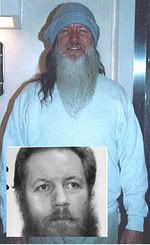 Is Thomas Silverstein a prisoner of his own deadly past — or the first in a new wave of locked-down lifer
For Denver's Westword News, Alan Prendergast writes:
When the goon squad showed up at his place at five in the morning, Tommy Silverstein knew something was up. He wasn't accustomed to greeting guests at such an ungodly hour — much less a team of corrections officers, helmeted and suited up for action.
In fact, Silverstein wasn't used to company at any hour. His home was a remote cell, known as the Silverstein Suite, in the special housing unit of the federal penitentiary at Leavenworth, Kansas. He'd been cut off from other inmates and all but a few emissaries from the outside world for more than two decades.
He stayed in the Silverstein Suite 23 hours a day. His interactions with staff typically amounted to some tight-lipped turnkey delivering his food through a slot in the cell door. The only change of scenery came when an electronic door slid open, allowing him an hour's solitary exercise in an adjoining recreation cage. Visitors were rarely permitted, and entire years had gone by during which he never left the cell.
But this day was different. Silverstein could think of only a couple of reasons why so many well-padded, well-equipped officers would be at his door, ordering him to strip for a search. Cell shakedown? Time for a game of hockey, with Tommy as the puck? No, that was a captain leading the squad. Something big.
A transfer.
So it came to pass that on July 12, 2005, U.S. Bureau of Prisons inmate #14634-116 left his cage in Kansas for one in Colorado. Security for the move was tighter than Borat's Speedo — about what you'd expect for a former Aryan Brotherhood leader convicted of killing four men behind prison walls. (One conviction was later overturned; Silverstein disputes the second slaying but admits the other two.) The object of all this fuss didn't mind the goon squad. He was enjoying the view — and hoping that the move signaled the end to his eight-thousand-plus days of solitary confinement. Maybe, just maybe, his decades of uneventful good behavior had paid off.
"They said for me to keep my nose clean, and maybe one day it'd happen," he recalled recently. "So I foolishly thought this was it. If you saw me in that van, you'd think I was Disneyland-bound, smiling all the way."
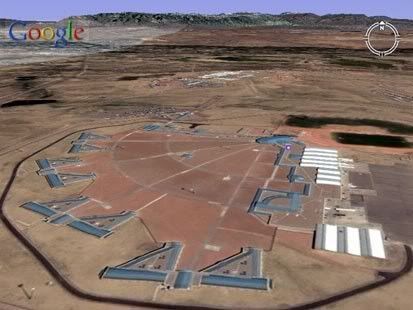
But the smile vanished after Silverstein reached his destination: the U.S. Penitentiary Administrative Maximum, better known as ADX. Located two miles outside of the high-desert town of Florence, ADX is the most secure prison in the country, a hunkered-down maze of locks, alarms and electronic surveillance, designed to house gang leaders, terrorists, drug lords and other high-risk prisoners in profound isolation. Its current guest list is a who's who of enemies of the state, including Unabomber Ted Kaczynski, shoe bomber Richard Reid, plane bomber Dandenis Muñoz Mosquera, abortion clinic bomber Eric Rudolph and double-agent Robert Hanssen.
When it opened in 1994, ADX was hailed as the solution to security flaws at even the highest levels of the federal prison system. Much of the justification for building the place stemmed from official outrage at the brutal murders of two guards in the control unit of the federal pen in Marion, Illinois, during a single 24-hour period in 1983. The first of those killings was committed by Thomas Silverstein, who was already facing multiple life sentences for previous bloodshed at Marion. The slaying of corrections officer Merle Clutts placed Silverstein under a "no human contact" order that's prevailed ever since, and it gave the Bureau of Prisons the perfect rationale for building its high-tech supermax. Although he never bunked there until 2005, you could call ADX the House that Tommy Built.
What greeted Silverstein two years ago was nothing like Disneyland. His hosts hustled him down long, sterile corridors with gleaming black-and-white checkerboard floors that reminded him of A Clockwork Orange or some other cinematic acid trip. One set of doors, then another and another, until he finally arrived at the ass-end of Z Unit, on a special range with only four cells, each double-doored. His new home was less than half the size of the Silverstein Suite and consisted of a steel slab with a thin mattress, a steel stool and desk, a steel sink-and-toilet combination, a steel shower and a small black-and-white TV.
Stripped of most of his small store of personal belongings, Silverstein had little to do besides take stock of his eighty-square-foot digs. The Silverstein Suite was a penthouse at the Plaza compared to this place. There were steel rings on the sides of the bed platform, ready for "four-pointing" difficult inmates. A camera mounted on the ceiling to record his every move. If he stood on the stool and peered out the heavily meshed window, he could get a glimpse of a concrete recreation cage and something like sky. So this was his reward for all those years of following the rules — 24-hour surveillance in his own desolate corner of the Alcatraz of the Rockies. He was no longer simply in the belly of the beast. He was, he would later write, "stuck in its bowels, with no end/exit in sight."
The double doors muffled sound from outside. But over time, Silverstein realized that there was one other prisoner on the range. He shouted greetings. The man shouted back. He asked the man how long he'd been in the unit. Four years, the man said.
Silverstein told the man his name. His neighbor introduced himself: Yousef. Ramzi Yousef. Convicted of the 1993 World Trade Center bombing, the one that killed six people and injured a thousand. Nephew of Khalid Sheikh Mohammed, the al-Qaeda leader who recently confessed to planning that failed effort to bring down the towers as well as the 9/11 attacks.
His keepers had put Silverstein in the beast's bowels, all right — right next to the one man in the entire federal system more loathed than he was. Still, it was somebody to talk to. Shouting to Yousef was the first conversation with another inmate that Silverstein had managed in almost twenty years.
But talking wasn't allowed. Within days, a new barrier was erected in the corridor outside his cell, preventing any further communication between the two residents of the range. Inmate #14634-116's transfer to ADX was now complete.
Entombed, Terrible Tommy was alone again. Naturally.
In the late 1980s, Pete Earley, a former Washington Post reporter, persuaded Bureau of Prison officials to grant him an unprecedented degree of access to inmates and staff at the Leavenworth penitentiary. Earley was allowed to walk the yard without an escort, to interview inmates without official monitoring, to talk candidly with veteran corrections officers about the dangers and frustrations of their work.
The resulting book, The Hot House: Life Inside Leavenworth Prison, is one of the most vivid works of prison reportage ever published. Among several unsettling portraits of career criminals and their keepers, the most memorable character is probably one Thomas Silverstein, who was then being housed, a la Hannibal Lecter, in a zoo-like cage in Leavenworth's basement, where the fluorescent lights stayed on around the clock to make it easier to watch him. Wild-haired and bearded — the BOP would not allow him a razor or a comb — Silverstein spent hours talking into Earley's tape recorder, describing his violent past and the petty torments he claimed the guards were putting him through in an effort to drive him insane.
Earley's book made Leavenworth's dungeon monster seem not only rational but quite possibly human. Granting a journalist unfettered access to him was a public relations blunder the BOP has been unwilling to repeat. Silverstein hasn't been allowed to have a face-to-face interview with a reporter for the past fifteen years. When Westword recently asked to visit him, ADX warden Ron Wiley promptly denied the request, citing "continued security concerns." But then, Wiley and his predecessors haven't let any journalist inside ADX to interview any inmate since 2001 because of "continued security concerns" (see related story).
Although he readily agreed to an interview with Westword, Silverstein isn't a huge fan of the press, either. He remains friendly with Earley, but he's learned to be wary of hit-and-run tabloid writers following in his wake, eager to write about "the most dangerous prisoner in America." Most of what the outside world knows about him, if it pays any attention at all, is the fragmentary image presented in The Hot House; he's a captive of his own legend, like some prehistoric insect trapped in amber. His letters seethe with contempt for lazy "plagiarists" who have simply appropriated snatches of Earley's account as well as for those who've produced long magazine pieces or cheeseball cable programs about the Aryan Brotherhood that largely rely on the lurid tales of government snitches.
"For some odd reason the media pees when Master snaps his fingers," he wrote recently. "I wouldn't call 'em 'mainstream' any more cuz there isn't anything mainstream about 'em. They're just lackeys for the powers that be."
Silverstein's response to the "injurious lies" spread about him has been to launch his own information campaign at www.tommysilverstein.com. That's right — America's most solitary prisoner, a man who's been inside since before the personal computer was invented and has never been allowed near one, has his own website, maintained by outside supporters who forward messages to him and post his responses.
"He's got a pretty impressive network," says Terry Rearick, a California private investigator who has communicated with Silverstein by letter and phone over several years. After the two lost touch for a time, Rearick got a call from a woman in England on Silverstein's behalf.
The same woman posts regularly on the website, where Silverstein himself duels at length with his detractors. (A similarly heated debate has ignited over the wording of Silverstein's entry on Wikipedia; his defenders and his critics alternately revise the account to suit their competing versions of his crimes.) Some visitors to his site dismiss him as a textbook psychopath. But Silverstein contends that if people understood the grim context in which the killings at Marion took place, the snitch games and psychological warfare and organized violence of prison life, they wouldn't be so quick to demonize him.
It's a strangely disconnected argument — a garbled dialogue between cultures on different planets. Most of the visitors to his website know little about Silverstein's world, just as he knows little about theirs. He's been in prison for the past 32 years, and much of what he's learned about life on the street since he was put in solitary in 1983 has come from reading or watching television. No American prisoner, not even Robert Stroud, the Birdman of Alcatraz, has ever been condemned to such a walled-off existence for such a long period of time. Many of Stroud's years of solitary confinement were spent in relative ease at Leavenworth; he had not only frequent visitors, but also a full-time secretary. Even his seventeen-year stretch in Alcatraz allowed for much more daily communication with others than Silverstein has had.
"I'm amazed that he's not stark, raving mad," says Paul Wright, the editor of Prison Legal News, who's corresponded with Silverstein for years and published some of his writing. "He's been in total isolation for almost 25 years. The only people I can think of that have been held in anything remotely like this in modern times are some of the North Korean spies held in South Korea."
Yet the no-contact conditions imposed on Silverstein are becoming less unique by the day. There are now 31 supermax prisons in the country, with more under construction, including Colorado's own 948-bed sequel to the current state supermax, known as Colorado State Penitentiary II. They are costly on several levels — the operational expense per cell can be double that of a less-secure prison, and the rate of mental illness in solitary confinement far exceeds that of the general prison population — but lockdown prisons are all the rage with a vengeful public. Increasingly, they are being used not for short-term punishment (disciplinary segregation) but for long-term confinement of hard-to-manage inmates (administrative segregation), whose privileges keep shrinking. Colorado, for example, no longer allows journalists to interview its supermax inmates except by mail.
"The phenomenon is disturbingly common," says David Fathi, a staff attorney for the ACLU's National Prison Project. "If it's disciplinary confinement, it's finite — when you're done, you're done. But with administrative segregation, there's a real lack of transparency about what a prisoner can do to earn his way out."
In the federal system, the past decade has seen the rise of "special administrative measures," or SAMs, which are imposed on terrorists or other inmates whose communications with the outside world "could result in death or serious bodily injury to persons." There are now at least two dozen SAMs cases in federal prisons, including Yousef and Zacarias Moussaoui, whose access to mail, phone calls, media interviews or other visits are extremely limited or banned outright. At present the restrictions must be approved by the U.S. Attorney General, but the Bush administration is considering changes that would allow wardens at ADX or other high-security prisons to designate inmates as terror threats and thus ban them from all media contact — even if they haven't been convicted on terrorism charges yet, Fathi notes.
Silverstein isn't a SAMs case. He still has his website and his mail (although he claims it's frequently withheld or "messed with" in other ways). But he may be the prototype of what the government has in mind for other infamous prisoners — to bury them in strata of supermax security to the point of oblivion.
Responding in letters to questions about the psychological impact of his isolation, Silverstein struggles to find the right words. "Trying to explain it is like trying to explain what an endless toothache feels like," he writes. "I wish I could paint what it's like."
In an article a few years ago, he called solitary confinement "a slow constant peeling of the skin, stripping of the flesh, the nerve-wracking sound of water dripping from a leaky faucet in the still of the night while you're trying to sleep. Drip, drip, drip, the minutes, hours, days, weeks, months, years, constantly drip away with no end or relief in sight."
In a Darwinian world, predators have to adapt or die, just like their prey. Tommy Silverstein arrived in the federal prison system at a critical phase of its evolution, when the number of inmate assaults on other inmates and staff was rising sharply and officials were looking at the idea of control units as a way to neutralize the growing threat posed by prison gangs. Silverstein quickly became a symbol of the problem — and the inadequacy of the proposed solution. It's not a stretch to say that the Marion control unit helped to make him what he became, just as the mayhem that erupted there helped to reshape the American prison system.
Before he reached the nether regions of the BOP, Silverstein's criminal career had been thoroughly unremarkable. Born in 1952 in California, he'd grown up in a middle-class neighborhood in Long Beach, but he was bullied by other kids who thought he was Jewish. (According to The Hot House, Silverstein's biological father was a man named Thomas Conway, whom his mother divorced when Tommy was four years old; she later married a man named Silverstein.) As a teenager, he ripped off houses for money to buy drugs; his sister, Sydney McMurray, says he was battling a heroin addiction and problems with his volatile, controlling mother.
"We were taught never to throw the first punch, but never to walk away from a fight," McMurray recalls. "My brother started getting into trouble because he was running away from a violent environment at home. Then he got into drugs, and he became a brother I never knew."
At nineteen, Silverstein landed in San Quentin for armed robbery. Paroled, he was soon arrested again for series of robberies — pulled with Conway and another relative — that yielded less than $1,400. This time, he went into the federal system on a fifteen-year jolt. He was 23 years old, and his life on the streets was already over.
At Leavenworth Silverstein became closely associated with Aryan Brotherhood members who allegedly controlled the heroin trade inside the prison — close enough that when convict Danny Atwell was found stabbed to death, supposedly because he'd refused to be a mule for the heroin business, Silverstein and two other AB members were charged with the murder. In 1980, he was convicted at trial on the basis of shifting testimony from other inmates and sentenced to life in prison. A federal appeals court later ruled that much of the testimony should never have been allowed and threw out the conviction. But by that time, Silverstein was in the Marion penitentiary and facing more murder charges.
Marion opened in 1963, the same year that Alcatraz closed. It was intended to be not just a replacement for the Rock but an improvement, with a more open design and modern rehabilitation programs. Yet by the late 1970s, it had the most restrictive segregation unit in the BOP; not coincidentally, it was also the most violent prison in America, a dumping ground for gang leaders and crazies. Between 1979 and 1983, the prison logged 81 inmate assaults on other inmates and 44 on staff; 13 prisoners were killed. BOP reports issued in 1979 and 1981 proposed turning the entire facility into a "closed-unit operation."
Confined to a one-man cell in the control unit 23 hours a day, Silverstein says he spent much of his time learning how to draw and paint. [Silverstein's artwork.] "I could hardly read, write or draw when I first fell," he explains. "But most of us lifers are down for so long and have so much time to kill that we actually fool around and discover our niche in life, often in ways we never even dreamt possible on the streets. We not only find our niche, we excel."
Prison officials worried that Silverstein was finding his niche in other areas, too. Long-simmering disputes between white and black gangs had a way of coming to a boil in the control unit. In 1981, D.C. Blacks member Robert Chappelle was found dead in his cell. He'd apparently been sleeping with his head close to the bars and had been strangled with a wire slipped around his neck, plied by someone exercising on the tier. Silverstein and another convicted killer, Clayton Fountain, received life sentences for the crime; inmates who testified for the prosecution claimed the two had boasted of it.
Silverstein has always denied killing Chappelle. (Another inmate later claimed to have done the deed, but investigators found his confession at odds with the facts.) Yet even if he hadn't been convicted in court, the suspicion that he was responsible was sufficient to trigger more violence. Shortly after the slaying, the BOP saw fit to transfer one of Chappelle's closest friends, D.C. Blacks leader Raymond "Cadillac" Smith, to the Marion control unit from another prison. Within days, Smith had tried to stab Silverstein and shoot him with a zip gun. Silverstein and Fountain responded by cutting their way out of an exercise cage with a piece of hacksaw blade and paying a visit to Smith while he was in the shower. Smith was stabbed 67 times, in what Silverstein still describes as an act of convict self-defense.
"Everyone knew what was going on and no one did anything to keep us apart," he told Earley. "The guards wanted one of us to kill the other."
At the time, there was no federal death penalty for inmate homicides — and not much the system could do to Silverstein, who was already serving multiple life sentences in the worst unit of the worst prison the BOP had to offer. But some staffers, concerned about Silverstein's outsized rep among white inmates, apparently did their best to keep him in check. In the months that followed Cadillac's death, Silverstein began to regard Officer Merle Clutts, a bull-headed regular of the control unit, as his chief tormentor.
Silverstein has given different explanations about what Clutts did to deserve such attention. Clutts trashed his cell during shakedowns and withheld mail; he smudged his artwork and taunted him; he even tried to set him up for attack by other inmates, Silverstein has suggested. Silverstein claims he told Earley "the whole story," but only pieces made it into The Hot House. Earley won't comment, saying he no longer discusses Silverstein with other reporters because of past misunderstandings.
The BOP has denied that Clutts harassed Silverstein. Whatever the source of the feud might have been, there's no question that Silverstein became fixated on Clutts. One study by Harvard psychiatrist Stuart Grassian suggests that prisoners in control units sometimes experience "the emergence of primitive, aggressive fantasies of revenge, torture, and mutilation" of the guards who watch over them.
Silverstein thought about Clutts, and he thought about the difficulties involved in getting to his enemy when he was allowed out of his cell only one hour a day, shackled, escorted by three guards.
Locked down for life, he had a mountain of time to consider the problem.
One day in solitary is pretty much like another. Prisoners have different strategies for filling up their days, but there are always more days to come.
In his cell at Florence, 54-year-old Tom Silverstein usually rises before dawn, catches up on letters and reads, waiting for the grand event that is the delivery of his breakfast. He goes to rec for an hour, comes back to the grand event that is lunch, showers and cleans his cell. Time for some channel-flipping on the small black-and-white TV, in search of something fresh amid the religious chatter and educational programs he's watched over and over. More reading, some yoga. Then dinner, more TV - he's a sucker for Survivor, Big Brother and other "reality-type shows" — and so to bed.
When he was in the Silverstein Suite at Leavenworth, Silverstein had access to paintbrushes, pens and other art supplies. At ADX, he's only permitted pastels, colored pencils and "cheap-ass paper," he reports; consequently, he hasn't drawn a lick since he's been there. He says that every few weeks, he's moved from the cell with the heavily meshed window to one with no window at all, then back again a few weeks later. There are rare, glorious interruptions in the routine — a visit with sister Sydney last May, an occasional lawyer checking in. Visitors sit in a booth outside the cell and talk to him on a phone; he sits shackled on the other side of a glass partition and talks back. But these dazzling bursts of conversation quickly fade into a muddle. Did the last lawyers come before or after his sister? Silverstein isn't sure.
"It's all a blur, a dream state of mind," he writes. "Like my memories. When I venture back to my yesterdays, it's hard to distinguish fact from fiction."
Yet there is one memory, one day that stands out from all the rest — the day that started it all. Twenty-four years later, Silverstein is still in the position of analyzing, defending and regretting the act that has defined his fate. But nothing can explain away the act itself, a murder that was meticulously planned and ruthlessly executed.
Marion wasn't designed to be a supermax. Control unit prisoners had to be shackled and escorted to the shower every day, and the guards permitted them to have brief conversations with other inmates in cells along the way. On October 22, 1983, Silverstein was on his way back from his shower when another inmate in a rec cage called over one of his three escorts — Merle Clutts. Now flanked by only two guards, Silverstein paused at the cell of one of his buddies, Randy Gometz, and struck up a conversation.
Before the guards knew what was happening, Gometz had reached through the bars, uncuffed Silverstein with a hidden key — and supplied him with a shank. Silverstein broke away from the guards and headed toward Clutts, now isolated at the far end of the tier. "This is between me and Clutts!" he shouted.
He stabbed the officer forty times before the dying Clutts could make it off the tier. Hours later, Silverstein's friend Clayton Fountain pulled the same handcuff trick and attacked three more guards in the control unit, fatally wounding Robert L. Hoffman Sr.
Two federal officers slaughtered in one day, on what was supposed to be the most secure unit in the entire BOP, sent the system into shock. The bureau's response was to forge ahead with the long-considered plan to turn all of Marion into a control unit while whisking Silverstein and Fountain into even more restricted quarters. (Fountain died in 2004 at the age of 48).
For years prison activists attempted to challenge the Marion lockdown in court, charging that the prison staff set about beating other prisoners and subjecting them to "forced rectal searches" as payback for the deaths of Clutts and Hoffman. In 1988, a federal judge ruled that the inmate accounts of staff brutality were simply not credible.
By that point, Silverstein and the bureau were already on the road that would lead to ADX — a place where communication among inmates, and physical contact between inmates and staff, could be strictly controlled and all but eliminated.
If the guard killings in Marion happened at any federal prison today, the perpetrators would almost certainly face the death penalty. Silverstein has suggested more than once that death would have been a more merciful option in his case.
"Even though we may not execute people by the masses, as they do in other countries, our government leaders bury people alive for life in cement tombs," he writes. "It's actually more human to execute someone than it is to torture them, year, after year, after year."
Silverstein's last taste of some kind of freedom came in the fall of 1987. Rioting Cuban prisoners broke into his special cell in the Atlanta federal penitentiary and set him loose. For one surreal week, he was able to roam the yard while the riot leaders dickered with federal negotiators over the release of more than a hundred prison staffers who'd been taken hostage.
Then the Cubans jumped him, shackled him and turned him over to the feds. Surrendering Silverstein had been high on the BOP's list of demands for resolving the situation, right up there with releasing all hostages unharmed.
Contrary to the bureau's expectations, Silverstein didn't butcher any guards during his precious days of liberty. He didn't harm anyone. He suggests the episode shows that he's not the killing machine the BOP says he is, and that he could exist in a less restrictive prison without resorting to violence.
The bureau isn't convinced. He killed Clutts.
Terrible Tommy says he's changed. He claims to have gone 21 years without a disciplinary writeup. Other long-term solitaries go berserk, smearing their cells with feces and "gassing" their captors with shit-piss cocktails. Not him.
"The BOP shrinks chalk it up as me being so isolated I haven't anyone to fight with," he writes, "but they're totally oblivious to all the petty BS that I could go off on if I chose to. I can toss a turd and cup of piss with the best of 'em if I desired. What are they going to do, lock me up?
"But I just have more self-control now, after 25 years of yoga, meditation, studying Buddhism and taking some anger-management courses. All that goes unacknowledged."
McMurray says her brother has learned a great deal about patience and suffering over the years. "He's more like the brother I knew on the outside years ago," she says. "I have spoken with the guards who deal with him every day, and they don't have a bad thing to say about him. It's the ones in administration who are trying to make it as difficult as they can for him.
"But my brother has a spirit that is unbreakable. In Leavenworth, at least he could draw. It's been more of a challenge for him in this situation, but he hasn't let it break his spirit."
The bureau doesn't care about his spiritual progress. He killed Clutts.
Silverstein has told reporters that he wants to apologize to the families of the men he killed, "even though it was in self-defense." He has recanted some oft-quoted lines from his interviews with Earley about "smiling at the thought of killing Clutts" and feeling the hatred grow every time he was denied a phone call or a visit. He says he regrets the grief he's caused and no longer seethes with hatred.
The bureau is unmoved by his repentance. He killed Clutts.
Silverstein has been cut off from the operations of the Aryan Brotherhood for decades. His story is still told among the faithful, in an effort to keep his memory alive among the younger members, but he disputes that the group is a white supremacist organization. His own paintings include an ethnically diverse array of portraits. "I think it's worth noting that Tommy is no longer a racist, if he ever was," says Prison Legal News editor Wright.
The bureau could give fuck-all. He killed Clutts.
Twice a year, prison officials hold a brief hearing to review Silverstein's placement in administrative segregation. For many years, the hearings were held in the corridor outside the Silverstein Suite in Leavenworth. Silverstein stopped attending because the result was always the same: no change. At ADX, he's taken to filing grievances, claiming that the move has left him more isolated, with fewer privileges than ever before.
"I am being punished for good conduct under ploy of security reasons," he wrote last year in a formal appeal of his situation. "The goal of these units is clearly to disable prisoners through spiritual, psychological and/or physical breakdown."
In his response, Warden Wiley pointed out that Silverstein is provided with food and medical care, "daily contact with staff members" and access to television, radio and reading materials.
"It's ridiculous to call a nameless guard that shoves a food tray through the hole in the door...a source of meaningful 'human contact,'" Silverstein fired back. "I request placement in general population."
He took his appeal to the regional office, then to headquarters, where it was swiftly denied. "You are serving three consecutive life terms plus 45 years for bank robbery and murder, including the murder of Bureau of Prisons staff," an administrator noted. "You are a member of a disruptive group and an escape risk. Your heinous criminal and institutional behavior warrant a highly individualized and restrictive environment."
Wiley declines to comment on Silverstein's treatment at his prison. Last spring, a group from Human Rights Watch was allowed to tour certain areas of ADX. The group wasn't let in Z-Unit, where Silverstein lives, or anywhere near A-Unit — the "hole," where most disciplinary cases are housed. But they saw enough to realize that the staffers who bring meals "do not converse regularly, if at all, with the inmates." Despite claims that clinical psychologists checked on prisoners every other week, "several inmates said they had not spoken to a psychologist in many months," and such conversations tended to be brief.
The group also reported that many ADX prisoners are trapped in a catch-22 predicament — they've been sent there directly after sentencing but have never been provided any opportunity to "progress" to a less restrictive setting because of the nature of their crime. Every placement review finds that the "reason for placement at ADX has not been sufficiently mitigated."
"No matter how well they behave in prison, they cannot undo the past crimes that landed them in prison, generally, and then ADX, specifically," Human Rights Watch director Jamie Fellner wrote to BOP director Harley Lapin.
Some crimes, it seems, are beyond redemption.
Silverstein got a copy of the do-gooders' report and immediately fired off a letter to the group, suggesting that they come see him in Z-Unit if they want the real story about the government's "failed and draconian penal system."
No one from the group has come to see him yet. Silverstein waits for them in his box within a box. He knows that the bureau just wants to bury him and that he turned the key himself. But he also knows he didn't build that box all on his own.
His earliest possible date of release is eighty-eight years away. He has nothing but time.
| [+/-] |
Fortress of Solitude |
The Bureau of Prisons is as good at keeping prisoners in as it is at keeping reporters out.
At Denver's Westword, Alan Prendergast writes:
A hundred miles southwest of Denver, the U.S. Penitentiary Administrative Maximum houses a killer lineup of mobsters (Salvatore "Sammy the Bull" Gravano), gang leaders (Barry "The Baron" Mills), assassins (Colombian hit man Dandenis "La Quica" Muñoz Mosquera) and terrorists (John "American Taliban" Walker Lindh). But not to worry — despite some embarrassing security breaches and two inmate homicides in the past two years, ADX has never had anything close to a breakout. It's probably the most escape-proof prison in the world.
For almost six years, it's also been media-proof. High-security prisoners are locked away in the Florence supermax, out of sight and mind — and reporters can't get in to see them, no matter how hard they try.
According to documents obtained by Westword, ADX officials have denied every single media request for a face-to-face interview with supermax prisoners from January 2002 through May 2007. It doesn't matter if the request comes from a major news organization or a humble local TV station; it doesn't matter if the prisoner is a high-profile resident or an obscure career criminal. Contrary to bureau policy, prison brass have turned down every journalist, citing boilerplate "security concerns" if no handier excuse is available.
Blanket denial of access appears to have started after the September 11 attacks. When Westword sought an interview with inmate Thomas Silverstein last spring, ADX warden Ron Wiley refused. The BOP "makes every effort" to accommodate media requests, Wiley explained, but "granting your request at this time may disrupt the good order and security of this institution."
Silverstein hasn't been granted a face-to-face with any journalist for more than a decade. But further inquiry revealed that Wiley wasn't turning us down because of who the subject was; prison spokesman Isidro Garcia acknowledged that the cited security concerns applied to any interview with any prisoner.
So when was the last time ADX allowed a prisoner to be interviewed? Garcia said he wasn't authorized to release that information.
After months of Freedom of Information Act requests and side battles, the answer finally arrived. There have been exactly 100 media requests to visit ADX since 2002, and Wiley and his predecessors have denied every single one. In fact, one of the last interviews to be conducted inside the supermax before the total media ban was Westword's visit with La Quica in 2001, four months before the September 11 attacks ("The Hit Man Nobody Knows," May 17, 2001).
In 23 cases, the reason cited for the denial was that the inmate declined to be interviewed. Another eighteen were turned down because the inmate in question is subject to special administrative measures (SAMs), including a ban on all media contact. (The BOP blacked out the names of the inmates out of privacy concerns, but virtually all SAMs inmates are convicted terrorists.) Three were rejected because the requests came from academics or free-lancers who aren't considered legitimate journalists by the BOP. But more than 50 percent of the denials cited unspecified "security concerns" — because, well, any visit by any outsider could, in theory, disrupt the good order and security of the government's most insecure supermax.
CNN, the Washington Post, 60 Minutes, Newsday — they were all turned down flat. So was the tabloid press, both foreign and domestic, from America's Most Wanted to American Gangsters to some dubious offshoots of the BBC and the Tokyo Broadcasting System. Well-known authors of books on terrorism, including Peter Lance and Lawrence Wright, were barred from interviewing prisoners with ties to radical Islam. Even the Cañon City Record, practically the prison's hometown newspaper, couldn't get in the door.
Journalists who simply wanted a tour of the place, free of any contact with prisoners, fared no better. Fast Food Nation author Eric Schlosser, who's been working on a book about the American prison system for several years, sent a plaintive three-page letter to the warden in 2004, offering to let prison officials review "any physical description of the facility and its staff that I write" before publication. No dice.
"I think ADX Florence may be America's most important prison," Schlosser wrote. "Denying me access to ADX Florence will not prevent me from writing about the facility. It will only make it harder for me to give a fully accurate depiction of the facility's aims and practices."
Schlosser was seeking what all self-respecting journalists want — the ability to see the situation for themselves. Without any access to the country's most important prison, reporters have been reduced to repackaging accounts from the inmates themselves. Eric Rudolph, for example, has been a prolific correspondent for publications ranging from Time magazine to the Colorado Springs Gazette, giving his own take on life inside "Bomber's Row" at ADX. But the view from lockdown can be quite limited, and prisoners can be punished if they write too freely. They are not supposed to mention other prisoners or provide physical details that might mess with the good order and security of the institution.
BOP policy states that a warden can suspend all media visits during "an institutional emergency" but provides no other basis for an ongoing ban on inmate interviews. Warden Wiley refused a request for an interview about the five-year ban at ADX or when it might be lifted.
Tuesday, July 3, 2007
| [+/-] |
A Government Insider Speaks Out |
At AfterDowningStreet.org, Steven Watson writes:
Is it possible that the anthrax attacks were launched from within our own government? A former Bush 1 advisor thinks it is.
Francis A. Boyle, an international law expert who worked under the first Bush Administration as a bioweapons advisor in the 1980s, has said that he is convinced the October 2001 anthrax attacks that killed five people were perpetrated and covered up by criminal elements of the U.S. government. The motive: to foment a police state by killing off and intimidating opposition to post-9/11 legislation such as the USA PATRIOT Act and the later Military Commissions Act.
"After the September 11, 2001, terrorist attacks, the Bush Administration tried to ram the USA PATRIOT Act through Congress," Boyle said in a radio interview with Austin-based talk-show host Alex Jones. "That would have set up a police state.
"Senators Tom Daschle (D-South Dakota) and Patrick Leahy (D-Vermont)
were holding it up because they realized what this would lead to. The
first draft of the PATRIOT Act would have suspended the writ of habeas
corpus [which protects citizens from unlawful imprisonment and
guarantees due process of law]. Then all of a sudden, out of nowhere,
come these anthrax attacks."
"At the time I myself did not know precisely what was going on, either
with respect to September 11 or the anthrax attacks, but then the New
York Times revealed the technology behind the letter to Senator
Daschle. [The anthrax used was] a trillion spores per gram, [refined
with] special electro-static treatment. This is superweapons-grade
anthrax that even the United States government, in its openly
proclaimed programs, had never developed before. So it was obvious to
me that this was from a U.S. government lab. There is nowhere else you
could have gotten that."
Boyle's assessment was based on his years of expertise regarding
America's bioweapons programs. He was responsible for drafting the
Biological Weapons Anti-Terrorism Act of 1989 that was passed
unanimously by both houses of Congress and signed into law by President
George H.W. Bush.
After realizing that the anthrax attacks looked like a domestic job,
Boyle called a high-level official in the FBI who deals with terrorism
and counterterrorism, Marion "Spike" Bowman. Boyle and Bowman had met
at a terrorism conference at the University of Michigan Law School.
Boyle told Bowman that the only people who would have the capability to
carry out the attacks were individuals working on U.S. government
anthrax programs with access to a high-level biosafety lab. Boyle gave
Bowman a full list of names of scientists, contractors and labs
conducting anthrax work for the U.S. government and military.
Bowman then informed Boyle that the FBI was working with Fort Detrick
on the matter. Boyle expressed his view that Fort Detrick could be the
main problem. As widely reported in 2002 publications, notably the New
Scientist, the anthrax strain used in the attacks was officially
assessed as "military grade."
"Soon after I informed Bowman of this information, the FBI authorized
the destruction of the Ames cultural anthrax database," the professor
said. The Ames strain turned out to be the same strain as the spores
used in the attacks.
The alleged destruction of the anthrax culture collection at Ames,
Iowa, from which the Fort Detrick lab got its pathogens, was blatant
destruction of evidence. It meant that there was no way of finding out
which strain was sent to whom to develop the larger breed of anthrax
used in the attacks. The trail of genetic evidence would have led
directly back to a secret government biowarfare program.
"Clearly, for the FBI to have authorized this was obstruction of
justice, a federal crime," said Boyle. "That collection should have
been preserved and protected as evidence. That's the DNA, the
fingerprints right there. It later came out, of course, that this was
Ames strain anthrax that was behind the Daschle and Leahy letters."
At that point, recounted Boyle, it became very clear to him that there
was a coverup underway. He later discovered, while reading David Ray
Griffin's book on the 9/11 attacks, The New Pearl Harbor, that Bowman
was the same FBI agent who allegedly sabotaged the FISA warrant for
access to [convicted co-conspirator] Zacharias Moussaoui's computer
prior to 9/11. Moussaoui's computer contained information that could
have helped prevent the attacks on the World Trade Center and the
Pentagon.
In 2003, Bowman was promoted and given the Presidential Rank Award by
FBI Director Robert S. Mueller. Senator Chuck Grassley (R-Iowa) wrote a
letter to Mueller, chastising the organization for granting such an
honor to an agent who had so obviously compromised America's security.
During the anthrax scare, the House of Representatives was officially
shut down for the first time in the history of the republic. Once
opposition from Leahy and Daschle evaporated in the wake of the
attempts on their lives, the USA PATRIOT Act was rammed through.
Testimony by Representative Ron Paul (R-Texas) revealed that most
members of Congress were compelled to vote for the bill without even
reading it.
"They were going to move to suspend the writ of habeas corpus, which is
all that really separates us from a police state," Boyle said. "And
that is what they have done now with respect to enemy combatants [in
the Military Commissions Act of 2006]." Boyle added that lawmakers are
now arguing that Amendment XIV, which guarantees due process of law to
all Americans, does not mean what it has been taken to mean and that,
under the Military Commissions Act, any U.S. citizen can be stripped of
citizenship and be labeled an enemy combatant.
Continued Boyle: "In other words, they have taken the position that at
some point in time, if they want to, they can unilaterally round up
United States native-born citizens, as they did for Japanese-Americans
in World War II, and stick us into concentration camps." Boyle asserted
that top officials, such as White House legal advisor John Yoo and
former Assistant Attorney General Jack Goldsmith (now a professor at
Harvard Law School), are pushing for the legalization of torture as
well.
"The Nazis did the exact same thing," said Boyle. "They had their
lawyers infiltrating law schools. Carl Schmidt was the worst, and he
was the mentor to Leo Strauss, the [ideological] founder of the
neoconservatives. So the same phenomenon that started in Nazi Germany
is happening here, and I exaggerate not. We could all be tortured; we
could all be treated this way."
Boyle stressed that it is vital to keep up the pressure on Senator
Leahy, who now chairs the Senate Judiciary Committee, giving him
subpoena power. Since Leahy was himself a target, he may have
sufficient motivation to get to the bottom of the attacks. The FBI and
the Justice Department have so far refused full disclosure to Congress.
In addition to his credentials as a government advisor, Boyle also
holds a doctorate of law magna cum laude and a Ph.D. in political
science, both from Harvard University. He teaches international law at
the University of Illinois at Champaign-Urbana. Boyle also served on
the Board of Directors of Amnesty International (1988-92) and
represented Bosnia-Herzegovina at the World Court.
Boyle alleged that due to his activities as a lawyer, he was
interrogated by an agent from the CIA/FBI Joint Terrorism Task Force in
the summer of 2004. The agent tried to recruit him as an informant to
provide the FBI with information on his Arab and Muslim clients. When
he refused, according to Boyle, the FBI placed him on the government's
terrorism watch lists.
Monday, June 25, 2007
| [+/-] |
Whitman On Hotseat Over 9/11 Aftermath |
The AP reports:
Ex-EPA chief Christie Whitman was bombarded by boos and a host of accusations Monday at a hearing into her assurances that it had been safe to breathe the air around the fallen World Trade Center.
The confrontation between the former head of the Environmental Protection Agency and her critics grew heated at times. Some members of the audience shouted in anger, only to be gaveled down by Rep. Jerrold Nadler, D-N.Y., who chaired the hearing.
For three hours Whitman faced charges from Nadler and others that the Environmental Protection Agency's public statements after the Sept. 11, 2001, attacks gave people a false sense of safety.
Whitman maintained the government warned those working on the toxic debris pile to use respirators, while elsewhere in lower Manhattan the air was safe to the general public.
"There are indeed people to blame. They are the terrorists who attacked the United States, not the men and women at all levels of government who worked heroically to protect and defend this country," Whitman said.
Since the attacks, independent government reviews have faulted the EPA's handling of the immediate aftermath and the agency's long-term cleanup program for nearby buildings.
A study of more than 20,000 people by Mount Sinai Medical Center in New York concluded that, since the attacks, 70 percent of ground zero workers have suffered some sort of respiratory illness. A separate study released last month found that rescue workers and firefighters contracted sarcoidosis, a serious lung-scarring disease, at a rate more than five times as high as in the years before the attacks.
Nadler, a Democrat whose district includes the World Trade Center site, called the hearing after years of criticizing federal officials for what he says was a negligent and incomplete cleanup.
He said the Bush administration "has continued to make false, misleading and inaccurate statements and refused to take remedial actions, even in the face of overwhelming evidence."
Whitman called such allegations "misinformation, innuendo and downright falsehoods."
Her responses were mostly calm and deliberate. But under questioning from Rep. Keith Ellison, D-Minn., Whitman angrily raised her voice, saying she based her statements on "what I was hearing from professionals," not the whims of politicians.
Whitman pointed out that her son was in the World Trade Center complex that day, "and I almost lost him," at which point Ellison said he would not "stand here and allow you to try to obfuscate."
"I'm not obfuscating," Whitman shot back. "I have been called a liar even in this room today."
She has long insisted that her statements that the "air is safe" were aimed at those living and working near ground zero, not those who actually toiled on the toxic pile that included asbestos.
"Was it wrong to try get the city back on its feet as quickly as possible in the safest way possible? Absolutely not," she said, drawing catcalls from the crowd.
Dozens of activists and Sept. 11 rescue workers came to the hearing, and some in the audience hissed when Whitman said she felt former Mayor Rudy Giuliani's administration "did absolutely everything in its power to do what was right" in handling the health concerns.
Rep. Trent Franks, R-Ariz., the ranking Republican on the House Judiciary subcommittee, said he worried that assigning blame to Whitman could mean, in future crises, that "officials might default to silence."
Thursday, June 21, 2007
| [+/-] |
GAO Report: "U.S. Misled NYC Residents On Dust From Ground Zero" |
The NYTimes reports:
Federal environmental officials misled Lower Manhattan residents about the extent of contamination in their condominiums and apartments after the collapse of the World Trade Center, according to a preliminary report released on Wednesday by the Government Accountability Office.
According to the report, made public during a Senate subcommittee hearing, the Environmental Protection Agency did not accurately report the results of a residential cleanup program in 2002 and 2003. More than 4,000 apartments in Lower Manhattan were professionally decontaminated in that program, and the agency reported that only a “very small” number of air samples taken in those residences showed unsafe levels of asbestos.
But the agency failed to explain that 80 percent of the air samples were taken after the apartments had already been cleaned.
“That was misleading,” said John B. Stephenson, director of the natural resources and environment division of the Government Accountability Office, an investigative arm of Congress. He spoke after testifying at a hearing of the Subcommittee on Superfund and Environmental Health of the Senate Committee on Environment and Public Works, which is reviewing the government’s response to environmental and health issues at ground zero.
The report concluded that the misleading information had left residents with an erroneous impression about risk. As a result, only 295 residents and apartment building owners asked to take part in a new residential cleanup program before enrollment ended in March. That number represented just a small portion of the 20,000 apartments eligible to participate.
“Residents are understandably reluctant to participate in what they consider to be a waste of time,” said Senator Hillary Rodham Clinton, who led the subcommittee hearing. Senator Clinton, who has been sharply critical of the federal response to 9/11-related health issues, said the data in the report offered “a very different picture from what the White House would like us to believe.”
Susan P. Bodine, assistant administrator of the environmental agency’s Office of Solid Waste and Emergency Response, declined to comment on the report. “I would have to go back and check the numbers,” she said in an interview.
Wednesday’s hearing was the first to look into the administration’s environmental response to the trade center disaster since Democrats took control of Congress. Christie Whitman, the agency’s administrator in 2001, is expected to testify at a committee hearing in the House on Monday about her handling of the disaster and the way she communicated the level of risk to the public.
Also at Wednesday’s hearing, Senator Clinton announced that a Senate appropriations subcommittee had included $55 million in the 2008 budget proposal for screening and treatment of people exposed to ground zero dust.
The money would, for the first time, cover residents of Lower Manhattan. The measure would also require the Department of Health and Human Services to develop a long-term screening and treatment plan.
Thursday, May 17, 2007
| [+/-] |
Michael Moore: "Sicko" is Completed and We're Off to Cannes! |
Michael Moore writes:Friends,
It's a wrap! My new film, "Sicko," is all done and will have its world premiere this Saturday night at the Cannes Film Festival. As with "Bowling for Columbine" and "Fahrenheit 9/11," we are honored to have been chosen by this prestigious festival to screen our work there.
My intention was to keep "Sicko" under wraps and show it to virtually no one before its premiere in Cannes. That is what I have done and, as you may have noticed if you are a recipient of my infrequent Internet letters, I have been very silent about what I've been up to. In part, that's because I was working very hard to complete the film. But my silence was also because I knew that the health care industry -- an industry which makes up more than 15 percent of our GDP -- was not going to like much of what they were going to see in this movie and I thought it best not to upset them any sooner than need be.
Well, going quietly to Cannes, I guess, was not to be. For some strange reason, on May 2nd the Bush administration initiated an action against me over how I obtained some of the content they believe is in my film. As none of them have actually seen the film (or so I hope!), they decided, unlike with "Fahrenheit 9/11," not to wait until the film was out of the gate and too far down the road to begin their attack.
Bush's Treasury Secretary, Henry Paulson, launched an investigation of a trip I took to Cuba to film scenes for the movie. These scenes involve a group of 9/11 rescue workers who are suffering from illnesses obtained from working down at Ground Zero. They have received little or no help with their health care from the government. I do not want to give away what actually happens in the movie because I don't want to spoil it for you (although I'm sure you'll hear much about it after it unspools Saturday). Plus, our lawyers have advised me to say little at this point, as the film goes somewhere far scarier than "Cuba." Rest assured of one thing: no laws were broken. All I've done is violate the modern-day rule of journalism that says, "ask no questions of those in power or your luncheon privileges will be revoked."
This preemptive action taken by the Bush administration on the eve of the "Sicko" premiere in Cannes led our attorneys to fear for the safety of our film, noting that Secretary Paulson may try to claim that the content of the movie was obtained through a violation of the trade embargo that our country has against Cuba and the travel laws that prohibit average citizens of our free country from traveling to Cuba. (The law does not prohibit anyone from exercising their first amendment right of a free press and documentaries are protected works of journalism.)
I was floored when our lawyers told me this. "Are you saying they might actually confiscate our movie?" "Yes," was the answer. "These days, anything is possible. Even if there is just a 20 percent chance the government would seize our movie before Cannes, does anyone want to take that risk?"
Certainly not. So there we were last week, spiriting a duplicate master negative out of the country just so no one from the government would take it from us. (Seriously, I can't believe I just typed those words! Did I mention that I'm an American, and this is America and NO ONE should ever have to say they had to do such a thing?)
I mean, folks, I have just about had it. Investigating ME because I'm trying to help some 9/11 rescue workers our government has abandoned? Once again, up is down and black is white. There are only two people in need of an investigation and a trial, and the desire for this across America is so widespread you don't even need to see the one's smirk or hear the other's sneer to know who I am talking about.
But no, I'm the one who now has to hire lawyers and sneak my documentary out of the country just so people can see a friggin' movie. I mean, it's just a movie! What on earth could I have placed on celluloid that would require such a nonsensical action against me?
Ok. Scratch that.
Well, I'm on my way to Cannes right now, a copy of the movie in my bag. Don't feel too bad for me, I'll be in the south of France for a week! But then it's back to the U.S. for a number of premieres and benefits and then, finally, a chance for all of you to see this film that I have made. Circle June 29th on your calendar because that's when it opens in theaters everywhere across the country and Canada (for the rest of the world, it opens in the fall).
I can't wait for you to see it.
Yours,
Michael Moore
P.S. I will write more about what happens from Cannes. Stay tuned on my website, MichaelMoore.com.
Tuesday, May 15, 2007
| [+/-] |
Michael Moore Challenges Alleged Presidential Wannabe Fred Thompson |
Letter from Michael Moore to ex-Senator Fred Thompson:May 15, 2007
Senator Fred Thompson
American Enterprise Institute
1150 Seventeenth Street, N.W.
Washington, DC 20036
Dear Senator Thompson,
Given that it has been publicly reported in The Weekly Standard, a leading neo-conservative publication, that you support Fidel Castro and the Cuban regime by being a purveyor of fine Cuban exports despite the trade embargo, I was surprised to see your recent op ed in a more traditional conservative outlet, The National Review, regarding my trip to Cuba (I suspect you choose The National Review in an effort to pander to an outlet that had criticized you for your opposition to medical malpractice legislation).
In your May 2, 2007 National Review article, “Paradise Island,” you specifically raised concerns about whether my trip to Cuba with 9/11 heroes, who have suffered serious health problems as a result of their exposure to toxic substances at Ground Zero that have gone untreated, was somehow going to support Castro and the Cuban government:“It always leaves me shaking my head when I read about some big-time actor or director going to Cuba and gushing all over Castro.”
Putting aside the fact that you, like the Bush Administration, seem far more concerned about the trip to Cuba than the health care of these 9/11 heroes, I was struck by the fact that your concerns (including comments about Castro's reported financial worth) apparently do not extend to your own conduct, as reported in The Weekly Standard's April 23, 2007 story, “From the Courthouse to the White House Fred Thompson auditions for the leading role” (emphasis added):“Thompson's work space looks just like what the home office of a successful politician or CEO should look like--though a little messier: a large desk, dark wood, leather furniture, lots of books and magazines and newspapers, a flat-screen TV, and box upon box of cigars--Montecristos from Havana.”
In light of your comments regarding Cuba and Castro, do you think the “box upon box of cigars – Montecristos from Havana” that you have in your office have contributed to Castro's reported wealth?
While I will leave it up to the conservatives to debate your hypocrisy and the Treasury Department to determine whether the “box upon box of cigars” violates the trade embargo, I hereby challenge you to a health care debate.
Survey after survey has indicated that health care is one of the top issues to the American voters. Today, more than 46 million people lack health care coverage, including 9 million children. We pay significantly more than any other country in the world - and get less back. Americans life expectancy is lower than other developed countries and our infant mortality rates are higher. And our heroic Ground Zero 9/11 workers live in a society where the Bush Administration has shown more concern about their travel than about their health.
Our debate would provide you an opportunity to appeal to the right wing of the Republican Party by continuing to attack me; it would give me a chance to discuss health care and tell you exactly what happened in Cuba, given your apparent interest; and it would provide the American people an opportunity to see just how serious Hollywood can be, with a purported conservative and an avowed progressive Hollywood personality on stage.
Over the course of the debate, we could specifically address the following issues:
(1) Your work as a lobbyist in light of the fact that the health care and insurance industries have maintained the current health care system through their effective control of the political establishment.
(2) The fact that you raised hundred of thousands of dollars in campaign contributions from the health care and insurance industries.
(3) Discuss the fact, highlighted in yet another conservative outlet The New York Sun, that you inexplicably wanted to cut funding for AIDS research.
(4) Your relationship with the Frist family and by extension HCA, one of the nation's largest for-profit hospital chains. It has been reported that former Senate Majority Leader Bill Frist (who was renowned for his over-the-television-screen Schiavo diagnosis) is serving as one of your confidantes on your potential presidential campaign. The Frist family has historically controlled HCA, which paid a record $1.7 billion in civil and criminal fines, including a $631 million penalty for Medicaid fraud – in other words, ripping off the taxpayers.
(5) Discussing whether Arthur Branch, as the District Attorney of Manhattan, supports a woman's right to choose, gun safety reforms, gay marriage, the trans fat ban and anti-smoking laws (which would impact Cuban cigars, including your Montecristos).
Like American Idol, we could even have the country vote to determine which one of us wins the debate. Though in the spirit of full disclosure, I feel obligated to forewarn you that I was the winner of the 1971-72 Detroit Free Press Debate Award for the state of Michigan.
The winner of our health care debate could even light a victory cigar with one of your Montecristos (though we may want to consider shipping them to the safe house where I have put a master copy of SiCKO in the event that the Bush Administration tries to seize the film).
Sincerely,
Michael Moore
Thursday, May 10, 2007
| [+/-] |
Michael Moore Faces U.S. Treasury Probe |
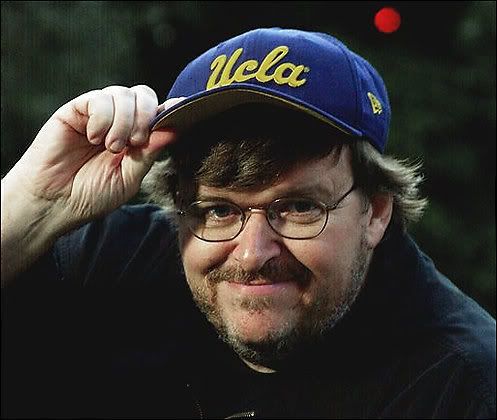
The Washington Post reports:
The investigation provides another contentious lead-in for a provocative film by Moore, a fierce critic of President Bush. In the past, Moore's adversaries have fanned publicity that helped the filmmaker create a new brand of opinionated blockbuster documentary.
"Sicko" promises to take the health-care industry to task the way Moore confronted America's passion for guns in "Bowling for Columbine" and skewered Bush over his handling of Sept. 11 in "Fahrenheit 9/11."
The Treasury Department's Office of Foreign Assets Control notified Moore in a letter dated May 2 that it was conducting a civil investigation for possible violations of the U.S. trade embargo restricting travel to Cuba. A copy of the letter was obtained Tuesday by the AP.
"This office has no record that a specific license was issued authorizing you to engage in travel-related transactions involving Cuba," Dale Thompson, OFAC chief of general investigations and field operations, wrote in the letter to Moore.
In February, Moore took about 10 ailing workers from the Ground Zero rescue effort in Manhattan for treatment in Cuba, said a person working with the filmmaker on the release of "Sicko." The person requested anonymity because Moore's attorneys had not yet determined how to respond.
Moore, who scolded Bush over the Iraq war during the 2003 Oscar telecast, received the letter Monday, the person said. "Sicko" premieres May 19 at the Cannes Film Festival and debuts in U.S. theaters June 29.
Moore declined to comment, said spokeswoman Lisa Cohen.
After receiving the letter, Moore arranged to place a copy of the film in a "safe house" outside the country to protect it from government interference, said the person working on the release of the film.
Treasury officials declined to answer questions about the letter. "We don't comment on enforcement actions," said department spokeswoman Molly Millerwise.
The letter noted that Moore applied Oct. 12, 2006, for permission to go to Cuba "but no determination had been made by OFAC." Moore sought permission to travel there under a provision for full-time journalists, the letter said.
According to the letter, Moore was given 20 business days to provide OFAC with such information as the date of travel and point of departure; the reason for the Cuba trip and his itinerary there; and the names and addresses of those who accompanied him, along with their reasons for going.
Potential penalties for violating the embargo were not indicated. In 2003, the New York Yankees paid the government $75,000 to settle a dispute that it conducted business in Cuba in violation of the embargo. No specifics were released about that case.
"Sicko" is Moore's followup to 2004's "Fahrenheit 9/11," a $100 million hit criticizing the Bush administration over Sept. 11. Moore's "Bowling for Columbine" won the 2002 Oscar for best documentary.
A dissection of the U.S. health-care system, "Sicko" was inspired by a segment on Moore's TV show "The Awful Truth," in which he staged a mock funeral outside a health-maintenance organization that had declined a pancreas transplant for a diabetic man. The HMO later relented.
At last September's Toronto International Film Festival, Moore previewed footage shot for "Sicko," presenting stories of personal health-care nightmares. One scene showed a woman who was denied payment for an ambulance ride after a head-on collision because it was not preapproved.
Moore's opponents have accused him of distorting the facts, and his Cuba trip provoked criticism from conservatives including former Republican Sen. Fred Thompson, who assailed the filmmaker in a blog at National Review Online.
"I have no expectation that Moore is going to tell the truth about Cuba or health care," wrote Thompson, the subject of speculation about a possible presidential run. "I defend his right to do what he does, but Moore's talent for clever falsehoods has been too well documented."
The timing of the investigation is reminiscent of the firestorm that preceded the Cannes debut of "Fahrenheit 9/11," which won the festival's top prize in 2004. The Walt Disney Co. refused to let subsidiary Miramax release the film because of its political content, prompting Miramax bosses Harvey and Bob Weinstein to release "Fahrenheit 9/11" on their own.
The Weinsteins later left Miramax to form the Weinstein Co., which is releasing "Sicko." They declined to comment on the Treasury investigation, said company spokeswoman Sarah Levinson Rothman.
Wednesday, May 2, 2007
| [+/-] |
George Tenet Slammed and Dunked: Moment of Truth or Just More Sellout? |
Colleen Rowley's letter to George Tenet:
Let's tell, let's everybody tell the truth," said our country's former Director of Central Intelligence during his interview on Sunday night's 60 Minutes. But George Tenet is over 5 1/2 years late and still seems to suffer from a terrible case of selective memory that even a $4 million book contract can't remedy.
The bulk of the job of refuting and correcting Tenet's story will have to come from former CIA and other intelligence insiders who knew him and the whole of his situation better. (See "An Open Letter to George Tenet" and Michael Scheuer's op-ed "Tenet Tries to Shift Blame. Don't Buy It.") I also have a little first-hand experience that contradicts what Tenet has pulled out to explain the post 9/11 need to torture.
In the interview, 60 Minutes reporter Scott Pelley, to his credit, asked Tenet over and over about his authorizing torture. The CIA's so-called "enhanced interrogation techniques" that Tenet signed off on are said to include sleep deprivation, extreme cold and water boarding which causes a severe gag reflex, as water is continuously poured over the face. Tenet admitted losing sleep over his role in authorizing such "new territory" but refused to call it torture saying he didn't want to "engage in a semantic debate" with Pelley. (You know, trying to figure out what the meaning of the word "is" is or whether water boarding is torture, those type of semantic debates.) Anyway in the midst of their semantic debate, Tenet launched into an explanation of the "tension" he was under:
The context is it's post-9/11. I've got reports of nuclear weapons in New York City, apartment buildings that are gonna be blown up, planes that are gonna fly into airports all over again. Plot lines that I don't know - I don't know what's going on inside the United States. And I'm struggling to find out where the next disaster is going to occur. Everybody forgets one central context of what we lived through. The palpable fear that we felt on the basis of the fact that there was so much we did not know . . . 'Cause these are people that will never, ever, ever tell you a thing. These are people who know who's responsible for the next terrorist attack. These are hardened people that would kill you and me 30 seconds after they got out of wherever they were being held and wouldn't blink an eyelash. . . . You can sit there after, you can sit there five years later, and have this debate with me, all I'm asking you to do, walk a mile in my shoes when I'm dealing with these realities.
One little problem, Khalid Sheikh Mohammed, the person Tenet is discussing and who reportedly was water boarded, was not arrested until March 1, 2003, eighteen months after 9/11. His arrest and torture was post 9/11 like it will always be post 9/11. The actual context was that by March 2003, the bulk of our troops had already been diverted away from the war against Al Qaeda and the hunt for Osama Bin Laden in Afghanistan. Our troops were already poised on Iraq's borders, awaiting Bush's order to commence the invasion of a country which didn't even have ties to Al Qaeda terrorism. That's the context of the actual "tension" under which Tenet signed off on torturing Khalid Sheikh Mohammed and others. When former Attorney General Ashcroft was questioned about the "post 9-11 round-up" of innocents in New York City--after the Department of Justice's Inspector General found that hundreds of innocent people had been improperly detained for 6 to 9 months--AG Ashcroft similarly refused to apologize "for protecting the American people." But at least AG Ashcroft's explanation fit better timing-wise with the confusion and fear that existed in the immediate aftermath of 9/11 than the context Tenet said existed 18 months afterward.
It must also be remembered that we already had one actual 9/11 terrorist suspect, Zacarias Moussaoui, in custody over three weeks before 9/11. And George Tenet was briefed on the facts of the investigation surrounding his detention in August 2001 with a powerpoint entitled something like "Fundamentalist Learns to Fly." At the time, DCI Tenet inexplicably took no action and did not even seek to confer with the Acting FBI Director about the case. But Tenet IS reported to have immediately linked Moussaoui to the Al Qaeda attack on 9/11 as soon as he was informed at breakfast of planes flying into the World Trade Center.
Moussaoui was not tortured however. Nor were "enhanced interrogation techniques" ever used on him. In fact FBI agents could not even get permission to attempt a plain interview of Moussaoui which permission I asked for on 9/11/01 and again on 9/12/01. I tried to argue with the Acting United States Attorney as well as with Department of Justice attorneys that the "public safety exception" to the Miranda rule pertained, not of course to engage in any "enhanced techniques" that might coerce a confession or produce unreliable information but just to circumvent the prophylactic component of the Miranda Rule so that he might be questioned about other Al Qaeda plans to hijack planes or attack U.S. citizens. But they all said no, there was no emergency. I argued harder on the morning of 9/12/01 when the full scope of what had happened was more apparent. This caused DOJ attorneys to discuss the situation a little longer than the U.S. Attorney had the day before, but I was ultimately told that whatever emergency had existed, it was over. We were so flabbergasted about the fact we were told no public safety emergency existed just hours after the attacks that my boss advised me to document it in a memo which became the first document in the legal subfile of the FBI's "Penttbom" case.
Nothing changed after Moussaoui's laptop and personal effects were searched revealing the fact that he had collected data on cropdusting and wind patterns and establishing his connections to the 9-11 masterminds. In early July 2002, when Moussaoui was making overtures that he WANTED to talk and was still the only 9-11 terrorist in custody--it would be months more before the real masterminds of the attack, either Ramzi Binalshibh or Khalid Sheikh Mohammed were arrested--I called to both Assistant Attorney General Michael Chertoff's office as well as to FBI Director Mueller's office to renew the request to attempt a plain interview of Moussaoui. (At the time Chertoff, as head of the Justice Department's criminal division and one of the chief architects of the Bush Administration's legal strategies in the War on Terror, supervised the prosecution's case against Moussaoui. Chertoff also reportedly advised the Central Intelligence Agency on the outer limits of legality in coercive interrogation sessions.) I talked to assistants for both Chertoff and Mueller, trying to impress on them the need to interview Moussaoui, someone who would likely know of plans for a second strike. I pointed to the suspicious nature of the cropdusting information found (which of course they were well aware of) and argued we needed to find out more about that to possibly prevent future attacks. But by that time Moussaoui had been charged with the death penalty and I deduced that AG Ashcroft would not allow any potential for bargaining leverage to be injected into the case.
And so it rang hollow when these same officials, including Tenet, would constantly say they were doing everything in their power to prevent another terrorist attack, when they said in early 2003 that's why we needed, of all things, to launch a brand new pre-emptive invasion of Iraq; when I had been told there was no "public safety emergency" on the day of the attacks; and when it seemed that death penalty considerations outweighed the need to find out information about possible second strikes. It rang hollow then and it still rings hollow when Tenet pulls it out to try to explain that's why we needed to begin torturing people.
In contrast to what Tenet stated about the efficacy of the CIA's "enhanced interrogation techniques," it's also worth repeating that the considered wisdom of expert FBI investigators is that torture doesn't work to produce reliable, timely information. Interviewing, on the other hand, is more likely to produce solid information. One of the FBI's most experienced agents in Al Qaeda terrorism and one of the few Arabic speaking ones has made this same point in discussing prior successful investigations of Al Qaeda operatives.
There are certainly other questions that arise if Tenet's description of "the palpable fear that we felt (post 9/11) on the basis of the fact that there was so much we did not know" did in fact drive his signing off--and presumably the new Director of Central Intelligence's continued signing off--on the use of torture and other illegal actions. For starters, if we allow that "palpable fear" to eliminate due process, we are opening ourselves up to real mistakes. For how do we even know we are torturing true terrorists? The use of torture or "taking the gloves off" was first suggested with regard to those swept up in the post 9-11 detentions who were later shown to be innocent. Already at least two individuals who were victims of the CIA's "extraordinary renditions" and who were subsequently tortured, Khalid El Masri and Maher Arar, have turned out innocent. CIA operatives have been or are to be indicted in both Germany and Italy for violating these allied countries' laws.
It's certainly safe to say that reversing the terrible mistakes of Bush, his neo-con ideologues and those like Tenet who knuckled under to their pressure, is going to require a lot more "truth" than George Tenet was willing to provide for $4 million and a presidential medal of freedom.
| [+/-] |
NBC's Pentagon Reporters Confirms Tenet's Account |
In a speech before the annual Business Expo at the Rhode Island Convention Center, NBC's chief Pentagon correspondent Jim Miklaszewski confirmed the gist of former CIA director George Tenet's charge that Bush administration officials began talking of including Iraq in any retaliatory attack just hours after the 9/11 attacks, even though all indications pointed to Al Qaeda as being responsible.
The Providence Journal reports:
In his new book, At the Center of the Storm, Tenet says White House and Pentagon officials were determined to attack Iraq long before 9/11, and afterward spun intelligence information to build a case for war with Saddam Hussein.
Miklaszewski said that while the opening anecdote in Tenet's book is wrong - Tenet writes of having an exchange with military consultant Richard Perle at the White House a day after the attacks when, actually, Perle was in France then - the veteran television newsman says Tenet is right about the president's intentions.
"Some things are right on the mark, when he says the Bush administration appeared predisposed to attack Iraq.''
How does Miklaszewski - whom the Greater Providence Chamber of Commerce paid $30,000 for his talk - know for sure?
His information, Miklaszewski told an audience of about 200 people, comes from some "off the record'' notes taken in the White House situation room in the hours after the attacks. Miklaszewski said someone gave him the notes two years ago. He did not say who nor explain why, if they were "off the record'' he was now sharing them with an audience.
However, the notes describe, Miklaszewski said, then-Secretary of Defense Donald H. Rumsfeld vowing to avenge the terrorist attacks and voicing frustration that attacks against the U.S. Embassy in Beirut in 1983 and the attack on the Cole, in 2000, had gone unavenged.
Reading from his notes, Miklaszewski quoted Rumsfeld as saying five hours after the terrorist attacks: "My interest is to hit Saddam Hussein at the same time we go after al-Qaida.''
"We ought not to look only'' at Osama bin Laden, Rumsfeld allegedly said before holding a conference call with President Bush. During the conversation, "Rumsfeld says not to focus solely on al-Qaida, consider all those range of options. And the president's response was yes.''
Said Miklaszewski: "So there is no question that Tenet got the time wrong [with meeting Perle in the White House] but there is no question in my mind, and with subsequent conversations I had with officials in the Pentagon, that the Bush administration had their sights set on attacking Saddam Hussein and Iraq long before there was even an effort to gather any evidence … that Saddam Hussein was involved in the attack. And all the evidence says quite the opposite.''
Miklaszewski, just the latest celebrity journalist to espouse a personal opinion before the annual business gathering, also shared some inside political analysis that even the most casual follower of the news would have considered stale. Among them: that former First Lady and Sen. Hillary Clinton is "one tough cookie'' who White House staffers feared and that North Carolina Sen. John Edwards is a "loser'' for trying to defend a $400 haircut.
Miklaszewski seemed more comfortable talking about what he knows best: the military and terrorism.
Quoting from a recent public-opinion poll, Miklaszewski said while 50 percent of people still think the Iraq war is a priority, only 18 percent mentioned terrorism as a concern.
"The American people have begun to forget about 9/11,'' he said. "This is a very patient enemy. They can certainly wait out America's attention span and that troubles me.''
Subscribe to:
Posts (Atom)
