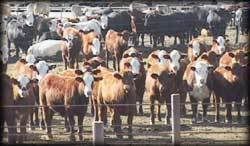
At NJVoices, Drew Harris writes:
If you think good regulations are too expensive, try bad regulations. The Topps Meat Company is recalling a year's worth of ground beef -- 21.7 million pounds -- produced in it's Elizabeth, New Jersey processing plant because they can't be sure it wasn't contaminated with the deadly bacteria, E. coli O157. Assuming ground beef is $2.50 a pound, this recall could cost Topps over $54 million in refunds to consumers. Several aspects of this story illustrate how a weak regulatory system not only threatens public health but is also bad for business.
A published report says it was over 18 days from the time the contamination was confirmed by the USDA laboratory before Topps went public and began the voluntary recall. Unfortunately, it wasn't the company or USDA that discovered the problem. People up and down the east coast had been getting sick for months, but until the E. coli was found in hamburger patties taken from a victim's refrigerator no one knew the source. Only later were samples from the plant checked.
We have a crazy-quilt food safety system. The Federal Food and Drug Administration (FDA) oversees most foods except meat, poultry and eggs, which fall under the purview of the US Department of Agriculture (USDA) unless meat, poultry or eggs are less than 2 to 3 percent of the product's content.
The US Centers for Disease Control and Prevention (CDC) is responsible for tracking diseases caused by food consumption. State agencies are responsible for regulating businesses that sell directly to consumers. Our food safety net is full of holes.
USDA is also the federal agency that helps promotes the consumption of US farm products, supports farmers, and ensures international regulations favorable to these products. It has been said that this is an inherent conflict of interest leading to lax oversight and an unwillingness to aggressively regulate an industry the agency is supposed to promote.
Topps had a USDA inspector on site every day like every meat processing plant. When an additional inspection was ordered in the wake of the mass recall, the new inspectors found violations so severe that they suspended the plant's ground beef processing. Why did the regular inspector miss these problems? Because the bad practices went back for months, there was no way to be sure the meat packaged on any given day was safe.
Amazingly, even when a problem is discovered, the USDA can only ask a meat processor to recall its product. Once the processor sends out the press release about the recall, they notify their primary customers who may be many steps removed from the actual consumer. You -- pardon the expression -- are at the end of the food chain and could be the last to know.
I have no doubt that Topps will be severely punished for this episode. The recall will cost them. Attorneys are already putting together the class-action law suits. They are subject to heightened scrutiny and are sure to lose market share. All of this was so unnecessary.
With stronger regulations, there would be tougher inspections, 100% testing of the end product for bacterial contamination, and better tracking of the product in the food distribution system. Thus, the harm could have been limited or even eliminated. Instead of recalling a year's worth of production, it might have been a day or two. Instead of dozens sickened, it could have been no one.
It's time to beef up weak regulations.
UPDATE: 10/5/07 2:11
Topps Meat Company announced today that it is closing its doors. The 67 year-old Elizabeth firm will lay off 77 workers in the wake of the massive recall of its frozen hamburger patties linked to an E. coli outbreak.
This is a cautionary tale for any business that doesn't pay strict attention to proper public health procedures. Shortchanging health and safety is bad for business, while appropriate and effective public health regulations are good for the bottom line.
Friday, October 5, 2007
| [+/-] |
"My Beef About Bad Beef & Weak Regulations" |
Wednesday, June 6, 2007
| [+/-] |
China to Revise Food and Drug Safety Rules |
The NYT reports:
Responding to growing international concerns about tainted food and counterfeit drugs, China said late Tuesday that it was overhauling its food and drug safety regulations and would introduce nationwide inspections.
The announcement, from the State Council, the nation’s highest administrative body, is the strongest signal yet that Beijing is moving to crack down on the sale of dangerous food and medicine and also trying to calm fears that some of its exports pose health problems.
The move follows a series of embarrassing episodes this year involving China’s export of contaminated pet food ingredients and toothpaste. The shipments of tainted pet food ingredients set off one of the largest pet food recalls in United States history.
Last month, an article in The New York Times revealed that at least 100 people had died in Panama after taking medicine containing a toxic chemical called diethylene glycol that had been produced in China and exported as the harmless syrup glycerine.
And in recent weeks, several countries, including the United States, Panama and Nicaragua, recalled or issued warnings about toothpaste made in China because it contained diethylene glycol.
While Beijing has strongly defended the quality and safety of its food and drug exports, and even denied that toothpaste it exported was unsafe, government regulators at the same time have stepped up safety inspections and shut down companies accused of producing unsafe food or counterfeit drugs.
But with pressure growing from regulators in the United States, Europe and other parts of the world, and international food companies expressing concern about the risks of importing Chinese-made food and feed ingredients, Beijing is pushing for a more forceful response to the crisis.
In its announcement on Tuesday, which was posted on a government Web site, China said that the state council had approved a new food and drug safety guarantee system on April 17 and that an outline of the new program was being distributed to government agencies nationwide.
The government said in its announcement that it planned by 2010 to place new controls on food and drug imports and exports, to step up random testing on medicines and have inspection information on 90 percent of all food products.
It said it also planned safety checks on a large majority of food makers and said that regulators would crack down on the sale of counterfeit drugs and medical devices.
The government did not indicate whether it would provide more funds for the efforts or which agencies would carry out the bulk of the functions.
But in announcing the new measures, the government hinted at its weaknesses in enforcement, saying that after five years one goal was that “100 percent of the significant food safety accidents are investigated and dealt with” and that “80 percent of the food that needs to be recalled is recalled.”
A few weeks ago, the government had announced that it was planning to set up a food recall system.
On Tuesday, the General Administration of Quality Supervision, Inspection and Quarantine, which oversees food and drug exports, also posted statements on its Web site about the issue.
“Recently, our country has had a series of export food problems, and that has triggered a lot of overseas attention about China’s food safety,” said Wei Chuanzhong, deputy director of the agency. “This has put us on high alert, and led us to seriously look into the reasons for the problem.”
Food and drug safety experts have complained for years about an incredibly flawed system that has led to food scares or mass poisonings tied to counterfeit or substandard medicines on the market.
Much of the blame has centered on weak enforcement of the nation’s food and drug regulations, as well as corruption, bribery and a business culture where counterfeiting thrives.
China’s food and drug administration, which is supposed to safeguard the nation’s health, has also been implicated.
Last week, a Chinese court handed down a death sentence against Zheng Xiaoyu, the head of the Food and Drug Administration in China from 1998 to 2005, after he pleaded guilty to bribery and corruption. The government also said that he took bribes to approve drug production licenses and that it was reviewing production licenses the agency had issued.
Some experts say the new food and drug safety program suggests that the nation’s top leaders are taking up the call for reforms and new enforcement measures.
“There’s been concern for a while about food safety in this country, and now that there are growing concerns about China’s international image, the state council has decided to act,” said Russell Leigh Moses, an analyst of Chinese politics who is based in Beijing. “This may be a sign that everyone in the government ought to get in line.”
But the challenges facing China are enormous because its regulatory system is weak and enforcement is particularly difficult, partly because the economy is growing so fast and also because local officials accept bribes and sometimes allow small companies to flout regulations.
Also, regulators here say many exporters of food and medicines are mislabeling goods and shipping them illegally.
Two weeks ago, food and drug safety issues were even on the table in Washington during the strategic economic dialogue hosted by Treasury Secretary Henry M. Paulson Jr.
“These are issues China has to deal with over time,” says Rio D. Praaning, secretary general of the Public Advice International Foundation in Belgium, an advisory group that is working on food and drug safety issues around the world. “But we can’t wait. We have interim developments. We have patience, but frankly patience is out the window when people start dying.”
Tuesday, May 29, 2007
| [+/-] |
China Food Boss Sentenced To Death |
Beijing has pledged tougher inspections amid growing domestic and international alarm over tainted products. Several countries have already imposed bans or voiced concerns about Chinese imports:
United States
Deaths of hundreds of pets blamed on Chinese pet food tainted with melamine, a chemical used in plastics, fertilisers and fireproofing
Mississippi and Alabama banned Chinese catfish after tests found they contained antibiotics
Europe and Japan
Excessive antibiotic or pesticide residues in Chinese shrimp, honey and other products
Hong Kong
Turbot found to contain traces of malachite green - a potential cancer-causing chemical used to treat fungal infections
China
Babies die after being fed fake baby formula
Cancer-causing dyes injected into eggs to make yolks redder
Children given saltwater passed off as rabies vaccine
Al Jazeera reports:
The former head of China's food and drug safety regulatory body has been sentenced to death for corruption.

Zheng Xiaoyu was convicted by a court in Beijing on charges of taking bribes and dereliction of duty, the official Xinhua news agency reported on Tuesday.
On the same day officials have announced a series of measures for recalling unsafe food products.
The news comes as China's leaders grapple with the fallout from a string of health alerts over toxins in food and other products.
Zheng, 62, headed the watchdog State Food and Drug Administration which sets standards for food and drug safety, from 1998 until he was sacked in 2005.
He was expelled from the ruling Communist party this year after investigators said he abused the administration's approval powers to obtain bribes and illegal profits from drug companies.
Zheng's powers increased substantially in 2002 when the government required all drugs be approved by the agency.
The change resulted in a massive backlog, giving companies a strong incentive to find ways to speed up approvals.
During his trial Zheng was accused of taking up to $780,000 in bribes to approve untested medicines, including an antibiotic that killed at least 10 patients.
His unusually harsh sentence may yet be reduced on appeal.
The last time China sentenced an official of Zheng's rank to death was in 2000, when Hu Changqing, a vice-governor of the eastern Jiangxi province, and Cheng Kejie, a vice-head of the National People's Congress, were executed for taking bribes.
In another case, local media reported that families of Chinese patients killed by a fake medical ingredient maker linked to widespread deaths in Panama have sued the southern Chinese hospital that administered the toxic injections.
They are seeking 20 million yuan ($2.6m) in compensation.
"These incidents have exposed serious problems in the production and distribution of medicines," the Information Times quoted one of the plaintiffs' lawyers as saying in the hearing that began on Monday.
Recall
Beijing has promised to subject all food and drugs to more rigorous inspections amid fears that tainted food scandals could lead to bans on Chinese food products.
Announcing new measures to tackle the problem on Tuesday, the govermment said it would be introducing a food recall system that will focus on "potentially dangerous and unapproved food products," the state-run China Daily newspaper said.
Earlier this month authorities announced the detention of managers from two Chinese firms linked to contaminated pet food sold in the US.
Ingredients used in the pet food had reportedly been tainted with melamine, a chemical used in plastics, fertilisers and flame retardants.
And in recent days the US government has stopped all imports of Chinese toothpaste after reports that some products sold in Australia, the Dominican Republic and Panama were tainted with diethylene glycol, a chemical commonly used in antifreeze and brake fluid.
Wednesday, May 2, 2007
| [+/-] |
Millions Of Chickens Fed Tainted Pet Food |
At least 2.5 million broiler chickens from an Indiana producer were fed pet food scraps contaminated with the chemical melamine and subsequently sold for human consumption, federal health officials reported yesterday.
Hundreds of other producers may have similarly sold an unknown amount of contaminated poultry in recent months, they added, painting a picture of much broader consumption of contaminated feed and food than had previously been acknowledged in the widening pet food scandal.
The Washington Post reports:
Officials emphasized that they do not believe the tainted chickens -- or the smaller number of contaminated pigs that were reported to have entered the human food supply -- pose risks to people who ate them.
"We do not believe there is any significant threat of human illness from this," said David Acheson, the Food and Drug Administration's chief medical officer. FDA Commissioner Andrew von Eschenbach named Acheson yesterday the agency's new "food czar" -- officially, assistant commissioner for food protection.
None of the farm animals is known to have become sick from the food, and very little of the contaminant is suspected of having accumulated in their tissue. Thus, no recall of any products that may still be on store shelves or in people's freezers is planned, officials said.
Nonetheless, 100,000 Indiana chickens that ate the melamine-laced food and are still alive have been quarantined and will be destroyed as a precautionary measure -- as will any other animals that turn up as the investigation continues to expand.
The revelations are the latest in a rapidly widening scandal that started out with reports of a few deaths of pets. It has mushroomed into a major debacle that, even if no human injuries emerge, has exposed significant gaps in the nation's food-safety system.
In the first volley of what Hill watchers expect to be a series of proposed fixes, Sen. Richard J. Durbin (D-Ill.) and Rep. Rosa DeLauro (D-Conn.) yesterday introduced legislation that would give the FDA the power to order mandatory recalls of adulterated foods, establish an early warning and notification system for tainted human or pet food, and allow fines for companies that do not promptly report contaminated products.
Meanwhile, the FDA expanded the number of plant-based protein products from China on its "do not import" list, pending the completion of further tests on various kinds of glutens, protein concentrates and other products.
At the center of the problem are pet foods spiked with melamine, a mildly toxic chemical that can make food appear to have more protein than it does. Most of the food went to pets, but scraps were sold in February to the Indiana poultry producer, officials said. The contaminated material may have made up about 5 percent of the chickens' total food supply.
That small fraction, and the fact that people, unlike pets, do not eat the same thing day after day, suggests that consumers who ate contaminated pork or chicken would probably have ingested extremely small doses of melamine, well below the threshold for causing health effects, officials said. Experts conceded, however, that they know little about how the toxin interacts with other compounds in food.
Investigators are tracking streams of the contaminated food through several states.
"Our sense is that the investigation will lead to additional farms where contaminated feed may have been fed to either animals or poultry," said Kenneth Petersen of the Agriculture Department Food Safety and Inspection Service.
Officials said the FDA has received 17,000 reports of pets that owners believe were sickened or killed by contaminated food. About 8,000 reports, roughly half of them involving animals that died, have been formally entered into the FDA's tracking system for further analysis.
U.S. investigators have arrived in China, officials said, but inspections of production facilities there have been hampered by the start yesterday of a week-long national vacation.
"Essentially, all the officials are on holiday," said Walter Batts, part of the FDA's China team, adding that one Chinese official had stayed behind to help.
Sunday, April 29, 2007
| [+/-] |
What The Chinese Are Putting In Our Food |
As American food safety regulators head to China to investigate how a chemical made from coal found its way into pet food that killed dogs and cats in the United States, workers in this heavily polluted northern city openly admit that the substance is routinely added to animal feed as a fake protein.
The NYT reports:
Workers at the Shandong Mingshui Great Chemical Company say they commonly add the chemical melamine in the process of making animal feed. Melamine appears as protein but has no nutritional value.
For years, producers of animal feed all over China have secretly supplemented their feed with the substance, called melamine, a cheap additive that looks like protein in tests, even though it does not provide any nutritional benefits, according to melamine scrap traders and agricultural workers here.
“Many companies buy melamine scrap to make animal feed, such as fish feed,” said Ji Denghui, general manager of the Fujian Sanming Dinghui Chemical Company, which sells melamine. “I don’t know if there’s a regulation on it. Probably not. No law or regulation says ‘don’t do it,’ so everyone’s doing it. The laws in China are like that, aren’t they? If there’s no accident, there won’t be any regulation.”
Melamine is at the center of a recall of 60 million packages of pet food, after the chemical was found in wheat gluten linked this month to the deaths of at least 16 pets and the illness of possibly thousands of pets in the United States.
No one knows exactly how melamine (which is not believed to be particularly toxic) became so fatal in pet food, but its presence in any form of American food is illegal.
The link to China has set off concerns among critics of the Food and Drug Administration that ingredients in pet food as well as human food, which are increasingly coming from abroad, are not being adequately screened.
“They have fewer people inspecting product at the ports than ever before,” says Caroline Smith DeWaal, the director of food safety for the Center for Science in the Public Interest in Washington. “Until China gets programs in place to verify the safety of their products, they need to be inspected by U.S. inspectors. This open-door policy on food ingredients is an open invitation for an attack on the food supply, either intentional or unintentional.”
Now, with evidence mounting that the tainted wheat gluten came from China, American regulators have been granted permission to visit the region to conduct inspections of food treatment facilities.
The Food and Drug Administration has already banned imports of wheat gluten from China after it received more than 14,000 reports of pets believed to have been sickened by packaged food. And last week, the agency opened a criminal investigation in the case and searched the offices of at least one pet food supplier.
The Department of Agriculture has also stepped in. On Thursday, the agency ordered more than 6,000 hogs to be quarantined or slaughtered after some of the pet food ingredients laced with melamine were accidentally sent to hog farms in eight states, including California.
The pet food case is also putting China’s agricultural exports under greater scrutiny because the country has had a terrible food safety record.
In recent years, for instance, China’s food safety scandals have involved everything from fake baby milk formulas and soy sauce made from human hair to instances where cuttlefish were soaked in calligraphy ink to improve their color and eels were fed contraceptive pills to make them grow long and slim.
For their part, Chinese officials dispute any suggestion that melamine from the country could have killed pets. But regulators here on Friday banned the use of melamine in vegetable proteins made for export or for use in domestic food supplies.
Yet what is clear from visiting this region of northeast China is that for years melamine has been quietly mixed into Chinese animal feed and then sold to unsuspecting farmers as protein-rich pig, poultry and fish feed.
Many animal feed operators here advertise on the Internet, seeking to purchase melamine scrap. The Xuzhou Anying Biologic Technology Development Company, one of the companies that American regulators named as having shipped melamine-tainted wheat gluten to the United States, had posted such a notice on the Internet last March.
Here at the Shandong Mingshui Great Chemical Group factory, huge boiler vats are turning coal into melamine, which is then used to create plastics and fertilizer.
But the leftover melamine scrap, golf ball-size chunks of white rock, is sometimes being sold to local agricultural entrepreneurs, who say they mix a powdered form of the scrap into animal feed to deceive those who raise animals into thinking they are buying feed that is high in protein.
“It just saves money if you add melamine scrap,” said the manager of an animal feed factory here.
Last Friday here in Zhangqiu, a fast-growing industrial city southeast of Beijing, two animal feed producers explained in great detail how they purchase low-grade wheat, corn, soybean or other proteins and then mix in small portions of nitrogen-rich melamine scrap, whose chemical properties help the feed register an inflated protein level.
Melamine is the new scam of choice, they say, because urea — another nitrogen-rich chemical — is illegal for use in pig and poultry feed and can be easily detected in China as well as in the United States.
“People use melamine scrap to boost nitrogen levels for the tests,” said the manager of the animal feed factory. “If you add it in small quantities, it won’t hurt the animals.”
The manager, who works at a small animal feed operation here that consists of a handful of storage and mixing areas, said he has mixed melamine scrap into animal feed for years.
He said he was not currently using melamine. But he then pulled out a plastic bag containing what he said was melamine powder and said he could dye it any color to match the right feed stock.
He said that melamine used in pet food would probably not be harmful. “Pets are not like pigs or chickens,” he said casually, explaining that they can afford to eat less protein. “They don’t need to grow fast.”
The resulting melamine-tainted feed would be weak in protein, he acknowledged, which means the feed is less nutritious.
But, by using the melamine additive, the feed seller makes a heftier profit because melamine scrap is much cheaper than soy, wheat or corn protein.
“It’s true you can make a lot more profit by putting melamine in,” said another animal feed seller here in Zhangqiu. “Melamine will cost you about $1.20 for each protein count per ton whereas real protein costs you about $6, so you can see the difference.”
Feed producers who use melamine here say the tainted feed is often shipped to feed mills in the Yangtze River Delta, near Shanghai, or down to Guangdong Province, near Hong Kong. They also said they knew that some melamine-laced feed had been exported to other parts of Asia, including South Korea, North Korea, Indonesia and Thailand.
Evidence is mounting that Chinese protein exports have been tainted with melamine and that its use in agricultural regions like this one is widespread. But the government has issued no recall of any food or feed product here in China.
Indeed, few people outside the agriculture business know about the use of melamine scrap. The Chinese news media — which is strictly censored — has not reported much about the country’s ties to the pet food recall in the United States. And few in agriculture here do not see any harm in using melamine in small doses; they simply see it as cheating a little on protein, not harming animals or pets.
As for the sale of melamine scrap, it is increasingly popular as a fake ingredient in feed, traders and workers here say.
At the Hebei Haixing Insect Net Factory in nearby Hebei Province, which makes animal feed, a manager named Guo Qingyin said: “In the past melamine scrap was free, but the price has been going up in the past few years. Consumption of melamine scrap is probably bigger than that of urea in the animal feed industry now.”
And so melamine producers like the ones here in Zhangqiu are busy.
A man named Jing, who works in the sales department at the Shandong Mingshui Great Chemical Group factory here, said on Friday that prices have been rising, but he said that he had no idea how the company’s melamine scrap is used.
“We have an auction for melamine scrap every three months,” he said. “I haven’t heard of it being added to animal feed. It’s not for animal feed.”
Tuesday, April 30, 2002
| [+/-] |
Modern Meat |
Have the dramatic changes in the U.S. meat industry compromised the safety of America's beef? ...[Cows] can take this grass which we can't digest, very few creatures can digest, and turn it into [fuel]. What is so amazing about that? Pollan, a former editor at Harper's Magazine, is the author of The Botany of Desire and several other books that examine the intersections between science and culture. Here, he talks about his experience as a small-scale rancher and his decision to buy a cow and track its journey through the cattle system for The New York Times Magazine. He also discusses the widespread use of antibiotics in the meat industry, and why he thinks the system is fragile and susceptible to microbes and pathogens. What do you mean? You could not crowd animals into these feedlots or feed them this highly concentrated ration without giving them antibiotics. But the antibiotics, in turn, lead to resistance; resistant microbes that then come and infect us. So most people think of a cow as something that's out grazing, and then is taken to the slaughterhouse.
Frontline interviews Michael Pollan:
Well, a cow out on grass is just an incredible thing to behold. ... Cows and other ruminants can do things we just can't do. They have the most highly evolved digestive organ on the planet, called the rumen. And the rumen can digest grass. It takes grass, cellulose in grass, and turns it into protein, very nutritious protein.
We can't do that. We can't digest grass. So to take land that is not good enough for agriculture -- that's growing grass and nothing else, that's been doing that for 10,000 years since the buffalo -- and put a cow on it ... there's something beautiful about that, and it's just the way it was meant to be.
And I went into this story [for the New York Times] thinking, "Well, that's how we get meat." But alas, it's not true.
By the time a modern American beef cow is six months old, it has seen its last blade of grass for the rest of its life. As soon as they wean, they spend the first six months out on the pasture with their moms, nursing, nibbling grass. The mom is converting the grass's protein that's turning into milk for the animal, doing the way they've done it for millions of years. We take them off grass. We put them in pens, called backgrounding pens, and we teach them how to eat something that they are not evolved to eat, which is grain, and mostly corn.
Why do we do this? Well, it's a very good question, because it makes absolutely no sense from an ecological standpoint. From a financial standpoint, it does. It makes them grow much more quickly. It makes them get fat, and we like our meat really fat and marbled. And it allows us to speed up the lifespan. In capitalism, time is money.
We're taking cows that we used to let grow to be four or five years old before we eat them [and] we've got it down to 14 months, and we're heading toward 11 months. What allows us to do this is getting them [on] corn, getting them off this whole evolutionary relationship they've had with grass....
...No, not true. Cows see very little grass nowadays in their lives. They get them on corn as fast as they can, which speeds up their lifespan, gets them really fat, and allows you to slaughter them within 14 months.
The problem with this system, or one of the problems with this system, is that cows are not evolved to digest corn. It creates all sorts of problems for them. The rumen is designed for grass. And corn is just too rich, too starchy. So as soon as you introduce corn, the animal is liable to get sick.
It creates a whole [host] of changes to the animal. So you have to essentially teach them how to eat corn. You teach their bodies to adjust. And this is done in something called the backgrounding pen at the ranch, which is kind of the prep school for the feedlot. Here's where you teach them how to eat corn.
You start giving them antibiotics, because as soon as you give them corn, you've disturbed their digestion, and they're apt to get sick, so you then have to give them drugs. That's how you get in this whole cycle of drugs and meat. By feeding them what they're not equipped to eat well, we then go down this path of technological fixes, and the first is the antibiotics. Once they start eating the [corn], they're more vulnerable. They're stressed, so they're more vulnerable to all the different diseases cows get. But specifically they get bloat, which is just a horrible thing to happen. They stop ruminating.
You have the image of a cow on grass of the cow ruminating, which is chewing its cud and burping a lot. In fact, a lot of greenhouse gases come out of the stock as methane emerges from their mouth as they eructate -- it's a technical term. And they bring down saliva in this process, and it keeps their stomach very base rather than acid.
So you put in the corn, and this layer of slime forms over the rumen. You've got to picture the rumen. It's a 45-gallon fermentation tank. It's essentially fermenting the grass. Suddenly your slime forms and the gas can't escape, and the rumen just expands like a balloon. It's pressing against the lungs and the heart, and if nothing is done, the animal suffocates.
So what is done is, if you catch it in time, you stick a hose down the esophagus and you release the gas and maybe give the animal some hay or grass, and it's a lot healthier. But it's one of the things that happens to cows on corn. ...
Not all cows get bloat. They're prone to bloat. It's a serious problem on feedlots. They also get acidosis, which is an acidifying of the rumen. ... And when the animals get acid stomach, it's a really bad case of heartburn, and they go off their feed. Eventually, if you give them too much corn too quickly, it ulcerates the rumen; bacteria escape from the rumen into the blood stream, and end up in the liver, creating liver abscesses.
What do we do about that? Another antibiotic. ... Most cows on feedlots eating this rich diet of corn are prone to having their livers damaged. So to prevent that, or limit the incidence of liver disease, we have to give them another antibiotic.
We spoke with a guy, Bill Haw, who runs a lot of these big feedlots. I asked him about the livers. And he said, "We've learned that the livers are not very economically viable, and there's a willingness to sacrifice the liver for the overall growth, which far transcends the value of the liver that may be damaged in the process." What's he saying?
He's saying that the economic calculus justifies ruining their liver. ... The fact is, we don't eat a lot of beef liver any more. So the fact that you have to throw out a significant percentage of the liver -- I've heard between 15 percent to 30 percent of the livers are too abscessed for people to eat -- it's worth it. ...
But that's a symptom. ... It means you have a sick cow. When your liver fails, other things fail. It's simply a symptom of a sick animal. So we try to treat [it] as best we can, but we tolerate it.
I've talked to many people who've said that if you kept animals on this diet indefinitely, they couldn't survive. They're eating a diet on feedlots at 80 percent to 90 percent corn that would sooner or later, as one vet told me, blow out their liver. They could not continue that. And in fact, dairy cows, which we want to live up to 8-10 years, we don't feed them like this, because we know that it hurts their health. So yes, economically, we tolerate sick cows. ...
But the issue is, you have an economic logic, and you have an evolutionary and natural logic. And when you get to the cow, you see them come into conflict. It may well make sense economically to feed cows what we feed them, but ecologically, it's a disaster. It's a disaster for them because they're getting sick. If you look at a cow on a feedlot, it is not a happy camper. ...
Instead, we take the Midwest and we pave it essentially [with] corn and soybeans, and the environmental consequences of growing all that corn -- and most of the corn grown in this country goes to feed livestock -- is environmental degradation of the Midwest and the Gulf. There's a dead zone in the Gulf of Mexico a thousand miles wide that is the result of nitrogen runoff coming down the Mississippi and killing all the life in this zone in the Gulf. And that's coming directly from corn.
So you see the cow is connected to that dead zone in the Gulf, and the cow is connected to our health, too. All these things are connected. There is an ecological logic that is very different than the economic logic. And in that ecological logic, you can't separate the health of the cow, the health of the environment, and the health of the eater.
[Why] do we feed them corn in the first place? When did that start happening, and what was the reason for it?
We feed them corn because it's the cheapest, most convenient thing we can give them. Corn is incredibly cheap; it costs about $2.25 for a bushel of corn, which is like 50 pounds. It actually costs less to buy than it costs to grow, because of subsidy. We pay the farmer to grow the corn -- see, this is a hidden cost to this supposedly cheap feed. I think it costs about $3 to grow a bushel of corn, and the feedlots only have to pay $2.25.
It's also very compact, so corn allows you to urbanize your livestock population in America. Since the corn takes up so little space relative to its food value, you can bring all the animals into a small space, and have 50,000 or 100,000. You could never bring in that much hay -- the sheer volume of the hay would just overwhelm the shipping cost and everything. So it's very compact.
How long have we been doing it? To some extent, for a long time. In the 19th century, we would grow animals on grass up to a few months before slaughter, and then we'd give them some corn mixed in. We like meat to get fatter, and corn definitely does make the meat fatter, and it makes it more tender and tasty, in a lot of people's judgment. I'm not so sure it's true, but we've learned to think that that's how beef should taste.
But it's only post-World War II that we began putting them on feedlots in this concentrated way and giving them a diet that's quite as hot, as ranchers call it, a hot ration. And the reason for that is that's when you had the explosion of corn surpluses. That's when you've got corn that people are giving away.
The yield of an acre of American farmland went from 20 bushels ... of corn in 1900 to 138 in the 1990s. So because of the improvements in technology in American agriculture -- but specifically because of chemical agriculture, because of chemical fertilizer -- we were able to get so much corn off the land that they didn't know how to get rid of it. So the USDA made it its policy to encourage people to feed corn, not just to cows, but to chicken and even fish and now in pigs. We had to get rid of corn.
Sounds like a good idea. We had this surplus.
Yes, and economically, it is a good idea. But economics is not the measure of all things. And so we're passing half of the corn crop in America through the guts of animals, some of which are well adapted to using it. I don't know that much about chickens and pigs, but they don't seem to have the same digestive problems that cows do. Cows are ruminants; they're designed for another kind of food.
Nevertheless, [corn] has so much food energy that it does put fat on them quickly. And so it makes sense to do.
...Explain to somebody in New York City what the abbreviated life of a cow is these days.
A cow is born in the late winter on a ranch; could be the product of artificial insemination or traditional sexual reproduction. It spends the first six months of its life with its mother on pasture and grass. The American food chain, when it comes to beef, starts out like the wide end of the funnel. It's as big as the Great Plains. There are hundreds of thousands of ranchers with millions of acres. And so it starts right out in the open, grazing, ruminating, doing what cows and ruminants have always done.
At weaning, which is normally in the fall of the first year after about six months, seven months, eight months, cows are taken off the grass, moved into the backgrounding pen. They're sorted and separated from their mother. Actually [it's one of] the more traumatic [events] in a cow's life, because the mothers just bellow and look around for their calves for several days.
You separate them. You get the cows as far away as you can, so they can't hear one another. And you start them on this ration of corn. You start out, though, pretty modest, with some silage, which is whole cornstalks and everything, and some corn or other grain, and still some hay. And you start with the drugs because to get them to tolerate that diet, they must have a drug called [Rumensin], which is a kind of antibiotic, a very powerful drug. It's toxic, and therefore it's not used in human medicine. In fact, you can't even give it to dairy cows -- it's very toxic.
They spend a few months in the backgrounding pen and then they are up to, say, 600-700 pounds. I should say they start at about 80 pounds; they grow very quickly. And once they go to the backgrounding pen, they grow even more quickly. You can actually say how fast you want your animal to grow. You can say, "I want to put two pounds a day on them." You feed that into a computer. You feed in the weather, the humidity, and it will tell you exactly what to feed it to put on two pounds a day.
They're getting up to 600-700 pounds, and then the cow gets on a truck and goes to the feedlots. When it gets to the feedlot, its life changes in a substantial way. It will never see any grass ever again. ... A feedlot is a city of cows. I saw several of them in western Kansas, and it was a stunning experience. You're driving down these ramrod straight roads through Kansas, and it's just empty, empty prairie. And suddenly there was this giant subdivision, only it's a city for animals. It's cattle pens, black earth, as far as you can see. Of course it's not really earth, you learn as you get a little closer; it's manure, reaching to the horizon.
[There are] 35,000, 50,000, 100,000 animals in the space of a couple of hundred acres. And in the middle of the city is rising the single landmark, which is the feedmill. It's several stories high. It's silvery. It's sort of this cathedral in the midst of this, and everything rotates around it. ...
But they really are medieval cities in many respects, I realized, because they are cities in the days before modern sanitation. They're from the time when cities really were stinky. When they were teeming and filthy and pestilential and liable to be ridden with plague, because you had people coming from many, many different places, bringing many, many different microbes into a concentrated area where they could spread them around.
The only reason this doesn't happen in the city of animals, the modern city of animals, is of course the modern antibiotics. That is the only thing that keeps the modern feedlots from being different than the 14th-century city where everybody was dying of plague. We can, to some extent, control the disease with drugs. Absent the drugs, these places would be as plague-ridden and pestilential as a 14th-century city....
Every hour I was on this feedlot, another tanker truck came in filled with liquefied fat. Another one with liquefied protein. Every hour there was another truck with 50,000 pounds of corn. You see all the feedstuff coming into the city, and you see the waste going out. The wastes, by and large, are manure, trucks coming in from farms carrying it away. But a lot of this was pooled in these lagoons, which were just full of this.
I haven't even mentioned the smell. I mean, it is overwhelming, the smell of these places. ... You get used to it, after a couple of hours, but initially, it is [overwhelming]. And it's not the smell of a cow on a farm. This is the smell of the bus station men's room. It's fierce. And you wear it in your clothing for days afterward.
It sounds rather disgusting the way you describe it. What's the purpose, what's the advantage of the system?
It's a wonderfully efficient system; it's a factory for producing protein. What it does is, it takes in corn and fat and vitamins and drugs, passes through that mill, which in a way is the hub of this factory, and then passes it through the bovine digestive system. And these animals put on three-and-a-half to four pounds a day, half of which is edible meat.
So it is an excellent factory for producing meat. And the factory farm metaphor makes perfect sense. You've got cheap inputs, more expensive outputs, although, the margins are very tight. It costs about $1.60 a day right now to keep an animal on a feedlot, which seems pretty cheap for 32 pounds of food, all you can eat. But nevertheless, the price of meat isn't very high, either. So they operate on very tight margins.
We spoke with Bill Haw, and he said that if you could interview a cow, a cow would probably choose to be in the feedlot, because it gets all the food it wants, and it's treated if it has medical conditions.
It's treated if it has medical conditions it would not have anywhere else, that's true. You know, that's an interesting thought experiment. I would love to see one of these guys open the gate and have some green grass out beyond the feed yard, and see how many cows stick around.
My guess is, I don't know. I don't know cow psychology very well. I asked the ranchers the same question about the backgrounding pen, and their sense was that they would leave. There's a reason that you lock the gate. And they might come back to eat some food, because they're lazy. But if you compare an image of a cow on grass, and a cow on a feedlot, you don't have to be the Freud of the bovine world to say, "Well, this one is happier than that one." I think we can say that.
It's very hard to speculate about what animal happiness is. But one definition is, an animal doing what it's evolved to do. And what cows have evolved to do is be out on grass, eating grass. And they sure look happy when they're doing it.
Tell me from a personal experience the difference between what a cow looks like that you've seen grazing and a cow in a feedlot....
...The cows I saw on the feedlot looked sullen. I'm very concerned not to anthropomorphize them, but that was how they appeared to me. They're standing around in their manure all day long. Animals have evolved basically to avoid their feces. Natural selection discourages this, because there are parasites in diseases. So in general, animals will stay away from that.
They're forced to exist with their feces all the time. When they go to sleep, that's what they lie down in. The beds in these feedlots, you look and you say, "Oh, there's dirt. They're in dirt." And of course no grass could grow there. But you look a little closer and it is manure, as far as you can see. They only scrape them out between classes, which is every six months.
So I can't say that that bothers a cow. I'm speculating. My guess is that, at some level, it does. But cows are very forgetful. Cows live in the present. So whether they're nostalgic for their days on grass, I would doubt that, too. ... But they love grass. When they're sick, as soon as they get on the feedlot, they give them nice long-stem hay. And they love it. And I saw them go to that.
I was on another ranch where the rancher was giving a little bit of corn to his animals in the hopper. Then we came onto the field and we had hay in the back of the truck, and we wanted to give them some hay. And he put that down in another hopper. They all left the grain and came over to the hay. They like not just the taste of hay but what it does to their stomachs. It stimulates the rumen, allows them to ruminate, to regurgitate. They love to chew their cud, and they can't chew their cud when they're on corn.
Speculating about animal happiness is dangerous turf. But common sense tells you that animals doing what they evolved to do are the happier animals.
...First of all, why did you buy a cow?
...I decided to become a small-scale rancher basically to learn about the business. I wanted to see it from the inside. So I purchased a steer, a calf, from these ranchers in South Dakota ... and followed it through the whole process. It's now on a feedlot in southwestern Kansas. And I'm using this animal, No. 534, as the hero of my story.
I'm chronicling everything he eats, and the drugs that he gets, and how much money he brings at the end. One of the things I wanted to understand -- better than I could from outside the calculation a rancher makes when he's deciding, for instance, whether to give a hormone implant to his animal, which strikes me as a bad idea -- [is] just in a general way, [if we should] be eating meat that has residues of hormones, even though no one has proved that it's bad for you. ... Why do it?
Well, if you own a cow, you understand why. It costs $1.50, and it puts 40-50 pounds on the final weight of your animal, which is worth $25-$35. So the economic calculus is just irresistible, and it's legal. That's why you do it. And if I don't do it, I will surely lose money on this animal.
So I wanted to understand things from the cow's perspective to some extent, and from the rancher's perspective. And I figured the best way to do that was to buy a cow. And at the end of the process, I'll see whether I want to eat my cow. But that's an option.
So when will your cow meet its end?
My cow has a date with the knocker, or the stunner, in June. One day in June, he will be judged sufficiently fat, because they really do get obese. And they move around at the end with that kind of the lugubrious awkwardness of the truly obese. And the owner of the feedlot, the manager, will say, "This pen is ready."
Then they will get on another truck and travel 100 miles to Liberal, Kansas, to a National Beef plant there. They will be put in a pen in a parking lot and wait their turn, and go up the ramp, and through a blue door. I was not allowed to go through the blue door. The kill floor is not something that journalists are allowed to see, even if you own the animal, I learned.
But I have reconstructed what happens on the other side of the blue door. What happens is that the animals go in single file. At a certain point, they pass over a bar, their legs on both sides, and the floor slowly drops away, and at that point they're being carried along sort of on that bar, which is a conveyor belt, and they then pass through a station where there's a man on the catwalk above. He's holding an object that looks like a power nailing gun or something. It's a pneumatic device called a stunner.
This essentially injects a metal bolt. It's about the size and length of a thick pencil into its brain, right between the eyes, and that should render the animal brain dead.
At that point, chains will be attached to his rear legs. He will be lifted up by the chains. The chains are attached to an overhead trolley, and then he will be bled. Another person in another station will stick a long knife in and cut his aorta and bleed the animal. And then he will be completely dead.
And from there he goes through a series of stations to clean him and to remove his hide. One of the real problems is that the animals have spent their [lives] lying in their manure, are smeared and caked with the stuff, and they're entering the food plant. And so many steps are taken to make sure that the manure doesn't infect the meat, which can happen very easily.
And this is really just the source of food-safety problems in the industry, in the beef industry, is microbes in the manure getting into the meat. So how do you stop that?
...Be explicit about what it means that they have manure caked on them, and why that becomes a problem.
Well, when the animals arrive at the meatpacking plant from their homes on the feedlot, they're carrying quite a bit of manure. They've been sleeping in it and resting in it, so their bodies are caked with it. They are then, of course, passing through that door on their way to becoming food. So you need to make sure that you remove their hides in such a way that you get all of the manure, and none of it ends up on the meat. And a great deal of the effort, which is now 99.9 percent of the time successful, is essentially keeping the manure out of the meat. But it doesn't; it's not a perfect system. And it's bound to happen, and does happen.
The problem is that that manure is particularly lethal, because it contains now certain microbes like E. coli O157, is a strain of a common intestinal bacteria which is now very common in the manure of feedlot animals. It's principally a feedlot microbe. And if we ingest only 10 of those bacteria, they can kill us, because they release this lethal toxin. The great problems that you've read about, of contaminated hamburgers and the Jack in the Box episode from several years ago, are a result of this particular pathogen.
The story of this pathogen really illustrates the ecological links between the health of these animals and the health of us. I was surprised to learn that E. coli O157 is relatively new -- it wasn't isolated until the early 1980s -- and that it essentially doesn't exist in the gut of animals that eat grass. It is a problem associated with feeding animals corn.
And here's how it works. The rumen, which is not an acidic environment normally, becomes acidic when it's fed corn. These [E. coli] bacteria evolved to be able to withstand the acid of the rumen. So they are acid-tolerant bacteria. Therefore, when they get into our guts -- through the manure, onto the carcass of the animal, into the hamburger -- they can survive our digestive processes; whereas in the past, if you had an equally lethal microbe resident in the gut of a cow, it probably was not acid-tolerant, since it didn't live in such an environment, so our stomachs gave it a gastric shock.... All the acids in our stomach would just kill it off. This is one of the protections built into the food chain that we've messed with by acidifying the guts of these animals....
The industry's response -- and the industry is working very hard to keep the meat clean, there's no question about it -- is a series of high-tech solutions, such as sprays. There's a spray based on milk, made from milk, that seems to kill it. They have these steam cabinets that they pass the meat through -- bags of hot water. This kills a lot of the bacteria, or most of the bacteria.
And now irradiating it. This is why we want to irradiate meat. Make no mistake, the need to irradiate meat is because there is a certain amount of manure in the meat. So the idea is to kill the microbes in the manure rather than keep the manure out, which they're trying to do also. But better to kill it after; it's easier and cheaper.
There is, it turns out, a much simpler solution. There is research that's been done that shows simply by putting cows on grass or hay for the last several days of their life, the E. coli population in their gut plummets by as much as 80 percent because, again, they can't tolerate the change in the pH in the stomach. A scientist, a very well-respected researcher at Cornell named James Russell, has proposed this in a series of articles.
But as far as I can tell, the industry doesn't want to hear about it. It would just be too cumbersome to bring all that hay into a feedlot. They would lose gain; they would lose pounds at the end, switching them to hay, because they don't grow as fast. ... It's King Corn. King Corn runs the American cattle business. And this is considered an anti-corn message. So this research, as far as I can see, has fallen largely on deaf ears.
And it's classic, in a way. Rather than going back and fixing the system, you figure out a way to make more money solving the problem with a new technology.
What's wrong with that? If we have a system that, because of the technology, results in cheap meat and this enormous efficiency, and if we can keep that system going by introducing more technology, why not?
Well, cheap meat is a bit of a myth. Cheap feed in general is a bit of a myth. The real costs of cheap food, when you look at it, are just being borne by someone other than the consumer. There is no free lunch in nature. And what happens is our cheap meat is a product of these drugs, for instance, antibiotics. We are using so many antibiotics in livestock -- over half of the antibiotics in this country go to livestock -- that these drugs no longer work for us. The reason I have trouble finding a good antibiotic when my son has an ear infection is directly related to the cost of that cheap hamburger. There is an expense, a public health cost.
Food poisoning too.... There's another public health cost. There's the environmental cost of all of this corn, which is polluting the Gulf of Mexico. That's a cost not reflected in that cheap hamburger. And then finally there's the cost to the animals, too, and their own health. I mean, nobody counts that. So when I hear the expression, "cheap food," "cheap meat," yes, it's true in a very narrow sense. But it depends on the way you do your math. And the way we do the math, it is cheap food.
Specifically in terms of food safety, irradiating the meat is better than not doing anything. And I'm not saying we shouldn't do these technologies. But isn't it interesting that we don't go back and just look at the whole system? It's like feedlots. If you talk to environmentalists, they're very concerned about feedlots. They become a serious environmental issue, and they treat them as this point-source pollution ... because of all of the water that comes out of them. The water and the waste is also full of pharmaceuticals. There are hormones in the water. They are finding fish with strange sexual characteristics downstream from feedlots. The antibiotics get into the environment also.
But they've kind of accepted it as, "Well, this is the cost of food. We'll just deal with the effluents." Rather than [saying], "Let's step back a little further and look at the whole system and see if we can't change the system. Maybe there's a more sustainable way to do this."
...There is another cost, too, that never gets counted. When you eat meat, you're eating oil .... This goes back to the cost of corn. The reason we can grow corn so cheaply is because we give the corn chemical fertilizer that is a fossil fuel product.... So you've taken the rumen, which is this sustainable solar organ, and we've turned it into just another fossil fuel burner. Which is the last thing we need.
And working with an economist at Cornell ... I wanted to figure out how much oil it took to grow my cow to slaughter with. It turns out it's about 100 gallons of oil to grow a single animal. So there's a cost that you're not seeing. It's the cost of the oil; it's the cost of having a military to defend the Gulf. It's all there.
The great lesson of ecology is that everything is connected. And it's true. So next time you're reaching for that cheap food, you might ask, is it really so cheap?
So cheapness is one of the arguments. But also we don't have the kind of population where everyone has a few cows and can slaughter their own.... You can do this on less space. That's another argument....
There's no question that the beef industry has done something quite incredible, which is, they've taken a feed that once belonged to the upper classes -- it was a very special occasion to eat meat; not everybody got to eat beef, and those who did, just on Sundays -- ... and made it a staple for everybody.
Is that a good thing? Well, yes and no. Beef is not very good for us. Maybe we shouldn't be eating so much beef. ... Animals raised on corn produce fattier meat, but it's not just that it's fattier, it's the kinds of fats. Corn-fed beef produces lots of saturated fats. So that the heart disease we associate with eating meat is really a problem with corn-fed meat. If you eat grass-fed beef, it has much more of the nutritional profile of the wild meat. Hunter-gatherers subsisted on lots of meat, and they never had heart disease.
So the so-called diseases of civilization that we're prone to such as heart disease are really the result of what we're feeding the animals. We always say, "You are what you eat." But that's only half the story. We're also what what we eat eats, too. And cows that eat corn are different meat. So when we're eating that corn-fed, oil-fed meat, we're incurring another kind of cost as well.
But yes, we've made the meat cheaper. We've democratized meat. But in the process, we've made it a less healthy product with much more serious consequences for the environment....
So is there a clear link between the system of agriculture and beef production and the problems we have with E. coli O157 and other virulent pathogens?
Yes and no. I would say that, yes, this system of industrial meat production, there's always been food-safety problems. There has always been sloppy slaughter practices. Probably slaughterhouses are cleaner now than they've been ever. OK? Major improvements have happened as a result of these problems like the Jack in the Box incident and others.
However, the animals are coming into the slaughterhouses with these new microbes that they're picking up in the feedlots, or they're developing because of what we feed them. So there are some novel threats as a result of this.
The fact is, the incidence of food poisoning generally has gone up. Most people don't realize this, but it's a much more serious problem than it was 100 years ago. Does that have to do with industrial agriculture? In part, it does. It has to do with a lot of things. It has to do with the fact that we take food from all over the world, and we can't really inspect it very well.
But a lot of it has to do with the way we grow our food, and the fact that we mix 100 different cows in a single burger. We never used to do that. The butcher used to take the scraps from that one animal and make his hamburger right in front of your eyes. ... Now, you get one infected carcass, and that meat can spread all around the country, because we have this centralized national system.
So there is a sense in which you rationalize things when you make them bigger and more centralized. But that's an environment in which microbes can thrive and spread. The best thing that ever happened to microbes is this centralization of agriculture. ... There were very few diseases until we had cities. When people were hunter-gatherers, they didn't spend enough time close together to communicate diseases. But when you bring everything together and you make it really build and you mix up microbes from all these different places in the feedlot and then in the hamburger, then it spans out to millions of people. Yes, that's a petri dish for food poisoning.
So the efficient system is also efficient for the microbes?
Yes, the efficient system is very efficient for the microbes. It is a fragile system. The bigger any system is, the more centralized it is. You know we've learned this about all monocultures. Take a system, centralize it to that extent, and a small problem can destroy it. It's like a computer virus can take out everybody's mail system, because we all have the same program in our computers. We have Microsoft, so it's a very vulnerable system....
Let's switch over to antibiotics.... Why are we using so much antibiotics? ... And are we using a lot of them?
Well, nobody knows exactly how many antibiotics we're using in agriculture, because the industry is very tight-lipped about it. But the Union of Concerned Scientists did a study last year, and they found it was well over half the antibiotics used do go to animals, for many reasons. Some of them are to treat animals, which no one really has a problem with. Some of them, though, are for what's called growth promotion. In many animals -- and this is particularly true in chickens and pigs for reasons we don't even understand -- if you give low levels of antibiotics to an animal, it will grow more quickly. It may be that it kills off low-level disease that was harming its productivity or something like that. No one really understands why.
But in many cases -- and this is definitely true in beef -- we give them antibiotics to keep them from getting sick from other things we're doing to them. ... So a lot of it is prophylactic, is being used to prevent them from getting sick. Then you also have the antibiotics used to keep them from having liver disease because they can't digest the corn.
And so there were many, many reasons that we were using them. Very few of them have to do with treating sick animals, although the beef case kind of confounds the usual argument. If you talk to public health advocates, they say, "It's fine to use antibiotics on sick animals; we just don't want them used for growth promotion." But exactly how do you categorize an antibiotic you've giving an animal because you've made it sick? And that's what we're doing. So that kind of falls in the middle.
Why is this a problem? We exist in the same microbial environment as these animals. So whatever you do to that ecosystem of germs, to them, is going to redound to us. ... Evolution is going on, and microbes are evolving to withstand those antibiotics. This is how evolution works. When there is a threat to the survival of any population, whatever members of that population ... are not susceptible, they then grow. Their population explodes. You select for resistance.
And that's what's happening. We're selecting for resistance in the guts of these animals, in the manure on the ground, in the water downstream of these places. And microbes are evolving that can withstand Cipro, that can withstand Tetracycline, that can withstand [other antibiotics].
This is helping in hospitals, too. I mean, this is not the only cause of antibiotic resistance. But given that most of the antibiotics are used in agriculture, the belief is that a lot of these superbugs that are showing up in hospitals that are not susceptible to any antibiotics are being created by their process. ... And so you have this phenomenon [that] we simply can't treat. We're getting antibiotic-resistant gonorrhea. We're getting antibiotic-resistant tuberculosis.
Public health advocates think perhaps this is the most serious threat to our public health over the next several years, because new antibiotics are not coming along as fast as we thought they would. ...
One of the things we hear is that the industry is reducing its amounts of antibiotics.... Is it?
That's what they say. The chicken industry claims that they have reduced their use of antibiotics, which is great, if true. It's on their own say-so.... So there is an effort to do it....
For many, many years, agribusiness claimed that there was no public health problem with their use of antibiotics. But the proof had not been found; the link between human health and using antibiotics in agriculture had not been established. Nobody makes that argument any more, except some real die-hard spokesmen for the industry. The FDA, the CDC, every public health expert in the country will tell you that there is a link between human health and the use of antibiotics in agriculture.
As a result, the industry, I think in an effort to forestall regulations which are on their way, has taken voluntary steps. The chicken industry, they say, has reduced their use substantially, several companies. If true, it's terrific. And it needs to be done. Whether they can do it without changing their practices is an interesting question. Have they changed anything else? And if they can reduce antibiotic use without having epidemics of disease on their chicken farms or such loss of productivity, then why would they do it in the first place?
So there are still a lot of questions about it. But we're definitely moving in the right direction on that issue....
[How does the current system make antibiotic resistance] a bigger problem? ...
You have the system that could not survive without antibiotics. You could not crowd animals into these feedlots or feed them this highly concentrated ration without giving them antibiotics. But the antibiotics, in turn, lead to resistance; resistant microbes that then come and infect us. So they're hidden costs.
If you follow the lines, ecology teaches you to see how things are connected. And there was a direct result between feeding the animals corn, and then antibiotics, and then us developing infections that we can't treat. ... Everything is connected. ...
So with these new threats, with the globalization of the microbial threat, with these superbugs that we're creating, what are we to do?
I think it's possible to build a more sustainable food system. I think if we really tried to calculate the costs in a saner way, and realized that this was the actual cost, that there's a cost in oil, there's a cost in public health, we would redesign the food system.
Antibiotics is a great example. Let's say we banned the non-clinical use, the non-therapeutic use of antibiotics in livestock. A lot of other things would change too. You couldn't go on with the level of crowding.... So the whole system would slow down a little bit, be a little less concentrated. And it can be done. The Europeans have done it. They're not using these drugs on animals, and they're still producing food at reasonable prices. Yes, the price would go up. The price would go up 5 percent to 10 percent for beef. It seems to me that is not just a fair price, but a more accurate price of what's really involved. So the system can be made more sustainable.
Ideally, I'd like to see us go back to a system where we relied more on grass. Imagine if [some of] the Midwestern farm belt, all those millions of acres of corn and soybean ... were turned back to pasture on which animals grazed. That system worked pretty well. It makes very healthy, very healthy meat, and does a lot less environmental damage....
We've heard a lot about overgrazing on the Western range, and it certainly is an environmental problem. But in recent years, the environmentalists will tell you, that's not the big environmental impact of the cattle business. It's all on the feedlot. The reason is that the ranchers have gotten a lot better at rotational grazing. They're basically having the animals imitate the buffalo's grazing patterns, which the grasses can handle, which the waterways can handle.
This is a sustainable system if you don't overdo it. So I would like to see us take a few steps back. I think the way we were growing beef 50 years ago was much better for the environment; much better for our health; and actually, I think, tastes great. I like the taste of grass-fed meat. It is chewier, I'll own that.... The Argentines make excellent beef that's grass-fed. They've learned how to age it, and they've gotten good at it. We've forgotten how to do it. We don't age our meat any more.
You phrased it interestingly there. You'd like to take a few steps back. What do you mean?
Well, I think the whole food system in the last, say, 50 years, as it has industrialized, it has made some incredible strides in terms of productivity, efficiency, cheapness. But it has also given a system that is incredibly fragile, that is making us sick. We're not very healthy. Our diets are killing us. If the food system were to step back a few paces to the point before it was quite as industrialized, before it became as dependent on drugs, as dependent on technology, as dependent on oil.... It's a very complicated issue.
Globally, we are dependent on this efficient system.... The definition of sustainability is that it can last. This is an unsustainable system. When I say that, I mean it's going to break down. And it is already breaking down in various ways. We have symptoms of the breakdown. The breakdown is the food-safety problem, the fact that more of us are getting sick. Add Mad Cow Disease, [it's] a sign of the breakdown of the system.... So the system is showing great signs of stress. And the idea that we have a choice between going on with the current system that we have and slowing things down a bit, we may not have that choice. The industrial system may collapse of its own weight.
You make a very persuasive case for one approach, and that's stepping back just a little bit to something that's a little more tenable, a little more sustainable. There seem to be two other basic approaches out there, and I want to talk to you about them. One of them is sort of the regulatory approach, where we're trying to control the food safety issue by regulating changes that will minimize the effects of this other system.
These are Band-Aids.
What do you mean?
You have a food-safety problem that, in some part, is the product of the system. Rather than reexamining the system, it's much more appealing to put a Band-Aid on it. Now, Band-Aids are often necessary. You want to stop bleeding. If people are getting sick, you apply whatever tourniquet you can find. But Band-Aids don't solve problems, really. You need to look at the system, I think, and not just the symptoms....
Would you call the enormous effort that's going into changing the regulatory system to look for microbes, to clean carcasses, to prevent the spread of E. coli, would you call that a Band-Aid?
Yes. Yes, it is. All the regulatory efforts are Band-Aids to solve a problem that could be solved in other ways. Band-Aids aren't bad.... [But] they don't get at the underlying unsustainability of the system....
But the argument would be that even if we've done everything we can, ... given that we have this industrial system, given that people depend on this kind of fast food in their lives, that they've made those choices.
And we may have, as a society. We may have made those choices as a society by insisting on cheap food. I think it's an enormous choice with great consequences that we have made, and it's a bad choice. But some regulation I think is fundamental, and not a Band-Aid.
For instance, were we to decide that antibiotics cannot be used in livestock except when they're specifically sick, that is a systemic change. I think it would be a very healthy change, because I think it would force changes all the way back through the system. You couldn't keep so many animals so close together, because you couldn't feed the cattle quite that hard. So I think that that would be a really salutary change. ...
Industry is also making some very positive changes. McDonald's has become a force for change in the cattle business in terms of humane slaughter. ... A single company like McDonald's can get the entire industry to change its practices overnight. When they said, "We're unhappy with the way you're stunning these animals, because it's not working all the time and occasionally the animals are getting past the stun process and being skinned alive." They said, "Let's audit this process. We're going to do something about it." And the change was night and day.
So they can make changes. McDonald's is in a unique position. They can decide they don't want meat with hormones in it, and that will be the end of hormones in meat. I actually think exerting pressure on McDonald's is probably just as important as on the Department of Agriculture.
The other approach -- a smaller-scale approach, the regulatory approach -- is sort of a technological approach. The industry certainly seems to be advocating that. Isn't that where the solutions are? Dave Theno, who is the guy who changed the whole Jack in the Box food-safety system and is one of the sort of respected people in food safety, basically says, "I believe in technology. It is going to make our food safer. It is going to make our food better."
Yes and no. I don't think you can make any blanket statements about technology. There are good technologies and bad technologies. I tend not to look at technologies so much as at systems. Genetic engineering is a technology that may or may not be a good technology, depending on how it gets used in the system. So I'm not prepared to make any kind of blanket condemnation or praise of technology.
I just think it's very interesting that we have a broken system, and rather than look at the system, it's much more appealing to sort of figure out a new business: food irradiation. There's more money to be made now solving this problem for a whole set of other companies than actually [saying], "Well, let's go back and see how did we get here, and maybe we can get off that road and get on a slightly different road."
You know, that may be very utopian. But I don't have any problems with using these technologies to keep people healthy. I'd hate to say, "No, don't irradiate," because it probably will save some lives. But you must look at a situation that's gotten to the point where irradiating our food is the only way to keep us healthy. We just never should have gotten there....
[Is irradiation safe?]
It's probably fine. I don't know. It's basically bombarding food with gamma rays.... Is there a health problem with that? I don't know. Probably not. But will that system do the work? ... The agent that appears to cause Mad Cow Disease, what distinguishes it is it doesn't have any nucleic acid, so therefore it would not be helped; radiation would not kill it. Something will get through that system, too. Every technology will need another technology. Nature will outwit any technology. This is what evolution has been doing for billions of years -- figuring out ways to outwit threats to a given population.
So yes, irradiation, maybe it'll work for a few years. And then we'll need something else.