Nonbelievers have long been more tolerant of believers in office than the other way around.
At Salon.com, Joe Conason writes:
Distasteful as all the Bible thumping and ostentatious piety of the Republican presidential aspirants certainly are, the time may have come to address their religious pretensions directly, instead of turning away in mild disgust. For the truth is that no matter how often candidates like Mitt Romney and Mike Huckabee promise to uphold the Constitution and protect religious freedom, they are clearly seeking to impose the restrictive tests of faith that the nation's founders abhorred.
The most egregious offender against basic American civics today is Huckabee, who told a group of students at Liberty University, the center of higher learning founded by the late Jerry Falwell, that his sudden rise in the Iowa polls is an act of God. He compared the improvement in his political fortunes to the New Testament miracle of the loaves and fishes. He wasn't joking, as both his demeanor and his words demonstrated.
The Rev. Huckabee has proved willing to risk his oversold reputation as the "nice" evangelical with a primary strategy that draws attention to his qualifications as a "Christian leader," in contrast to the suspect Mormonism of Romney. Huckabee was honest enough not to deny that he believes the Church of Jesus Christ of Latter-day Saints is a cult -- and in fact, many if not most of his fellow Southern Baptists regard the LDS church as a satanic cult.
In response, Romney delivered an address that simultaneously pleaded for religious tolerance and urged intolerance of what he termed the "religion of secularism." The former Massachusetts governor at once declined to discuss the specific dogmas of his own faith while seeking to convince the bigots in his political party that, like them, he accepts Jesus Christ as the Son of God and his Savior. (Actually, Mormon beliefs about Jesus, which Romney insists he will not abandon, are considerably more complicated than his speech implied and bear little resemblance to the theology of orthodox Christianity.)
Whatever bland assurances they may offer to the contrary, both Romney and Huckabee have implicitly endorsed religious tests for a presidential candidacy. Both suggest that only leaders who accept Jesus Christ as Lord and Savior are qualified to lead. Huckabee says that we should choose a president who speaks "the language of Zion," meaning a fundamentalist Christian like himself. Romney says that among the questions that may appropriately be asked of aspiring presidential candidates is what they believe about Jesus Christ, a question he endeavored to answer in a way that would assuage suspicions about his own religion.
So if these two worthy gentlemen seek to exploit or extol their own faith, why should we bar ourselves from exploring the subject more deeply? They have invited a discussion of the sublime and the absurd in their religious doctrines, and of how those doctrines would influence them in office. We have already seen the destruction inflicted on America and the world by a dogmatic chief executive who believes that God urged him to wage war. (And let's not forget that Rudolph Giuliani, among others, has echoed the notion that President Bush was divinely chosen and inspired.)
We can begin with Romney's speech Thursday, in which he declared, as Joan Walsh noted with alarm, that there can be no liberty without faith. "Freedom requires religion just as religion requires freedom ... Freedom and religion endure together, or perish alone."
This statement is so patently false that it scarcely deserves refutation. If Romney has studied the bloody history of his own church, then he knows that the religious fervor of its adversaries drove them to deprive the Mormons not only of their freedom but their lives, and that the Mormons reacted in kind. If he has studied the bloody history of the world's older religions, then he knows that the most devout Christians of all sects have not hesitated to suppress, torture and murder "heretics" throughout history. Only the strictest separation of church and state has permitted the establishment of societies where freedom of conscience prevails -- and those freedoms are firmly rooted in societies where organized religion has long been in decline.
Surely Romney knows that Mormonism, in particular, was historically hostile to liberty for blacks as well as women. The founders of his church believed that God had cursed the world's dark-skinned people. They rejected abolitionism and later the civil rights movement. And their acceptance of full membership for African-Americans in the LDS church dates back only 30 years.
If Romney is going to attack humanists and secularists as "wrong," then let him explain why they were so far ahead of his church on the greatest moral issues of the past half-century.
As for Huckabee, let him answer a few pertinent questions about his faith, too. Does he actually believe in creationist dogma that insists the planet is less than 10,000 years old, and that humans once walked with dinosaurs? How would that loony idea influence his science policies as president? Is he a believer in "end times" eschatology, which holds that American foreign policy should be shaped by the coming Armageddon in the Middle East? Would he apply the harsh punishments of the Old Testament to biblical sins such as homosexuality and adultery?
Phonies like Huckabee and Romney complain constantly about the supposed religious intolerance of secular liberals. But the truth is that liberals -- including agnostics and atheists -- have long been far more tolerant of religious believers in office than the other way around. They helped elect a Southern Baptist named Jimmy Carter to the presidency in 1976, and today they support a Mormon named Harry Reid who is the Senate majority leader -- which makes him the highest-ranking Mormon officeholder in American history. Nobody in the Democratic Party has displayed the slightest prejudice about Reid's religion.
Liberals and progressives have no apologies to make, or at least no more than libertarians and conservatives do. Cherishing the freedoms protected by a secular society need not imply any disrespect for religion. But when candidates like Romney and Huckabee press the boundaries of the Constitution to promote themselves as candidates of faith, it is time to push back.
Friday, December 7, 2007
| [+/-] |
Romney and Huckabee's Religious Intolerance |
Tuesday, November 6, 2007
| [+/-] |
Senator Grassley Probes Televangelists' Finances |
The Guardian reports:
Acting on tips about preachers who ride in Rolls Royces and have purportedly paid $30,000 for a conference table, the top Republican on the Senate Finance Committee said Tuesday he's investigating the finances of six well-known TV ministers.
Sen. Chuck Grassley of Iowa said those under scrutiny include faith healer Benny Hinn, Georgia megachurch pastor Creflo Dollar and one of the nation's best known female preachers, Joyce Meyer.
Grassley sent letters to the half-dozen Christian media ministries earlier this week requesting answers by Dec. 6 about their expenses, executive compensation and amenities, including use of fancy cars and private jets.
In a statement, Grassley said he was acting on complaints from the public and news coverage of the organizations.
``The allegations involve governing boards that aren't independent and allow generous salaries and housing allowances and amenities such as private jets and Rolls Royces,'' Grassley said.
``I don't want to conclude that there's a problem, but I have an obligation to donors and the taxpayers to find out more. People who donated should have their money spent as intended and in adherence with the tax code.''
Those ministries that responded Tuesday either said they were cooperating or committed to financial transparency and following the law.
The investigation promises to shine new light on the kind of TV ministries that were crippled by sex and money scandals in the 1980s. Experts also say it stands out as an unusual case of the government probing the inner workings of religious organizations.
Most of those under investigation preach a variation of the ``prosperity gospel,'' the teaching that God will shower faithful followers with material riches.
Grassley's letters went to:
- Kenneth and Gloria Copeland of Kenneth Copeland Ministries of Newark, Texas, a $20 million organization and prosperity gospel pioneer. Questions were raised about the transfer of church assets to a for-profit company, Security Patrol Inc., a $1 million loan from Gloria Copeland to the group, and a ``personal gift'' of more than $2 million given to Kenneth Copeland to mark the ministry's 40th anniversary.
A Copeland spokeswoman released a statement saying the ministry is working on a response to Grassley's letter, follows all laws and best practices governing churches and religious nonprofit groups, and ``will continue to do so.''
- Creflo and Taffi Dollar of World Changers Church International and Creflo Dollar Ministries of College Park, Ga. Grassley's letter asks for records on private planes, board makeup, compensation and donations and ``love offerings'' to visiting ministers. In a statement, Dollar called his ministry an ``open book'' and said he would cooperate. He also questioned whether the investigation could ``affect the privacy of every community church in America.''
- Benny Hinn of World Healing Center Church Inc. and Benny Hinn Ministries of Grapevine, Texas, is asked about use of a private jet, a home in Dana Point, Calif. and ``layover trips'' while traveling on ministry business. Hinn did not respond to requests for comment.
- Bishop Eddie Long of New Birth Missionary Baptist Church and Bishop Eddie Long Ministries of Lithonia, Ga., was questioned about his salary, a $1.4 million real estate transaction and whether he, and not the board, holds sole authority over the organization. Long plans to fully comply with the Senate's request, and his church has ``several safeguards'' to ensure transactions comply with laws governing churches, according to a statement from Long's spokesman.
- Joyce and David Meyer of Joyce Meyer Ministries of Fenton, Mo., who were quizzed about receiving donations of money and jewelry and the handling of cash from overseas crusades. They also were asked about expenditures at ministry headquarters, including a $30,000 conference table and a $23,000 ``commode with marble top.''
The ministry's lawyer released a statement describing the ministry's work and public release of several years' worth of audits. He also said the IRS found in October that the group continues to qualify for tax-exempt status.
- Randy and Paula White of the multiracial Without Walls International Church and Paula White Ministries of Tampa, Fla. are asked about home purchases in San Antonio, Texas, Malibu, Calif., and New York, credit card charges for clothing and cosmetic surgery and the reported purchase of a Bentley convertible as a gift for Bishop T.D. Jakes, a prominent Texas preacher and televangelist. An e-mail to a spokeswoman for Jakes was not immediately returned.
In a statement, Randy and Paula White declined to comment on specifics, saying they needed time to review the letter with their lawyers. But the Whites called the Grassley letter ``unusual, since the IRS has separate powers to investigate religious organizations if they think it's necessary.''
Hinn, Kenneth Copeland and Creflo Dollar all sit on the board of regents for Oral Roberts University, which is mired in a financial scandal of its own.
The Senate Finance Committee has chided secular nonprofits for governance and compensation problems in the past, but this level of scrutiny for what are basically ``non-pulpit churches'' is unprecedented, said Ken Behr, president of the Evangelical Council for Financial Accountability.
Because the groups have tax status as churches, they are not required to file tax forms open to public inspection.
| [+/-] |
Senator Questioning Ministries on Spending |
The New York Times reports:
Senator Charles E. Grassley, the ranking Republican on the Senate Finance Committee, is investigating six prominent evangelistic ministries to determine whether they have illegally used donations to finance opulent lifestyles.
Mr. Grassley said yesterday that he sent letters to the six Christian ministries on Monday requesting documents to answer a long list of questions about their compensation, housing allowances, checking and savings accounts, cars, airplanes and overseas trips. They have until Dec. 6 to respond.
The inquiry focuses on some of the flashiest preachers now popular on television and the Internet, many of them proponents of the prosperity gospel — that God will reward believers who open their hearts and wallets.
Mr. Grassley, of Iowa, said in a telephone interview: “Jesus comes into the city on a simple mule, and you got people today expanding his gospel in corporate jets. Somebody ought to raise questions about is it right or wrong.”
These ministries are being investigated:
- Rev. Creflo A. Dollar Jr. and his wife, Taffi, of World Changers Church International, based in College Park, Ga., popular prosperity preachers with churches and homes in New York City and Georgia.
- Paula and Randy White, a dynamic young couple who started Without Walls International Church and Paula White Ministries in Tampa, Fla., but who are now divorcing. Mr. Grassley wants them to document clothing expenses and any cosmetic surgery from 2004 to the present.
- Benny Hinn of World Healing Center Church, a showy faith healer based in Grapevine, Tex., who holds large crusades around the world. Mr. Hinn is being asked how he handles cash collected on his overseas crusades and how much he spent on hotels and food for himself and his staff members during layovers on his trips from 2001 to the present.
- Joyce Meyer, who with her husband, David, runs Joyce Meyer Ministries from Fenton, Mo., and who is popular especially with women for her no-nonsense brand of self-help. Mr. Grassley wants her to explain the “tax-exempt purpose” of purchases including a “commode with marble top” bought for $23,000 for her headquarters.
- Bishop Eddie L. Long of New Birth Missionary Baptist Church in Lithonia, Ga., a megachurch in the Atlanta suburbs with an active media ministry.
- Kenneth and Gloria Copeland of Kenneth Copeland Ministries of Newark, Tex.
The ministries, although far larger and more diversified than the average church, are classified by the Internal Revenue Service as churches and do not have to file the I.R.S. 990 forms required for other nonprofit organizations.
Mr. Grassley’s letter says that since these ministries are tax exempt, contributions to them must be used for the “tax-exempt purposes of the organizations.”
If donations were diverted for personal use, that could violate the tax code.
Asked for a comment, four released statements yesterday saying that they planned to respond to the requests for information.
Mr. Hinn’s ministry said that his legal counsel and board were trying to determine the “best course of action,” and would not respond until they got more information.
There was no reply to a message left for Paula and Randy White, or a spokesman.
Mr. Dollar said that he would comply, but that he planned to consult legal professors and scholars first. “The questions at hand are much bigger than World Changers,” he said, “as it could affect the privacy of every community church in America.”
Mr. Grassley said that he and Finance Committee staff members focused on these ministries because they were “intrigued” by investigative reports about many of them in local newspapers and on television. They also received tips from watchdog groups like the Trinity Foundation in Dallas and ministrywatch.com.
“It centered on these six ministries,” Mr. Grassley said, “but I wouldn’t want to say there’s something magic about these six. It could be seven or eight. Who knows, after we get these answers back, we might decide we have to look at others.”
Monday, September 10, 2007
| [+/-] |
Kathy Griffin Silenced |
Kathy Griffin's Emmy Remarks to Be Censored
The AP reports:
Before Kathy Griffin won a creative arts Emmy last weekend for her reality show, 'My Life on the D-List,' she joked that an award would move her to the C-list. She was right: 'C' as in censored. The TV academy said her raucous acceptance speech will be edited when the event, which was taped, is shown Saturday on the E! channel.
The main prime-time Emmy Awards air the next night on Fox.
'Kathy Griffin's offensive remarks will not be part of the E! telecast on Saturday night,' the Academy of Television Arts & Sciences said in a statement Monday.
In her speech, Griffin said that 'a lot of people come up here and thank Jesus for this award. I want you to know that no one had less to do with this award than Jesus.'
She went on to hold up her Emmy, make an off-color remark about Christ and proclaim, 'This award is my god now!'
The comedian's remarks were condemned Monday by Catholic League President Bill Donohue, who called them a 'vulgar, in-your-face brand of hate speech.'
According to the TV academy and E!, when the four hour-plus ceremony is edited into a two-hour program, Griffin's remarks will be shown in 'an abbreviated version' in which some language may be bleeped.
The program was in production and unfinished, an E! spokeswoman said Monday.
Requests for comment were left Monday evening by phone and e-mail with Griffin's publicist. They were not immediately returned.
The Catholic League, an anti-defamation group, called on the TV academy to 'denounce Griffin's obscene and blasphemous comment' at Sunday's ceremony.
The academy said Monday it had no plans to address the issue in the prime-time broadcast.
The organization may have another delicate issue to consider, this one involving an off-color fake music video that aired last December on 'Saturday Night Live' and won a creative arts Emmy for best song.
Andy Samberg of 'SNL' said Saturday that he had yet to be asked by the TV academy to perform the tune with Timberlake on the Fox broadcast, but he was willing.
Timberlake, on a concert tour, is scheduled to be in Los Angeles next weekend.
The subject of their '(Blank) in a Box' video: wrapping a certain part of the male anatomy and presenting it to a loved one as a holiday present.
The academy has said that 'show elements are in the process of being worked out.'

Saturday, September 1, 2007
| [+/-] |
Bush Snubs Wiccan War Widow |
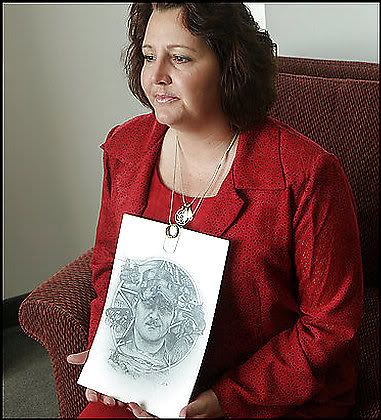
The Washington Post reports:
President Bush has apologized to the widow of a Wiccan soldier after she was excluded from a Nevada meeting this week that the president held with the families of soldiers killed in combat.
Roberta Stewart, whose husband, Sgt. Patrick Stewart, was killed in Afghanistan in 2005, was left off the invitation list for the private meeting Tuesday even though other members of her husband's family were invited.
When she heard about the exclusion from her mother-in-law, Stewart said, she concluded that it was done because of her public fight to force the federal government to engrave the symbol for the Wiccan faith on her husband's marker on a memorial.
"I was devastated," Stewart said. "I was crying and upset. I couldn't believe that my country would continue this discrimination."
On Thursday, after publicity about the omission, the White House and the military scrambled to put things right. Stewart said she received phone calls from Department of Defense officials, who told her that her name was inadvertently left off a list of guests they forwarded to the White House.
Bush, who had been in Nevada for a speech to the American Legion's national convention, also called Stewart and, in a conversation that she said lasted about five minutes, expressed regret over her exclusion. She said she told the president about the Wiccan faith.
" 'I don't know whether you believe me or not, but I hope you know that this president would not dishonor a soldier,' " she said Bush told her.
Scott Stanzel of the White House press office confirmed the president's call to Stewart.
Stewart, also a Wiccan, fought an 18-month battle to get the Wiccan symbol -- a five-pointed star within a circle -- engraved on a brass plaque for war heroes at the veterans cemetery in Fernley, Nev. Patrick Stewart, who was in the Nevada Army National Guard, is believed to be the first Wiccan killed in combat. The helicopter he was riding in was shot down.
The Wiccan faith is based on nature and emphasizes respect for the earth. Some Wiccans call themselves witches or pagans.
The Department of Veterans Affairs turned down Roberta Stewart's request because the Wiccan symbol was not among the 38 emblems, including ones for atheism and humanism, allowed for inscription on military memorials or grave markers.
Americans United for the Separation of Church and State sued the department on behalf of Stewart and other Wiccan spouses, and in April, the VA agreed to add the symbol to its approved list.
Thursday, August 23, 2007
| [+/-] |
U.S. Judge Rules Public Funds Can Be Used For Church Renovations |
The Federal district court ruling in Michigan highlights a shift away from strict church-state separation.
The Christian Science Monitor reports:
Should citizens' tax dollars be spent to renovate houses of worship?
The answer to that question used to be a resounding "No, it's unconstitutional." But Aug. 8, a federal judge broke new ground. He ruled that the city of Detroit could partially reimburse three churches for renovations they made to their buildings to make the downtown area more attractive before the 2006 Super Bowl. (The city paid numerous property owners for renovations.)
Public funds can go to churches for improvements that serve a civic purpose, but not to promote religion, ruled Judge Avern Cohn of the US District Court of Eastern Michigan. In practical terms, that meant the churches could be reimbursed for repairs to their buildings and parking lots, which "convey no religious message," he said, but not for new signs or stained-glass windows.
"This is the first time we've gotten a court decision on government bricks-and-mortar spending in a very long time," says Robert Tuttle, a law professor at George Washington University. And it's likely to capture the attention of states and cities across the United States as they consider similar church-state matters.
The ruling troubles those who hold to a strict separation of church and state, including the group that brought the case against Detroit's downtown development agency.
"If it's OK for the government to pay for bricks and mortar, what's to stop it from out and out building churches?" asks Ellen Johnson, president of American Atheists Inc. (AAI) "The ramifications are tremendous."
The ruling represents an attempt to grapple seriously with a changing legal landscape, says Mr. Tuttle, who codirects legal research for the Roundtable on Religion and Social Welfare Policy based in Albany, N.Y. Pressures have grown in recent years to move away from the idea of a strict separation between church and state. Proponents in legal and religious circles have called for government neutrality toward religion – providing a level playing field where religious and secular entities can compete for public funds. This issue remains highly contentious.
Not long ago, it was deemed unconstitutional for public money to go to groups whose mission was "pervasively sectarian," in the language of the US Supreme Court. (The First Amendment to the US Constitution prohibits any government "establishment of religion.")
In 1973, the Supreme Court stated in regard to religious structures that government "may not maintain such buildings or renovate them when they fall into disrepair." That decision has never been repudiated, but in 2000, the Court ruled (in Mitchell v. Helms) that government can provide funds to religious groups as long as the money does not support religious activities. Parsing that in practice becomes the challenge.
President Bush's faith-based initiative made funding of religious organizations for a variety of social services a prime goal. Some of those projects have been challenged in court, a few successfully, for promoting a particular religion.
In 2003, the administration announced it was opening the door to direct funding for renovations to religious buildings through the Save America's Treasures program to preserve cultural landmarks. (The Department of Justice later issued legal opinions that could allow funding religious structures under other federal programs.)
The first grant, for $317,000, was given to restore the windows in Boston's Old North Church, made famous by Paul Revere. Later that year, $375,000 went to Touro Synagogue in Newport, R.I., the nation's oldest synagogue. Both are active houses of worship, but they are also historical landmarks that draw visitors in large numbers. No challenge has been mounted to those grants.
"We have well over half a million visitors each year, including some 70,000 school kids," says Ed Pignone, director of Old North Foundation. The 1723 church is "Boston's most visited historic site," he says.
Other instances of direct government aid are being challenged, however. When Congress passed a bill specifically to fund the restoration of California missions, 19 of which are active Catholic churches, Americans United for Separation of Church and State said it would sue. The missions have yet to raise the matching money that would trigger the grant.
And last week, the American Civil Liberties Union filed a suit in Louisiana to halt the payment of $120,000 in state money to two churches. The funds were earmarked in an appropriations bill, without any purpose or justification given.
AAI is considering whether to appeal the Michigan ruling. Although they had a partial victory (some church expenses were not reimbursed), they say they can't let the bricks-and-mortar argument stand.
"You could easily build a megachurch and avoid the religion iconography," Ms. Johnson says. "Then the church could later say, 'Now we'll put in the religious symbols ourselves.' " There's nothing secular about a church, she adds.
Others argue that religious groups frequently provide a secular service that makes them worthy of public support, even without setting up a separate 501(c)3 nonprofit to ensure no funds go to religious activities. This is the thinking behind Mr. Bush's faith-based initiative.
Partners for Sacred Places (PSP), a nonprofit, nonsectarian organization founded in 1989 to help preserve older and historic houses of worship, seeks contributions from private and public sources to help congregations repair their buildings.
Partners conducted a study of 100 congregations in six cities. It found that, on average, each maintained four community service programs. And 80 percent of the people who entered the buildings in a given week were nonmembers – people receiving those community services.
To donors, "we say it isn't supporting a religion, but supporting everybody – they don't make distinctions between kids or seniors of one faith or another," says Bob Jaeger, PSP executive director. "The other argument is that these are historic buildings ... that are an important part of a community's heritage."
PSP set up a fund in Pennsylvania and raised $2 million in donations from the William Penn Foundation, the state government (three different sources), and individuals to restore buildings in southeastern counties. The goal is to help congregations across the state.
One beneficiary is St. Francis de Sales Catholic Church in west Philadelphia. "It's an enormous building ... and they've been struggling for 20 years with how to fix the [three] domes which have water leaks," says Mr. Jaeger. "The church has an amazing physical presence and a cluster of programs for the community – we gave them $100,000."
For strict separationists like Johnson, no tax money should help a church – "religion should be doing that themselves."
For Tuttle, the Michigan decision seriously tackles the changes that have gone on in the law: the shift from barring any funding to religious institutions to barring funding for any religious activities. It comes down neither on the strict separationists side nor on the blanket neutrality approach of the Bush administration.
Instead, it says that "when a government makes a grant for secular purposes to a broad set of grantees, it can include churches," Tuttle adds. "But it has to be careful it is not directly supporting the religious mission or ministry."
Wednesday, June 13, 2007
| [+/-] |
Earmarks Gone Wild |
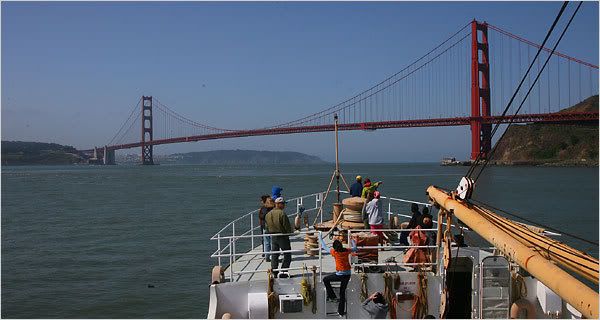 The White Holly cutter approaching the Golden Gate Bridge.
The New York Times reports:
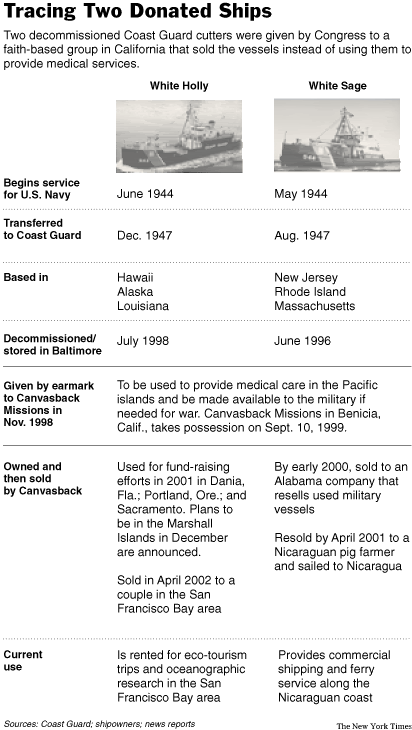
In theory, it was simple: Congress gave two decommissioned Coast Guard cutters to a faith-based group in California, directing that the ships be used only to provide medical services to islands in the South Pacific.
Coast Guard records show that the ships have been providing those services in the South Pacific since the medical mission took possession of them in 1999.
In reality, the ships never got any closer to the South Pacific islands than the San Francisco Bay. The mission group quickly sold one to a maritime equipment company, which sold it for substantially more to a pig farmer who uses it as a commercial ferry off Nicaragua. The group sold the other ship to a Bay Area couple who rent it for eco-tours and marine research.
The gift of the two cutters was one of almost 900 grants Congress has made to faith-based organizations since 1987 through the use of provisions, called earmarks, that are tucked into bills to bypass normal government review and bidding procedures.
Skipping those safeguards can generate more than accusations of political favoritism. As the case of the Coast Guard cutters shows, it also can give rise to grants that never achieve their intended purpose, with the government never even realizing it.
Canvasback Missions, in Benicia, Calif., took ownership of the cutters, the White Sage and the White Holly, in Baltimore in September 1999. This was the first time such ships had been given away through an earmark, the Coast Guard said.
Pressed for cash, Canvasback sold the White Sage a few months later for about $85,000. Two years later, the struggling mission sold the White Holly to the Bay Area couple for $330,000. The mission did not inform the Coast Guard property office about the sales.
Typically, decommissioned Coast Guard vessels are sold at auction, are included in foreign aid packages or are added to the nation’s mothball fleet.
If the two cutters had been sold at auction, the General Services Administration would have monitored their use for five years. But the Canvasback earmark required no such monitoring, and Coast Guard officials said they did not know about the sales until The New York Times asked about them.
The fate of the White Holly and the White Sage comes as a surprise to people who supported the Canvasback earmark.
Former Representative Frank D. Riggs, Republican of California, whose staff drafted the earmark, said it “would raise concerns” if the ships were “not used as intended.”
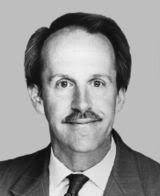 Former California Congressman Frank Riggs
Senator Olympia J. Snowe, Republican of Maine, was also credited by Canvasback with working on the earmark. But David Snepp, Ms. Snowe’s spokesman, said she had merely voted for it. Mr. Snepp called Canvasback’s actions troubling and said the senator had asked her staff to research what is now a gray area: whether selling the two ships was legal.
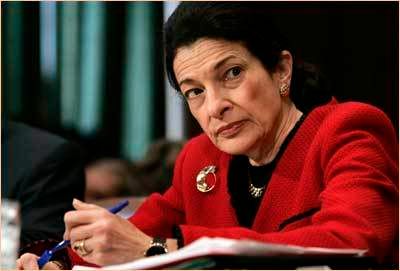 Maine Senator Olympia Snowe
“If they were not used in Micronesia, they were definitely not used in the spirit of the way this was written,” Mr. Snepp said. The text of the earmark gave the government the right to reclaim the ships, he added. While that was perhaps unlikely, he continued: “They were supposed to retain the vessels in case the Coast Guard needed them back. The charity does not have the option to sell.”
A harsher assessment came from Steve Ellis, vice president of Taxpayers for Common Sense, a watchdog group that opposes earmarks, and a former Coast Guard officer. “They are flipping the property,” Mr. Ellis said.
Jamie W. Spence, president and founder of Canvasback Missions, said all the sales proceeds supported the organization’s work in the Marshall Islands, where it has provided eye and dental care and counseling on diabetes prevention to thousands of people since it was founded in 1981.
 Jacque Spence, left, and her husband, Jamie, at their Canvasback Missions office in Benicia, Calif.
“We did everything in our power to put these ships into service,” Mr. Spence said. But when the group could not raise the money to repair and maintain the vessels, it sold them instead, using the proceeds to cope with its financial difficulties, he said.
Mr. Spence said he had consulted with Canvasback’s legal advisers and was confident the sales were ethical and legal.
Coast Guard officials were surprised at the cutters’ fate. “The White Holly and the White Sage are in the South Pacific,” Lynn Brown, the personal property manager in the decommissioning office, said in March. She affirmed recently that her office had not known that Canvasback sold the ships.
Mr. Spence acknowledged that he did not give notice to Ms. Brown’s office. But he said he told Coast Guard employees in the Bay Area about the White Holly sale and mentioned the White Sage sale to the Coast Guard officer in charge of the Baltimore yard before the deal and to civilian Coast Guard officials afterward. He did not respond to requests to identify those people.
While all earmarks are troublesome to critics like Mr. Ellis, who called the Canvasback gift an “utter indictment of earmarks,” those made for faith-based groups involve special questions about the constitutional borders between church and state.
 Vince Backen with students and teachers after giving them a cruise on the White Holly, a former Coast Guard cutter sold to him by Canvasback Missions.
[photo: Jim Wilson/NYT]
The Coast Guard ships were given to Canvasback for a secular purpose, providing medical services. But Mr. Spence said Canvasback did not isolate the sales proceeds; instead it mingled them with its general revenues, which also cover activities that include evangelism. And under most court decisions, evangelism cannot be paid for with federal grants.
Mr. Spence said no constitutional violations occurred. “I’m very certain that the proceeds were used for supporting our medical program,” he said, “and I’m absolutely sure they were not used for evangelism.” He said Canvasback, a nondenominational Christian mission, raises donations separately for its evangelism activities, which included donating Bibles translated into local languages and constructing a chapel.
Mr. Spence and his wife, Jacque, established their medical mission 26 years ago, using a 71-foot catamaran, the Canvasback, to navigate the shallow coasts of the poorer, more remote islands of Micronesia. As the ministry grew, it mobilized medical professionals to volunteer for short stints in the islands and delivered donated medical equipment and supplies.
When they sought the Congressional earmark, the Spences were hoping the two cutters would allow them to expand their medical ministry, Mr. Spence said. But the mission acquired and then sold those vessels, and a third vessel that was privately donated, because Canvasback determined that maintaining and operating the ships was too big a financial burden, he explained. But few of these details can be found in the annual statements Canvasback files with the Internal Revenue Service. Two leading nonprofit accounting experts examined the statements and found them to be incomplete and internally inconsistent.
“There is no clear audit trail for the boats,” said Julie L. Floch of Eisner L.L.P. in Manhattan, a member of the I.R.S.’s national advisory panel on nonprofits. Her view was echoed by Jody Blazek of Blazek & Vetterling L.L.P. in Houston, the author of six books on nonprofit tax law and accounting.
William J. MacLean, the accountant in Seaside, Ore., who prepared the filings, declined to comment.
These days, Canvasback has redirected its efforts from ship-based medical care in the remote islands to land-based clinics on the more populated islands, Mr. Spence said.
That work has won praise from health officials in the Marshall Islands — and fresh support from Congress. The tiny mission is now the lead contractor on a diabetes research program being financed through two $1 million Defense Department contracts. Those grants were directed to Canvasback by Congress through a pair of earmarks.
Friday, February 2, 2007
| [+/-] |
High Court Holds A '60s Revival |
Warren era comes to life in cases on student signs and standing to sue
For the ABAJournal.com, David G. Savage writes:
A pair of unusual first amendment cases gives the U.S. Supreme Court under Chief Justice John G. Roberts Jr. a chance to reconsider doctrines that were set in the late 1960s, under Chief Justice Earl Warren.
The court this term will take up a test of the free speech rights of high school students and will decide whether taxpayers have a right to challenge President Bush’s faith-based initiative as a violation of the establishment clause.
The cases recall some that were argued during the Warren era, which famously expanded individual rights. When students showed their disapproval of the Vietnam War by wearing black armbands to high school, the court overturned their suspensions and said students do not “shed their constitutional rights to freedom of speech or expression at the schoolhouse gate.” Tinker v. Des Moines Independent Community School District, 393 U.S. 503 (1969).
And when some taxpayers sued because federal education aid was used to subsidize religious schools, the Warren court made an exception to the rule that taxpayers do not have standing to challenge government policies. In Flast v. Cohen, 392 U.S. 83 (1968), the court said taxpayers may sue to enforce the First Amendment ban on spending tax money to promote religion.
But in more recent times, those doctrines have been narrowed. And in this term, the court will decide whether to narrow them even further.
Perhaps the more colorful case before the court is Morse v. Frederick, No. 06-278. Students outside a Juneau, Alaska, high school unfurled a 14-foot banner along the street after they were dismissed from class to watch the torch for the 2002 Winter Olympics pass by.
As the torch and local TV cameras approached, senior Joseph Frederick and a few friends hoisted the banner, which read, “Bong Hits 4 Jesus.” Principal Deborah Morse spotted it, grabbed it from the students and crumpled it.
When Frederick invoked the group’s right to freedom of speech, the principal said the school’s policy prohibited the display of “offensive” messages, including ones that “promote the use of illegal drugs.” She suspended the senior for 10 days.
Frederick appealed the suspension to the superintendent and the school board, but lost. He then sued in federal court, alleging his free speech rights were violated, but he lost there too.
Last March, however, he won before the San Francisco-based 9th U.S. Circuit Court of Appeals, which held that school officials may not “punish and censor” expressions by students simply because their message conflicts with the school’s policy.
“What schools are entitled to do ... is suppress speech that disrupts the good order necessary to conduct their educational function,” wrote Judge Andrew Kleinfeld, one of the most conservative judges on the 9th Circuit.
He reviewed the trilogy of student free speech cases decided by the Supreme Court. Tinker in 1969 said the free speech rights of students would prevail except when they would cause a “substantial disruption of or material interference with school activities.”
In 1986, however, the court upheld the suspension of a high school student who gave a nominating speech in the auditorium that contained a thinly veiled sexual allusion. School authorities need not tolerate “plainly offensive” speech from students during a “school-sponsored educational program,” the court said. Bethel School District v. Frazer, 478 U.S. 675. Two years later, the court said school officials were free to censor a student newspaper that was produced in a journalism class and therefore was “part of the school curriculum.” Hazelwood School District v. Kuhlmeier, 484 U.S. 260.
NOT ‘PLAINLY OFFENSIVE’
Kleinfeld said the student’s banner was protected free speech. “The phrase ‘Bong Hits 4 Jesus’ may be funny, stupid or insulting, depending on one’s point of view, but it is not ‘plainly offensive’ in the way sexual innuendo is,” he wrote. And since it was displayed outside the school, along the street, it certainly cannot be described as part of the curriculum, he added.
The 9th Circuit not only sided with Frederick on the free speech claim but also rejected the principal’s claim of qualified immunity. “This is no case of ignorance,” the 9th Circuit said. “The law was clear.”
Former U.S. Solicitor General Kenneth Starr, now dean of the Pepperdine University law school, petitioned on behalf of the school board and principal, arguing the law was anything but clear. He noted that school boards across the nation have adopted policies that forbid students from wearing clothes at school events that promote the use of alcohol, tobacco or illegal drugs.
By contrast, the 9th Circuit’s decision says school authorities “must tolerate pro-drug messages in the face of threats of draconian civil damages lawsuits. This is wildly wrong,” Starr said.
The two sides differ on how to regard the torch parade that sparked the incident. Juneau attorney Douglas Mertz, a lawyer for Frederick, calls it an “off campus” event, since the student was standing on the street, not on the school grounds. But Starr referred to the same incident as a “school-sponsored” event, akin to a football game, since school authorities were in control.
In the second case, Hein v. Freedom from Religion Foundation, No. 06-157, the court will focus on standing of a different sort. Arguments are slated for Feb. 28.
In his first term, Roberts made clear he would strictly enforce the limits on standing. Last year, taxpayers in Ohio challenged the state’s subsidies for out-of-state manufacturers to build new plants in the Buckeye State. They won a ruling in the U.S. Court of Appeals saying this subsidy discriminated against interstate commerce and violated the commerce clause.
But Roberts spoke for the court and dismissed the suit. “We have an obligation to assure ourselves of litigants’ standing under Article III,” he wrote in Cuno v. DaimlerChrysler Corp., 126 S. Ct. 2286.
Otherwise, it would “transform federal courts into forums for taxpayers’ generalized grievances.” Ohio taxpayers had not suffered a specific injury that gave them grounds to sue, he said.
FAITH-BASED FUNDING
While rejecting standing for the Ohio taxpayers in DaimlerChrysler, Roberts noted that the Flast decision had created a “narrow exception” for taxpayers who complain about spending to promote religion.
Shortly after taking office, President Bush created a Center for Faith-Based and Community Initiatives in the White House that encouraged religious groups to participate in government-funded social-service programs. Bush’s order stressed tax money would not be used for “inherently religious activities,” such as worship or religious teaching.
Nonetheless, the Madison, Wis.-based Freedom from Religion Foundation sued, contending the White House was using tax money for conferences and meetings that promoted “the funding of faith-based organizations.”
The administration’s lawyers moved to block the suit on standing grounds. They said federal officials were merely assuring that church groups and other religious charities had the same opportunity as others to participate in public programs. Certainly, the president and other officials can speak favorably about religion without violating the establishment clause or giving taxpayers grounds for suing, they said.
A federal judge in Wisconsin dismissed the suit, but the Chicago-based 7th U.S. Circuit Court of Appeals revived it in a 2-1 decision. “Taxpayers have standing to challenge an executive-branch program, alleged to promote religion, that is financed by a congressional appropriation, even if the program was created entirely within the executive branch,” said Judge Richard Posner.
After the full appeals court upheld that decision in a 7-4 vote, U.S. Solicitor General Paul Clement urged the justices to rule that taxpayers do not have standing to challenge “the executive’s use of general appropriations.”
“This is a relatively narrow question, but it’s quite important,” says Barry W. Lynn, executive director of Americans United for Separation of Church and State. “We believe that no tax money should be spent to advance religion. It’s essential that the justices uphold the principle that taxpayers can go to court when their money is being used to advance religion.”
But Kevin J. Hasson, president of the Becket Fund for Religious Liberty in Washington, D.C., says he hopes the court will use the case to end the “jurisprudence of hurt feelings.”
“Paying taxes should not give every malcontent with a gripe against religion a license to sue the government,” Hasson says. “This case could finally close a loophole in the law through which radical secularists have been driving entire convoys of trucks.”
