Clinton aide, Blumenthal, accepts deal in DWI case - Blumenthal fined $900, had license revoked for 10 months
The Nashua Telegraph reports:
Sen. Hillary Clinton campaign adviser Sidney Blumenthal slipped into Nashua District Court to plead guilty and be sentenced last month, three weeks earlier than scheduled.
Blumenthal, 59, of Washington, D.C., was arrested in Nashua on Jan. 7, the day before the New Hampshire primary, accused of speeding while intoxicated on Concord Street.
Blumenthal and his lawyer, Ray Mello, of Nashua, had negotiated a plea bargain with police prosecutors last month. Notice of the deal was filed March 20, and the court scheduled a plea-and-sentencing hearing Friday.
The district court is a busy place, however, and last-minute scheduling changes are common – especially with plea bargains, which are quick and easy for the court to accommodate. Plea bargains are routine; the vast majority of DWI cases and criminal cases in general are resolved by similar deals.
Blumenthal had been charged with aggravated DWI, because police charged he was speeding at about 70 mph in a 30 mph zone.
Blumenthal declined to take a breath or blood test and did not show any obvious signs of impairment during booking at the police station. Blumenthal didn't slur or sway, and he and the officers were all models of politeness, a video of the process shows.
More on this topic
Read Nashua District Court records of Sidney Blumenthal's sentencing.
Asked about any drug or alcohol use, which is part of the routine questioning before detention, Blumenthal said, "I had some wine at dinner."
It was Blumenthal's first arrest, ever, he told police.
Booking videos and other police reports are generally a matter of public record once a case has been closed; The Telegraph requested a copy of the video Friday afternoon and got it Monday morning.
Blumenthal was brought to a cell after booking and later released after posting $200 bail.
Blumenthal pleaded guilty March 28 to a standard, misdemeanor DWI charge. He was fined $900, and his driver's license revoked for 10 months. Blumenthal can seek to get his license restored after 120 days, however, if he completes and alcohol education program in Washington, D.C., court records show.
Blumenthal also agreed not to contest a six-month administrative license suspension, which was already in effect, police have said previously.
Though there is no standard disposition to fit all cases, the terms of Blumenthal's plea are stiffer than a standard DWI charge, and typical of an aggravated DWI plea bargain for a first-time offender, Capt. Peter Segal said. Blumenthal has no prior DWI convictions, he said.
Police negotiated a plea bargain in part because the arresting officer, Christopher Ditullio, was called up for service in Iraq, and would not have been available to testify, Segal said.
Blumenthal is an unpaid adviser to Clinton, actively involved in her presidential campaign, according to his lawyer. Blumenthal also was an adviser to former President Clinton. He was in southern New Hampshire on the eve of the primaries but got lost on the way from dinner to his hotel, he told police.
Sgt. Michael Masella spotted Blumenthal's rented Buick heading north on Concord Street in the area of Greeley Park at about 70 mph on the night before the New Hampshire primaries, police reported. Masella and Ditullio stopped Blumenthal near the Henri Burque Highway and arrested him after performing a field sobriety test.
Tuesday, April 15, 2008
| [+/-] |
Sidney Blumenthal, DWI |
Wednesday, January 9, 2008
| [+/-] |
Polling the New Hampshire Primaries: What Happened? |
At the Huffington Post, John Zogby writes:
There was no shortage of polls going into the New Hampshire primary in 2008 and it looks like we all missed the mark on the Democratic side. This will require a lot of scrutiny in the coming days and weeks, but here are some initial thoughts on what has been happening:
1. According to the exit polls, 18% of the voters said that they made up their minds on primary day. That is just an unprecedented number. I have polled many races, especially close ones, where 4% to 8% have said they finally decided on their vote the day of the election and that can wreak havoc on those of us who are in the business of capturing pre-election movements and trends. But nearly one in five this time?
2. It looks like the always feisty voters in both Iowa and New Hampshire have rejected pre-election coronations. In the case of Iowa, Democratic voters said that Mrs. Clinton is not inevitable, while in New Hampshire they were not ready to endorse the Obama train without checking the engine.
3. The compressed schedule of the two events may have had an impact. Normally the winning candidate gets an initial big bounce out of Iowa, and then plateaus. Then the next primary race begins. With less than five full days, Obama got his bounce in New Hampshire, then the settling down period began on the last day -- under the radar screen.
4. My polling showed Clinton doing well on the late Sunday night and all day Monday -- she was in a 2-point race in that portion of the polling. But since our methods call for a three-day rolling average, we had to legitimately factor the huge Obama numbers on Friday and Saturday -- thus his 12 point average lead. Unfortunately, one day or a day-and-a-half does not make a trend and we ran out of time.
5. Going into the New Hampshire primary, we certainly did see Clinton holding on to a significant lead among women and older voters. But we were focusing on Obama's massive lead among younger and independent voters. We seem to have missed the huge turnout of older women that apparently put Clinton over the top.
6. We expected that Obama would receive the lion's share of independents and drain the Republican primary of these voters. It now appears that, perhaps with a sense that Obama had a lock on the Democratic side, independents felt free to vote on the Republican side and reward their hero, John McCain.
We will pour through the data and try to come up with something more definitive, but those are my early observations. There is much speculation that Senator Clinton's crying incident may have offered voters -- especially women -- a peek at the human side of someone who is often seen as scripted. I think she also scored points during the ABC debate Saturday night when she declared, amid a discussion about the country's desire for a change in direction, that electing a woman would represent a big change in itself. Her numbers did go up in that last 24-hour period.
On the other side, most of us did a whole lot better coming close to the numbers on the Republican side of the aisle. But this is one of those cases that remind us that pre-election polls are guides to voter attitudes and shifts. All things considered in this and other cases, we pollsters still do a creditable job.
Wednesday, December 19, 2007
| [+/-] |
Book Links Jamming to GOP 'High Ups' |
Operative imprisoned in case tells his story.
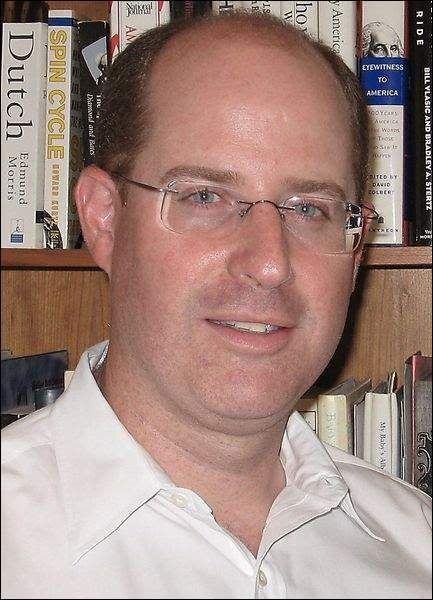 Republican consultant Allen Raymond
The Concord Monitor reports:
The conspiracy to jam New Hampshire Democratic Party phone lines on Election Day 2002 must have gone to the top of the Republican Party, one of the operatives imprisoned in the scheme writes in a forthcoming book.
Republican consultant Allen Raymond writes that he became involved only because he'd been called by James Tobin, then the New England political director for the Republican National Committee.
"The Bush White House had complete control of the RNC, and there was no way someone like Tobin was going to try what he was proposing without first getting it vetted by his high-ups," Raymond wrote in How To Rig an Election, a book set for publication next month. "That's if Tobin, rather than one of his bosses, had even thought of the ploy himself - which seemed unlikely."
Raymond, who once had the same RNC job as Tobin for the mid-Atlantic region, said that before Tobin's call, his telemarketing outfit, GOP Marketplace, had been shut out of RNC jobs. Allen figured he'd lost favor because he publicly aired his disdain for Bush and feuded with a Bush vendor. "I figured this was the Dare - the Bushies' way of making me prove my stripes to get back into the club," he wrote.
In an interview, Raymond said the book had two aims: To entertain - he said he aimed for a cross between Ball Four and Wise Guys (the book Goodfellas was based on) - and to follow the adage "sunlight's the best disinfectant."
"Anybody who reads this book and is mad at me has no sense of humor," he said.
The Monitor obtained an advance copy yesterday. The book is set for release Jan. 8, the day of New Hampshire's presidential primary.
Former gossip columnist Ian Spiegelman, who used to write the New York Post's Page Six, co-wrote the book, which is full of vulgar, colorful language. Raymond said he was connected with Spiegelman through his agent.
"The gossip world at the level he was working is highly charged, highly political," Raymond said. "So I knew that he'd understand what I was talking about."
President Bush is described as a "Connecticut-raised cowboy who'd been blind drunk until he was forty." Steve Forbes, whose presidential campaign Raymond worked for in 2000, "looked like he'd been put together on an operating table" and "had a stammering speech pattern that made you think he was on the verge of a seizure."
Raymond, 40, also knocks the Republican Party that employed him for nearly a decade. "Ever hear the one about the president who picked a land war in the Middle East?" he writes. "Or the one about the vice president who took a scattergun to an old man's face? And then got the old man to apologize for getting shot? That's the type I was dealing with."
Tobin, meanwhile, is painted as a moderate New Englander who'd gone to work for Bush's campaign and "reinvented himself as a full-fledged, Bible-thumping, fear-mongering acolyte for the Holy Connecticut Cowboy."
The U.S. attorneys who handled Tobin's trial also don't escape derision. Prosecutors Nick Marsh and Andrew Levchuk are described as the "pair from Keystone" who "knew exactly nothing" when they took over the case.
The phone-jamming scheme involved repeated hang-up calls made to jam six phone lines - five at the Democratic Party's get-out-the-vote operation and one for a firefighters union offering rides to the polls. Raymond writes that the plan was to tie up the lines all day, but it was aborted after 90 minutes on orders from then-state Republican Party Chairman John Dowd, who insisted it was illegal.
The calls were made on the day of the down-to-the-wire Senate race between Jeanne Shaheen and John Sununu, whose names are almost afterthoughts in the book, mentioned only after pages of discussing the scheme. Sununu won the election by 19,571 votes; the two may face a rematch next year.
Raymond, who served three months in federal prison, and two other men pleaded guilty to criminal conspiracy charges for their roles in the scheme. Chuck McGee, executive director of the New Hampshire Republican Party at the time, came up with the idea. Idaho telemarketer Shaun Hansen owned the company that made the calls.
As the phone-jamming blew up in the press and the FBI investigated, Allen wrote, the RNC opted for "the old-school cover-up" route.
Tobin pleaded not guilty, went to trial and was convicted of telephone harassment in 2005. This spring, an appeals court overturned the ruling and sent the case back to U.S. District Court in Concord for further arguments. Tobin is slated for a new trial in February, though Judge Steven McAuliffe is considering a motion to acquit him.
To Raymond, Tobin was the scheme's "linchpin," and he wrote that he "couldn't believe it" when he read in the newspaper that Tobin pleaded not guilty.
"Now, Tobin was not mentally defective; he could not have believed his own lies," Raymond wrote. To Raymond, he said, the key question is: "Who is he protecting?"
Raymond repeatedly notes that the RNC has paid millions for Tobin's legal defense. "My old pals at the Republican National Committee were spending almost $3 million on my coconspirator's legal defense because he was still a loyal member of the GOP family, while at the same time labeling me a liar, a rogue and a thief to any news outlet that would listen," he wrote.
The smaller details of being a man under indictment are also detailed in the book.
Raymond went to great pains to convince lawyers at the Department of Justice that he wasn't what they were expecting - "a slimy D.C. scoundrel in a Gucci suit, French cuffs, tassel shoes and a fat watch." When he was under investigation, he owned three watches worth a total of $6,000 - so he went to CVS and bought a Timex. He also pulled out the first suit he'd owned, "a power tie from 1990" and loafers with a whole.
"When I put the whole ensemble together, (my wife) Elizabeth just clucked her tongue and gave me the thumbs-up," he wrote. "And then I jumped into my Audi and went to my meeting."
In addition to phone jamming, Raymond elaborates on other political dirty tricks, such as using racial tensions to target phone calls in a New Jersey congressional race that sounded as if they were coming in support of his opponent. He deployed the "angry black man" voice on Eastern European Democrats and used actors with "thick Spanish accents" to tape calls aimed at union households.
These days, Raymond said, he's promoting his book, coaching little league and working at a few business ventures on the side. He lives in the Washington, D.C., area with his wife and two elementary-school-age sons.
He's done with working in politics. As a felon, he said, he's not allowed to vote. But if he could, he'd call himself undeclared, no longer a Republican.
"I love politics, but I'm done. I'll never make a living in politics again," Raymond said in the interview. "After what I went through, one, who would hire me? And two, why would I ever want to work for anybody who would hire me?"
| [+/-] |
Official: Justice Department Slowed Probe Into Phone Jamming |
McClatchey reports:
The Justice Department delayed prosecuting a key Republican official for jamming the phones of New Hampshire Democrats until after the 2004 election, protecting top GOP officials from the scandal until the voting was over.
An official with detailed knowledge of the investigation into the 2002 Election-Day scheme said the inquiry sputtered for months after a prosecutor sought approval to indict James Tobin, the northeast regional coordinator for the Republican National Committee.
The phone-jamming operation was aimed at preventing New Hampshire Democrats from rounding up voters in the close U.S. Senate race between Republican Rep. John Sununu and Democratic Gov. Jeanne Shaheen. Sununu's 19,000-vote victory helped the GOP regain control of the Senate.
While there were guilty pleas in the New Hampshire investigation prior to the 2004 presidential election, involvement of the national GOP wasn't confirmed. A Manchester, N.H., policeman quickly traced the jamming to Republican political operatives in 2003 and forwarded the evidence to the Justice Department for what ordinarily would be a straightforward case.
However, the official, who requested anonymity because of the sensitivity of the matter, told McClatchy that senior Justice Department officials slowed the inquiry. The official didn't know whether top department officials ordered the delays or what motivated those decisions.
The official said that Terry O'Donnell, a former Pentagon general counsel who was representing Tobin, was in contact with senior department officials before Tobin was indicted.
In October, the House Judiciary Committee opened an investigation to determine whether partisan politics undermined the federal probe.
The official said that department officials rejected prosecutor Todd Hinnen's push to bring criminal charges against the New Hampshire Republican Party.
Weeks before the 2004 election, Hinnen's supervisors directed him to ask a judge to halt action temporarily in a Democratic Party civil suit against the GOP so that it wouldn't hurt the investigation, although Hinnen had expressed no concerns that it would, the official said.
Paul Twomey, a lawyer for the state Democratic Party, said the delay spared Republicans embarrassment at the peak of the campaign because a pending deposition would have revealed that several state GOP officials knew about the scheme, which was hatched by their executive director, Charles McGee. The delay also stalled the case beyond its statute of limitations, depriving Democrats of full discovery, he said.
Citing longstanding policy, spokesman Peter Carr said the Justice Department wouldn't comment on its investigation.
Four men have been convicted in the scandal, including McGee and Republican consultant Allen Raymond, who arranged to jam the phones. Their cooperation led to Tobin's indictment.
In mid-October 2004, Tobin resigned as the Bush-Cheney campaign's regional director after a news report disclosed allegations of his involvement. Bush narrowly lost New Hampshire, the only state he won in 2000 that went for Democrat John Kerry.
Hinnen, now an aide to Democratic presidential candidate and Delaware Sen. Joseph Biden, said he couldn't comment on the investigation.
Tobin was convicted in December 2005 of charges related to the scheme, but won a new trial on appeal. His lawyers didn't respond to e-mailed questions.
National Republican committees have paid more than $6 million to Washington law firms to defend Tobin and fight the civil suit, raising suspicions that there's more to the scandal.
Rep. Paul Hodes, a New Hampshire Democrat who requested the House inquiry, said he considers the delay in indicting Tobin to be ``a miscarriage of justice.''
At the outset, the federal investigation hit a snag when Thomas Colantuono, the U.S. attorney for New Hampshire, withdrew from the case in early 2003 because his wife was a Bush-Cheney campaign worker. Justice Department officials then assigned the case to Hinnen, a prosecutor in the Computer Crimes Section.
HOW THE INVESTIGATION BEGAN
The official with detailed knowledge of the case gave this account of how the case unfolded:
In early 2004, Hinnen got approval from John Malcolm, the deputy chief of the Justice Department's Criminal Division, in early 2004 to investigate Tobin. Malcolm left the department soon afterward.
Hinnen then sought approval from Malcolm's successor, Laura Parsky, to prosecute Tobin but wasn't told until late summer to write a formal, detailed prosecution memo, which he did in early September.
On Oct. 1, 2004, Hinnen got the green light to prepare an indictment, but was directed to first give Tobin lawyer O'Donnell a chance to make his client's case. O'Donnell requested delays and then told Hinnen, Parsky and other senior officials that an unidentified lawyer had advised Tobin that the jamming was legal.
Hinnen argued to his superiors that it was irresponsible for the department to allow Tobin to serve as a Bush campaign official when it had evidence that he'd hindered people from voting.
In late October 2004, Justice Department officials told Hinnen it was too close to the election to bring such a politically sensitive indictment, putting it off until late November.
In early 2005, Hinnen submitted a lengthy memo arguing for a criminal indictment treating the New Hampshire Republican State Committee as a corporate entity. Hinnen noted that the party lacked an ethics policy at the time of the phone jamming and that its officials had refused to share with prosecutors the results of an internal investigation of the scheme.
Craig Donsanto, the chief of the department's Election Crimes Branch, objected to an indictment, arguing that the state GOP's ``shareholders'' are the voters.
Ultimately, John Keeney, a career deputy assistant attorney general, directed Hinnen to drop the idea.
Keeney, Donsanto and Parsky, now a San Diego County judge, didn't respond to phone calls.
In August, 2005, Hinnen was detailed for 18 months to a National Security Council job in the White House, leaving other prosecutors to handle Tobin's trial.
Tuesday, December 18, 2007
| [+/-] |
GOP Trickster Says He Was A Scapegoat |
Phone jammer claims higher-ups in the party took part in the scheme in New Hampshire
The Houston Chronicle reports:
A former GOP political operative who ran an illegal Election Day scheme to jam the phone lines of New Hampshire Democrats during the state's tight 2002 U.S. Senate election said in a new book and an interview that he believes the scandal reaches higher into the Republican Party.
Allen Raymond of Bethesda, Md., whose book Simon & Schuster will publish next month, also accused the GOP of trying to hang the blame for a scandal on him as part of an "old-school cover-up."
Raymond's book, How to Rig an Election: Confessions of a Republican Operative, offers a raw glimpse of the phone scandal as it unraveled and of a ruthless world in which political operatives seek to win at all costs.
McClatchy obtained an advance copy of the book.
The 2002 New Hampshire Senate race, in which GOP Rep. John Sununu edged Democratic Gov. Jeanne Shaheen by 19,000 votes, was among several targeted by Republicans seeking to win control of the U.S. Senate.
Raymond said those who have tried to make him the fall guy for the New Hampshire scheme failed to recognize that e-mails, phone records and other evidence documented the complicity of a top state GOP official and the Republican National Committee's northeast regional director.
Both men were later convicted of charges related to the phone harassment, along with Raymond and an Idaho phone bank operator. Defense lawyers have since won a retrial for James Tobin, the former regional director for both the RNC and the National Republican Senatorial Committee.
A lawyer for Tobin didn't respond to phone messages.
GOP committees have paid Washington law firms more than $6 million to defend Tobin and to fight a Democratic civil suit against the party. Raymond, himself a former RNC official, said he believes that the scandal reaches higher.
"Any tactic that didn't pass the smell test would never see the light of day without, at the very least, the approval of an RNC attorney," he wrote.
Paul Twomey, a lawyer for the New Hampshire Democratic Party, said that phone records obtained in the civil suit showed that Tobin made 22 calls to the White House political office in the 24 hours before and after the jamming.
Twomey said Tobin refused to testify about the calls, invoking his Fifth Amendment rights against self-incrimination.
Asked about Raymond's book, RNC spokesman Danny Diaz said that "it would be hard to find two less credible individuals" than Raymond and co-author Ian Spiegelman, who lost his job as a New York Post gossip columnist for sending a threatening e-mail accusing a source of trying to plant a fake story.
Raymond, who served three months in jail last year, said he earned a graduate degree in political management solely to make money off politics, and it made no difference to him whether he was a Republican or a Democrat.
Thursday, December 13, 2007
| [+/-] |
Shaheen Resigns As Clinton Co-Chairman |
The Hill reports:
New Hampshire power player Billy Shaheen stepped down as national co-chairman of Sen. Hillary Rodham Clinton’s (D-N.Y.) campaign just a day after bringing up Sen. Barack Obama’s (D-Ill.) drug use in an interview with a reporter.
Shaheen, whose wife, former New Hampshire Gov. Jeanne Shaheen (D) is running against Sen. John Sununu (R), told The Washington Post Wednesday that Democrats should consider how Republicans might use Obama’s admission of past drug use against him in a general election.
“It'll be, ‘When was the last time? Did you ever give drugs to anyone? Did you sell them to anyone?’” Shaheen said in the interview.
In the firestorm that followed, Shaheen said the comments were not authorized by the campaign, and Clinton said she personally apologized to Obama, promising not to engage in personal attacks for the remainder of the campaign.
Obama’s campaign immediately seized on Shaheen’s comments Wednesday and turned them into a fundraising plea.
“This race took a sharply negative turn yesterday,” Obama campaign manager David Plouffe said in an e-mail to supporters. “With recent polls giving Barack the lead in Iowa, New Hampshire, and South Carolina, and just three weeks left before the Iowa caucuses, the attacks on Barack’s character that Hillary Clinton has called ‘the fun part’ of this campaign have reached a new low.”
In his statement as released by the Clinton campaign, Shaheen said he wanted “to reiterate that I deeply regret my comments yesterday and say again that they were in no way authorized by Sen. Clinton or the Clinton campaign.”
“Sen. Clinton has been running a positive campaign focused on the issues that matter to America’s families,” Shaheen said in his statement. “She is the best qualified to be the next president of the United States because she can lead starting on day one. I made a mistake and in light of what happened, I have made the personal decision that I will step down as the co-chair of the Hillary for President campaign. This election is too important and we must all get back to electing the best-qualified candidate who has the record of making change happen in this country. That candidate is Hillary Clinton.”
Thursday, October 4, 2007
| [+/-] |
Phone-Jamming Scandal May Finally Be Solved |
At the Huffington Post, Thomas B. Edsall writes:
One of the long-standing mysteries of the Bush presidency is whether the White House and Justice Department were involved in a 2002 New Hampshire voter suppression scandal that produced three criminal convictions but never touched the administration.
Now, with Democrats back in control of Congress, this mystery may finally get cleared up. John Conyers Jr. (D-Mich.), chairman of the House Judiciary Committee, and subcommittee chairs, plan to investigate the controversial role of the Justice Department in the case.
There are two key issues questions involving Justice:
First, whether top officials there blocked a New Hampshire prosecutor from pursuing leads involving the White House and both the Republican National and Senatorial Committees.
Second, whether the Department purposely delayed prosecution of the one defendant with ties to the RNC and NRSC until after the 2004 election. The Department did attempt on October 15, 2004, just over two weeks before the election, to block depositions of key witnesses in a civil suit brought by the New Hampshire Democratic Party.
The vote suppression/phone jamming operation was dreamed up in 2002 by Charles McGee, executive director of the New Hampshire Republican Party, who obtained phone numbers of Democratic support groups offering Election Day rides to the polls, according to McGee's court testimony.
McGee then hired an Idaho telemarketing company to flood those numbers with phony calls, blocking all legitimate requests for help getting rides to the polls.
Initially, McGee's plan worked perfectly. For two hours, the Idaho firm tied up Democratic Party and pro-Democratic union phone lines, preventing seniors and others needing a lift to their voting places from being able to request rides.
"The phones were starting to ring, and as I would pick up one phone, it automatically bumped over to another line," testified Manchester firefighter Jeffery S. Duval, who was working the phones at his union's headquarters. "There was nobody on any of the phones. The phone lines were dead once we went to pick them up... We gave the police department a call."
Realizing there could be criminal implications, Republican leaders quickly ordered the telemarketing company to stop the jamming, according to court testimony. The FBI and the Justice Department were then called in because the allegations involved violations of federal telecommunications law.
The effort helped John E. Sununu (R) beat Jeanne Shaheen (D) in a tight Senate race by 51 to 47 percent, a 19,151-vote margin.
In addition to the questions about the role of the Justice Department, there were strong indications of involvement on the part of the White House and other D.C.-based pro-Republican groups:
* Over the course of 4 hours on Election Day, just as New Hampshire police began investigating the scheme to jam the phones, James Tobin, Northeast Regional Director for the Republican National and Senatorial Committees, made 22 phone calls to the White House political office, according to court records.
* Later, when Tobin was tried, the Republican National Committee paid $2.8 million to cover his legal fees. Tobin was found guilty, but an appeals court threw out the verdict on the grounds that the judge's orders to the jury were inadequate, and ordered a new trial. No date has been set.
* Another defendant in the case testified that when the phone-jamming operation was brought to a halt, an American Gas Association lobbyist, Darrell Henry, said he would get the Chamber of Commerce to take over the effort to disrupt the Democratic get out the vote undertaking. When Henry was deposed, he refused to answer questions, asserting his Fifth Amendment right not to incriminate himself.
Danny Diaz, a RNC spokesman, contends a congressional inquiry into the New Hampshire case is unjustified: "The questions regarding the New Hampshire issue have been answered time and again. Additional activity on this front is solely for political purposes and is a questionable usage of taxpayer dollars."
In a letter to Acting Attorney General Peter D. Keisler, Conyers and the subcommittee chairs, Robert C. Scott (D-VA), Jerrold Nadler (D-NY), and Linda Sánchez (D-CA), detailed the Tobin-White House calls, the payment by the RNC of Tobin's legal fees, and then stated:
"Despite this compelling evidence of Washington involvement in the election day jamming of Democratic phone lines, however, the FBI Special Agent working this matter allegedly was instructed not to follow investigative leads back to Washington.
"In addition, the attorney for one of the phone jamming defendants has stated that he was told by a federal prosecutor that 'all decisions in this case had to be made subject to the approval of the Attorney General himself, who had to sign off on all actions in this case,' an unusual state of affairs for a criminal prosecution."
The prime mover behind the congressional inquiry is freshman Representative Paul Hodes (D-NH) who has been pressing both the House and Senate to take action.
Tuesday, August 16, 2005
| [+/-] |
Mitt Romney's Summer Home |
The AP reports:
Like a lot of Massachusetts residents, Gov. Mitt Romney prefers New Hampshire in the summertime. He spends as many summer weekends as he can at his 11-acre Lake Winnipesaukee estate, which boasts more than 700 feet of waterfront, a six-bedroom mansion, stable, guest quarters and a boathouse, which at 2,700 square feet is bigger than most people's homes.
By all accounts, the Romneys are good neighbors — amiable and low key. And Wolfeboro, an old resort town where locals take pride in not fussing over wealthy and celebrity residents, seems to suit Romney, a Republican who made a fortune as a venture capitalist before becoming governor in 2003. Except for the Massachusetts state trooper discreetly shadowing him, he's just another millionaire browsing the hardware store or eating soft-serve ice cream.
That won't be the case if Romney, whose term expires next year, follows through on signs he will run for president in 2008 — and wins.
"Just wait. It will be a massive change," says Donald Fiske, head selectman in Kennebunkport, Maine, which was President George H.W. Bush's summer White House from 1989-92. "I would say to Wolfeboro, you don't really know what the possibilities are of how your town will be affected."
Wolfeboro, population 6,500, has hosted its share of the rich and famous: Monaco's Prince Rainier and Princess Grace, Drew Barrymore, Madame Chiang Kai-shek, and members of the Black & Decker and Marriott hotel clans all have (or had) connections to the area. Former Republican Sen. Bob Dole vacationed in Wolfeboro in 1993. Three years later he lost the New Hampshire primary to Pat Buchanan, though he went on to win the GOP nomination.
But veterans of "Kennebushport," 76 miles to the northeast, say no amount of Hollywood exposure can prepare a town for the crush of security around a summer White House.
George Herbert Walker Bush, known as '41' around Kennebunkport, has spent nearly every summer of his life at his family's oceanfront property there. But the easy familiarity with the boy who played in the summer baseball league was a distant memory by the time he became president, said Fiske, 64.
"Everything ground to a halt if he was going to play golf or if he was on the move to the airport," Fiske said. He remembers the scene: helicopters overhead, Coast Guard cutters offshore, Secret Service snipers watching the town square, media vans everywhere. Locals got used to checklists and traffic stops. Lobstermen, tired of having their boats searched, stopped throwing traps in a cove near Bush's home.
Tourism and businesses benefited, but Kennebunkport also was targeted by activist groups, and it took more than a year for the federal government to reimburse the town for police overtime costs, Fiske said.
He said Kennebunkport gets a reminder of those days whenever '43,' President George W. Bush, pays a visit.
"The town goes into a lockdown form of protectiveness when 43's around," Fiske said. "That is where Wolfeboro will see the major difference. It's going to be the protective walls that are necessary to be around the president of the United States."
The next president won't be sworn in until January 2009, so Wolfeboro officials aren't losing any sleep yet.
"I push it aside, thinking, well, 'I'll wait 'til it happens,'" said Selectwoman Shirley Ganem. "It would be exciting but it would also be a strain — bittersweet."
Police Chief Brian Black said he'll be in touch with Kennebunkport police if Romney becomes a serious candidate.
If he decides to run for president, Romney's Wolfeboro compound would give him a second home in the state with the first-in-the nation presidential primary.
Wolfeboro also is a GOP town: registered Republicans outnumber registered Democrats by a ratio of more than 2-to-1. Democrat John Kerry won New Hampshire in last year's general election, but President Bush won Wolfeboro, 2,343-1,798.
"He's a very nice, amiable fellow," said Gordon Hunt, owner of the hardware store where Romney occasionally shops.
Romney earned some gratitude two years ago when he and two of his sons raced to the rescue of six people whose boat sank in the lake. That same summer Massachusetts State Police marked a 250-foot security border in the water around Romney's property. The markers were removed after people complained to New Hampshire authorities.
"The goodwill was a little bit strained," Ganem said

