CBS News reports:
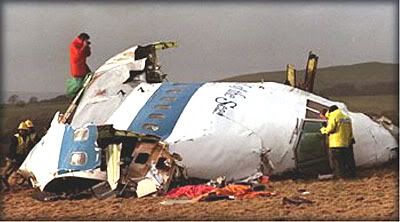
Three days before Christmas in 1988, the biggest mass murder in British history occurred. Pan Am Flight 103, Heathrow to JFK, had been in the air around 35 minutes when a bomb in the luggage hold exploded, sending the jumbo jet and its 259 passengers crashing into Lockerbie, Scotland. Another 11 were killed on the ground by the wreckage that rained down on them.
It took 13 years and a trial costing $160 million to put someone away for that crime. Former Libyan intelligence officer Abdel Basset Ali al Megrahi was found guilty and sentenced to life in a Scottish prison. Megrahi insists he's innocent. He tried to appeal, but that was turned down.
Now, however, he may get another day in court, after the independent Scottish Criminal Case Review Commission suggested strongly there may have been a miscarriage of justice and said there should be a new trial. Its 800 page report says there is new evidence and that evidence was withheld at the original trial. There were also serious questions raised about the credibility of the prosecution's forensic experts, conflicting forensic evidence, and witness inconsistencies.
Megrahi's lawyers contend Britain and the U.S. tampered with the evidence, disregarded witness statements and deliberately diverted the investigation away from the real culprits, Iran and Palestinian terrorists. They claim the bombing of the Pan Am flight was Iran's revenge for the shooting down of an Iranian passenger plane by the U.S. months earlier.
After Meghahi's conviction, you would have expected the families of those who'd been killed to be relieved, but many weren't. They believed the Libyan was framed.
Jim Swire, whose daughter Flora was a stewardess on the flight, says exactly that: "Framed." He sat in court and came out shaking his head. In Swire's view, "the trial ensured that a politically-desired result was obtained."
Swire asks why the West would want to blame Libya, which insisted its hands were clean. Swire answers his own question this way: The first Gulf War was about to happen, and the coalition didn't want Syrians and Iranians moving against it, "so they picked on Libya."
It was a convenient choice: Libya's Colonel Gaddafi was anti-West and had funded terror in other parts of the world, so why not? Libya was even forced to pay $270 million in compensation, as a condition for the lifting of U.N. sanctions. It did this begrudgingly, admitting no guilt.
If Megrahi gets a new trial, and that's not yet certain, he may still be found guilty, or he may not be. That's what a fair trial is supposed to decide. As still-grieving father Jim Swire says, "It's no good trying to have closure on false foundations. A house built on sand cannot stand."
After the commission's report, Megrahi said, "I wish, like the relatives, the whole truth about Pan Am 103 to be exposed."
There may be others in very high places that do not.
Friday, June 29, 2007
| [+/-] |
Pan Am 103 Revisited |
| [+/-] |
3 Sought After 2nd Car Bomb Found in London |
Explosives-laden vehicles could have killed hundreds, authorities say
MSNBC reports:
British authorities were seeking three men Friday after police defused two car bombs that they said could have killed hundreds of people had a cell-phone trigger not failed.
The three men have been identified and are believed to be from the Birmingham area, a center of radical Islamic unrest in Britain, U.S. officials who had been briefed on the developments told NBC News.
Police said the two cars, a light green and a light blue Mercedes-Benz, were found early Friday morning in London’s theater district. The green Mercedes was defused at the site. The blue Mercedes was not discovered to be a threat until early Friday evening, after it had been issued a parking ticket and towed to an impoundment lot near Hyde Park.
“These vehicles are clearly linked,” said Peter Clarke, chief of Britain’s antiterrorism police. “The discovery of a second bomb is obviously troubling.”
Chilling new threat: Iraq-style devices
The car bombs were similar to highly destructive explosives used in Iraq and could have killed hundreds of people, U.S. and British officials told NBC News. British officials warned that the country was facing a “serious and sustained” terrorist threat.
A law enforcement official indicated that a catastrophe was only narrowly averted. Speaking on condition of anonymity, the official told NBC News that the bomber or bombers apparently tried to detonate at least one of the cars but failed.
The first car, which had been stolen in Scotland, was found about 2:30 a.m. parked under a blue awning near the popular Tiger Tiger nightclub, which was jammed with as many as 2,000 people on Ladies Night.
Authorities believe it was intended to be set off by remote control by a cell phone found inside. The cell phone had received at least two calls, which should have detonated several gallons of gasoline, but when the calls came in, the bomb failed to go off, the official said.
Had it done so, that blast then would have ignited six to eight tanks of propane in a mist to make a fuel-air explosion, creating a fireball the size of a small house and propelling 18 to 20 boxes of roofing nails around a large area at bullet speed, counterterrorism officials said.
Clarke told reporters that the second car was similarly laden with gasoline, propane and nails. It was parked illegally nearby, ticketed and towed about 3:30 a.m., he said.
U.S. officials told NBC that the devices resembled the highly explosive car bombs that had been seen in Iraq but not, until now, in the West.
Islamist terrorist suspects convicted in recent London cases have spoken of moving up to more deadly fuel-air explosives, authorities said. Metropolitan Police Commissioner Ian Blair said earlier this year that “vehicle-borne weaponry is the greatest danger that we can face.”
Authorities told NBC News that police had learned a great deal from the cell phone, which recorded incoming and outgoing phone numbers. In addition, they were trawling through footage from the scores of high-resolution closed-circuit television cameras that record nearly everything that happens across the city.
Police did not name the three men they were seeking, but they said the men were believed to be from the Birmingham area, home to Britain’s second-largest Muslim population and a strong recruiting base for the controversial Muslim group Hizb ut-Tahrir, or the Party of Liberation.
They said one of the three men could be an associate of Dhiren Bharot, an Indian convert to Islam who was sentenced to life in prison last year for plotting to fill limousines with explosives similar to those found Friday and park them in garages beneath hotels and office complexes.
Bharot, whom police described as a high-level al-Qaida operative, also planned to attack five financial landmarks in the United States: the New York Stock Exchange and the Citigroup Tower in New York; the International Monetary Fund and the World Bank, both in Washington; and the Prudential Building in Newark, N.J.
Second car bomb unspotted for hours
The two cars were left at the same place, but their discoveries were very dissimilar.
The first car was immediately recognized as a threat and disarmed at the scene. The second car, however, sat unrecognized for most of the day after it was hitched up to a tow truck and carted down London’s streets to a police impoundment lot, its deadly payload intact for the entire trip.
It was clear that the devices, had they exploded, would have caused great damage and many casualties in the area, which is packed with restaurants, bars and theaters.
“This is a busy area that time of night,” the police official told NBC News. “There could have been a fireball that could have penetrated the club, and with the nails, it could have caused serious casualties.”
Somber start for Brown
The attempted bombing comes just days after Gordon Brown succeeded Tony Blair as prime minister and a week before the second anniversary of the July 7 London bombings that killed 52 people.
Brown’s new home secretary, Jacqui Smith, said the country was confronted with “the most serious and sustained threat to our security from international terrorism.”
President Bush scheduled a Cabinet meeting for late Monday afternoon in Washington to assess the situation. But Michael Chertoff, secretary of the U.S. Department of Homeland Security, said U.S. officials had no evidence of a threat to U.S. security and that there were no plans to raise the U.S. security threat level.
With the approach of Independence Day, however, New York officials said they were ramping up security in light of the developments in London, where a New York police official was coordinating with local authorities.
“Some of you will notice, some of you won’t — but we have to be cognizant,” Mayor Michael Bloomberg said on his weekly radio show.
| [+/-] |
Islamist Militant Linked to UK Bomb Plot |
ABC News reports:
British and US officials are increasingly convinced that two cars found in London and laden with explosives were part of a foiled "terror plot involving Islamic extremists."
ABC News has learned that police have a clear closed-circuit television camera image of the driver of one vehicle left near Piccadilly Circus. They believe the man on the video is a known associate of jailed Islamist militant Dhiren Barot.
The two cars, both filled with "fuel, gas canisters and nails" and found near each other in central London "are clearly linked" to each other, said Peter Clarke of Scotland Yard's anti-terror command.
The first bomb, found in a green Mercedes parked near Piccadilly Circus in the early morning hours Friday, was defused by police technicians. Later that day, police identified a suspicious blue Mercedes near Hyde Park and subsequently cordoned off Park Lane, a busy thoroughfare.
British police defused the Piccadilly Circus car bomb, made from 33 gallons of gasoline and capable of causing "significant loss of life." The bomb also included propane canisters and nails and was wired to be detonated by cell phone.
Watch World News with Charles Gibson at 6:30 p.m. EDT for the latest developments on the story.
The target of that car bomb may have been a nightclub just around the corner, with hundreds of people inside.
A robot was used to investigate the suspicious vehicle found on Park Lane and the car was removed from the area.
By rush hour Friday evening, Fleet Street had been reopened to traffic but Park Lane remained closed as investigators looked for a possible link to the suspicious vehicle there and the Piccadilly Circus car bomb.
Police called on Londoners to remain vigilant and promised to minimize disruptions to traffic as much as possible.
"I'd ask Londoners to be alert and report anything suspicious to the police," said Tarique Ghaffur, an assistant commander at Scotland Yard. "In incidents of this nature there is disruption and we're trying to minimize that, we're grateful to the public for their continued reporting and continued vigilance. We are working under tried and tested systems, many of which were brought in after 7/7."
Word of the Piccadilly Circus car bomb came in the early hours of Friday morning from an ambulance driver who was treating someone nearby and saw smoke coming from a blue Mercedes shortly after it careened into a barricade. The driver had apparently fled.
The alert brought central London to a standstill. Police cordoned off parts of Piccadilly Circus and surrounded the car.
Calling the device a "significant bomb," bomb technicians first approached the car with a robot. The smoke inside the car was so thick that the robot's camera could not record anything, sources said.
A bomb technician in a heavy kevlar suit approached the car and, sources say, was surprised to find a carefully constructed bomb. The bomb contained 33 gallons of gasoline in containers stuffed onto the car's right front seat and in its trunk. Also in the car were cylinders of propane and butane.
At great personal risk, sources say, the bomb technician then defused the bomb by hand.
According to U.S. security officials briefed on the matter a cell phone was to be used as a detonator.
The incident happened just hours after newly installed British Prime Minister Gordon Brown announced his new Cabinet. He said the British people must remain vigilant
"As we have said on so many occasions, we face a serious and continued security threat to our country," Brown told reporters outside his residence at 10 Downing Street.
Scotland Yard's Peter Clarke told reporters the incident shows the terror threat "is real, it is here and it is enduring."
A British government source told ABC News that the authorities here in the middle of investigating significant anti-terror activities right now, with a number of investigations under way at once, including ones with links to Pakistan and al Qaeda.
London is just days away from the anniversary of the July 7, 2005, bombings that killed 52 people. There have long been fears of a repeat, with authorities monitoring both homegrown terrorists and threats outside the country.
In Washington, President Bush commended the swift action of British authorities and pledged U.S. support in the ongoing investigation.
"We commend the British security services for their action today. U.S. officials are in contact with their U.K. counterparts and will continue to monitor the situation. Bush was informed this morning during his daily briefing," said Gordon Johndroe, National Security Council spokesman.
White House spokesman Tony Snow said the president has yet to speak with the newly appointed Prime Minister Gordon Brown or other British officials but "if they need anything, they'll get it."
The FBI is working closely with the British, checking on the registration of the vehicle, trying to determine who the driver might have been, and if they get any names, looking for associates to see if those people have been to the United States. The July 4 holiday is approaching, and U.S. officials are always concerned about that holiday.
Michael Chertoff, secretary of Homeland Security, said there was no threat to U.S. security but called on Americans to be vigilant over the holiday.
"At this point, I have seen no specific, credible information suggesting that this incident is connected to a threat to the homeland," he said.
ABC News has reported for a while on disturbing evidence that terror groups have been specifically training agents to wreak havoc in Europe and the United States, using bombs.
ABC's Brian Ross just three weeks ago reported on a video of an alleged al Qaeda terrorist graduation ceremony, claiming that suicide bomb teams were to be dispatched around the world. The video, obtained by ABC News from a Pakistant journalist, shows the men going through a terror training camp somewhere in Pakistan. Teams of 50 to 60 men were supposedly dispatched to Europe and the United States after the ceremony.
The existence of the tape put British and German security experts on edge. As well, it was just last year when an al Qaeda operative was convicted in a London court of planning suicide attacks in London and the United States using limousines, not unlike the car discovered in London this morning. It is too early to know if today's incident was the work of al Qaeda.
British officials are also checking gas and chemical trucks, cement trucks, limousines as well as all vehicles coming to and from the famed Wimbledon tennis tournament that began this week outside London.
| [+/-] |
Was London Bomb Heralded On Web? |
Internet Forum Comment From Night Before: "London Shall Be Bombed"
CBS News reports:
Hours before London explosives technicians dismantled a large car bomb in the heart of the British capital's tourist-rich theater district, a message appeared on one of the most widely used jihadist Internet forums, saying: "Today I say: Rejoice, by Allah, London shall be bombed."
CBS News found the posting, which went on for nearly 300 words, on the "al Hesbah" chat room. It was left by a person who goes by the name abu Osama al-Hazeen, who appears regularly on the forum. The comment was posted on the forum, according to time stamp, at 08:09 a.m. British time on June 28 -- about 17 hours before the bomb was found early on June 29.
Al Hesbah is frequently used by international Sunni militant groups, including al Qaeda and the Taliban, to post propaganda videos and messages in their fight against the West.
There was no way for CBS News to independently confirm any connection between the posting made Thursday night and the car bomb found Friday.
Al-Hazeen's message begins: "In the name of God, the most compassionate, the most merciful. Is Britain Longing for al Qaeda's bombings?"
Al-Hazeen decries the recent knighthood of controversial author Salman Rushdie as a blow felt by all British Muslims. "This 'honoring' came at a crucial time, a time when the whole nation is reeling from the crusaders attacks on all Muslim lands," he said, in an apparent reference to the British role in Iraq.
"We say to Britain: The Emir of al Qaeda, Sheikh Osama, has once threatened you, and he carried out his threats. Today I say: Rejoice, by Allah, London shall be bombed," the message reads.
Speaking at a news conference Friday after the bomb scare in central London, the Metropolitan Police force's Counter-Terrorism Commander Peter Clarke said that officials had "no indication that we were going to be attacked this way".
Prior to the Thursday night posting by al-Hazeen, there had been no specific allusions to threats against London or Britain seen on al Hesbah, or any other major jihadist forums in recent weeks.
Several responses to the posting by other forum members expressed hope that an attack against London would be realized in the near future.
In response, al-Hazeen urges patience, saying, "Victory is very close, but you are just rushing it."
Reached by CBSNews.com Friday, the Metropolitan Police's media office could not confirm whether investigators were aware of the Internet posting on al Hesbah.
Intelligence sources who spoke to CBS News Friday morning seemed to express surprise at the discovery of the device, suggesting there had been "no warning, no intel, no smell" as a prelude to the plot — a vacuum of information which reportedly had Britain's domestic intelligence agency "very, very worried".
The attempted bombing in London's Haymarket area came one week before the second anniversary of the July 7 bombings that killed 52 people on London's transportation network.
Also Friday, a London jury was expected to hand down a verdict in the case against five young men who were charged with trying to blow up city buses and trains in 2005.
The men, all from London, were arrested after police found homemade devices on trains and buses that had failed to detonate properly — sending puffs of smoke from backpacks that frightened commuters, but injured no one.
Early reports from law enforcement officials indicate that the car bomb found Friday morning may also have failed to detonate properly — causing smoke to appear in the passenger area. It was the smoke that prompted people to call explosives officers to the scene.
One explosives expert told the British Broadcasting Corporation that the device — comprised of gas canisters and nails — appeared to be a fairly crude construction, and not the work of anyone with an extensive knowledge of weaponry.
Britain has wrestled since the July 7, 2005, over how to deal with the threat of "homegrown" terrorism. Young men from the country's large Muslim population are easy prey for radical clerics and propaganda campaigns propagated on Internet forums such as al Hesbah.
In addition to messages calling for jihad in Britain, detailed video demonstrations of how to construct bombs using gas canisters are readily available on the forums.
| [+/-] |
|
Sky News reports:
Police have confirmed that not one, but two massive car bombs were set to explode in the heart of London's West End.
The first car, in Haymarket, was a metallic green Mercedes packed with petrol, gas cannisters and nails, and was defused after police were alerted by an ambulance crew called to an incident at a nearby nightclub in the early hours of Friday morning.
The second bomb was in a car that was illegally parked nearby and towed to the Park Lane car pound.
Staff there alerted police because "it smelled of gas." 
That device has also been made safe and has been taken away for examination.
In a news conference Deputy Assistant Commissioner Peter Clarke said the second car, a blue Mercedes, was parked a few hundred yards from the first in Cockspur Street which runs between Haymarket and Trafalgar Square.
It was issued with a parking ticket at around 2:30am on Friday before being towed to the Park Lane car pound where staff alerted police.
DAC Clarke said: "The vehicle was found to contain very similar materials to the first vehicle in Haymarket.
"There was a considerable amount of fuel and gas cannisters, as in the first vehicle. There was also a substantial quantity of nails.
"This device, like the first was potentially viable and was made safe by explosives officers. The vehicles are clearly linked."
"The discovery of a second bomb is obviously troubling and reinforces the need for the public to remain vigilant."
He also asked anyone who may have seen the blue Mercedes parked in Cockspur Street to come forward.
Hyde Park and Park Lane sealed off
Sky News sources say one of the first police officers on the scene of the Haymarket car bomb may have saved dozens of lives by defusing the explosives before the bomb squad arrived.
It is believed the quick-thinking cop recognised that the car was wired to blow up, jumped in and disconnected the trigger device, thought to be a mobile phone.
The device, which contained 60 litres of petrol, a large amount of nails and several gas canisters, was found in the Mercedes early this morning.
Police had received reports of a suspicious vehicle close to the Tiger Tiger nightclub in Piccadilly shortly before 2am on Friday morning.
An ambulance crew, who treated a person in the club in an unrelated incident, reported that there was smoke inside the car.
Home Secretary Jacqui Smith said the UK is "currently facing the most serious and sustained threat" and authorities are doing everything they can to protect the public.
Police believe they have foiled a major terror attack and said if the Haymarket bomb had gone off it could have caused "significant injury or loss of life".
Vehicle examined for clues
The timing coincided with hundreds of revellers leaving nightspots, but police said there was no intelligence to suggest such an attack.
The area was cordoned off by officers who examined the metallic green car, outside an American Express foreign exchange, and then discovered the device.
Deputy Assistant Commissioner Peter Clarke, head of Scotland Yard's counter-terrorism command, paid tribute to those who manually defused it, saying they had not only saved lives but gave forensic officers the opportunity to gather a substantial amount of material.
Officers have appealed for witnesses who may have seen anything suspicious in the Haymarket area. The number is 0800 789 321.
Extra police patrols are taking place across London following the incident.
Whitehall sources said that the police and security services are looking at possible international links - including similarities to car bombs used by insurgents in Iraq.
Device found in Haymarket
Mr Brown said the incident reminds us that Britain faces "a serious and continuous threat" and the public "need to be alert" at all times.
The Haymarket is in the heart of London's theatreland, which is packed with thousands of people through most of the day and night.
Detectives are looking at CCTV footage from the area surrounding the Haymarket and interviewing witnesses, including staff from bars and nightclubs.
Congestion charge cameras, which recognise number plates and run 24 hours a day, will be able to track the route of the vehicle into the capital.
Former head of the Flying Squad John O'Connor said the attacker had most probably "bottled it" and was likely to be a homegrown terrorist.
The Home Secretary chaired an emergency Cobra meeting about the terror scare and then briefed the Cabinet.
Enhanced security measures have been put in place at the Houses of Westminster in the wake of the incident.
The discovery of the car bomb comes just under two years since suicide attacks killed 52 people in the capital.
Another 784 were injured when four bombs exploded on London's transport network on July 7, 2005.
| [+/-] |
London Bomb Scare: A Chronology of Attacks |
CNN reports:
A chronology of bombings and attempted bomb attacks in the mainland UK since the 1970s:
June 29, 2007: Police defuse a bomb consisting of 200 liters of fuel, gas cylinders and nails found in an abandoned car in Haymarket, central London.
July 21, 2005: Two weeks after the deadly 7/7 bombings, four men are alleged to have attempted to carry out a second wave of attacks against London's transport network at three London underground stations and aboard a bus. But their alleged rucksack bombs fail to explode.
July 7, 2005: Four suicide bombers detonate themselves aboard three underground trains and a bus in a morning rush hour attack against London's transport network, killing 52 people and injuring around 700 more. Al Qaeda claims responsibility in a video statement. (Gallery)
August 2004: Anti-terrorist police disrupt a plot by Islamic militants to blow up targets including the Ministry of Sound nightclub and the Bluewater shopping center in southeast England using explosives packed into limousines and large vehicles. Seven men are convicted in May 2007 and sentenced to up to 26 years in prison.
March 2001: A car bomb explodes outside the BBC's London headquarters, wounding one man. Police blame the Real IRA, a republican splinter group opposed to the IRA's cease fire.
April 1999: Three people die when a nail bomb explodes in the Admiral Duncan pub in London's gay district -- the third in a spate of series of nail bomb attacks also targeting immigrant areas of the city that left dozens injured. A 23-year-old self-declared "Nazi", David Copeland, is sentenced to six life terms.
June 1996: A massive IRA bomb explodes in a shopping center in central Manchester, injuring more than 200 people.
February 1996: Two people die as IRA terrorists detonate a bomb in London's Docklands area, causing damage estimated at around $170m and ending the group's 17-month cease fire.
April 1993: An IRA truck bomb devastates part of London's financial district, killing one and wounding 44.
March 1993: Two boys aged three and 12 are killed and dozens are injured by two bombs left in litter bins in Warrington, northern England. The IRA admits planting the bombs.
April 1992: A huge IRA car bomb in London's financial district kills three people and wounds 91.
February 1991: IRA terrorists launch a mortar attack at Prime Minister John Major's Downing Street offices. No-one is injured.
September 1989: Eleven people die and 22 are wounded when an IRA bomb explodes at a Royal Marine music school in Deal, southern England.
December 1988: A Pan Am airliner explodes over the Scottish town of Lockerbie, killing 259 aboard and 11 people on the ground. Libyan agent Abdel Basset al-Megrahi, convicted of the attack in 2001, was this week granted the right to mount a fresh appeal. (Full story)
October 1984: Five people die in an IRA bomb attack on a hotel in Brighton, southern England, where Prime Minister Margaret Thatcher and her cabinet are staying for the Conservative Party's annual conference.
December 1983: An IRA bomb at London's Harrods department store kills six people.
July 1982: Two IRA bomb attacks on soldiers in London's parks kill 11 people and wound 50.
October-November 1974: A wave of IRA bombs in British pubs in Birmingham and Guildford kill 28 people and wound more than 200.
February 1974: A coach carrying soldiers and families in northern England is bombed by the IRA, killing 12 and wounding 14.
| [+/-] |
Two Explosive-Laden Cars in London Linked |
Story Highlights
• NEW: Anti-terror chief: "These vehicles are clearly linked"
• Two vehicles loaded with fuel and nails safely removed
• Police hunt driver who abandoned explosives-packed car outside nightclub
• Bomb could have resulted in serious loss of life, anti-terror chief says
CNN reports:
As authorities were investigating an explosives-packed car discovered outside a nightclub near Piccadilly Circus on Friday, a second vehicle was found in London that had similar explosive material inside, security sources said.
Both cars were laden with large amounts of fuel, gas canisters and "a substantial quantity of nails," British police anti-terror chief Peter Clarke said.
"These vehicles are clearly linked," he said.
The second car had been parked underground near Trafalgar Square in an area where parking was not allowed.
Workers towed it to a lot on Park Lane near Buckingham Palace and thought it smelled of gasoline. Given the reports that gas canisters were among the explosive material found in the other car, they became suspicious, security sources said.
Authorities then blocked off a section of Park Lane while they examined the car and discovered the material.
Earlier Friday, a section of Fleet Street also was cordoned off briefly, then reopened without incident.
Inside the first car near Piccadilly Circus, a device was found loaded with fuel, gas cylinders and nails, said security sources, and it was set up for remote detonation.
Security sources said the "relatively crude device" contained at least 200 liters, or about 50 gallons, of fuel in canisters.
Police said the car was found shortly before 2 a.m. Friday and deactivated. The device could have caused huge numbers of casualties, police said.
Clarke said detectives were examining security camera footage for clues to the driver of the vehicle.
The incident renewed fears of a terrorist strike almost two years after London's transport network was hit by suicide bombers.
Security sources with knowledge of the investigation said a cell phone was found as part of the first device, but it was not immediately clear whether it was to be used as a detonator or timer, or in some other way.
Clarke said the car was discovered when a quick-thinking ambulance crew noticed it was filled with smoke outside the popular Tiger Tiger nightclub.
Explosives officers discovered the fuel and nails attached to a "potential means of detonation" inside the vehicle. Officers "courageously" disabled the trigger by hand, Clarke said.
"Even at this stage it is obvious that if the device had detonated, there could have been severe injuries and loss of life," Clarke said. He said it was too early to say who was responsible.
Witness Daniel Weir said he was walking home from work when he noticed police had cordoned off the area around the nightclub and a nearby vehicle.
He snapped several photos, including one that showed a canister labeled "patio gas." (See the photos)
"If I had known what was actually ... going on, I don't think I would have been hanging about," he told CNN hours later.
British Prime Minister Gordon Brown, appointed two days earlier in a transition of power seen as a potential spur for extremists to mount an attack, said the incident was a reminder of the dangers facing the country. (Full story)
Brown, whose predecessor Tony Blair's support of the Iraq war provoked anger among Islamic militants, said Britain faced "a serious and continuous threat" and the public needs to be alert at all times.
The incident came a little more than a week before the second anniversary of July 7, 2005, when four Islamic extremist suicide bombers killed 52 people and injured hundreds more on London's transport system in the deadliest strike on the city since World War II.
'Rude awakening'
CNN international security correspondent Paula Newton said the Piccadilly Circus bomb was potentially aimed at theatergoers or nightclubbers, echoing plots recently thwarted by anti-terror police in which Islamic militants intended to attack prominent dance venues and shopping malls.
London has a long history of bomb attacks and alerts during decades of violence mounted by Northern Irish guerrilla groups. Lone attackers also have previously targeted the city's gay and immigrant communities. (Timeline of attacks)
Friday's incident could prove to be the first major test for Brown, a former finance minister, who has only just appointed his Cabinet, including new Home Secretary Jacqui Smith, in charge of domestic security.
"For Gordon Brown, it is a rude awakening to the realities you take on as prime minister," CNN's European political editor Robin Oakley said.
Smith on Friday attended a meeting of Britain's so-called Cobra emergency committee -- consisting of intelligence and security chiefs -- and later briefed Brown's Cabinet.
"As the police and security services have frequently said, we face one of the most serious and sustained threats to our security at the moment," Smith told reporters.
Police later said they were deploying an enhanced presence to provide extra security across the capital, but said the reinforcements were not in response to a specific incident.
| [+/-] |
Reports Circulate About Second Suspicious Vehicle in London |
USA Today On Deadline reports:
As London reels from this morning's discovery of a car bomb in the theater district, CNN is quoting anonymous police and security sources who say similar components were found in a vehicle that parking enforcement towed from Trafalgar Square to an underground parking garage near Hyde Park.
ITN says officials won't confirm reports that explosives were found in the second car. But CNN quotes "a senior U.S. official with knowledge of the London investigation" saying "the car was linked to the vehicle outside the club, and that some materials found inside the car were very similar to explosive materials found in the car near Piccadilly Circus."
Sky News reports that the second vehicle, described as a blue hybrid Mercedes, was parked illegally on the West End and towed to the Park Lane impound lot early this morning. "Staff at the pound became suspicious and alerted police because they said 'it smelled of gas,'" the network says. "Forensic officers and bomb disposal teams spent several hours examining the car, however Park Lane has now re-opened."
An international manhunt is underway, with counter-terrorism investigators said to looking for the person who seen leaving the first vehicle outside a nightclub early this morning.
Update at 3:30 p.m. ET: CBS News focused this afternoon on reports that someone posted information about a bombing in London to the Internet long before police found the car near Piccadilly Circus. "Today I say: Rejoice, by Allah, London shall be bombed," the person wrote Thursday night on a jihadist forum, according to the network.
ABC News has an urgent alert in bright red letters splashed across the top of its website: SEVERAL EXPLOSIONS WERE PLANNED USING MULTIPLE VEHICLES BY ISLAMIC EXTREMISTS IN LONDON BOMB PLOT, U.S. AND BRITISH OFFICIALS TELL ABC NEWS.
That may be true, but so far there's little evidence in the network's story to back up the claims in its headline. Here's the first sentence: "British and U.S. officials have become increasingly convinced that two cars found in London and laden with explosives are part of a 'terror plot involving Islamic extremists,' according to ABC News's Brian Ross."
That's the only part of the story that addresses the claims in the headline and the breaking-news alert.
Judging by the chatter on the all-news channels, many experts believe that Islamic extremists were in fact responsible for the car bomb that police discovered early this morning outside a London nightclub. But we have yet to see any confirmation of these claims from named sources, and some reports have been careful to note the possibility that the car bomb was tied to criminals instead of terrorists.
As for the second vehicle, there are conflicting reports as to whether or not it contained bomb-related materials. Several major news organizations are quoting unidentified officials who say the car contained explosives or bomb-making components. But Rep. Peter King, R-N.Y., tells MSNBC that his briefings suggest that further investigation showed that the vehicle wasn't a threat.
Update at 3:57 p.m. ET: British police just held a very short press conference during which they confirmed that the two cars were linked. "This second vehicle has been examined ... the vehicle was found to contain very similar materials to those that had been found in the first car in Haymarket earlier today," Deputy Assistant Commissioner Peter Clarke says. "There was a considerable amount of fuel and gas canisters. As in the first vehicle, there was also a substantial quantity of nails."
Clarke, head of the counter-terror squad, says the bomb squad disabled both devices.
"These vehicles are clearly linked," he says. Clarke didn't take any questions.
| [+/-] |
Central London Terror Plot Foiled By Chance |
ITN reports:
A plot to kill hundreds of London revellers was foiled when police found a car packed with nails, petrol and gas canisters by chance.
Carnage was averted in the early hours of Friday morning when police defused a bomb in the Mercedes saloon car left outside the Tiger Tiger nightclub in The Haymarket, just yards from Piccadilly Circus.
Hours later, Park Lane was sealed off by police examining a vehicle left in the entrance of a car park. The prestigious London road has reopened but Metropolitan Police are refusing to confirm reports that explosives were found in the car.
The vehicle carrying the Haymarket bomb was first spotted by a vigilant London ambulance crew who had been called to the area to attend an injured man. They saw what appeared to be smoke coming from the car and phoned police.
Officers believe the smoke was vapour released from at least 60 litres of volatile petrol held inside the car. The club was evacuated and the area cordoned off while explosives officers made the device safe.
Scotland Yard declined to comment on reports that a mobile phone was found in the Mercedes that may have been intended to trigger the explosion. Some reports claim a quick-thinking officer disconnected the phone before bomb squad officers arrived.
A massive international manhunt is now under way for whoever fled the metallic light green car. Counter-terror detectives, working with MI5 officers, are believed to have a description of the suspect.
Deputy Assistant Commissioner Peter Clarke, head of Scotland Yard's counter-terrorism command, said: "There was no intelligence whatsoever that we were going to be attacked in this way."
Hundreds of revellers were in The Haymarket area at the time of the first incident. The club is close to celebrity haunts such as Chinawhite and the famous Trocadero complex.
A source said it is too early to tell if the perpetrator was a lone individual or part of a wider plot. Commuters have suffered delays as Piccadilly Circus Tube station remains closed.
Mr Clarke said the courage of bomb squad officers saved lives. He added: "It is obvious that if the device had detonated, there could have been significant injury or loss of life. We are doing absolutely everything we can in our power to keep the public safe.
"The threat from terrorism is real and is here. Life must go on but we must all stay alert to the threat as we go on with our lives."
Prime Minister Gordon Brown said the incident showed that Britain faces "a serious and continuous threat" and the public need to be alert at all times.
The Government's emergency response committee, Cobra, met this morning before briefing the Cabinet on the dramatic events.
Speaking in her first full day in the job, Home Secretary Jacqui Smith said: "What I think is very important is that the public remain vigilant at all times."
Liberal Democrat leader Sir Menzies Campbell said: "We should praise the police for their professionalism and diligence.
Responding to the incident, Defence Secretary Des Browne said: "It does appear to be a very serious incident. My first reaction to this is, thank God that we have police and explosives experts who can make these devices safe, and that nobody has been injured."
The plot might have been inspired by terrorist mastermind Dhiren Barot, who was jailed for life last November. He conspired to park limousines packed with gas canisters underneath high-profile buildings before detonating them.
The gang behind the fertiliser bomb plot planned to target nightclubs such as the Ministry of Sound in London. The five members, jailed for life earlier this year, had close links with the July 7 London bombers.
The incident comes almost two years after four suicide bombers brought carnage to London's transport network, claiming the lives of 52 innocent people on July 7.
| [+/-] |
Explosives-Packed Car Defused in London |
Forbes.com reports:
Police in London's bustling nightclub and theater district on Friday defused a bomb that could have killed hundreds after an ambulance crew spotted smoke coming from a Mercedes filled with a lethal mix of gasoline, propane and nails, authorities said.
The bomb near Piccadilly Circus was powerful enough to have caused "significant injury or loss of life" - possibly killing hundreds, British anti-terror police chief Peter Clarke said.
The discovery resurrected fears that followed the July 7, 2005, suicide bombings that killed 52 people on three London subways and a bus and failed attacks on the transit system just two weeks later.
"We are currently facing the most serious and sustained threat to our security from international terrorism," Britain's new home secretary, Jacqui Smith, said after an emergency meeting of top officials.
But in Washington, two U.S. officials briefed on the investigation said British authorities had so far found no terrorist link in the early hours of the investigation. The officials, who spoke on condition of anonymity because they were not authorized to discuss the case, said the inquiry had yielded no suspects and no definitive description of anyone leaving the vehicle.
Police were examining footage from closed-circuit TV cameras, Clarke said, hoping the surveillance network that covers much of central London will help them track down the driver of the Mercedes.
U.S. Rep. Peter King, the ranking Republican on the House Homeland Security Committee, said British authorities saw a man fiddling with a cell phone near the Mercedes.
"They found a cell phone and it was going to be used to detonate the bomb," said King, R-N.Y.
The events unfolded when an ambulance crew - responding to a call just before 1:30 a.m. about a person who had fallen at a Haymarket nightclub - noticed smoke coming from a car parked in front of the building, Clarke said.
The crew alerted police, and a bomb squad manually disabled the device, Clarke said.
Photographs of the metallic green Mercedes show a canister bearing the words "patio gas," indicating it was propane, next to the car. The back door was open with blankets spilling out. The car was removed from the scene after a bomb squad disabled the explosives.
Hours after the discovery, police closed a major road on the edge of Hyde Park to investigate a suspicious vehicle. Sky News and the British Broadcasting Corp. reported that the vehicle was linked to the foiled plot, although a police spokeswoman denied any connection had been established.
The busy Haymarket thoroughfare is packed with restaurants, bars, a cinema complex and West End theaters, and was buzzing at that hour. "Phantom of the Opera" is playing at Her Majesty's Theater down the street.
It was ladies' night Thursday, nicknamed "Sugar 'N' Spice," at the Tiger Tiger nightclub, a three-story venue that at full capacity can pack in 1,770 people and stays open until 3 a.m.
Police also were investigating the possibility that the planned attack could have been criminal in nature. Authorities closed the Piccadilly Circus subway station for eight hours and cordoned off a 10-block area around the scene.
A British security official, who spoke on condition of anonymity because of the sensitivity of the security details, said there were similarities between the device and vehicle bombs used by insurgents in Iraq. But the two officials in Washington said it was too early in the investigation to tell if those similarities were significant.
The British security official also said the domestic spy agency MI5 would examine possible connections between Friday's bomb attempt and at least two similar foiled plots - to attack a London nightclub in 2004 and to pack limousines in New York with gas canisters and shrapnel.
In the 2004 plot, accused members of an al-Qaida-linked terror cell were convicted of conspiring to cause explosions. One of the possible targets M15 overheard them discussing was the Ministry of Sound, one of London's biggest and most famous nightclubs.
One man is heard saying the plan was to "Blow the whole thing up."
Gordon Brown, who only Wednesday succeeded Tony Blair as prime minister, called it a reminder that Britain faces a serious and continuous threat of terrorist attacks: "I will stress to the Cabinet that the vigilance must be maintained over the next few days."
There had been no prior intelligence of planned attacks from the al-Qaida terror network, a British government official told The Associated Press on condition of anonymity because of the sensitivity of the investigation.
Londoners were relatively unfazed by the news. People crowded onto buses and subway trains during the afternoon rush hour, shopping streets were busy and sidewalk cafes did brisk business.
"Sure, it's disturbing, and obviously it reminds everyone of 7/7," said Ian Hiskos, 32, eating at a cafe across the block from the police cordon on Haymarket. "I try not to think about these things."
The terror threat level in Britain has remained at "severe" - meaning a terrorist attack is highly likely - since last August.
On Friday, Metropolitan Police said it sent more officers on the streets of central London. Authorities also stepped up security at Wimbledon.
One analyst said the bombers could be trying to send Britain's new leader a message.
"It's a way of testing Gordon Brown," said Bob Ayers, a security expert at the Chatham House think tank. "It's not too far-fetched to assume it was designed to expedite the decision on withdrawal (from Iraq)."
The U.S. government urged Americans abroad to be vigilant but officials said they saw no potential terrorist threat in the United States ahead of next week's July 4 Independence Day holiday.
"At this time we are characterizing this as a localized incident in London," said Laura Keehner, a spokeswoman for the Department of Homeland Security.
New York strengthened its already tight security as a precaution, putting additional police in Times Square and the mass transit system.
"We're going to ramp up a little bit, but nothing dramatic," Mayor Michael Bloomberg said on his weekly radio show. "We'll take a little bit of extra precaution. Some of you will notice, some of you won't - but we have to be cognizant."
Thursday, June 28, 2007
| [+/-] |
Lockerbie Bomber Wins New Appeal |
Story Highlights
CNN reports:
• Libyan man convicted of 1988 Lockerbie bombing granted new appeal
• 270 people killed when Pan Am flight bombed over Scottish town in 1988
• Abdel Basset al-Megrahi found guilty in 2001; currently serving a life sentence
Scotland's High Court must hear a new appeal by Libyan intelligence agent Abdel Basset al-Megrahi against his conviction for the 1988 Lockerbie airliner bombing, an independent review body said on Thursday.
The Scottish Criminal Cases Review Commission (SCCRC) said it was referring Megrahi's case to the High Court, a step it takes in cases where it believes there may have been a miscarriage of justice.
Megrahi was found guilty in 2001 of the bombing of a Pan Am flight over the Scottish town of Lockerbie, which killed 270 people. He is serving a life sentence in a prison near Glasgow.
He took his case to the review commission in September 2003 after his original appeal in 2002 was turned down. The SCCRC announced Thursday's decision in a press release but did not make public its statement of reasons, which runs to more than 800 pages plus numerous volumes of appendices.
Recent history suggests Megrahi's appeal will have a good chance of success -- 25 out of 39 cases, or 64 percent of those settled after being referred by the commission to the High Court, have ended with appeals being granted.
Some victims' relatives and independent observers have long harbored doubts about Megrahi's conviction. These focus on the reliability of prosecution witnesses and forensic evidence.
Libya, seeking international rehabilitation after Washington had branded it for years a rogue state, paid more than $2 billion in compensation to victims' relatives since telling the United Nations in 2003 it "accepts responsibility for the actions of its officials".
Lawyers and analysts say that carefully worded formula could enable Libya to deny any role if Megrahi's conviction were eventually quashed. Some believe it may even demand compensation from the United States and Britain.
At the original trial, three Scottish judges accepted evidence that the bomb was placed aboard a plane in Malta and transferred to a Pan Am "feeder" flight at Frankfurt before ending up on Flight 103 from London's Heathrow to New York on Dec. 21, 1988.
They acknowledged, however, that there were "a number of uncertainties and qualifications" regarding the evidence.
Ever since the bombing, alternative theories have focused on the possible involvement of an Arab militant group, the Syrian-backed Popular Front for the Liberation of Palestine - General Command, acting at the behest of Iran.
Five months before Lockerbie, the U.S. navy mistakenly shot down an Iranian Airbus in the Gulf, killing 290 people.
"Iran had the most potent motive of anybody for destroying an American airliner," said Jim Swire, a Briton whose daughter Flora was killed on Flight 103 and who speaks on behalf of victims' relatives.
Friday, April 13, 2007
| [+/-] |
Payouts Reveal Iraq Civilian Toll |
The BBC reports:
A civil liberties group has obtained files from the US Army on compensation claims to Iraqi and Afghan civilians killed and hurt by coalition forces.
The American Civil Liberties Union received the records in response to a Freedom of Information Act request.
Of the 496 claims, 164 resulted in cash payments to families, the ACLU says. Many files relate to civilian deaths at checkpoints or near US convoys.
The military only pays compensation in cases not involving combat activity.
If it does not accept responsibility for the civilian's death, the military can make a discretionary "condolence" payment, which is offered without admission of fault and is capped at $2,500.
In the 164 claims resulting in payments, about half were for compensation and the remainder condolence payments.
The New York-based ACLU believes the files it has received are a very small proportion of those held by the defence department, and is pressing it to disclose them all.
Civilian 'burden'
Jameel Jaffer, an attorney for the ACLU, told the BBC News website it was the first time the US government had released records of this kind.
They allow the public to understand the burden that has been borne by civilians in Iraq and Afghanistan
Jameel Jaffer, ACLU
"For the first time they give the public access to very detailed information about the human costs of war," he said.
"They allow the public to understand the burden that has been borne by civilians in Iraq and Afghanistan."
The details published by the ACLU are summaries of claims submitted to the US Foreign Claims Commission by the relatives of civilians said to have been killed as a result of actions by coalition forces.
Some 479 of the claims relate to incidents in Iraq, dating from May 2003 to late 2006 with the majority in 2005, and 17 to Afghanistan, most dating from 2006.
Many deaths occur as a result of confusion at checkpoints
One file records a payment of $35,000 made to a family in Hib Hib, Iraq, after US forces "accidentally discharged 155 mm rounds", killing three children aged five, 16 and 18 and damaging their home.
Another, dating from February 2006, describes how a fisherman in Tikrit was shot as he reached down to switch off the engine of his boat. He had been shouting "fish, fish" and pointing to his catch.
The US Army refused to compensate his family for his death, ruling that it was the result of combat activity, but paid $3,500 for the loss of his boat - which drifted off - net and mobile phone.
In a third file, a civilian states that US forces opened fire with more than 100 rounds on his sleeping family, killing his mother, father and brother. He was also hurt and 32 of the family's sheep killed.
The US Army paid $11,200 compensation and made a $2,500 condolence payment. It had been responding to an attack from the direction of the village.
Mother killed
About a fifth of the claims - 92 of the 496 files - relate to deaths at checkpoints or near US convoys, the ACLU points out.
In one case, a civilian records how his mother was killed and his sister and four-year-old brother injured after the taxi in which they were travelling ran through a checkpoint in the Iraqi town of Baquba.
An Army memo states: "There is evidence to suggest that the warning cones and printed checkpoint signs had not yet been displayed in front of the checkpoint, which may be the reason why the driver of the taxi did not believe he was required to stop."
A condolence payment of $7,500 was suggested but it is not known if it was paid.
Hearts and minds
Incidents that have not been logged in the US military's "significant act" database are generally denied compensation for lack of evidence, despite eyewitness statements. Condolence payments may be made.
The US Army says coalition forces try hard to avoid civilian casualties
Some letters sent to notify denial of a claim conclude with the phrase "I wish you well in a Free Iraq".
Mr Jaffer fears such platitudes and some instances of claims being denied may be damaging US efforts to win "hearts and minds" in Iraq and Afghanistan.
"It's extremely important from a policy point of view that the US compensates people in these kinds of claims and that the system is fair and not arbitrary," he said.
And while very many civilian casualties are caused by insurgents, the 1,700 pages of files received by the ACLU tell the stories of those killed by coalition forces in "very human detail".
Many prove to be the tragic result of miscommunication and misunderstanding on both sides, Mr Jaffer added.
The US defence department has said it regrets any civilian deaths and strives to prevent them.
"Any loss of life is tragic and our forces, as well as the forces we serve with, take every available means to limit the effects of combat on civilians," defence department spokesman Todd Wician told the BBC.
