Southeast water shortage a factor in huge cooling requirements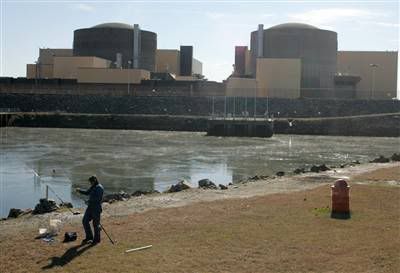
MSNBC reports:
Nuclear reactors across the Southeast could be forced to throttle back or temporarily shut down later this year because drought is drying up the rivers and lakes that supply power plants with the awesome amounts of cooling water they need to operate.
Utility officials say such shutdowns probably wouldn’t result in blackouts. But they could lead to shockingly higher electric bills for millions of Southerners, because the region’s utilities could be forced to buy expensive replacement power from other energy companies.
Already, there has been one brief, drought-related shutdown, at a reactor in Alabama over the summer.
“Water is the nuclear industry’s Achilles’ heel,” said Jim Warren, executive director of N.C. Waste Awareness and Reduction Network, an environmental group critical of nuclear power. “You need a lot of water to operate nuclear plants.” He added: “This is becoming a crisis.”
An Associated Press analysis of the nation’s 104 nuclear reactors found that 24 are in areas experiencing the most severe levels of drought. All but two are built on the shores of lakes and rivers and rely on submerged intake pipes to draw billions of gallons of water for use in cooling and condensing steam after it has turned the plants’ turbines.
Because of the yearlong dry spell gripping the region, the water levels on those lakes and rivers are getting close to the minimums set by the Nuclear Regulatory Commission. Over the next several months, the water could drop below the intake pipes altogether. Or the shallow water could become too hot under the sun to use as coolant.
“If water levels get to a certain point, we’ll have to power it down or go off line,” said Robert Yanity, a spokesman for South Carolina Electric & Gas Co., which operates the Summer nuclear plant outside Columbia, S.C.
Limits on intake pipes
Extending or lowering the intake pipes is not as simple at it sounds and wouldn’t necessarily solve the problem. The pipes are usually made of concrete, can be up to 18 feet in diameter and can extend up to a mile. Modifications to the pipes and pump systems, and their required backups, can cost millions and take several months. If the changes are extensive, they require an NRC review that itself can take months or longer.
Even if a quick extension were possible, the pipes can only go so low. It they are put too close to the bottom of a drought-shrunken lake or river, they can suck up sediment, fish and other debris that could clog the system.
An estimated 3 million customers of the four commercial utilities with reactors in the drought zone get their power from nuclear energy. Also, the quasi-governmental Tennessee Valley Authority, which sells electricity to 8.7 million people in seven states through a network of distributors, generates 30 percent of its power at nuclear plants.
While rain and some snow fell recently, water levels across the region are still well below normal. Most of the severely affected area would need more than a foot of rain in the next three months — an unusually large amount — to ease the drought and relieve pressure on the nuclear plants. And the long-term forecast calls for more dry weather.
Lakes nearing their minimums
At Progress Energy Inc., which operates four reactors in the drought zone, officials warned in November that the drought could force it to shut down its Harris reactor near Raleigh, according to documents obtained by the AP. The water in Harris Lake stands at 218.5 feet — just 3½ feet above the limit set in the plant’s license.
Lake Norman near Charlotte is down to 93.7 feet — less than a foot above the minimum set in the license for Duke Energy Corp.’s McGuire nuclear plant. The lake was at 98.2 feet just a year ago.
“We don’t know what’s going to happen in the future. We know we haven’t gotten enough rain, so we can’t rule anything out,” said Duke spokeswoman Rita Sipe. “But based on what we know now, we don’t believe we’ll have to shut down the plants.”
During Europe’s brutal 2006 heat wave, French, Spanish and German utilities were forced to shut down some of their nuclear plants and reduce power at others because of low water levels — some for as much as a week.
If a prolonged shutdown like that were to happen in the Southeast, utilities in the region might have to buy electricity on the wholesale market, and the high costs could be passed on to customers.
“Currently, nuclear power costs between $5 to $7 to produce a megawatt hour,” said Daniele Seitz, an energy analyst with New York-based Dahlman Rose & Co. “It would cost 10 times that amount that if you had to buy replacement power — especially during the summer.”
At a nuclear plant, water is also used to cool the reactor core and to create the steam that drives the electricity-generating turbines. But those are comparatively small amounts of water, circulating in what are known as closed systems — that is, the water is constantly reused. Water for those two purposes is not threatened by the drought.
Instead, the drought could choke off the billions of gallons of water that pass through the region’s reactors every day to cool used steam. Water sucked from lakes and rivers passes through pipes, which act as a condenser, turning the steam back into water. The outside water never comes into direct contact with the steam or any nuclear material.
At some plants — those with tall, Three Mile Island-style cooling towers — a lot of the water travels up the tower and is lost to evaporation. At other plants, almost all of the water is returned to the lake or river, though significantly hotter because of the heat absorbed from the steam.
Progress spokeswoman Julie Hahn said the Harris reactor, for example, sucks up 33 million gallons a day, with 17 million gallons lost to evaporation via its big cooling towers. Duke’s McGuire plant draws in more than 1 billion gallons a day, but most of it is pumped back to its source.
Nuclear plants are subject to restrictions on the temperature of the discharged coolant, because hot water can kill fish or plants or otherwise disrupt the environment. Those restrictions, coupled with the drought, led to the one-day shutdown Aug. 16 of a TVA reactor at Browns Ferry in Alabama.
The water was low on the Tennessee River and had become warmer than usual under the hot sun. By the time it had been pumped through the Browns Ferry plant, it had become hotter still — too hot to release back into the river, according to the TVA. So the utility shut down a reactor.
David Lochbaum, nuclear project safety director for the Union of Concerned Scientists, warned that nuclear plants are not designed to take the wear and tear of repeatedly stopping and restarting.
“Nuclear plants are best when they flatline — when they stay up and running or shut down for long periods to refuel,” Lochbaum said. “It wears out piping, valves, motors.”
Both the industry and NRC spokesman Scott Burnell said plants can shut down and restart without problems.
Wednesday, January 23, 2008
| [+/-] |
Drought Could Shut Down Nuclear Power Plants |
Saturday, December 29, 2007
| [+/-] |
Pricey Hay Imperils Horses |
Neglected horses abound as drought shrivels supply, spikes price
The News & Observer reports:
Rescue agencies are taking in record numbers of horses across the state, many emaciated because of the drought-related hay shortage.
In the most recent case, a Randolph County woman was charged Thursday with 11 counts of animal abuse and eight counts of disposing of a dead animal improperly, after county officials investigated separate reports of a large number of dead horses scattered on the ground and of 11 live horses jammed into an undersize corral with no water and little hay.
The U.S. Equine Rescue League normally accepts about 100 neglected or abused horses a year in the three states where it operates, which include North Carolina. This year, the agency has taken in about 170 -- 90 in this state alone -- said Jennifer Malpass, director of the league's Triangle chapter.
Horse rescue groups nationally -- even those in states not stricken with a severe drought -- are being inundated with pleas to take neglected horses.
One group in Florida is fielding daily calls, up from bimonthly requests early this year. A rescue group in south central Kentucky had to turn away 13 horses this month. Kathy Grant, an equine cruelty investigator who runs a rescue group, says the rural roads in her eastern Tennessee community are lined with pastures dotted with emaciated horses.
"A lot of the farmers around here have hay, but they're holding on to it," said Grant. "When they're releasing it, they're charging exorbitant rates. A normal person can't afford it."
A round bale jumped from $12 to $100 since the summer, Grant said. In South Carolina, rescue volunteers noticed the price triple. In Texas, struck by a severe drought last year, hay prices haven't leveled off; horse owners are paying double what they did three years ago.
High prices are leaving owners with tough choices. Some are voluntarily forfeiting their animals. In other cases, horses are seized after county officials determine they have been abused or neglected.
County officials typically don't have holding facilities for large animals and so depend on agencies such as the rescue league to assume responsibility for horses. The league nurses them back to health, then places them in foster homes until someone adopts them, Malpass said.
The flood of rescues this year is a double blow to the volunteers.
Even before the drought, they were struggling to find space for foster horses. Now, they not only have to find shelter for more horses but also feed them when hay is expensive and scarce, Malpass said.
Hay donations drop
Her chapter normally receives about 300 bales of donated hay before winter, mostly from big horse operations clearing spring hay from their storage barns to make room for the fall cutting. But there was so little to spare that hay donations this year were only about a third the normal amount.
That means the volunteer rescuers are having to pull money out of their own pockets -- and a lot of it -- for hay, which has doubled in price in many areas.
The hay crisis also has increased the severity of the cases they are seeing, said Amy Woodard, a volunteer who leads the league's efforts in the northeastern corner of the state.
As the expense of feeding them has risen, the selling prices of horses have dropped. That has made purchase possible for people who might not be able to afford proper food and health care, or who didn't have the knowledge to keep horses healthy, Malpass said.
'Pieces everywhere'
The horse owner in the Randolph County case, Jauvanna Craven, 51, of Groom Road, Sophia, surrendered her horses. That saved time in court and allowed the county to get the surviving horses more quickly into the hands of rescuers.
Randolph County Health Director MiMi Cooper was so shocked at the animals' condition that she went to Craven to issue the charges herself. Craven could have faced more counts of improper disposal, said Cooper, who owns four horses herself.
"There were probably more than eight, but there were pieces [of dead horses] everywhere," she said. "Do you know what I had to do? I had to count heads."
Craven could not be reached for comment.
She had kept the horses on a 22-acre tract but sold it recently, Cooper said. The new owners discovered a number of horse carcasses and called the health department Dec. 21 to report them.
On the same day, the department got what it thought was an unrelated call about the 11 living horses, which were in a different location. They were confined in a pen that was big enough for only one or two horses, Cooper said. The horses were clearly starving, with every rib showing and their hip and shoulder bones jutting. One had an injury and had to be euthanized.
"She said that she was running a rescue operation," Cooper said. "That's not how you rescue horses."
The Equine Rescue League's Triad chapter took four of the horses, and another agency took three. The other three were apparently owned by someone else, who hadn't known about their health problems, and he took them away.
Shortage hits everyone
The hay shortage is so bad, though, that even conscientious owners are getting into trouble, Malpass said.
Marilyn Kille, who is taking care of three foster horses just outside Chapel Hill, said that people who own only one or two horses don't often have the massive dry storage space required for a whole winter supply of hay.
Normally, hay is abundant enough that suppliers keep plenty on hand, and horse owners can drop by every couple of weeks to buy more. Now, horse owners are competing for the scant supply against beef and dairy operations. Often, the only way to get it is to buy full truckloads from as far away as Ohio or New York.
Randolph County has fielded at least half a dozen calls this year from owners who didn't know where to turn, Cooper said, and area veterinarians have been getting similar calls.
Depending on the situation, Cooper said, the county steers them to hay sources like the on-line list kept by the state agriculture department, or links them with a rescue agency. Instead of suggesting that owners give up horses, the rescue agency prefers to teach them how to keep horses healthy, Malpass said.
Usually that approach works, she said. When it doesn't, the county or the rescuers ask the owner to give up the horse, or the county takes the owner to court to force the issue.
Normally rescues taper off in summer, when horses can graze. That's when the rescuers get a breather and start to build up their stores of hay.
This past summer, though, there was no break in rescues and the hay donations didn't come. So now, Malpass' group finds itself starting winter -- when livestock rely more on hay and less on grazing -- with an unusual number of horses to feed, not nearly enough hay and predictions that hay crops next year might be poor, too.
"It's really worrying because it can only get worse from here," she said.
