Southeast water shortage a factor in huge cooling requirements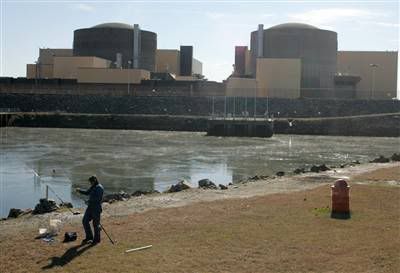
MSNBC reports:
Nuclear reactors across the Southeast could be forced to throttle back or temporarily shut down later this year because drought is drying up the rivers and lakes that supply power plants with the awesome amounts of cooling water they need to operate.
Utility officials say such shutdowns probably wouldn’t result in blackouts. But they could lead to shockingly higher electric bills for millions of Southerners, because the region’s utilities could be forced to buy expensive replacement power from other energy companies.
Already, there has been one brief, drought-related shutdown, at a reactor in Alabama over the summer.
“Water is the nuclear industry’s Achilles’ heel,” said Jim Warren, executive director of N.C. Waste Awareness and Reduction Network, an environmental group critical of nuclear power. “You need a lot of water to operate nuclear plants.” He added: “This is becoming a crisis.”
An Associated Press analysis of the nation’s 104 nuclear reactors found that 24 are in areas experiencing the most severe levels of drought. All but two are built on the shores of lakes and rivers and rely on submerged intake pipes to draw billions of gallons of water for use in cooling and condensing steam after it has turned the plants’ turbines.
Because of the yearlong dry spell gripping the region, the water levels on those lakes and rivers are getting close to the minimums set by the Nuclear Regulatory Commission. Over the next several months, the water could drop below the intake pipes altogether. Or the shallow water could become too hot under the sun to use as coolant.
“If water levels get to a certain point, we’ll have to power it down or go off line,” said Robert Yanity, a spokesman for South Carolina Electric & Gas Co., which operates the Summer nuclear plant outside Columbia, S.C.
Limits on intake pipes
Extending or lowering the intake pipes is not as simple at it sounds and wouldn’t necessarily solve the problem. The pipes are usually made of concrete, can be up to 18 feet in diameter and can extend up to a mile. Modifications to the pipes and pump systems, and their required backups, can cost millions and take several months. If the changes are extensive, they require an NRC review that itself can take months or longer.
Even if a quick extension were possible, the pipes can only go so low. It they are put too close to the bottom of a drought-shrunken lake or river, they can suck up sediment, fish and other debris that could clog the system.
An estimated 3 million customers of the four commercial utilities with reactors in the drought zone get their power from nuclear energy. Also, the quasi-governmental Tennessee Valley Authority, which sells electricity to 8.7 million people in seven states through a network of distributors, generates 30 percent of its power at nuclear plants.
While rain and some snow fell recently, water levels across the region are still well below normal. Most of the severely affected area would need more than a foot of rain in the next three months — an unusually large amount — to ease the drought and relieve pressure on the nuclear plants. And the long-term forecast calls for more dry weather.
Lakes nearing their minimums
At Progress Energy Inc., which operates four reactors in the drought zone, officials warned in November that the drought could force it to shut down its Harris reactor near Raleigh, according to documents obtained by the AP. The water in Harris Lake stands at 218.5 feet — just 3½ feet above the limit set in the plant’s license.
Lake Norman near Charlotte is down to 93.7 feet — less than a foot above the minimum set in the license for Duke Energy Corp.’s McGuire nuclear plant. The lake was at 98.2 feet just a year ago.
“We don’t know what’s going to happen in the future. We know we haven’t gotten enough rain, so we can’t rule anything out,” said Duke spokeswoman Rita Sipe. “But based on what we know now, we don’t believe we’ll have to shut down the plants.”
During Europe’s brutal 2006 heat wave, French, Spanish and German utilities were forced to shut down some of their nuclear plants and reduce power at others because of low water levels — some for as much as a week.
If a prolonged shutdown like that were to happen in the Southeast, utilities in the region might have to buy electricity on the wholesale market, and the high costs could be passed on to customers.
“Currently, nuclear power costs between $5 to $7 to produce a megawatt hour,” said Daniele Seitz, an energy analyst with New York-based Dahlman Rose & Co. “It would cost 10 times that amount that if you had to buy replacement power — especially during the summer.”
At a nuclear plant, water is also used to cool the reactor core and to create the steam that drives the electricity-generating turbines. But those are comparatively small amounts of water, circulating in what are known as closed systems — that is, the water is constantly reused. Water for those two purposes is not threatened by the drought.
Instead, the drought could choke off the billions of gallons of water that pass through the region’s reactors every day to cool used steam. Water sucked from lakes and rivers passes through pipes, which act as a condenser, turning the steam back into water. The outside water never comes into direct contact with the steam or any nuclear material.
At some plants — those with tall, Three Mile Island-style cooling towers — a lot of the water travels up the tower and is lost to evaporation. At other plants, almost all of the water is returned to the lake or river, though significantly hotter because of the heat absorbed from the steam.
Progress spokeswoman Julie Hahn said the Harris reactor, for example, sucks up 33 million gallons a day, with 17 million gallons lost to evaporation via its big cooling towers. Duke’s McGuire plant draws in more than 1 billion gallons a day, but most of it is pumped back to its source.
Nuclear plants are subject to restrictions on the temperature of the discharged coolant, because hot water can kill fish or plants or otherwise disrupt the environment. Those restrictions, coupled with the drought, led to the one-day shutdown Aug. 16 of a TVA reactor at Browns Ferry in Alabama.
The water was low on the Tennessee River and had become warmer than usual under the hot sun. By the time it had been pumped through the Browns Ferry plant, it had become hotter still — too hot to release back into the river, according to the TVA. So the utility shut down a reactor.
David Lochbaum, nuclear project safety director for the Union of Concerned Scientists, warned that nuclear plants are not designed to take the wear and tear of repeatedly stopping and restarting.
“Nuclear plants are best when they flatline — when they stay up and running or shut down for long periods to refuel,” Lochbaum said. “It wears out piping, valves, motors.”
Both the industry and NRC spokesman Scott Burnell said plants can shut down and restart without problems.
Wednesday, January 23, 2008
| [+/-] |
Drought Could Shut Down Nuclear Power Plants |
Tuesday, July 10, 2007
| [+/-] |
Nuclear Power Plants the Solution to Climate Change? |
Reasons not to glow . . . On Not Jumping Out of The Frying Pan Into The Eternal Fires
From Orion magazine, Rebecca Solnit writes:
Chances are good, gentle reader, that you are going to have to sit next to someone in the coming year who will assert that nuclear power is the solution to climate change. What will you tell them? There’s so much to say. You could be sitting next to someone who hasn’t really considered the evidence yet. Or you could be sitting next to scientist and Gaia theorist James Lovelock, a supporter of Environmentalists for Nuclear EnergyTM, which quotes him saying, “We have no time to experiment with visionary energy sources; civilisation is in imminent danger and has to use nuclear-the one safe, available, energy source-now or suffer the pain soon to be inflicted by our outraged planet.
“If you sit next to Lovelock, you might start by mentioning that half the farms in this country had windmills before Marie Curie figured out anything about radiation or Lise Meitner surmised that atoms could be split. Wind power is not visionary in the sense of experimental. Neither is solar, which is already widely used. Nor are nukes safe, and they take far too long to build to be considered readily available. Yet Stewart Brand, of Whole Earth Catalog fame, has jumped on the nuclear bandwagon, and so has Greenpeace founding member turned PR flack Patrick Moore. So you must be prepared.
Of course the first problem is that nuclear power is often nothing more than a way to avoid changing anything. A bicycle is a better answer to a Chevrolet Suburban than a Prius is, and so is a train, or your feet, or staying home, or a mix of all those things. Nuclear power plants, like coal-burning power plants, are about retaining the big infrastructure of centralized power production and, often, the habits of obscene consumption that rely on big power. But this may be too complicated to get into while your proradiation interlocutor suggests that letting a thousand nuclear power plants bloom would solve everything.
Instead, you may be able to derail the conversation by asking whether they’d like to have a nuclear power plant or waste repository in their backyard, which mostly they would rather not, though they’d happily have it in your backyard. This is why the populous regions of the eastern U.S. keep trying to dump their nuclear garbage in the less-populous regions of the West. My friend Chip Ward (from nuclear-waste-threatened Utah) reports, “To make a difference in global climate change, we would have to immediately build as many nuclear power plants as we already have in the U.S. (about 100) and at least as many as 2,000 worldwide.” Chip goes on to say that “Wall Street won’t invest in nuclear power because it is too risky. . . . The partial meltdown at Three Mile Island taught investment bankers how a two-billion-dollar investment can turn into a billion-dollar clean-up in under two hours.” So we, the people, would have to foot the bill.
Nuclear power proponents like to picture a bunch of clean plants humming away like beehives across the landscape. Yet when it comes to the mining of uranium, which mostly takes place on indigenous lands from northern Canada to central Australia, you need to picture fossil-fuel-intensive carbon-emitting vehicles, and lots of them-big disgusting diesel-belching ones. But that’s the least of it. The Navajo are fighting right now to prevent uranium mining from resuming on their land, which was severely contaminated by the postwar uranium boom of the 1940s and 1950s. The miners got lung cancer. The children in the area got birth defects and a 1,500 percent increase in ovarian and testicular cancer. And the slag heaps and contaminated pools that were left behind will be radioactive for millennia.
If these facts haven’t dissuaded this person sitting next to you, try telling him or her that most mined uranium-about 99.28 percent-is fairly low-radiation uranium-238, which is still a highly toxic heavy metal. To make nuclear fuel, the ore must be “enriched,” an energy-intensive process that increases the .72 percent of highly fissionable, highly radioactive U-235 up to 3 to 5 percent. As Chip points out, four dirty-coal-fired plants were operated in Kentucky just to operate two uranium enrichment plants. What’s left over is a huge quantity of U-238, known as depleted uranium, which the U.S. government classifies as low-level nuclear waste, except when it uses the stuff to make armoring and projectiles that are the source of so much contamination in Iraq from our first war there, and our second.
Reprocessing spent nuclear fuel was supposed to be one alternative to lots and lots of mining forever and forever. The biggest experiment in reprocessing was at Sellafield in Britain. In 2005, after decades of contamination and leaks and general spewing of horrible matter into the ocean, air, and land around the reprocessing plant, Sellafield was shut down because a bigger-than-usual leak of fuel dissolved in nitric acid-some tens of thousands of gallons-was discovered. It contained enough plutonium to make about twenty nuclear bombs. Gentle reader, this has always been one of the prime problems of nuclear energy: the same general processes that produce fuel for power can produce it for bombs. In India. Or Pakistan. Or Iran. The waste from nuclear plants is now the subject of much fretting about terrorists obtaining it for dirty bombs-and with a few hundred thousand tons of high-level waste in the form of spent fuel and a whole lot more low-level waste in the U.S. alone, there’s plenty to go around.
By now the facts should be on your side, but do ask how your neighbor feels about nuclear bombs, just to keep things lively.
The truth is, there may not be enough uranium out there to fuel two thousand more nuclear power plants worldwide. Besides, before a nuke plant goes online, a huge amount of fossil fuel must be expended just to build the thing. Still, the biggest stumbling block, where climate change is concerned, is that it takes a decade or more to construct a nuclear plant, even if the permitting process goes smoothly, which it often does not. So a bunch of nuclear power plants that go online in 2017 at the earliest are not even terribly relevant to turning around our carbon emissions in the next decade-which is the time frame we have before it’s too late.
If you’re not, at this point, chasing your poor formerly pronuclear companion down the hallway, mention that every stage of the nuclear fuel cycle is murderously filthy, imparting long-lasting contamination on an epic scale; that a certain degree of radioactive pollution is standard at each of these stages, but the accidents are now so many in number that they have to be factored in as part of the environmental cost; that the plants themselves generate lots of radioactive waste, which we still don’t know what to do with-because the stuff is deadly . . . anywhere . . . and almost forever. And no, tell them, this nuclear colonialism is not an acceptable sacrifice, since it is not one the power consumers themselves are making. It’s a sacrifice they’re imposing on people far away and others not yet born, a debt they’re racking up at the expense of people they will never meet.
Sure, you can say nuclear power is somewhat less carbon-intensive than burning fossil fuels for energy; beating your children to death with a club will prevent them from getting hit by a car. Ravaging the Earth by one irreparable means is not a sensible way to prevent it from being destroyed by another. There are alternatives. We should choose them and use them.
An antinuclear activist in Nevada from 1988 to 2002, Rebecca Solnit just put up a clothesline in the backyard and will get around to installing the solar panels any day now. National Book Critics Circle award-winner Solnit’s most recent book is Storming the Gates of Paradise.
