According to NJ.com:
A Democratic superdelegate from New Jersey said this week he is worried that unifying the party behind Barack Obama may be difficult because the Clinton camp "has engaged in some very divisive tactics and rhetoric it should not have."
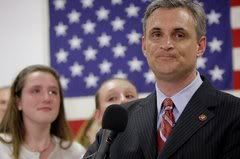
U.S. Rep. Rob Andrews, who supported Hillary Clinton throughout the primary season, disclosed he received a phone call shortly before the April 22 Pennsylvania primary from a top member of Clinton's organization and that the caller explicitly discussed a strategy of winning over Jewish voters by exploiting tensions between Jews and African-Americans.
"There have been signals coming out of the Clinton campaign that have racial overtones that indeed disturb me," Andrews said at his campaign headquarters in Cherry Hill Tuesday night after he lost his bid for the Democratic U.S. Senate nomination.
"Frankly, I had a private conversation with a high-ranking person in the campaign ... that used a racial line of argument that I found very disconcerting. It was extremely disconcerting given the rank of this person. It was very disturbing."
Andrews said the phone call came after he angered the Clinton camp by making some positive comments about Obama. He would not disclose the caller's name because of the private nature of the conversation.
The Obama camp declined to comment. Clinton's campaign issued an angry response to Andrews, who once was charged with lobbying other members of Congress to support her.
"Comments like these, coming so soon after Congressman Andrews' crushing defeat, are sad and divisive," said Clinton's chief national spokesman, Phil Singer.
Andrews stood by his statements and said: "I would hope that all Democrats can put this divisiveness behind them. I'm glad the Clinton campaign is finally about to change its tone." He said he made his comments only after his primary loss to Sen. Frank Lautenberg because "I didn't want people to think I was trying to win over Obama supporters in the primary."
Some Obama supporters, as well as neutral Democrats such as Rep. James E. Clyburn of South Carolina, had complained during the campaign that Clinton surrogates injected racial overtones into the contest.
Former president Bill Clinton was criticized for downplaying Obama's win in South Carolina by comparing it to the ultimately unsuccessful 1988 campaign of the Rev. Jesse Jackson. Former vice presidential candidate Geraldine Ferraro gave up an honorary post in the Clinton campaign after saying in an interview that Obama would not have made it so far if he were white.
Andrews has joined other New Jersey Clinton delegates this week in saying he looks forward to uniting the delegation behind the presumptive nominee.
New Jersey's Feb. 5 primary allotted a majority of its 107 pledged delegates to Clinton, and 12 of the state's 20 superdelegates endorsed her, but state party leaders say they are not worried about getting on the same page for the campaign against the Republicans' presumptive nominee, Sen. John McCain of Arizona.
During an interview on MSNBC Thursday morning, Gov. Jon Corzine, who was the leader of New Jersey's Clinton supporters, pivoted toward Obama, saying he "absolutely" will fight for the senator from Illinois.
"It's time for Democrats to unite around Barack Obama and move forward," said Corzine, who last year was the first sitting governor to come out for Clinton. "We're all going to get behind Barack and go full throttle."
McCain, who has been able to attract followers outside of traditional Republican strongholds, is pursuing middle-of-the road Democrats much the way Ronald Reagan did a generation ago and is looking to be competitive in moderate states like New Jersey.
He is returning to the state for a town hall-style meeting next Friday at Burlington County College and will be opening a Garden State headquarters.
"It's very clear that John McCain is putting New Jersey in play," said state Sen. Bill Baroni (R-Mercer), who is chairing the Republican's effort in the state. "Everything that we can do to show the political world that John McCain is competing in New Jersey we are doing."
Friday, June 6, 2008
| [+/-] |
Racist Strategy From Clinton Camp |
Tuesday, May 13, 2008
| [+/-] |
Racism Alarms Obama Backers |
Candidate's foot soldiers encounter name-calling, vandalism, bomb threats
At WashingtonPost.com, Kevin Merida reports:Danielle Ross was alone in an empty room at the Obama campaign headquarters in Kokomo, Ind., a cellphone in one hand, a voter call list in the other. She was stretched out on the carpeted floor wearing laceless sky-blue Converses, stories from the trail on her mind. It was the day before Indiana's primary, and she had just been chased by dogs while canvassing in a Kokomo suburb. But that was not the worst thing to occur since she postponed her sophomore year at Middle Tennessee State University, in part to hopscotch America stumping for Barack Obama.
Here's the worst: In Muncie, a factory town in the east-central part of Indiana, Ross and her cohorts were soliciting support for Obama at malls, on street corners and in a Wal-Mart parking lot, and they ran into "a horrible response," as Ross put it, a level of anti-black sentiment that none of them had anticipated.
"The first person I encountered was like, 'I'll never vote for a black person,' " recalled Ross, who is white and just turned 20. "People just weren't receptive."
For all the hope and excitement Obama's candidacy is generating, some of his field workers, phone-bank volunteers and campaign surrogates are encountering a raw racism and hostility that have gone largely unnoticed -- and unreported -- this election season. Doors have been slammed in their faces. They've been called racially derogatory names (including the white volunteers). And they've endured malicious rants and ugly stereotyping from people who can't fathom that the senator from Illinois could become the first African American president.
The contrast between the large, adoring crowds Obama draws at public events and the gritty street-level work to win votes is stark. The candidate is largely insulated from the mean-spiritedness that some of his foot soldiers deal with away from the media spotlight.
Meeting cruel reaction
Victoria Switzer, a retired social studies teacher, was on phone-bank duty one night during the Pennsylvania primary campaign. One night was all she could take: "It wasn't pretty." She made 60 calls to prospective voters in Susquehanna County, her home county, which is 98 percent white. The responses were dispiriting. One caller, Switzer remembers, said he couldn't possibly vote for Obama and concluded: "Hang that darky from a tree!"
Documentary filmmaker Rory Kennedy, the daughter of the late Robert F. Kennedy, said she, too, came across "a lot of racism" when campaigning for Obama in Pennsylvania. One Pittsburgh union organizer told her he would not vote for Obama because he is black, and a white voter, she said, offered this frank reason for not backing Obama: "White people look out for white people, and black people look out for black people."
Obama campaign officials say such incidents are isolated, that the experience of most volunteers and staffers has been overwhelmingly positive.
The campaign released this statement in response to questions about encounters with racism: "After campaigning for 15 months in nearly all 50 states, Barack Obama and our entire campaign have been nothing but impressed and encouraged by the core decency, kindness, and generosity of Americans from all walks of life. The last year has only reinforced Senator Obama's view that this country is not as divided as our politics suggest."
Campaign field work can be an exercise in confronting the fears, anxieties and prejudices of voters. Veterans of the civil rights movement know what this feels like, as do those who have been involved in battles over busing, immigration or abortion. But through the Obama campaign, some young people are having their first experience joining a cause and meeting cruel reaction.
On Election Day in Kokomo, a group of black high school students were holding up Obama signs along U.S. 31, a major thoroughfare. As drivers cruised by, a number of them rolled down their windows and yelled out a common racial slur for African Americans, according to Obama campaign staffers.
Frederick Murrell, a black Kokomo High School senior, was not there but heard what happened. He was more disappointed than surprised. During his own canvassing for Obama, Murrell said, he had "a lot of doors slammed" in his face. But taunting teenagers on a busy commercial strip in broad daylight? "I was very shocked at first," Murrell said. "Then again, I wasn't, because we have a lot of racism here."
Vandalism, bomb threats
The bigotry has gone beyond words. In Vincennes, the Obama campaign office was vandalized at 2 a.m. on the eve of the primary, according to police. A large plate-glass window was smashed, an American flag stolen. Other windows were spray-painted with references to Obama's controversial former pastor, the Rev. Jeremiah Wright, and other political messages: "Hamas votes BHO" and "We don't cling to guns or religion. Goddamn Wright."
Ray McCormick was notified of the incident at about 2:45 a.m. A farmer and conservationist, McCormick had erected a giant billboard on a major highway on behalf of Farmers for Obama. He also was housing the Obama campaign worker manning the office. When McCormick arrived at the office, about two hours before he was due out of bed to plant corn, he grabbed his camera and wanted to alert the media. "I thought, this is a big deal." But he was told Obama campaign officials didn't want to make a big deal of the incident. McCormick took photos anyway and distributed some.
"The pictures represent what we are breaking through and overcoming," he said. As McCormick, who is white, sees it, Obama is succeeding despite these incidents. Later, there would be bomb threats to three Obama campaign offices in Indiana, including the one in Vincennes, according to campaign sources.
Obama has not spoken much about racism during this campaign. He has sought to emphasize connections among Americans rather than divisions. He shrugged off safety concerns that led to early Secret Service protection and has told black senior citizens who worry that racists will do him harm: Don't fret. Earlier in the campaign, a 68-year-old woman in Carson City, Nev., voiced concern that the country was not ready to elect an African American president.
"Will there be some folks who probably won't vote for me because I am black? Of course," Obama said, "just like there may be somebody who won't vote for Hillary because she's a woman or wouldn't vote for John Edwards because they don't like his accent. But the question is, 'Can we get a majority of the American people to give us a fair hearing?' "
Skilled at bridging divides
Obama has won 30 of 50 Democratic contests so far, the kind of nationwide electoral triumph no black candidate has ever realized. That he is on the brink of capturing the Democratic nomination, some say, is a testament to how far the country has progressed in overcoming racism and evidence of Obama's skill at bridging divides.
Obama has won five of 12 primaries in which black voters made up less than 10 percent of the electorate, and caucuses in states such as Idaho and Wyoming that are overwhelmingly white. But exit polls show he has struggled to attract white voters who didn't attend college and earn less than $50,000 a year. Today, he and Hillary Clinton square off in West Virginia, a state where she is favored and where the votes of working-class whites will again be closely watched.
For the most part, Obama campaign workers say, the 2008 election cycle has been exhilarating. On the ground, the Obama campaign is being driven by youngsters, many of whom are imbued with an optimism undeterred by racial intolerance. "We've grown up in a different world," says Danielle Ross. Field offices are staffed by 20-somethings who hold positions -- state director, regional field director, field organizer -- that are typically off limits to newcomers to presidential politics.
Gillian Bergeron, 23, was in charge of a five-county regional operation in northeastern Pennsylvania. The oldest member of her team was 27. At Scranton's annual Saint Patrick's Day parade, some of the green Obama signs distributed by staffers were burned along the parade route. That was the first signal that this wasn't exactly Obama country. There would be others.
In a letter to the editor published in a local paper, Tunkhannock Borough Mayor Norm Ball explained his support of Hillary Clinton this way: "Barack Hussein Obama and all of his talk will do nothing for our country. There is so much that people don't know about his upbringing in the Muslim world. His stepfather was a radical Muslim and the ranting of his minister against the white America, you can't convince me that some of that didn't rub off on him.
"No, I want a president that will salute our flag, and put their hand on the Bible when they take the oath of office."
Obama's campaign workers have grown wearily accustomed to the lies about the candidate's supposed radical Muslim ties and lack of patriotism. But they are sometimes astonished when public officials such as Ball or others representing the campaign of their opponent traffic in these falsehoods.
Karen Seifert, a volunteer from New York, was outside of the largest polling location in Lackawanna County, Pa., on primary day when she was pressed by a Clinton volunteer to explain her backing of Obama. "I trust him," Seifert replied. According to Seifert, the woman pointed to Obama's face on Seifert's T-shirt and said: "He's a half-breed and he's a Muslim. How can you trust that?"
Racial attitudes difficult to measure
Pollsters have found it difficult to accurately measure racial attitudes, as some voters are unwilling to acknowledge the role that race plays in their thinking. But some are not. Susan Dzimian, a Clinton supporter who owns residential properties, said outside a polling location in Kokomo that race was a factor in how she viewed Obama. "I think if it was somebody other than him, I'd accept it," she said of a black candidate. "If Colin Powell had run, I would be willing to accept him."
The previous evening, Dondra Ewing was driving the neighborhoods of Kokomo, looking to turn around voters like Dzimian. Ewing, 47, is a chain-smoking middle school guidance counselor, a black single mother of two and one of the most fiercely vigilant Obama volunteers in Kokomo, which was once a Ku Klux Klan stronghold. On July 4, 1923, Kokomo hosted the largest Klan gathering in history -- an estimated 200,000 followers flocked to a local park. But these are not the 1920s, and Ewing believes she can persuade anybody to back Obama. Her mother, after all, was the first African American elected at-large to the school board in a community that is 10 percent black.
Kokomo, population 46,000, is another hard-hit Midwestern industrial town stung by layoffs. Longtimers wistfully remember the glory years of Continental Steel and speak mournfully about the jobs shipped overseas. Kokomo Sanitary Pottery, which made bathroom sinks and toilets, shut down a couple of months ago and took with it 150 jobs.
Aaron Roe, 23, was mowing lawns at a local cemetery recently, lamenting his $8-an-hour job with no benefits. He had earned a community college degree as an industrial electrician, but learned there was no electrical work to be found for someone with his experience, which is to say none. Politics wasn't on his mind; frustration was. If he were to vote, it would not be for Obama, he said. "I just got a funny feeling about him," Roe said, a feeling he couldn't specify, except to say race wasn't a part of it. "Race ain't nothing," said Roe, who is white. "It's how they're going to help the country."
People with funny feelings
The Aaron Roes are exactly who Dondra Ewing was after: people with funny feelings.
At the Bradford Run Apartments, she found Robert Cox, a retiree who spent 30 years working for an electronics manufacturer making computer chips. He was in his suspenders, grilling shish kebab, which he had never eaten. "Something new," Cox said, recommended by his son who was visiting from Colorado.
Ewing was selling him hard on Obama. "There are more than two families that can run the United States of America," she said, "and their names aren't Bush and Clinton."
"Yeah, I know, I know," Cox said, remaining noncommittal.
He opened the grill and peeked at the kebabs. "It's not his race, because I got real good friends and all that," Cox continued. "If anything would keep him from getting elected, it would be his name. It might turn off some older people."
Like him?
"No, older than me," said Cox, 66.
Ewing kept talking, until finally Cox said, "Probably Obama," when asked directly how he would vote.
As she walked away, Ewing said: "I think we got him."
But truthfully, she wasn't feeling so sure.
Thursday, May 8, 2008
| [+/-] |
Clinton Makes Case For Wide Appeal |
USA Today reports:
Hillary Rodham Clinton vowed Wednesday to continue her quest for the Democratic nomination, arguing she would be the stronger nominee because she appeals to a wider coalition of voters — including whites who have not supported Barack Obama in recent contests.
"I have a much broader base to build a winning coalition on," she said in an interview with USA TODAY. As evidence, Clinton cited an Associated Press article "that found how Sen. Obama's support among working, hard-working Americans, white Americans, is weakening again, and how whites in both states who had not completed college were supporting me."
"There's a pattern emerging here," she said.
Clinton's blunt remarks about race came a day after primaries in Indiana and North Carolina dealt symbolic and mathematical blows to her White House ambitions.
The Obama campaign, looking toward locking up the nomination, stepped up pressure on superdelegates who have the decisive votes in their race.
In both states, Clinton won six of 10 white voters, according to surveys of people as they left polling places.
Obama spokesman Bill Burton said that in Indiana, Obama split working-class voters with Clinton and won a higher percentage of white voters than in Ohio in March. He said Obama will be the strongest nominee because he appeals "to Americans from every background and all walks of life. These statements from Sen. Clinton are not true and frankly disappointing."
Clinton rejected any idea that her emphasis on white voters could be interpreted as racially divisive. "These are the people you have to win if you're a Democrat in sufficient numbers to actually win the election. Everybody knows that."
CLINTON: Campaigning continues despite dire forecasts
OBAMA: Faced with a divided party
Larry Sabato, head of the University of Virginia Center for Politics, said Clinton's comment was a "poorly worded" variation on the way analysts have been "slicing and dicing the vote in racial terms."
However, he said her primary support doesn't prove she's more electable. Either Democrat will get "the vast majority" of the other's primary election votes in a general election, he said.
Clinton lost North Carolina by 14 percentage points and won Indiana by 2 points after competing full-out in both states. She had loaned the campaign $6.4 million in the past month. She said she might lend more.
"We should finish the contests we have and see where we stand after they're over," she said, referring to the six remaining primaries that will end June 3.
There were signs of unrest Wednesday, even among Clinton allies. California Sen. Dianne Feinstein wondered to The Hill, a Capitol Hill newspaper, "whether she can get the delegates that she needs." Former South Dakota senator George McGovern, whose 1972 presidential bid gave Clinton her first political experience, switched his support from Clinton to Obama.
Wednesday, February 20, 2008
| [+/-] |
Racist Attacks On Obama Growing More Heated |
Southern Poverty Law Center's HateWatch reports, "Racist Attacks on Obama Growing More Heated":
With the selection of Barack Obama as the first black Democratic nominee for president seeming more possible by the day, racists and white supremacists are posting increasingly ugly and even threatening remarks on the Internet.
“OBAMA WILL DIE, KKK FOREVER,” concludes a Feb. 15 post by “Rodney” to a blog run by a person identified only as Strider333. Above that signoff, Rodney wrote: “The KKK or someone WILL assassinate Obama! If we get a NIGGER President all you NIGGER’s [sic] will think you’ve won and that the WHITE people will have to bow to you[.] FUCK THAT.”
On traditional white supremacist and neo-Nazi sites (for instance, here and here), there are lengthy discussion threads about what would happen if Obama were elected president. Dozens of those posts are derogatory and employ all kinds of racist slurs. Others speculate that such an Obama victory would kick off a race war between whites and blacks. And some even raise the possibility that he could be assassinated. But talk like that is rare and extremely careful — probable evidence that the “white nationalists” who inhabit these sites are deeply concerned that their comments are being monitored by law enforcement for any criminal threat relating to the presidential race. In fact, Obama reportedly received federal Secret Service protection unusually early in the campaign season because of concerns about a racially motivated attack.
The most heated anti-Obama talk appears to be on Internet sites that allow people to post messages anonymously. One such site, JD Underground, is a list ostensibly devoted to lawyers, although further details were not available. It has carried a particularly venomous thread, entitled “Nigger President,” that has stretched from January into this month.
“I’m hoping someone will do his public duty of putting a bullet through Obama’s head,” said a poster identified as “Kill Da Nigga.” Another poster suggests “bring[ing] back lynchings” and concludes with a warning: “LOOK OUT NIGGER. THE KLAN IS GETTING BIGGER!!!!!!” And a third, using the screen name “amerikkkan,” says only, “The deep south is making plans.”
