The NY Times reports:
After protesters clashed violently with the police inside and outside the New Orleans City Council chambers on Thursday, the Council voted unanimously to allow the federal government to demolish 4,500 apartments in the four biggest public housing projects here.
The Council also called on the Department of Housing and Urban Development to reopen some apartments in the closed projects immediately and to rebuild all of the public housing units that it bulldozes. The agency plans to replace barracks-style projects, known as “the bricks,” with mixed-income developments.
“We need affordable housing in this city,” said Shelley Stephenson Midura, a Council member who proposed the resolution that was adopted. But, she added, “public housing ought not to be the warehouse for the poor.”
Advocates for public housing residents contended that the agency’s plan would not provide enough housing for the 3,000 families who lived in the projects before Hurricane Katrina, almost all of them black. Many of them have not been able to return to the city, and some protesters said they were being deliberately excluded from New Orleans.
“The issue is and the question remains, who’s in the mix,” said the Rev. Torin T. Sanders, pastor of the Sixth Baptist Church, referring to the plan for mixed-income housing. He and other speakers at the four-hour hearing before the vote said past redevelopment efforts had shut out most public housing residents.
The city’s shortage of low-cost housing was only going to get worse in the coming months, as the federal government tried to move more than 30,000 people out of government-owned trailers, said Courtney Cowart, strategic director of disaster response for the Episcopal Diocese of Louisiana.
But representatives of the residents’ councils at three of the projects spoke earlier in the hearing, describing the poor conditions at the complexes before the storm and expressing their support for the new plans.
“It’s about being able to walk into a house and say this is a house, not a project,” said Donna Johnigan, a resident at the B. W. Cooper Apartments, which the government began to demolish last week.
The future of public housing in New Orleans has been a subject of debate in this storm-scarred city, involving race, money, history, the right to return and who gets to make the decisions.
That the three black members and four white members on the City Council joined to support the demolition seemed to echo a widely held feeling here, crossing racial lines, that the old housing projects were deeply dysfunctional for their residents and for the people who lived nearby.
Mistrust of the government was voiced by many of the speakers who opposed the demolition. Supporters said most of the protesters were people who did not live in New Orleans, much less in the four housing projects.
Police officers tried to keep protesters out of the Council chambers once all the seats were filled. Demonstrators tried to push through some iron gates to get in when the police used what appeared to be pepper spray and stun guns; at least two protesters needed medical treatment.
There was also a brief fight inside the chambers, and the police ejected some demonstrators. About 15 protesters were arrested, the police said, mostly on charges of disturbing the peace.
Friday, December 21, 2007
| [+/-] |
New Orleans Council Votes For Demolition Of Housing |
Friday, July 13, 2007
| [+/-] |
More Republican Politicians Embrace Scandalized U.S. Senator Vitter |
From NOLA.com:
The scandal surrounding Sen. David Vitter is sparking a partisan fight as the state Democratic Party chairman called Vitter an "embarrassment" and Republicans rallied behind their embattled senator.
For his part, Vitter remained out of sight Thursday, the third straight day of hiding since he acknowledged on Monday that his telephone number appeared on the list of a woman accused of running a prostitution ring.
"Rather than proving to be a leader, he's proving to be an embarrassment," Chris Whittington, the state Democratic chairman, said on Thursday night.
Whittington also said Vitter's "actions and remaining time in seclusion show his blatant disregard for his duties in the Senate by missing votes."
Julie Vezinot, Whittington's spokeswoman, said the state Democratic Party would start a petition calling for Vitter's resignation on Friday.
Meanwhile, several prominent Republicans came out in support of Vitter after largely keeping mum, although one of the party's most high-profile members, Rep. Bobby Jindal, R-La., was not among them. Jindal is running for governor.
Rep. Rodney Alexander, R-La., said Vitter was "doing the right thing taking some time to be with his family" and added that "we can't forget about all the positive things David has done for the state of Louisiana."
 U.S. Representative Rodney Alexander (R.-LA)
Rep. Jim McCrery, R-La., sounded a similar forgiving tone and called Vitter "an effective senator." Statements in support also came from state Rep. Steve Scalise, R-Metairie, Jay Dardenne, the secretary of state, and Jim Donelon, the insurance commissioner.
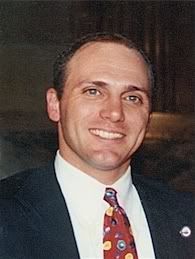 Louisiana state representative Steve Scalise
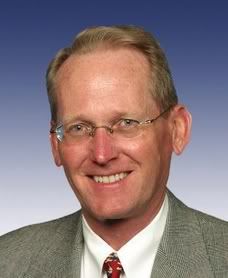 U.S. Representative Jim McCrery (R.-LA)
 Louisiana Secretary of State Jay Dardenne, wife Cathy McDonald Dardenne, and sons John and Matt
 Louisiana state insurance commissioner Jim Donelon
In the same batch of statements sent out by Republicans late Thursday, former Gov. David Treen, who once ran against Vitter in a bitter congressional race, stopped short of supporting the senator.
His read: "Any talk of David Vitter resigning or me being appointed to his Senate seat is ridiculous. It's just not going to happen."
Reached at home by telephone, Treen declined to elaborate on his terse statement.
Elliott Stonecipher, a political analyst, said partisanship is "the next leg of the story" because Vitter's indiscretions were well-known among operatives from both parties and now both factions will try to use the scandal to suit their ends.
Pearson Cross, a political science professor at the University of Louisiana-Lafayette, said that Vitter could benefit if his troubles turn into a partisan duel.
"That will clearly play in his favor because that would seem piling on," Cross said. But, he added, "the Democrats are clearly sensing blood in the water. There's an opening here if Vitter decided to resign."
| [+/-] |
Republican Politicians Embracing Scandalized Senator David Vitter |
From NOLA.com:
U.S. Rep. Bobby Jindal, the front-runner for governor and one of the state's best-known and most popular Republicans, broke his silence Friday over the call-girl scandal surrounding GOP Sen. David Vitter, issuing a cautious statement of support.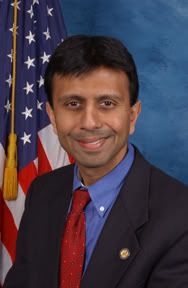
"While we are disappointed by Senator Vitter's actions, Supriya and I continue to keep David and his family in our prayers," Jindal said, referring to his wife. "This is a matter for the Senator to address, and it is our hope that this is not used by others for their own political gain."
Jindal had stayed mum Thursday as other Louisiana Republicans rallied to Vitter's defense. Jindal waited until late Friday afternoon before issuing the two-sentence release regarding the embattled congressional colleague whose 1st District seat he assumed when Vitter ran for the U.S. Senate in 2004.
Pollster Bernie Pinsonat said that the Vitter scandal is unwelcome news to Jindal, who will officially launch his gubernatorial bid Monday and was expecting Vitter to play an active role campaigning, particularly in north Louisiana.
"It is the best you can expect out of Jindal because he is running for governor," Pinsonat said. "This is not something he wants to deal with right now. It couldn't come at a worse time for him."
Vitter rocked the Louisiana political establishment on Monday night when he acknowledged that his number appeared on the billing records of a Washington call girl service whose owner is charted with running a prostitution ring. Records show the number appeared at least five times between 1999 and 2001, a period during which he served in the U.S. House.
In his only public statement, Vitter acknowledged a "very serious sin," and in an e-mail to supporters sent out early this week, offered a separate apology. He assured his backers that he and his family "will be fine."
"I will live every day always striving to fully honor that friendship and those prayers," Vitter wrote.
The e-mail was sent before a former New Orleans brothel owner said Vitter had been a customer of her operation and a prostitute said then-state Rep. Vitter was a regular client of hers during the mid-1990s. Vitter has not addressed the most recent allegations, but denied them in 2004.
Louisiana Republicans said little at first as each day brought new revelations. In a concerted push Thursday to offer some support for the most prominent Republican statewide elected official, the state GOP organized the release of a flurry of supportive statements. Most urged personal support for Vitter and his family and focused on the legislative work Vitter has done in his eight years on Capitol Hill.
Few were as expansive as the statement released Friday by Rep. Richard Baker, R-Baton, who not only defended Vitter's character but also warned the news media to tread carefully before it prints any more stories.
Baker said Vitter's behavior was serious and disappointing, "but it does not define the whole of the man and it is not irredeemable." He urged the news media to "demonstrate some restraint and professionalism."
Baker took aim at critics who labeled Vitter a hypocrite for promoting conservative views, talking about family values and advocating sexual abstinence at a time when he was in a touch with an alleged call girl service.
"If a man has values and standards, but does not live up to them, it does nothing to discredit the validity or those values and standards, and he is far preferable to those timid souls who, without values and standards, cannot fall short of them nor ever run the risk of being charged with hypocrisy," Baker said.
Rep. Charles Boustany, R-Lafayette, by contrast, issued a statement more in keeping with the reserved tone of the one issued by Jindal.
"David and his family are going through a difficult time and my thoughts and prayers are with him," Boustany said.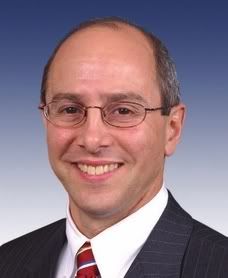
As in the rest of the South, the Republican Party has been ascendant in Louisiana over the past 10 years. The loss of a senate seat, should Vitter resign or lose reelection in 2010, would be a major blow.
Pinsonat, the pollster, said most Republicans are offering guarded support for their standard bearer because they aren't sure of all the details surrounding the current allegations or what else might come out.
"They are sticking their toe in the water very carefully because they don't know how hot it will get," Pinsonat said.
Louisiana Democrats sought to turn up the heat Friday by launching a petition drive calling on Vitter to resign because of his "immoral, unlawful and hypocritical behavior."
"We really have been getting lots of phone calls from all over the country," said Julie Vezinot, spokeswoman for the party. "People are fed up with his hypocritical behavior and he is not doing his job in Washington."
Friend and colleague Sen. Jim DeMint, R-S.C., told the Associated Press that he has been in touch with Vitter by e-mail and that Vitter plans to return to Capitol Hill next week for votes on Tuesday. He said Vitter was contrite in their exchange.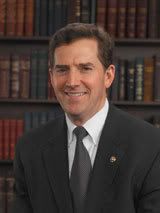
"It's a huge moral failure that reflects on the whole body. And for that he's very sorry," DeMint told the AP. "Obviously he has a lot of remorse. He seems to want to address it head on and not try to hide it."
| [+/-] |
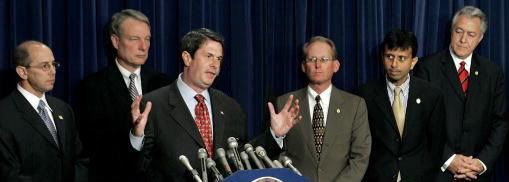
David Vitter, Hiding Out |
At NOLA.com:
Louisiana Sen. David Vitter will probably emerge from seclusion soon and return to Washington to fight for his political career, a colleague of the first-term Republican said Friday.
When Vitter does, he is sure to be confronted with his past remarks about the sanctity of marriage, the importance of fidelity and the need for high ethical standards among office holders.
In a statement last Monday night, Vitter apologized for committing a "very serious sin in my past," acknowledging that his Washington phone number was among those called several years ago by an escort service that prosecutors say was a prostitution operation. Telephone records show that the service called Vitter's number five times from 1999 to 2001, while he was a U.S. House member.
Sen. Jim DeMint, R-S.C., told reporters Friday that, based on e-mail exchanges with Vitter, he expects his colleague to return to the Capitol by Tuesday. Vitter, 46, missed votes on Iraq policy matters on Tuesday, Wednesday, Thursday and Friday.
DeMint said of Vitter's admission: "It's a huge moral failure that reflects on the whole body. And for that he's very sorry."
Several GOP colleagues in Washington and Louisiana have rallied to Vitter's side, saying politicians deserve forgiveness when they err and repent. Some opponents have accused him of hypocrisy, noting that his career is built largely on an image as someone more ethical than the average politician.
Vitter, a married father of four, last month urged colleagues to devote more federal spending to programs urging sexual abstinence among teens. The best way to avert teen pregnancy, he wrote, is "by teaching teenagers that saving sex until marriage and remaining faithful afterwards is the best choice for health and happiness."
In a June 2006 Senate speech supporting a constitutional amendment against gay marriage, Vitter said it was "well overdue that we in the Senate focus on nurturing, upholding, preserving and protecting such a fundamental social institution as traditional marriage."
On Friday night, Deborah Jeane Palfrey, who ran the escort service and whose phone records led to Vitter's problems, said she was "disgusted at the hypocrisy" of the senator's comments about gay marriage.
"How dare someone dictate one thing and practice another, and in the process deny so many in this country the opportunity for happiness," said Palfrey. "In particular, I'm talking about dictating what constitutes a family. What constitutes a family is love, pure and simple."
A lengthy 1999 profile of Vitter in the Times-Picayune of New Orleans was headlined, "Straight arrow aims for Congress."
Several lawmakers including Sen. Barbara Boxer, D-Calif., publicly accused Vitter of hypocrisy this week. Hustler magazine publisher Larry Flynt reveled in his role in unearthing Vitter's phone records, saying, "I'm only exposing the hypocrisy."
Roger Villere, chairman of the Louisiana Republican Party, said Friday he had tried to get in touch with Vitter without success. Villere said he'd been inundated with e-mails from Republicans, most of them supporting Vitter. A "vocal minority" is voicing opposition, he said.
Also Friday, people close to Vitter confirmed that he sent an e-mail to supporters earlier this week saying: "I ... deeply apologize again for letting you and others down. ... Our family will be fine, though we certainly appreciate your continuing thoughts and prayers."
Vitter, a Harvard graduate and Rhodes Scholar, moved rapidly from the Louisiana legislature to the U.S. House and then the Senate, thanks largely to his repeated attacks on what he portrayed as ethical shortcomings of his opponents. He assailed their junkets, ties to casino gambling and use of a tax-paid scholarship program.
The 1999 Times-Picayune profile called him "the boyish-looking, straight-laced freshman state representative" who was "sometimes lampooned as a Boy Scout in adult life." It said he hammered everyone "who didn't pass Vitter's ethical muster. Along the way, he made some powerful enemies. ... Even some of Vitter's fellow Republicans privately groused that he was a grandstander."
Vitter's allies say they will try to help him regain some of his luster.
"The past conduct that Sen. Vitter has acknowledged and taken responsibility for is serious and disappointing," Rep. Richard Baker, R-La., said in a statement Friday, "but it does not define the whole of the man, and it is not irredeemable."
Thursday, July 12, 2007
| [+/-] |
Another Prostitute Comes Forward About Senator David Vitter |
From NOLA.com:
Days after Senator David Vitter apologized for using an escort service in Washington, D.C., a woman who once worked as a prostitute in Louisiana said he was a regular client of hers several years ago while he was a state legislator.
The woman worked under the name Wendy Cortez. Her birth name is Wendy Yow, according to her ex-husband, who asked not to be named but said he has seen her birth certificate.
Yow, contacted through relatives, called The Times-Picayune Wednesday night and said Vitter was a regular customer of hers, but said the two did not have a personal romantic relationship. She claimed to have severed ties with him after she found out he was married. Yow said it was a part of her life she hoped to put behind her.
On Thursday, The Times-Picayune asked Vitter's office whether he had ever hired a prostitute or knew Wendy Cortez. In response, his office issued a statement that referenced his Monday apology regarding the Washington escort service and reiterated that he was not implicated in a federal investigation that led to the closing of a Canal Street brothel in 2001.
''Senator Vitter was very honest and direct in his statement on Monday. Unfortunately, that has resulted in political enemies and those looking to profit from the situation shopping all sorts of false stories. Four different lawyers in the Canal Street matter, including the lead defense attorney and the U.S. attorney, have confirmed Senator Vitter had nothing to do with the operation in any way. But sadly the media insists on being completely irresponsible and continues to report rumors and false accusations,'' said Joel DiGrado, a Vitter spokesperson.
DiGrado said that Vitter is spending important time with his family and soon will return to work in the U.S. Senate.
Two of the attorneys cited by DiGrado -- U.S. Attorney Jim Letten and defense attorney Vinny Mosca -- said Vitter's name did not surface or show up in documents during a federal investigation of the operation but did not go as far as to say that he had never been a client.
On Tuesday, Jeanette Maier, the ''Canal Street Madam,'' said Vitter was a customer at her Mid-City brothel but that his ties predated the investigation.
Confronted during his 2004 Senate race with a question about his relationship with Cortez, Vitter denied the liasions on a radio program.
''I think you know that that allegation is absolutely and completely untrue...I have said that on numerous occasions ... I'll say that in any forum,'' Vitter said during the broadcast on WSMB radio. ''Unfortunately, that's just crass Louisiana politics, now that I am running for the Senate. I have made that clear that it is all completely untrue...And, it's obviously politically motivated.''
Yow characterized the senator as a good man but said she was perturbed that he portrayed himself as a politician who would bring moral authority to his office when he was using her services on the side.
Her former boyfriend Tait Cortez, contacted by The Times-Picayune, said he has seen several photos of Wendy Cortez and Vitter together.
Tait Cortez, who works in construction and often travels to compete in weekend rodeos, said he dated Wendy Cortez for several years in the late 1990s and lived with her for more than a year. The couple never married. Her relationship with Vitter, which Tait Cortez claimed went beyond the brothel business, contributed to their breakup, he said.
''She said she gave exotic massages,'' Cortez, 40, said. ''That's when the trouble (between us) started.''
Towards the end of a waning relationship in the summer of 1998, Wendy told him she was an ''exotic masseause,'' Cortez said.
''She told me she had clients lined up; high-dollar people, lawyers, politicians, golfers,'' he said.
While unpacking boxes following the couple's move to Alabama in 1998, Tait Cortez said he found photos of a smiling Wendy at a formal affair, wearing an evening gown, alongside a man he described as a ''city slicker'' wearing a suit. In another photo, that same dark-haired man appeared with Wendy at a waterfront party, he said. The man was wearing shorts and a t-shirt next to Wendy in a bikini, Cortez said. ''She had his hand on his crotch,'' Cortez said. ''They were smiling.''
Cortez said the photo stung him. It was ''more sexual'' than any others, and he felt that Wendy and the man exhibited more than a business relationship, he said.
''She said it was a client of hers,'' Cortez said. ''She said it was David Vitter, a politician.''
Cortez said he and Wendy argued over the course of the next days during which he learned more about her line of work. ''She said it was all a job,'' he said.''I asked her what exactly she did. She said whatever they wanted. I asked her about sex. She said whatever it took.''
After returning home from work the next day, Cortez said he found a note on the refrigerator that said he should not look for her, because he wouldn't find her.
His truck also was missing, along with several items. Save for a few out-of-the-blue phone calls, Cortez said he hasn't spoken to Yow in several years.
Records show Yow has moved often, with addresses in at least five states over the past decade, including Louisiana, Texas, Arkansas, Iowa and Florida. She used the last names of Yow, Cortez, Williams, Shackelford, Ellis, Scavone and Bruhn, among others, according to cross-referenced public records and interviews.
Yow also has an extensive criminal record. Her legal trouble began in 1991 when she was arrested in Gretna and booked on warrants alleging two counts of forgery and parole violation, records show.
In 1995, she was arrested in Sanford, Fla., and charged as a felon fleeing from justice, and extradited to Arkansas, where she was wanted, according to police records.
A year later in Seminole County, Fla., sheriffs booked her on three counts of fraudulent use of credit cards. She was convicted and ordered to serve probation, but violated that sentence years later and was rearrested in 2001 in Longwood, Fla. Records show she served a jail sentence.
Yow was arrested in October 1997 in Orleans Parish and charged with theft over $500, according to court records. A handwriting specimen was scheduled and Yow failed to appear for a subsequent hearing. The case was dropped in 1998 under article 701.
Available records do not indicate Yow has been arrested for prostitution.
Cortez identified a photo of the woman who adopted his name and described the location of the Mid-City brothel where he said he'd been to pick her up when she worked there. A family member also confirmed the photo. Meier, the madam, said the photo was not the woman she knew as Wendy Cortez.
Tait Cortez has since married, burned photos of his former lover, and forgotten about her, he said, although he still feels deceived.
''She acts like she loves you, but in the end, she is just taking money from you,'' he said.


Monday, July 9, 2007
| [+/-] |
Senator's Number on 'Madam' Phone List |
The Washington Post reports:
Sen. David Vitter (R-La.) apologized last night after his telephone number appeared in the phone records of the woman dubbed the "D.C. Madam," making him the first member of Congress to become ensnared in the high-profile case.
The statement containing Vitter's apology said his telephone number was included on phone records of Pamela Martin and Associates dating from before he ran for the Senate in 2004.
The service's proprietor, Deborah Jeane Palfrey, 51, faces federal charges of racketeering for allegedly running a prostitution ring out of homes and hotel rooms in the Washington area. Authorities say the business netted more than $2 million over 13 years beginning in 1993. Palfrey contends that her escort service was a legitimate business.
"This was a very serious sin in my past for which I am, of course, completely responsible," Vitter, 46, said in a statement, which his spokesman, Joel DiGrado, confirmed to the Associated Press.
"Several years ago, I asked for and received forgiveness from God and my wife in confession and marriage counseling," Vitter continued. "Out of respect for my family, I will keep my discussion of the matter there -- with God and them. But I certainly offer my deep and sincere apologies to all I have disappointed and let down in any way."
Neither Palfrey nor her attorney, Montgomery Blair Sibley, could be reached for comment last night. Sibley told the Associated Press that his client posted the phone records of her escort service on the Internet yesterday, four days after a federal judge lifted a restraining order preventing their publication. The records were included in a series of files on a Web site devoted to Palfrey's legal defense fund.
"I'm stunned that someone would be apologizing for this already," Sibley said.
Vitter is in his first Senate term after serving six years in the House. During his Senate campaign, Vitter was accused by a member of the Louisiana Republican State Central Committee of carrying on a lengthy affair with a prostitute in New Orleans's French Quarter.
In a radio interview, Vitter called the allegation "absolutely and completely untrue" and dismissed it as "just crass Louisiana politics."
Vitter was the first senator to endorse former New York mayor Rudolph W. Giuliani and serves as the campaign's Southern regional chairman. A reliable conservative vote in the Senate, Vitter was among a small group of GOP lawmakers who sought to block an immigration overhaul from advancing last month.
Vitter and his wife, Wendy, a former prosecutor, have four children. On his Senate Web site, Vitter says he is committed to "advancing mainstream conservative principles" and notes that he has his wife are lectors at their hometown church.
Vitter attended Harvard University and was a Rhodes Scholar at Oxford University. He won a convincing victory in 2004, easily defeating two Democrats with a slim majority of the vote, to succeed John Breaux (D).
Palfrey, 51, titillated national media this spring by threatening to auction her list of clients' phone numbers to the highest bidder. She said she needed the money to pay legal expenses, but in May U.S. District Judge Gladys Kessler ordered Palfrey to keep the records to herself.
That move came after Palfrey and Sibley had turned over a sizable portion of the 10,000 phone records to ABC News. One client contacted by ABC reporters was Randall L. Tobias, a deputy secretary of state, who said he used Palfrey's escort service for massages, not for sex.
A day later, on April 27, Tobias resigned from the State Department, reigniting the media firestorm over Palfrey's records. That was seemingly snuffed out by Kessler's temporary restraining order two weeks later, but Kessler vacated her order on Thursday, clearing the way for Palfrey to post the records online.
Pamela Martin and Associates hired college-educated women in their 20s, sending them to male clients in the Washington area who, according to authorities, paid $275 to $300 per sexual encounter. Palfrey said that, so far as she knew, her employees and clients engaged in legal sex play -- such as erotic role-playing.
Friday, October 29, 2004
| [+/-] |
The House of Vitter in New Orleans |
Salon.com reports:
A family-values far-right conservative named David Vitter appears headed for victory on Tuesday in the U.S. Senate race in Louisiana. Sharp-edged and uncompromising, but enormously talented at self-promotion, the three-term Republican representative from suburban New Orleans has rocketed to prominence over the last decade despite opposition from the state's Republican power brokers.
Privately aghast at his rise, the state's GOP leaders have all but fallen in line now, afraid to cross the man who may be their next senator. In interviews with Salon over several days, many Louisiana Republicans expressed anguish that a Vitter victory next week could mark the end of the state's unique tradition of moderate, bipartisan politics. This, of course, is exactly what Vitter's breed of brash, Newt Gingrich-style Republicans believe a deeply polarized country needs -- conservatives who disdain common-sense compromise in pursuit of ideological purity. And so Louisiana Republicans are deeply unhappy that the 43-year-old lawyer, known for running slashing negative campaigns with under-the-radar help from white supremacist David Duke, is on track to become the first GOP U.S. senator from Louisiana in more than 100 years.
If Vitter wins more than 50 percent of the vote in Louisiana's unique multiparty open election on Tuesday, he will avoid a runoff and head directly to Washington. In a state where the other U.S. senator (Mary Landrieu) and the governor (Kathleen Blanco) are moderate, consensus-building Democratic women, the polarizing Vitter will become Louisiana's GOP standard-bearer.
While many Republican politicians and operatives see Vitter as duplicitous, and many African-American leaders call him racist, Louisiana's white conservative voters appear mostly beguiled. Based in the New Orleans suburb of Metairie, Vitter has won his last two congressional elections with more than 80 percent of the vote. He presents himself as a morally righteous, clean-cut family man, and his wife and three young children have become virtual campaign props. The Harvard-educated Rhodes scholar is also extremely intelligent, observers say, and runs perhaps the most effective political ads in the state. But there are hints of a dark side: allegations of an affair with a prostitute and a lawsuit claiming he lost his temper and physically charged at a woman at a town hall meeting.
Yet Vitter's increasing popularity and power have caused his once-vocal critics to retreat. The situation today is in stark contrast to five years ago, when virtually the entire state Republican establishment lined up against the young state representative in his successful bid for the congressional seat being vacated by Rep. Bob Livingston, a Republican who was forced to retire after revelations about his extramarital affairs.
In 1999, none of Vitter's future House colleagues showed up at his victory party, and few of his fellow state legislators did. "Vitter has such problems with people -- not just fringe politicians, but legitimate, honest politicians in the legislature who just can't stand him," Republican lawyer Rob Couhig, one of the candidates Vitter defeated for Livingston's congressional seat, told the Capitol Hill newspaper Roll Call at the time. But today Couhig wouldn't dare repeat his earlier assertion. Like most other Louisiana Republicans, he now supports David Vitter.
There is one Republican who refuses to go quietly. He is a 78-year-old retired homebuilder from suburban New Orleans named John Treen, the brother of former Louisiana Gov. David Treen, a Republican whom Vitter defeated in the bitter 1999 congressional race. Saying he doesn't "give a damn" what Vitter thinks of him, Treen said his motivation for speaking up is simple: "I don't like liars."
David Treen was a pioneer in the state GOP who represented Louisiana in the U.S. House in the 1970s. He declined to comment on Vitter, as did other Louisiana Republicans contacted for this article. "Everyone is scared," John Treen told me. "You won't find anyone willing at this point to stick their neck out. No one wants to cross Vitter, because he has grown too powerful."
Vitter's spokesman, Mac Abrams, did not return phone calls seeking comment. Undoubtedly, though, his boss would argue that his critics are merely angry that changing political preferences have swept them aside. Or he would say the clubby, often corrupt, political establishment in Louisiana resents his outsider status and reformer's bent. "So many forces were against us. So many powers that be," Vitter said in his 1999 victory speech. "They had the politicians. We had the people. They've had the past, but we are the future."
Vitter grew up in a well-to-do family in New Orleans. After graduating from Harvard University, he attended Oxford University on a Rhodes scholarship and earned a law degree from Tulane University in New Orleans. He served in the Louisiana House from 1991 to 1999. A Catholic, he lives in Metairie with his wife, Wendy, and three small children.
In the state House, Vitter earned a reputation as a grandstander. He was known for sneakily calling solo press conferences -- sometimes just hours before his fellow Republicans had planned to make a joint announcement -- in order to take credit for group initiatives that he would pass off as his own. "We'd be on the floor debating controversial bills and he'd be on the radio criticizing us," one state Republican legislator, who declined to allow his name to be published, told me.
But Vitter also took on the state's notorious corruption, earning him extensive coverage from the news media. In 1993, he helped expose officials who were awarding lucrative Tulane scholarships to members of their own families. Taking advantage of a perk that dated to the 1880s, the officials -- including Livingston and Sen. J. Bennett Johnston, a Democrat -- had bestowed on their families tens of thousands of dollars in tuition savings.
Also, in 1993, Vitter filed an ethics complaint against Democratic Gov. Edwin Edwards, which accused him of allowing his children to profit illegally from business with the state-regulated riverboat gambling industry. Edwards was later convicted in an extortion case involving riverboat gambling.
At the same time as he was racking up laudatory press coverage, though, Vitter was also getting a reputation in some quarters for a hot temper. At a Sept. 21, 1993, town hall meeting in Metairie, he got into a confrontation with a questioner that led to a lawsuit against him.
Mercedes Hernandez, who was involved in Republican politics, testified that she frequently attended local meetings to engage officials on the issues, usually tape-recording the events. At a town hall meeting, Hernandez asked the state representative about a rumor she'd heard that he was supporting a gay-rights bill in the Legislature. Vitter became "enraged by her question, left the podium where he was standing, advanced toward her in a rapid, threatening manner, pushing aside chairs ... and grabbed a portable tape recorder" that Hernandez was holding, according to her legal complaint.
In his legal filings, Vitter denied that he had assaulted Hernandez and instead accused her of trying to set him up by planting the false idea with other attendees that he supported gay rights, a position that is anathema in his religious conservative district. He further accused Hernandez of working with John Treen and his other political enemies by trying to shop a story about the incident to the media.
After a trial, a judge awarded Hernandez $50. "The court finds that Mr. Vitter's demeanor changed when he saw the tape recorder. He became angry, agitated and excited," the judge wrote. "He thought Ms. Hernandez was using her question [about gay rights] as a ruse to 'set him up' and embarrass him." But the judge also admonished Hernandez. "It appears that Ms. Hernandez was rather enjoying the political advantage she seemed to have perceived herself to have gained." Hernandez, who is still active in Republican politics, did not return phone calls from Salon seeking comment.
By 1999, Vitter was ready to move to the national stage. His chance came when House Republicans lost seats in the 1998 midterm elections amid public anger over the impeachment of President Clinton. The election debacle caused angry House Republicans to reject Newt Gingrich, who resigned. His replacement as speaker was to be Livingston, then chairman of the House Appropriations Committee. But as the Louisiana Republican decried Clinton's sexual transgressions, it emerged that he himself had engaged in extramarital affairs. Livingston too was forced to resign, paving the way for the 1999 special congressional election.
Livingston, Gov. Mike Foster, Rep. Billy Tauzin and other prominent Louisiana Republicans lined up to back David Treen, who even had the support of such Democrats as Sen. John Breaux. Then 70, Treen had served four terms in the U.S. House in the 1970s and became governor in 1979. His reputation was as a consensus builder who reached out to African-Americans. He was not an ally of the religious right. John Treen said, "My brother Dave has a reputation for absolute honesty and integrity. That was one of his trademarks."
In the crowded open primary -- a field that included David Duke -- Treen and Vitter garnered the most votes and proceeded to a head-to-head runoff. In a meeting, they pledged to pull no dirty tricks, John Treen said.
To be sure, their campaign rhetoric was tough. Vitter attacked David Treen as an old-school politician. Treen replied that he was experienced. Treen supported restrictions on the sale of automatic and semiautomatic assault weapons; Vitter was against any form of gun control. Treen opposed racial quotas but supported allowing state colleges and universities to decide their own policies for boosting minority enrollment; Vitter was against any form of affirmative action. For most of the race, the better-known Treen led in the polls -- until the last week, when Vitter violated his pledge not to play dirty, John Treen said.
The Vitter campaign sent fliers to black voters stating that the racist David Duke was supporting his opponent. In fact, Treen had been an enemy of Duke and had tried to stop his rise in Louisiana GOP politics. "Dave Treen and I have absolutely no use for David Duke whatsoever," John Treen said. "He [Duke] tried to shake my hand once, and I said, 'I'm not going to shake your hand, you son of a bitch.' It's hypocritical to shake someone's hand if you consider them an enemy." But in what John Treen believes was a secret pact between Duke and Vitter, the former Ku Klux Klansman came out publicly for his nemesis, Treen.
The effect was to suppress the black vote. Amid low turnout, Vitter eked out a victory with 51 percent. Curiously, though, the New Orleans area precincts that had supported Duke in the earlier phase of the race went not for Treen -- whom the white supremacist had claimed to be supporting -- but for Vitter. That was evidence, John Treen claims, that Duke's supporters had secretly been rounding up votes for Vitter.
On election night, no members of Louisiana's congressional delegation showed up to celebrate with their new colleague. Few members of the state House were there, either. Only one Republican of any consequence -- U.S. Rep. Jim McCrery -- called to congratulate Vitter.
In Congress, Vitter became a reliable vote for the extreme right, earning a 100 percent rating from the American Conservative Union in 2002. He vowed to outlaw abortion in almost all cases, even when pregnancy results from rape or incest; his only exception was to save the life of the mother. And -- with an eye on the governor's office -- he continued the crusade against gambling that he'd started in 1993 with the ethics complaint against Gov. Edwin Edwards.
In 2002, Vitter criticized his fellow Republican, Gov. Mike Foster, for supporting the expansion of a casino operated near the Texas border by the Jena Band of Choctaws. Coming to Vitter's aid was an advocacy group called the Committee Against Gambling Expansion, which mailed out campaign fliers on Vitter's behalf and allowed Vitter to use its name in phone calls to supporters.
It turned out that the advocacy group was not run by "Louisiana folks with the Christian community," as Vitter told the Times-Picayune he had initially thought. Rather, it was a sophisticated front group set up by a Washington lobbyist, who is now under federal investigation for his activities, on behalf of a rival tribe that was trying to block competition. Vitter has said he had no idea the Committee Against Gambling Expansion was actually representing casino interests.
As Vitter geared up in 2002 to run for governor, his bitter race against Treen came back to haunt him. A Treen supporter, local Republican Party official Vincent Bruno, blurted out on a radio show that he believed Vitter had once had an extramarital affair.
The Louisiana Weekly newspaper followed up. Bruno told the paper that the young woman had contacted the Treen campaign in 1999 because she was upset that Vitter was portraying himself as a family-values conservative and trotting out his wife and children for campaign photo ops. Bruno, who declined to comment for this story, and John Treen interviewed the woman, who said she had worked under the name "Leah."
But after nearly a year of regular paid assignations with Vitter, the lawmaker asked her to divulge her real name, according to Treen, citing the account he said she gave him. Her name was Wendy Cortez, Treen said. She said Vitter's response was electric. "He said, 'Oh, my God! I can't see you anymore," John Treen told me, citing the woman's account to him and noting that Vitter's wife is also named Wendy. And Wendy Vitter does not appear to be the indulgent type.
Asked by an interviewer in 2000 whether she could forgive her husband if she learned he'd had an extramarital affair, as Hillary Clinton and Bob Livingston's wife had done, Wendy Vitter told the Times-Picayune: "I'm a lot more like Lorena Bobbitt than Hillary. If he does something like that, I'm walking away with one thing, and it's not alimony, trust me."
Vitter, Bruno and others interviewed the alleged prostitute several times in 1999. She also met with a respected local television reporter, Richard Angelico, the Louisiana Weekly said. But Angelico declined to run with the story after she would not agree to go on camera, the paper said. Vitter denied the allegations. But shortly before the Louisiana Weekly was set to publish its story, he dropped out of the governor's race, saying he needed to deal with marital problems. "Our [marriage] counseling sessions have ... led us to the rather obvious conclusion that it's not time to run for governor," Vitter said at the time.
Chris Tidmore, the author of the Louisiana Weekly story, said he interviewed the alleged prostitute by telephone and reviewed the notes of her sessions with Treen and Bruno before publishing his story. He said she had moved away from New Orleans and is now living under an assumed name. Salon could not locate her.
Amid Vitter's denials and the reluctance of his accuser to go public, no newspapers in Louisiana reported on the allegations. And, when Sen. Breaux announced his retirement last December, Vitter jumped into the race to succeed the conservative Democrat. The far-right and confrontational Vitter was the opposite of Breaux, who had been a consensus-builder in Washington with close relationships with Republicans.
Vitter was also deeply unpopular in the black community. In February a group of black clergy went so far as to accuse Vitter of orchestrating a federal corruption probe into people associated with New Orleans' black former mayor, Marc Morial. Vitter had helped secure federal funding for the task force that was investigating the Morial circle.
After the task force raided the home of the former mayor's brother Jacques, Morial's attorney said sarcastically that he was surprised Vitter hadn't been riding along with the agents. "Congressman Vitter is running for the Senate," Pat Fanning told the Times-Picayune. "You've got a Republican conservative white base, and you went and got money to go and investigate black people in New Orleans."
Vitter denied that he had targeted the Morial family and asked the Greater New Orleans Coalition of Ministers, a group of black clergy that had complained about his motives, to meet with him. Instead, the ministers denounced Vitter's "political ploys," saying they would not participate in a "media event designed to deceive our congregations." Although more than 30 percent of the population in Louisiana is African-American, Vitter appears to have written them off. And if the polls are correct, he doesn't need black voters; he can win on the strength of conservative whites alone in a state that gave its nine electoral votes to George W. Bush in 2000.
Indeed, Vitter has a strong lead in the open-party race. He is the only Republican, and he's running against three Democrats -- state treasurer John Kennedy, U.S. Rep. Chris John, and state Rep. Arthur Morrell. With Democratic votes divided, Vitter may win outright. A Verne Kennedy poll, conducted Oct. 22 and 23, found Vitter pulling 51 percent, enough to avoid a runoff. The poll showed Vitter with only 6 percent of the black vote.
This week, the Lafayette Daily Advertiser declined to endorse any of the Senate candidates, saying they "have shown no indication that they will continue the bipartisan approach that has been so important to Louisiana and the nation." Newt Gingrich would be proud.
