The Administration's plan for Iran.
In the New Yorker, Seymour Hersh writes:
In a series of public statements in recent months, President Bush and members of his Administration have redefined the war in Iraq, to an increasing degree, as a strategic battle between the United States and Iran. “Shia extremists, backed by Iran, are training Iraqis to carry out attacks on our forces and the Iraqi people,” Bush told the national convention of the American Legion in August. “The attacks on our bases and our troops by Iranian-supplied munitions have increased. . . . The Iranian regime must halt these actions. And, until it does, I will take actions necessary to protect our troops.” He the concluded, to applause, “I have authorized our military commanders in Iraq to confront Tehran’s murderous activities.
The President’s position, and its corollary—that, if many of America’s problems in Iraq are the responsibility of Tehran, then the solution to them is to confront the Iranians—have taken firm hold in the Administration. This summer, the White House, pushed by the office of Vice-President Dick Cheney, requested that the Joint Chiefs of Staff redraw long-standing plans for a possible attack on Iran, according to former officials and government consultants. The focus of the plans had been a broad bombing attack, with targets including Iran’s known and suspected nuclear facilities and other military and infrastructure sites. Now the emphasis is on “surgical” strikes on Revolutionary Guard Corps facilities in Tehran and elsewhere, which, the Administration claims, have been the source of attacks on Americans in Iraq. What had been presented primarily as a counter-proliferation mission has been reconceived as counterterrorism.
The shift in targeting reflects three developments. First, the President and his senior advisers have concluded that their campaign to convince the American public that Iran poses an imminent nuclear threat has failed (unlike a similar campaign before the Iraq war), and that as a result there is not enough popular support for a major bombing campaign. The second development is that the White House has come to terms, in private, with the general consensus of the American intelligence community that Iran is at least five years away from obtaining a bomb. And, finally, there has been a growing recognition in Washington and throughout the Middle East that Iran is emerging as the geopolitical winner of the war in Iraq.
During a secure videoconference that took place early this summer, the President told Ryan Crocker, the U.S. Ambassador to Iraq, that he was thinking of hitting Iranian targets across the border and that the British “were on board.” At that point, Secretary of State Condoleezza Rice interjected that there was a need to proceed carefully, because of the ongoing diplomatic track. Bush ended by instructing Crocker to tell Iran to stop interfering in Iraq or it would face American retribution.
At a White House meeting with Cheney this summer, according to a former senior intelligence official, it was agreed that, if limited strikes on Iran were carried out, the Administration could fend off criticism by arguing that they were a defensive action to save soldiers in Iraq. If Democrats objected, the Administration could say, “Bill Clinton did the same thing; he conducted limited strikes in Afghanistan, the Sudan, and in Baghdad to protect American lives.” The former intelligence official added, “There is a desperate effort by Cheney et al. to bring military action to Iran as soon as possible. Meanwhile, the politicians are saying, ‘You can’t do it, because every Republican is going to be defeated, and we’re only one fact from going over the cliff in Iraq.’ But Cheney doesn’t give a rat’s ass about the Republican worries, and neither does the President.”
Bryan Whitman, a Pentagon spokesman, said, “The President has made it clear that the United States government remains committed to a diplomatic solution with respect to Iran. The State Department is working diligently along with the international community to address our broad range of concerns.” (The White House declined to comment.)
I was repeatedly cautioned, in interviews, that the President has yet to issue the “execute order” that would be required for a military operation inside Iran, and such an order may never be issued. But there has been a significant increase in the tempo of attack planning. In mid-August, senior officials told reporters that the Administration intended to declare Iran’s Revolutionary Guard Corps a foreign terrorist organization. And two former senior officials of the C.I.A. told me that, by late summer, the agency had increased the size and the authority of the Iranian Operations Group. (A spokesman for the agency said, “The C.I.A. does not, as a rule, publicly discuss the relative size of its operational components.”)
“They’re moving everybody to the Iran desk,” one recently retired C.I.A. official said. “They’re dragging in a lot of analysts and ramping up everything. It’s just like the fall of 2002”—the months before the invasion of Iraq, when the Iraqi Operations Group became the most important in the agency. He added, “The guys now running the Iranian program have limited direct experience with Iran. In the event of an attack, how will the Iranians react? They will react, and the Administration has not thought it all the way through.”
That theme was echoed by Zbigniew Brzezinski, the former national-security adviser, who said that he had heard discussions of the White House’s more limited bombing plans for Iran. Brzezinski said that Iran would likely react to an American attack “by intensifying the conflict in Iraq and also in Afghanistan, their neighbors, and that could draw in Pakistan. We will be stuck in a regional war for twenty years.”
In a speech at the United Nations last week, Iran’s President, Mahmoud Ahmadinejad, was defiant. He referred to America as an “aggressor” state, and said, “How can the incompetents who cannot even manage and control themselves rule humanity and arrange its affairs? Unfortunately, they have put themselves in the position of God.” (The day before, at Columbia, he suggested that the facts of the Holocaust still needed to be determined.)
“A lot depends on how stupid the Iranians will be,” Brzezinski told me. “Will they cool off Ahmadinejad and tone down their language?” The Bush Administration, by charging that Iran was interfering in Iraq, was aiming “to paint it as ‘We’re responding to what is an intolerable situation,’ ” Brzezinski said. “This time, unlike the attack in Iraq, we’re going to play the victim. The name of our game seems to be to get the Iranians to overplay their hand.”
General David Petraeus, the commander of the multinational forces in Iraq, in his report to Congress in September, buttressed the Administration’s case against Iran. “None of us, earlier this year, appreciated the extent of Iranian involvement in Iraq, something about which we and Iraq’s leaders all now have greater concern,” he said. Iran, Petraeus said, was fighting “a proxy war against the Iraqi state and coalition forces in Iraq.
Iran has had a presence in Iraq for decades; the extent and the purpose of its current activities there are in dispute, however. During Saddam Hussein’s rule, when the Sunni-dominated Baath Party brutally oppressed the majority Shiites, Iran supported them. Many in the present Iraqi Shiite leadership, including prominent members of the government of Prime Minister Nuri al-Maliki, spent years in exile in Iran; last week, at the Council on Foreign Relations, Maliki said, according to the Washington Post, that Iraq’s relations with the Iranians had “improved to the point that they are not interfering in our internal affairs.” Iran is so entrenched in Iraqi Shiite circles that any “proxy war” could be as much through the Iraqi state as against it. The crux of the Bush Administration’s strategic dilemma is that its decision to back a Shiite-led government after the fall of Saddam has empowered Iran, and made it impossible to exclude Iran from the Iraqi political scene.
Vali Nasr, a professor of international politics at Tufts University, who is an expert on Iran and Shiism, told me, “Between 2003 and 2006, the Iranians thought they were closest to the United States on the issue of Iraq.” The Iraqi Shia religious leadership encouraged Shiites to avoid confrontation with American soldiers and to participate in elections—believing that a one-man, one-vote election process could only result in a Shia-dominated government. Initially, the insurgency was mainly Sunni, especially Al Qaeda in Mesopotamia. Nasr told me that Iran’s policy since 2003 has been to provide funding, arms, and aid to several Shiite factions—including some in Maliki’s coalition. The problem, Nasr said, is that “once you put the arms on the ground you cannot control how they’re used later.”
In the Shiite view, the White House “only looks at Iran’s ties to Iraq in terms of security,” Nasr said. “Last year, over one million Iranians travelled to Iraq on pilgrimages, and there is more than a billion dollars a year in trading between the two countries. But the Americans act as if every Iranian inside Iraq were there to import weapons.”
Many of those who support the President’s policy argue that Iran poses an imminent threat. In a recent essay in Commentary, Norman Podhoretz depicted President Ahmadinejad as a revolutionary, “like Hitler . . . whose objective is to overturn the going international system and to replace it . . . with a new order dominated by Iran. . . . [T]he plain and brutal truth is that if Iran is to be prevented from developing a nuclear arsenal, there is no alternative to the actual use of military force.” Podhoretz concluded, “I pray with all my heart” that President Bush “will find it possible to take the only action that can stop Iran from following through on its evil intentions both toward us and toward Israel.” Podhoretz recently told politico.com that he had met with the President for about forty-five minutes to urge him to take military action against Iran, and believed that “Bush is going to hit” Iran before leaving office. (Podhoretz, one of the founders of neoconservatism, is a strong backer of Rudolph Giuliani’s Presidential campaign, and his son-in-law, Elliott Abrams, is a senior adviser to President Bush on national security.)
In early August, Army Lieutenant General Raymond Odierno, the second-ranking U.S. commander in Iraq, told the Times about an increase in attacks involving explosively formed penetrators, a type of lethal bomb that discharges a semi-molten copper slug that can rip through the armor of Humvees. The Times reported that U.S. intelligence and technical analyses indicated that Shiite militias had obtained the bombs from Iran. Odierno said that Iranians had been “surging support” over the past three or four months.
Questions remain, however, about the provenance of weapons in Iraq, especially given the rampant black market in arms. David Kay, a former C.I.A. adviser and the chief weapons inspector in Iraq for the United Nations, told me that his inspection team was astonished, in the aftermath of both Iraq wars, by “the huge amounts of arms” it found circulating among civilians and military personnel throughout the country. He recalled seeing stockpiles of explosively formed penetrators, as well as charges that had been recovered from unexploded American cluster bombs. Arms had also been supplied years ago by the Iranians to their Shiite allies in southern Iraq who had been persecuted by the Baath Party.
“I thought Petraeus went way beyond what Iran is doing inside Iraq today,” Kay said. “When the White House started its anti-Iran campaign, six months ago, I thought it was all craziness. Now it does look like there is some selective smuggling by Iran, but much of it has been in response to American pressure and American threats—more a ‘shot across the bow’ sort of thing, to let Washington know that it was not going to get away with its threats so freely. Iran is not giving the Iraqis the good stuff—the anti-aircraft missiles that can shoot down American planes and its advanced anti-tank weapons.”
Another element of the Administration’s case against Iran is the presence of Iranian agents in Iraq. General Petraeus, testifying before Congress, said that a commando faction of the Revolutionary Guards was seeking to turn its allies inside Iraq into a “Hezbollah-like force to serve its interests.” In August, Army Major General Rick Lynch, the commander of the 3rd Infantry Division, told reporters in Baghdad that his troops were tracking some fifty Iranian men sent by the Revolutionary Guards who were training Shiite insurgents south of Baghdad. “We know they’re here and we target them as well,” he said.
Patrick Clawson, an expert on Iran at the Washington Institute for Near East Policy, told me that “there are a lot of Iranians at any time inside Iraq, including those doing intelligence work and those doing humanitarian missions. It would be prudent for the Administration to produce more evidence of direct military training—or produce fighters captured in Iraq who had been trained in Iran.” He added, “It will be important for the Iraqi government to be able to state that they were unaware of this activity”; otherwise, given the intense relationship between the Iraqi Shiite leadership and Tehran, the Iranians could say that “they had been asked by the Iraqi government to train these people.” (In late August, American troops raided a Baghdad hotel and arrested a group of Iranians. They were a delegation from Iran’s energy ministry, and had been invited to Iraq by the Maliki government; they were later released.)
“If you want to attack, you have to prepare the groundwork, and you have to be prepared to show the evidence,” Clawson said. Adding to the complexity, he said, is a question that seems almost counterintuitive: “What is the attitude of Iraq going to be if we hit Iran? Such an attack could put a strain on the Iraqi government.”
A senior European diplomat, who works closely with American intelligence, told me that there is evidence that Iran has been making extensive preparation for an American bombing attack. “We know that the Iranians are strengthening their air-defense capabilities,” he said, “and we believe they will react asymmetrically—hitting targets in Europe and in Latin America.” There is also specific intelligence suggesting that Iran will be aided in these attacks by Hezbollah. “Hezbollah is capable, and they can do it,” the diplomat said.
In interviews with current and former officials, there were repeated complaints about the paucity of reliable information. A former high-level C.I.A. official said that the intelligence about who is doing what inside Iran “is so thin that nobody even wants his name on it. This is the problem.”
The difficulty of determining who is responsible for the chaos in Iraq can be seen in Basra, in the Shiite south, where British forces have earlier presided over relatively secure area. Over the course of this year, however, the region became increasingly ungovernable, and by fall the British had retreated to fixed bases. A European official who has access to current intelligence told me that “there is a firm belief inside the American and U.K. intelligence community that Iran is supporting many of the groups in southern Iraq that are responsible for the deaths of British and American soldiers. Weapons and money are getting in from Iran. They have been able to penetrate many groups”—primarily the Mahdi Army and other Shiite militias.
A June, 2007, report by the International Crisis Group found, however, that Basra’s renewed instability was mainly the result of “the systematic abuse of official institutions, political assassinations, tribal vendettas, neighborhood vigilantism and enforcement of social mores, together with the rise of criminal mafias.” The report added that leading Iraqi politicians and officials “routinely invoke the threat of outside interference”—from bordering Iran—“to justify their behavior or evade responsibility for their failures.”
Earlier this year, before the surge in U.S. troops, the American command in Baghdad changed what had been a confrontational policy in western Iraq, the Sunni heartland (and the base of the Baathist regime), and began working with the Sunni tribes, including some tied to the insurgency. Tribal leaders are now getting combat support as well as money, intelligence, and arms, ostensibly to fight Al Qaeda in Mesopotamia. Empowering Sunni forces may undermine efforts toward national reconciliation, however. Already, tens of thousands of Shiites have fled Anbar Province, many to Shiite neighborhoods in Baghdad, while Sunnis have been forced from their homes in Shiite communities. Vali Nasr, of Tufts, called the internal displacement of communities in Iraq a form of “ethnic cleansing.”
“The American policy of supporting the Sunnis in western Iraq is making the Shia leadership very nervous,” Nasr said. “The White House makes it seem as if the Shia were afraid only of Al Qaeda—but they are afraid of the Sunni tribesmen we are arming. The Shia attitude is ‘So what if you’re getting rid of Al Qaeda?’ The problem of Sunni resistance is still there. The Americans believe they can distinguish between good and bad insurgents, but the Shia don’t share that distinction. For the Shia, they are all one adversary.”
Nasr went on, “The United States is trying to fight on all sides—Sunni and Shia—and be friends with all sides.” In the Shiite view, “It’s clear that the United States cannot bring security to Iraq, because it is not doing everything necessary to bring stability. If they did, they would talk to anybody to achieve it—even Iran and Syria,” Nasr said. (Such engagement was a major recommendation of the Iraq Study Group.) “America cannot bring stability in Iraq by fighting Iran in Iraq.”
The revised bombing plan for a possible attack, with its tightened focus on counterterrorism, is gathering support among generals and admirals in the Pentagon. The strategy calls for the use of sea-launched cruise missiles and more precisely targeted ground attacks and bombing strikes, including plans to destroy the most important Revolutionary Guard training camps, supply depots, and command and control facilities.
“Cheney’s option is now for a fast in and out—for surgical strikes,” the former senior American intelligence official told me. The Joint Chiefs have turned to the Navy, he said, which had been chafing over its role in the Air Force-dominated air war in Iraq. “The Navy’s planes, ships, and cruise missiles are in place in the Gulf and operating daily. They’ve got everything they need—even AWACS are in place and the targets in Iran have been programmed. The Navy is flying FA-18 missions every day in the Gulf.” There are also plans to hit Iran’s anti-aircraft surface-to-air missile sites. “We’ve got to get a path in and a path out,” the former official said.
A Pentagon consultant on counterterrorism told me that, if the bombing campaign took place, it would be accompanied by a series of what he called “short, sharp incursions” by American Special Forces units into suspected Iranian training sites. He said, “Cheney is devoted to this, no question.”
A limited bombing attack of this sort “only makes sense if the intelligence is good,” the consultant said. If the targets are not clearly defined, the bombing “will start as limited, but then there will be an ‘escalation special.’ Planners will say that we have to deal with Hezbollah here and Syria there. The goal will be to hit the cue ball one time and have all the balls go in the pocket. But add-ons are always there in strike planning.”
The surgical-strike plan has been shared with some of America’s allies, who have had mixed reactions to it. Israel’s military and political leaders were alarmed, believing, the consultant said, that it didn’t sufficiently target Iran’s nuclear facilities. The White House has been reassuring the Israeli government, the former senior official told me, that the more limited target list would still serve the goal of counter-proliferation by decapitating the leadership of the Revolutionary Guards, who are believed to have direct control over the nuclear-research program. “Our theory is that if we do the attacks as planned it will accomplish two things,” the former senior official said.
An Israeli official said, “Our main focus has been the Iranian nuclear facilities, not because other things aren’t important. We’ve worked on missile technology and terrorism, but we see the Iranian nuclear issue as one that cuts across everything.” Iran, he added, does not need to develop an actual warhead to be a threat. “Our problems begin when they learn and master the nuclear fuel cycle and when they have the nuclear materials,” he said. There was, for example, the possibility of a “dirty bomb,” or of Iran’s passing materials to terrorist groups. “There is still time for diplomacy to have an impact, but not a lot,” the Israeli official said. “We believe the technological timetable is moving faster than the diplomatic timetable. And if diplomacy doesn’t work, as they say, all options are on the table.”
The bombing plan has had its most positive reception from the newly elected government of Britain’s Prime Minister, Gordon Brown. A senior European official told me, “The British perception is that the Iranians are not making the progress they want to see in their nuclear-enrichment processing. All the intelligence community agree that Iran is providing critical assistance training, and technology to a surprising number of terrorist groups in Iraq and Afghanistan, and, through Hezbollah, in Lebanon, and Israel/Palestine, too.
There were four possible responses to this Iranian activity, the European official said: to do nothing (“There would be no retaliation to the Iranians for their attacks; this would be sending the wrong signal”); to publicize the Iranian actions (“There is one great difficulty with this option—the widespread lack of faith in American intelligence assessments”); to attack the Iranians operating inside Iraq (“We’ve been taking action since last December, and it does have an effect”); or, finally, to attack inside Iran.
The European official continued, “A major air strike against Iran could well lead to a rallying around the flag there, but a very careful targeting of terrorist training camps might not.” His view, he said, was that “once the Iranians get a bloody nose they rethink things.” For example, Ali Akbar Rafsanjani and Ali Larijani, two of Iran’s most influential political figures, “might go to the Supreme Leader and say, ‘The hard-line policies have got us into this mess. We must change our approach for the sake of the regime.’ ”
A retired American four-star general with close ties to the British military told me that there was another reason for Britain’s interest—shame over the failure of the Royal Navy to protect the sailors and Royal Marines who were seized by Iran on March 23rd, in the Persian Gulf. “The professional guys are saying that British honor is at stake, and if there’s another event like that in the water off Iran the British will hit back,” he said.
The revised bombing plan “could work—if it’s in response to an Iranian attack,” the retired four-star general said. “The British may want to do it to get even, but the more reasonable people are saying, ‘Let’s do it if the Iranians stage a cross-border attack inside Iraq.’ It’s got to be ten dead American soldiers and four burned trucks.” There is, he added, “a widespread belief in London that Tony Blair’s government was sold a bill of goods by the White House in the buildup to the war against Iraq. So if somebody comes into Gordon Brown’s office and says, ‘We have this intelligence from America,’ Brown will ask, ‘Where did it come from? Have we verified it?’ The burden of proof is high.”
The French government shares the Administration’s sense of urgency about Iran’s nuclear program, and believes that Iran will be able to produce a warhead within two years. France’s newly elected President, Nicolas Sarkozy, created a stir in late August when he warned that Iran could be attacked if it did not halt is nuclear program. Nonetheless, France has indicated to the White House that it has doubts about a limited strike, the former senior intelligence official told me. Many in the French government have concluded that the Bush Administration has exaggerated the extent of Iranian meddling inside Iraq; they believe, according to a European diplomat, that “the American problems in Iraq are due to their own mistakes, and now the Americans are trying to show some teeth. An American bombing will show only that the Bush Administration has its own agenda toward Iran.”
A European intelligence official made a similar point. “If you attack Iran,” he told me, “and do not label it as being against Iran’s nuclear facilities, it will strengthen the regime, and help to make the Islamic air in the Middle East thicker.”
Ahmadinejad, in his speech at the United Nations, said that Iran considered the dispute over its nuclear program “closed.” Iran would deal with it only through the International Atomic Energy Agency, he said, and had decided to “disregard unlawful and political impositions of the arrogant powers.” He added, in a press conference after the speech, “the decisions of the United States and France are not important.”
The director general of the I.A.E.A., Mohamed ElBaradei, has for years been in an often bitter public dispute with the Bush Administration; the agency’s most recent report found that Iran was far less proficient in enriching uranium than expected. A diplomat in Vienna, where the I.A.E.A. is based, said, “The Iranians are years away from making a bomb, as ElBaradei has said all along. Running three thousand centrifuges does not make a bomb.” The diplomat added, referring to hawks in the Bush Administration, “They don’t like ElBaradei, because they are in a state of denial. And now their negotiating policy has failed, and Iran is still enriching uranium and still making progress.”
The diplomat expressed the bitterness that has marked the I.A.E.A.’s dealings with the Bush Administration since the buildup to the 2003 invasion of Iraq. “The White House’s claims were all a pack of lies, and Mohamed is dismissive of those lies,” the diplomat said.
Hans Blix, a former head of the I.A.E.A., questioned the Bush Administration’s commitment to diplomacy. “There are important cards that Washington could play; instead, they have three aircraft carriers sitting in the Persian Gulf,” he said. Speaking of Iran’s role in Iraq, Blix added, “My impression is that the United States has been trying to push up the accusations against Iran as a basis for a possible attack—as an excuse for jumping on them.”
The Iranian leadership is feeling the pressure. In the press conference after his U.N. speech, Ahmadinejad was asked about a possible attack. “The want to hurt us,” he said, “but, with the will of God, they won’t be able to do it.” According to a former State Department adviser on Iran, the Iranians complained, in diplomatic meetings in Baghdad with Ambassador Crocker, about a refusal by the Bush Administration to take advantage of their knowledge of the Iraqi political scene. The former adviser said, “They’ve been trying to convey to the United States that ‘We can help you in Iraq. Nobody knows Iraq better than us.’ ” Instead, the Iranians are preparing for an American attack.
The adviser said that he had heard from a source in Iran that the Revolutionary Guards have been telling religious leaders that they can stand up to an American attack. “The Guards are claiming that they can infiltrate American security,” the adviser said. “They are bragging that they have spray-painted an American warship—to signal the Americans that they can get close to them.” (I was told by the former senior intelligence official that there was an unexplained incident, this spring, in which an American warship was spray-painted with a bull’s-eye while docked in Qatar, which may have been the source of the boasts.)
“Do you think those crazies in Tehran are going to say, ‘Uncle Sam is here! We’d better stand down’? ” the former senior intelligence official said. “The reality is an attack will make things ten times warmer.”
Another recent incident, in Afghanistan, reflects the tension over intelligence. In July, the London Telegraph reported that what appeared to be an SA-7 shoulder-launched missile was fired at an American C-130 Hercules aircraft. The missile missed its mark. Months earlier, British commandos had intercepted a few truckloads of weapons, including one containing a working SA-7 missile, coming across the Iranian border. But there was no way of determining whether the missile fired at the C-130 had come from Iran—especially since SA-7s are available through black-market arms dealers.
Vincent Cannistraro, a retired C.I.A. officer who has worked closely with his counterparts in Britain, added to the story: “The Brits told me that they were afraid at first to tell us about the incident—in fear that Cheney would use it as a reason to attack Iran.” The intelligence subsequently was forwarded, he said.
The retired four-star general confirmed that British intelligence “was worried” about passing the information along. “The Brits don’t trust the Iranians,” the retired general said, “but they also don’t trust Bush and Cheney.”
Sunday, September 30, 2007
| [+/-] |
Shifting Targets |
Thursday, July 19, 2007
| [+/-] |
Federal Judge Dismisses Valerie Plame's Lawsuit |
A federal judge appointed by George W. Bush throws out Valerie Plame's lawsuit.
The LATimes reports:
A federal judge today dismissed a lawsuit by former CIA operative Valerie Plame and her husband seeking damages against Vice President Dick Cheney, former Cheney aide I. Lewis "Scooter" Libby and two others she accused of conspiring to disclose her identity.
Plame and her husband, former diplomat Joseph C. Wilson IV, had alleged that Cheney, Libby, White House political advisor Karl Rove and former State Department official Richard L. Armitage had violated their constitutional rights in the events that led to Plame being identified in news reports in the summer of 2003.
U.S. District Judge John Bates rejected the lawsuit in a 41-page ruling today.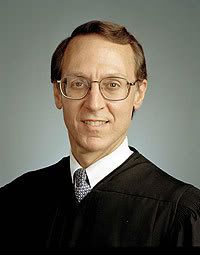
Without offering an opinion on the merits of the case, Bates said it was barred by other statutes that Congress had enacted to cover instances of alleged harm to CIA operatives and other federal employees.
"The court finds that, under controlling Supreme Court precedent, special factors — particularly the remedial scheme established by Congress in the Privacy Act — counsel against the recognition of an implied damages remedy for plaintiffs' constitutional claims," the judge ruled.
Bates also wrote that he was concerned about "creating a private right of action for the disclosure of covert identity," and that such lawsuits could "inevitably require judicial intrusion into matters of national security."
Lawyers for Cheney and the other defendants had argued in court filings that the lawsuit would be "inimical" to the ability of the executive branch to protect national security information.
Libby was convicted in March of lying to a grand jury and federal investigators about his role in the CIA leak case, and was sentenced to 30 months in prison. President Bush commuted his prison sentence this month, but left in place a $250,000 fine and two years' supervisory release.
Lawyers for Wilson and Plame said they would appeal the decision.
Melanie Sloan, executive director of Citizens for Responsibility and Ethics, and one of the couple's lawyers, said Bates' decision recognized that the Wilsons' claims posed "important questions relating to the propriety of actions undertaken by our highest government officials."
But, she said, the judge dismissed their lawsuit on a threshold legal issue centered on the difficulty of suing a federal official.
"While we are obviously very disappointed by today's decision, we have always expected that this case would ultimately be decided by a higher court." Sloan said. "We disagree with the court's holding and intend to pursue this case vigorously to protect all Americans from vindictive government officials who abuse their power for their own political ends."
| [+/-] |
The Judge Who Threw Out Plame's Lawsuit |
Who is John D. Bates?
The Honorable John D. BatesMeet the judge:
John D. Bates was appointed United States District Judge for the U.S. District Court for the District of Columbia by President George W. Bush in December 2001.
He graduated from Wesleyan University in 1968 and received a J.D. from the University of Maryland School of Law in 1976. From 1968 to 1971, he served in the United States Army, including a tour in Vietnam. Judge Bates clerked for Judge Roszel C. Thomsen of the United States District Court for the District of Maryland from 1976 to 1977 and was an associate at Steptoe & Johnson from 1977 to 1980. He served as an Assistant United States Attorney for the District of Columbia from 1980 to 1997, and was Chief of the Civil Division of the U.S. Attorney's Office from 1987 to 1997.
Judge Bates was on detail as Deputy Independent Counsel for the Whitewater investigation from 1995 to mid-1997. In 1998, he joined the Washington law firm of Miller & Chevalier, where he was Chair of the Government Contracts/Litigation Department and a member of the Executive Committee. Judge Bates has served on the Advisory Committee for Procedures of the D.C. Circuit and on the Civil Justice Reform Committee for the District Court, and as Treasurer of the D.C. Bar, Chairman of the Publications Committee of the D.C. Bar, and Chairman of the Litigation Section of the Federal Bar Association. He was a member of the Board of Directors of the Washington Lawyers Committee for Civil Rights and Urban Affairs. In 2005, he was appointed by Chief Justice Rehnquist to serve on the U.S. Judicial Conference Committee on Court Administration and Case Management. In February 2006, he was appointed by Chief Justice Roberts to serve as a judge of the United States Foreign Intelligence Surveillance Court. (Ed. Note - The preceding paragraph was copied from his official biography.)
As a District Court Judge, Bates dismissed the GAO's effort to learn with whom Cheney's energy task force conferred.
Judge Bates spent two years working for Kenneth Starr and the Independent Counsel's office during the investigation into President Bill Clinton, specifcially Deputy Independent Counsel under Ken Starr from September 1995 until leaving in March 1997.
Of Bates' appointment to the FISA court, Steven Aftergood at FAS.org reports:
Judge Bates of the D.C. District is the eleventh member of the secretive Court, which processes applications for domestic intelligence search and surveillance under the Foreign Intelligence Surveillance Act of 1978.
He replaces Judge James Robertson who resigned in December 2005 in what was widely viewed as a protest against the President's warrantless surveillance program.
The appointment of Judge Bates to the FISA Court has not previously been reported.
When questioned by Secrecy News earlier this week, Justice Department officials refused to divulge the name of the newest FISA Court judge. The Justice officials suggested filing a Freedom of Information Act request.
But Judge Bates himself disclosed the February 2006 appointment in his online bio at the D.C. District Courthouse (thanks to S).
Judge Bates, a Republican appointee, has a distinctly conservative cast to his resume. From 1995-1997, he served as Deputy Independent Counsel to the intensely partisan Whitewater investigation. In 2002, he dismissed a lawsuit brought by the congressional General Accounting Office seeking disclosure of records of the Vice President's Energy Task Force.
But he has also ruled occasionally in favor of Freedom of Information Act litigants. And in 2004, he rejected the Bush Administration's argument that a U.S. citizen detained abroad under U.S. control cannot invoke habeas corpus.
"The Court concludes that a citizen cannot be so easily separated from his constitutional rights," Judge Bates memorably ruled in Abu Ali v. John Ashcroft.
An FAS roster of FISA Court judges, now including Judge Bates, can be found here.
Tuesday, July 3, 2007
| [+/-] |
David Brooks: "End The Farce" |
David Brooks writes:
In retrospect, Plamegate was a farce in five acts. The first four were scabrous, disgraceful and absurd. Justice only reared its head at the end.
The drama opened, as these dark comedies are wont to do, with a strutting little peacock who went by the unimaginative name of Joe Wilson.
Mr. Wilson claimed that his wife had nothing to do with his trip to investigate Iraqi purchases in Niger, though that seems not to have been the case. He claimed his trip proved Iraq had made no such attempts, though his own report said nothing of the kind.
In short order, Wilson established himself as the charming P.T. Barnum of the National Security set, an inveterate huckster who could be counted on to wrap every actual fact in six layers of embellishment. His small part in the larger fiasco of the Iraq war would not have registered a micron of attention had the villain of the epic — the vice president — not exercised his unfailing talent for vindictive self-destruction.
Act Two opened with a cast of thousands crowding the stage, filling the air with fevered vapors and gleeful rage. Perhaps you can remember those days, when the Plame story pretended to be about the outing of an undercover C.I.A. agent. Perhaps you can remember the howls of outrage from our liberal friends, about the threat to national security, the secret White House plot to discredit its enemies.
Perhaps you remember the media stakeouts of Karl Rove’s driveway, the constant perp-walk photos of Rove on his way to and from the grand jury, the delirious calls from producers (The indictment is coming today! The indictment is coming today!).
There were media types so eager to get Rove, so artificially appalled at the thought of somebody actually leaking classified information, they were willing to forgive prosecutor Patrick Fitzgerald for throwing journalists in jail. It was like watching a city of Ahabs getting deliriously close to the great white whale.
That was back when everybody thought Rove was the key leaker. But then it turned out he wasn’t. Richard Armitage was, as Fitzgerald knew from the start.
By the start of Act Three, nobody cared about the outing of a C.I.A. agent. That part of the scandal disappeared. And all that was left of Joe Wilson and Valerie Plame were the creepy photos in Vanity Fair.
Act Three was the perjury act, and attention shifted to the unlikely figure of Scooter Libby. As Joe Wilson was an absurd man with a plain name, Scooter Libby was a plain man with an absurd name. And the odder thing was that Libby was the only normal person in the asylum. People who knew him thought him discreet, honest and admirable. And yet the charges were brought and the storm clouds of idiocy gathered once more.
Republicans who’d worked themselves up into a spittle-spewing rage because Bill Clinton lied under oath were appalled that anybody would bother with poor Libby over lying under oath. Democrats who were outraged that Bill Clinton was hounded for something as trivial as perjury were furious that Scooter Libby might not be ruined for a crime as heinous as perjury. It was an orgy of shamelessness. The God of Self-Respect took sabbatical.
The trial and sentencing, Act Four, was, to be honest, somewhat anticlimactic. Fitzgerald, having lost all perspective, demanded Libby get a harsh sentence as punishment for crimes he had not been convicted of. The judge, casting himself as David against Goliath, demonstrated an impressive capacity for talking about himself.
And finally, yesterday, came Act Five, and a paradox. Scooter Libby emerged as the least absurd character in the entire drama, and yet he was the one who committed a crime. President Bush entered the stage like a character from another world, a world in which things make sense.
His decision to commute Libby’s sentence but not erase his conviction was exactly right. It punishes him for his perjury, but not for the phantasmagorical political farce that grew to surround him. It takes away his career, but not his family.
Of course, the howlers howl. That is their assigned posture in this drama. They entered howling, they will leave howling and the only thing you can count on is their anger has been cynically manufactured from start to finish.
The farce is over. It has no significance. Nobody but Libby’s family will remember it in a few weeks time. Everyone else will have moved on to other fiascos, other poses, fresher manias.
Monday, July 2, 2007
| [+/-] |
Bush's Statement On The Libby Commutation |
Bush's statement on Monday in sparing former White House aide I. Lewis "Scooter" Libby from a 2 1/2-year prison term:
The United States Court of Appeals for the D.C. Circuit today rejected Lewis Libby's request to remain free on bail while pursuing his appeals for the serious convictions of perjury and obstruction of justice. As a result, Mr. Libby will be required to turn himself over to the Bureau of Prisons to begin serving his prison sentence.
I have said throughout this process that it would not be appropriate to comment or intervene in this case until Mr. Libby's appeals have been exhausted. But with the denial of bail being upheld and incarceration imminent, I believe it is now important to react to that decision.
From the very beginning of the investigation into the leaking of Valerie Plame's name, I made it clear to the White House staff and anyone serving in my administration that I expected full cooperation with the Justice Department. Dozens of White House staff and administration officials dutifully cooperated.
After the investigation was under way, the Justice Department appointed United States Attorney for the Northern District of Illinois Patrick Fitzgerald as a special counsel in charge of the case. Mr. Fitzgerald is a highly qualified, professional prosecutor who carried out his responsibilities as charged.
This case has generated significant commentary and debate. Critics of the investigation have argued that a special counsel should not have been appointed, nor should the investigation have been pursued after the Justice Department learned who leaked Ms. Plame's name to columnist Robert Novak. Furthermore, the critics point out that neither Mr. Libby nor anyone else has been charged with violating the Intelligence Identities Protection Act or the Espionage Act, which were the original subjects of the investigation. Finally, critics say the punishment does not fit the crime: Mr. Libby was a first-time offender with years of exceptional public service and was handed a harsh sentence based in part on allegations never presented to the jury.
Others point out that a jury of citizens weighed all the evidence and listened to all the testimony and found Mr. Libby guilty of perjury and obstructing justice. They argue, correctly, that our entire system of justice relies on people telling the truth. And if a person does not tell the truth, particularly if he serves in government and holds the public trust, he must be held accountable. They say that had Mr. Libby only told the truth, he would have never been indicted in the first place.
Both critics and defenders of this investigation have made important points. I have made my own evaluation. In preparing for the decision I am announcing today, I have carefully weighed these arguments and the circumstances surrounding this case.
Mr. Libby was sentenced to 30 months of prison, two years of probation and a $250,000 fine. In making the sentencing decision, the district court rejected the advice of the probation office, which recommended a lesser sentence and the consideration of factors that could have led to a sentence of home confinement or probation.
I respect the jury's verdict. But I have concluded that the prison sentence given to Mr. Libby is excessive. Therefore, I am commuting the portion of Mr. Libby's sentence that required him to spend 30 months in prison.
My decision to commute his prison sentence leaves in place a harsh punishment for Mr. Libby. The reputation he gained through his years of public service and professional work in the legal community is forever damaged. His wife and young children have also suffered immensely. He will remain on probation. The significant fines imposed by the judge will remain in effect. The consequences of his felony conviction on his former life as a lawyer, public servant and private citizen will be long-lasting.
The Constitution gives the president the power of clemency to be used when he deems it to be warranted. It is my judgment that a commutation of the prison term in Mr. Libby's case is an appropriate exercise of this power.
Thursday, June 14, 2007
| [+/-] |
Judge in Libby Trial Received Threats |
The AP reports:
The federal judge who oversaw I. Lewis "Scooter" Libby's CIA leak trial said Thursday that he received threatening letters and phone calls after sentencing the former White House aide to prison.
"I received a number of angry, harassing mean-spirited phone calls and letters," U.S. District Judge Reggie B. Walton said. "Some of those were wishing bad things on me and my family."
Walton made the remarks as he opened a hearing into whether to delay Libby's 2 1/2-year sentence. He said he was holding the letters in case something happened but said they would have no effect on Thursday's decision.
Libby, the former chief of staff to Vice President Dick Cheney, argues that he shouldn't have to report to prison until his appeals have run out.
Walton has said he's not inclined to grant that request. But even if he rules that way, it is unlikely Libby would be taken away in handcuffs. Rather, it would lead to more maneuvering in Libby's legal fight.
Libby's newly formed appellate team — Lawrence S. Robbins and Mark Stancil — are standing by. If Libby loses Thursday, his lawyers have said they will ask an appeals court for an emergency order delaying the sentence. Because one of the issues in the appeal is whether Special Prosecutor Patrick Fitzgerald had the authority to charge Libby, defense lawyers also could ask the Supreme Court to step in.
Then there is the pardon question.
Libby's supporters have called for President Bush wipe away Libby's convictions. Bush publicly has sidestepped pardon questions, saying he wants to let the legal case play out.
If Bush were to decide to issue a pardon, a delay would give him more flexibility to pick a time that makes the most political sense.
Bush's father pardoned former Defense Secretary Caspar Weinberger and five others in the Iran-Contra arms and money affair on Christmas Eve 1992.
President Clinton pardoned more than 100 people on his way out the White House door, including former Housing and Urban Development Secretary Henry Cisneros and Whitewater scandal figure Susan McDougal.
After a monthlong trial, jurors found in March that Libby lied to investigators about how he learned that Valerie Plame, the wife of an outspoken war critic, worked for the CIA, and whom he told.
Libby maintains his innocence and says any misstatements were the result of a bad memory, not deception.
To win a delay of his sentence, Libby's lawyers would have to show there was a good chance they could overturn the conviction on appeal.
Attorneys argue that, during trial, they were unfairly prohibited from discussing the classified issues that were weighing on Libby's mind at the time of the leak and from questioning witnesses that could have helped his case.
Wednesday, June 6, 2007
| [+/-] |
More Than Fair |
Jail Time for Scooter Libby
The NYT opines:
The jail sentence and fine imposed on Scooter Libby, the former chief of staff for Vice President Dick Cheney, are an appropriate — indeed necessary — punishment for his repeated lies to a grand jury and to F.B.I. agents investigating a possible smear campaign orchestrated by the White House. Although Mr. Libby plans to appeal, as he has every legal right to, the judge ought to send him to jail now as a lesson that such efforts to frustrate justice will not be tolerated.
Mr. Libby was convicted in March for lying about his role in revealing the identity of Valerie Plame Wilson, a C.I.A. officer, as part of a campaign to discredit her husband, Joseph Wilson. He was a diplomat whose inquiries abroad had shot holes through a key premise for the war in Iraq, that Saddam Hussein had recently tried to buy uranium from Niger for a secret nuclear weapons program. Although Mr. Libby’s supporters make much of the fact that no one was ever indicted for leaking Ms. Wilson’s name, that should not obscure the fact that Mr. Libby did his best to derail efforts to find out who did it and why.
Federal District Judge Reggie Walton sentenced Mr. Libby to two and a half years in prison and fined him $250,000 based on “overwhelming evidence” of Mr. Libby’s guilt on four counts, including obstruction of justice, perjury and giving false statements. The jail term was at the low end of what the prosecutor had recommended but much harsher than the probation sought by Mr. Libby’s attorneys.
Although Libby partisans sometimes suggest that he is being railroaded because of anger over his zeal in promoting the disastrous war in Iraq, that is hardly the case here. Judge Walton, who was appointed to the federal bench by the current President Bush, is simply known for a tough-on-crime attitude that transcends politics.
Mr. Libby’s attorneys are asking that he be allowed to remain free while his appeal goes forward, but there is no good reason for Judge Walton to grant such undeserved leniency. Some analysts suggest that the Libby strategy is to run out the clock with an appeal and then count on a last-minute pardon from President Bush as he leaves office. At a time when high administration officials routinely dissemble and claim lapses of memory, immediate jail time for Mr. Libby, a convicted felon, is the best way to send a message that obstruction of justice will be severely punished.
Tuesday, June 5, 2007
| [+/-] |
Letters Cast Light on Cheney's Inner Circle |
Dozens of Prominent Figures and Insiders Praise Libby as Fundamentally Decent
The Washington Post reports:
For nearly seven years, the office of the vice president has been a virtual black hole for information about the Bush administration. But yesterday, a series of letters aimed at securing leniency for Vice President Cheney's former chief of staff, I. Lewis "Scooter" Libby, provided a small, if selective, window on the world of Cheney and his aides.
Lewis A. Hoffman, the vice president's White House physician, asked Judge Reggie B. Walton to understand "the mindset that was pervasive" in the vice president's office after the Sept. 11, 2001, attacks, and the "real fear about what the future held."
"I can tell you for certain that Mr. Libby worked himself to exhaustion day after day," Hoffman wrote in a letter dated April 26. "This is a testimony to his devotion to our nation and the Vice President. I also believe that such continuous stress and total exhaustion is just the setting where a person might honestly confuse what he said to who on what day."
Elizabeth A. Denny, who worked with Libby as the vice president's social secretary, wrote that her "heart broke" the day Libby walked out of the White House after his indictment on perjury charges in 2005. "I could feel a vacuum sucking the wind out of our office, out of the White House," she said. "I could feel his absence immediately in a very large way. I still can't figure it out."
The letters were among more than 150 released by the U.S. District Court in Washington shortly before Walton sentenced Libby to 30 months in prison and ordered him to pay a $250,000 fine. [.pdf of all letters]
Most came from former colleagues and law partners, friends, neighbors and players in Libby's regular touch football game -- as well as a collection of prominent conservative intellectuals -- who urged the judge to take into account what they described as a lifetime of selfless public service and devotion to family. Some appear to have been solicited by Libby's lawyers; other letter writers said they were writing voluntarily to try to provide a fuller view of Libby's life.
"I regard him as among the most gifted and valuable public servants of his generation," wrote Norman Podhoretz, the former editor of conservative opinion journal Commentary. "I find it inconceivable that a man of his sterling character, who is also famous for his lawyerly scrupulousness, could deliberately have told lies to a grand jury, or for that matter to anyone else."
A smaller number came from ordinary citizens who expressed outrage over Libby's actions and urged the stiffest possible sentence.
"The message sent by this man's actions and the posturing of his cronies that Mr. Libby has been convicted wrongfully for innocent misstatements, at most legal technicalities, is an appalling approval of outrageous behavior that undermines the justice system and undermines faith in government," wrote Steven C. Hychka, whose home address was blacked out by the court, as were all the others.
The writers included some of the most prominent names in conservative thinking about foreign policy, as well as current and former senior government officials -- Donald H. Rumsfeld, Paul D. Wolfowitz, Gen. Peter Pace and Henry A. Kissinger.
"He is a man of strong views, some of which I do not share," Kissinger wrote. "But in my observations, he pursued his objectives with integrity and a sense of responsibility. I would never have associated his actions for which he was convicted with his character. . . . Having served in the White House and under pressure, I have seen how difficult it sometimes is to recall precisely a particular sequence of events. This does not justify the action, but it might help you consider mitigating circumstances."
Cheney did not write a letter. His spokeswoman declined to answer questions about the case, saying his statement after the sentencing -- which lamented the sentence and praised Libby -- spoke for itself. She said she did not know whether aides wrote letters on their own or were solicited by Cheney's lawyers.
Some letters came from prominent Democrats, including Richard Danzig, secretary of the Navy during the Clinton administration, and James Carville, who signed a supportive message with his wife, Mary Matalin.
Several letter writers, even some who indicated they disagreed with Libby, said they found Libby to be a man of uncommon decency. "While he has been portrayed in the press as an ideologue and highly partisan, this characterization is very far from the truth in all of my dealings with him over the years," wrote Francis Fukuyama, a prominent foreign-policy thinker. "To the contrary, in my discussions with him on issues from Middle East diplomacy to his work on the Cox Commission to the Iraq war, he has always been open to different views and notably without rancor."
Like Kissinger, other letter writers sought to buttress a major line of Libby's defense, that he innocently forgot some of his conversations in the Valerie Plame case because of his crushing workload. John R. Bolton, the former U.N. ambassador, wrote of how "information flowed across his desk on a daily basis like water coming out of a high-pressure fire hydrant, with more demands for action than could humanly be met."
"In the face of all these demands, keeping every detail straight is impossible," Bolton wrote.
Others offered details of what they described as Libby's crucial role in key administration decisions. Former ambassador and White House aide Robert D. Blackwill called Libby a "crucial voice" in President Bush's decision to accelerate transfer of sovereignty to the Iraqis after the ouster of Saddam Hussein.
"Sadly I believe that Mr. Libby's premature departure from the Administration has been a major reason for the downward spiral of the situation in Iraq and the consuming mess in which we find ourselves today regarding that country," he wrote.
Many letter writers expressed frustration over the Libby saga's conclusion. Former senator Alan K. Simpson (R-Wyo.) wrote that he "shall always remain eternally puzzled how the situation ever 'came to this.' Some are of the opinion that he has 'fallen upon his sword' and yet, it is my perception that the sword has fallen upon him!"
Thursday, September 14, 2006
| [+/-] |
U.S. Press Bigwigs Screw Up, Again |
In Consortium News, Robert Parry writes:
So, right-wing columnist Robert Novak now says that Richard Armitage, Novak’s initial source on the identity of CIA officer Valerie Plame, wasn’t just some loose-lipped gossip blurting out her name, but rather that Armitage urged Novak to write about Plame’s alleged role in her husband’s fact-finding trip to Niger.
In a Sept. 14 column, Novak calls Armitage’s recent depiction of their July 2003 conversation “deceptive” for suggesting that Armitage’s leaking of Plame’s CIA identity was innocent and inadvertent, when Novak recalled it as intentional and even calculating.
Yet, for the past two weeks, major Washington journalists have been treating Armitage’s account as the gospel truth and, further, as proof that George W. Bush’s White House had gotten a bum rap on the Plame-leak scandal.
This misplaced “conventional wisdom” extended from the Washington Post’s editorial pages to virtually every major TV chat show – and even touched off another round of personal attacks by Bush allies against Plame’s husband, former U.S. Ambassador Joseph Wilson, for having dared to stand up to the President over his false claims that Iraq sought uranium ore from Niger.
According to these press pundits, the real victim in the Plame case was Bush’s political adviser Karl Rove, who had suffered under suspicions that he had orchestrated a smear campaign against Wilson for becoming, in July 2003, one of the first Washington insiders to accuse Bush of having “twisted” intelligence to justify invading Iraq.
Despite reams of evidence that Rove did participate in such a smear campaign – and also was a source on Plame’s identity for at least two journalists – prominent opinion leaders rallied to Rove’s defense, chastising news outlets that had pointed fingers at Rove.
In a Sept. 7 article, entitled “One Leak and a Flood of Silliness,” veteran Washington Post columnist David Broder wrote that publications which had made these allegations “owe Karl Rove an apology. And all of journalism needs to relearn the lesson: Can the conspiracy theories and stick to the facts.”
But it now appears that it was Broder and other see-no-evil pundits who were ignoring the facts as well as the well-worn pattern of the Bush administration attacking Iraq War critics.
Indeed, if anyone deserves chastising for unprofessional journalism, it would be Broder and other mainstream journalists who continue wearing blinders that so limit their field of vision that – after all these years – they still can’t believe that Rove and the White House would play dirty to discredit anyone who challenges Bush.
On Sept. 3, I wrote that this clueless behavior of these Washington journalists – in the face of so much damning evidence – justified the old “Shawshank Redemption” question posed to the corrupt prison warden: “How can you be so obtuse?” [See Consortiumnews.com’s “How Obtuse Is the U.S. Press?”]
Armitage Myth
Beyond the specific evidence of a White House campaign to out covert CIA officer Valerie Plame and the broader Republican hostility toward anyone who gets in Bush’s way, there is also the notion that Armitage, long considered a tough team player, was an independent soul who would never help the administration discredit a troublesome critic.
Though Armitage may not have been one of Bush’s intimates nor a leading enthusiast for invading Iraq in 2003, the Washington press corps is exaggerating both Armitage’s independence and his anti-war credentials.
Virtually forgotten in all the news coverage was the fact that in 1998, Armitage was one of the 18 signatories to a seminal letter from the neoconservative Project for the New American Century urging President Bill Clinton to oust Saddam Hussein by military force if necessary.
Armitage joined a host of neoconservative icons, such as Elliott Abrams, John Bolton, William Kristol, Richard Perle and Paul Wolfowitz. Many of the signers, including Donald Rumsfeld, would become architects of Bush’s Iraq War policy five years later.
A well-placed conservative source, who knows both Armitage and Rove, told me that the two operatives are much closer than many in official Washington understand. Armitage and Rove grew to be friends when they were negotiating plans for bringing Colin Powell into the Bush administration in 2000, when Armitage represented Powell and Rove stood in for Bush.
After the administration took office, Rove and Armitage remained in frequent communication, becoming a back channel for sharing sensitive information between the White House and the State Department, the source said.
Beyond these relationships, there is also evidence that Armitage was part of a classic Washington scheme to slip Plame’s identity into the newspapers, albeit with plenty of deniability for all involved.
The evidence about Armitage’s role in leaking Plame’s identity – and thus destroying her CIA career as an undercover counter-proliferation operative – now includes Novak’s account of their July 8, 2003, interview as Novak described it in his Sept. 14, 2006, column, entitled “Armitage’s Leak.”
Toward the end of the hour-long meeting, Novak wrote, he asked Armitage, the then-Deputy Secretary of State, why former Ambassador Wilson, had been sent on the trip to Africa. (Novak doesn’t say whether he was one of the journalists who had been urged by the White House to pursue that line of questioning.)
Novak wrote that Armitage “told me unequivocally that Mrs. Wilson worked in the CIA’s Counter-proliferation Division and that she had suggested her husband’s mission. As for his current implication that he [Armitage] never expected this to be published, he noted that the story of Mrs. Wilson’s role fit the style of the old Evans-Novak column – implying to me that it continued reporting Washington inside information.”
In other words, Novak acknowledges two significant points: that he asked why Ambassador Wilson was chosen and that Armitage knew that Plame held a sensitive CIA position, yet still wanted her exposed.
Deniable Leak
What is not clear from Novak’s account is whether anyone in the administration planted the idea of asking about Wilson’s trip in Novak’s head, knowing that the Plame information had been distributed sufficiently at senior levels of the administration that it likely would be divulged by someone.
Rather than Broder’s claim that this idea of an orchestrated leak is some kind of “conspiracy theory,” it actually is a fairly common Washington technique for getting out damaging information about an adversary, spreading the news around the government and then urging reporters to ask about it.
Plus, there is solid evidence that the White House conducted just such an operation.
A month before Wilson’s Iraq-Niger Op-Ed article appeared in the New York Times on July 6, 2003, Vice President Dick Cheney already was anticipating possible trouble from the former ambassador whose trip to Africa had helped disprove the bogus claims that Iraq was seeking yellowcake uranium ore from Niger.
So, Cheney’s chief of staff Lewis Libby requested a report on Wilson from Undersecretary of State Marc Grossman, a neoconservative ally. In violation of the strict rules against jeopardizing the covert identity of CIA officers, Grossman’s report, dated June 10, 2003, tossed in a reference to “Valerie Plame” as Wilson’s wife.
CIA Director George Tenet also divulged to Cheney that Wilson’s wife worked for the CIA and had a hand in arranging Wilson’s trip to Niger – information that Cheney then passed on to Libby in a conversation on June 12, 2003, according to Libby’s notes as described by lawyers in the case. [NYT, Oct. 25, 2005]
Those two facts – Plame’s work for the CIA and her minor role in Wilson’s Niger trip (which was approved and arranged at higher levels of the CIA) – were transformed into attack points against Wilson, to suggest nepotism and to question Wilson’s manhood.
On June 23, 2003, still two weeks before Wilson’s article, Libby briefed New York Times reporter Judith Miller about Wilson and, according to a later retrospective by the Times, may then have passed on the tip that Wilson’s wife worked at the CIA.
The anti-Wilson campaign gained new urgency when the ex-ambassador penned his Op-Ed article for the New York Times on July 6, 2003.
As Cheney read Wilson’s article, “What I Didn’t Find in Africa,” the Vice President scribbled down questions he wanted pursued. “Have they [CIA officials] done this sort of thing before?” Cheney wrote. “Send an Amb[assador] to answer a question? Do we ordinarily send people out pro bono to work for us? Or did his wife send him on a junket?”
Though Cheney did not write down Plame’s name, his questions indicated that he was aware that she worked for the CIA and was in a position (dealing with WMD issues) to have a hand in her husband’s assignment to check out the Niger reports. [Cheney’s notations were disclosed in a May 12, 2006, court filing by special prosecutor Patrick Fitzgerald.]
On the morning of July 6, 2003, Wilson appeared on NBC’s “Meet the Press” to elaborate on the Niger dispute. Later that day, Armitage arranged for a copy of Grossman’s memo to be sent to Air Force One, where Secretary of State Powell was accompanying President Bush and other senior officials on a state trip to Africa.
On July 8, 2003, two days after Wilson’s article, Libby gave Judith Miller more details about the Wilsons. Cheney’s chief of staff said Wilson’s wife worked at a CIA unit responsible for weapons intelligence and non-proliferation. It was in the context of that interview, that Miller wrote down the words “Valerie Flame,” an apparent misspelling of Mrs. Wilson’s maiden name. [NYT, Oct. 16, 2005]
On that same day, Novak elicited the information from Armitage about the role of Wilson’s wife in arranging the Niger trip.
Planted Question
Meanwhile, Time magazine correspondent John Dickerson, who was on the presidential trip to Africa, was getting prodded by other administration officials to ask about the seemingly insignificant question of who had been involved in arranging Wilson’s trip.
On July 11, 2003, as Bush was finishing a meeting with the president of Uganda, Dickerson said he was chatting with a “senior administration official” who was tearing down Wilson and disparaging Wilson’s Niger investigation. The message to Dickerson was that “some low-level person at the CIA was responsible for the mission” and that Dickerson “should go ask the CIA who sent Wilson.”
Later, Dickerson discussed Wilson with a second “senior administration official” and got the same advice: “This official also pointed out a few times that Wilson had been sent by a low-level CIA employee and encouraged me to follow that angle,” Dickerson recalled.
“At the end of the two conversations I wrote down in my notebook: ‘look who sent.’ … What struck me was how hard both officials were working to knock down Wilson.” [See Dickerson’s article, “Where’s My Subpoena?” for Slate, Feb. 7, 2006]
Back in Washington on July 11, 2003, Dickerson’s Time colleague, Matthew Cooper, was getting a similar earful from Bush’s political adviser Rove, who tried to steer Cooper away from Wilson’s critical statements about the “twisted” Niger intelligence.
Rove added that the Niger trip was authorized by “Wilson’s wife, who apparently works at the agency [CIA] on WMD issues,” according to Cooper’s notes of the interview. [See Newsweek, July 18, 2005, issue]
Cooper later got the information about Wilson’s wife confirmed by Cheney’s chief of staff Libby, who had already been peddling the information to Miller.
On July 12, 2003, in a telephone conversation, Miller and Libby returned to the Wilson topic. Miller’s notes contain a reference to a “Victoria Wilson,” another misspelled reference to Wilson’s wife. [NYT, Oct. 16, 2005]
Two days later, on July 14, 2003, Novak – having gotten confirmation about Plame’s identity from Karl Rove – published a column, citing two administration sources outing Plame as a CIA officer and portraying Wilson’s Niger trip as a case of nepotism.
But the White House counterattack against Wilson had only just begun. On July 20, 2003, NBC’s correspondent Andrea Mitchell told Wilson that “senior White House sources” had called her to stress “the real story here is not the 16 words [from Bush’s State of the Union speech about the Niger suspicions] but Wilson and his wife.”
The next day, Wilson said he was told by MSNBC’s Chris Matthews that “I just got off the phone with Karl Rove. He says and I quote, ‘Wilson’s wife is fair game.’”
'Given to Me'
When Newsday spoke with Novak – before he decided to clam up – the columnist said he had been approached by administration sources with the information about Plame. “I didn’t dig it out, it was given to me,” Novak said. “They thought it was significant, they gave me the name and I used it.” [Newsday, July 22, 2003]
More than three years later, in his Sept. 14, 2006, column, Novak is reiterating that early claim, indicating that Armitage was one of those who pushed Plame’s identity. But, also note Novak’s use of the plural in referring to the administration officials who gave him the Plame information: “They thought it was significant, they gave me the name.”
Novak’s comment and the wealth of other evidence suggest that he was, indeed, just one cog in a broader campaign to get Plame’s name into the press. It wasn’t a case of some tidbit casually mentioned as “gossip” by Armitage and then reluctantly confirmed by “poor” Karl Rove, which is the current “conventional wisdom” of Washington.
Novak’s contemporaneous comment to Newsday fits with the pattern of facts that is now established about the administration’s organized leak of Plame’s name, as well as with a common-sense understanding of how this White House operates when Bush faces criticism.
In a court filing – after indicting Libby on five counts of perjury, lying to investigators and obstruction of justice – special prosecutor Fitzgerald said his investigation had uncovered government documents that “could be characterized as reflecting a plan to discredit, punish, or seek revenge against Mr. Wilson” because of his criticism of the administration’s handling of the Iraq-Niger allegations.
Without doubt – based simply on the public record – the evidence clearly supports Fitzgerald’s conclusion.
Beyond the Plame leak, the White House also oversaw a public-relations strategy to denigrate Wilson. The Republican National Committee put out talking points ridiculing Wilson, and the Republican-run Senate Intelligence Committee made misleading claims about his honesty in a WMD report.
Rather than thank Wilson for undertaking a difficult fact-finding trip to Niger for no pay – and for reporting accurately about the dubious Iraq-Niger claims – the Bush administration and its many media allies sought instead to smear the former ambassador.
The Republican National Committee even posted an article entitled “Joe Wilson’s Top Ten Worst Inaccuracies and Misstatements,” which itself used glaring inaccuracies and misstatements to discredit Wilson. [For details, see Consortiumnews.com’s “Novak Recycles Gannon on ‘Plame-gate.’”]
Meanwhile, with her undercover work and her career in ruins, Plame quit the CIA. She and her husband have since filed a lawsuit against some of the administration officials implicated in the leak.
Yet, David Broder and many other Washington journalists either still don’t get it – how the administration set out to destroy this couple and make them an example for other potential critics – or perhaps the pundits are as willfully obtuse as the corrupt prison warden in “Shawshank Redemption.”
Wednesday, September 6, 2006
| [+/-] |
What Valerie Plame Really Did At The CIA |
From the Nation, David Corn reports:
In the spring of 2002 Dick Cheney made one of his periodic trips to CIA headquarters. Officers and analysts were summoned to brief him on Iraq. Paramilitary specialists updated the Vice President on an extensive covert action program in motion that was designed to pave the way to a US invasion. Cheney questioned analysts about Saddam Hussein's weapons of mass destruction. How could they be used against US troops? Which Iraqi units had chemical and biological weapons? He was not seeking information on whether Saddam posed a threat because he possessed such weapons. His queries, according to a CIA officer at the briefing, were pegged to the assumptions that Iraq had these weapons and would be invaded--as if a decision had been made.
Though Cheney was already looking toward war, the officers of the agency's Joint Task Force on Iraq--part of the Counterproliferation Division of the agency's clandestine Directorate of Operations--were frantically toiling away in the basement, mounting espionage operations to gather information on the WMD programs Iraq might have. The JTFI was trying to find evidence that would back up the White House's assertion that Iraq was a WMD danger. Its chief of operations was a career undercover officer named Valerie Wilson.
Her specific position at the CIA is revealed for the first time in a new book, Hubris: The Inside Story of Spin, Scandal, and the Selling of the Iraq War, by the author of this article and Newsweek's Michael Isikoff. The book chronicles the inside battles within the CIA, the White House, the State Department and Congress during the run-up to the war. Its account of Wilson's CIA career is mainly based on interviews with confidential CIA sources.
In July 2003--four months after the invasion of Iraq--Wilson would be outed as a CIA "operative on weapons of mass destruction" in a column by conservative journalist Robert Novak, who would cite two "senior administration officials" as his sources. (As Hubris discloses, one was Richard Armitage, the number-two at the State Department; Karl Rove, Bush's chief strategist, was the other. I. Lewis "Scooter" Libby, Cheney's chief of staff, also talked to two reporters about her.) Novak revealed her CIA identity--using her maiden name, Valerie Plame--in the midst of the controversy ignited by former Ambassador Joseph Wilson, her husband, who had written a New York Times op-ed accusing the Bush Administration of having "twisted" intelligence "to exaggerate the Iraqi threat."
The Novak column triggered a scandal and a criminal investigation. At issue was whether Novak's sources had violated a little-known law that makes it a federal crime for a government official to disclose identifying information about a covert US officer (if that official knew the officer was undercover). A key question was, what did Valerie Wilson do at the CIA? Was she truly undercover? In a subsequent column, Novak reported that she was "an analyst, not in covert operations." White House press secretary Scott McClellan suggested that her employment at the CIA was no secret. Jonah Goldberg of National Review claimed, "Wilson's wife is a desk jockey and much of the Washington cocktail circuit knew that already."
Valerie Wilson was no analyst or paper-pusher. She was an operations officer working on a top priority of the Bush Administration. Armitage, Rove and Libby had revealed information about a CIA officer who had searched for proof of the President's case. In doing so, they harmed her career and put at risk operations she had worked on and foreign agents and sources she had handled.
Another issue was whether Valerie Wilson had sent her husband to Niger to check out an intelligence report that Iraq had sought uranium there. Hubris contains new information undermining the charge that she arranged this trip. In an interview with the authors, Douglas Rohn, a State Department officer who wrote a crucial memo related to the trip, acknowledges he may have inadvertently created a misimpression that her involvement was more significant than it had been.
Valerie Plame was recruited into the CIA in 1985, straight out of Pennsylvania State University. After two years of training to be a covert case officer, she served a stint on the Greece desk, according to Fred Rustmann, a former CIA official who supervised her then. Next she was posted to Athens and posed as a State Department employee. Her job was to spot and recruit agents for the agency. In the early 1990s, she became what's known as a nonofficial cover officer. NOCs are the most clandestine of the CIA's frontline officers. They do not pretend to work for the US government; they do not have the protection of diplomatic immunity. They might claim to be a businessperson. She told people she was with an energy firm. Her main mission remained the same: to gather agents for the CIA.
In 1997 she returned to CIA headquarters and joined the Counterproliferation Division. (About this time, she moved in with Joseph Wilson; they later married.) She was eventually given a choice: North Korea or Iraq. She selected the latter. Come the spring of 2001, she was in the CPD's modest Iraq branch. But that summer--before 9/11--word came down from the brass: We're ramping up on Iraq. Her unit was expanded and renamed the Joint Task Force on Iraq. Within months of 9/11, the JTFI grew to fifty or so employees. Valerie Wilson was placed in charge of its operations group.
There was great pressure on the JTFI to deliver. Its primary target was Iraqi scientists. JTFI officers, under Wilson's supervision, tracked down relatives, students and associates of Iraqi scientists--in America and abroad--looking for potential sources. They encouraged Iraqi émigrés to visit Iraq and put questions to relatives of interest to the CIA. The JTFI was also handling walk-ins around the world. Increasingly, Iraqi defectors were showing up at Western embassies claiming they had information on Saddam's WMDs. JTFI officers traveled throughout the world to debrief them. Often it would take a JTFI officer only a few minutes to conclude someone was pulling a con. Yet every lead had to be checked.
"We knew nothing about what was going on in Iraq," a CIA official recalled. "We were way behind the eight ball. We had to look under every rock." Wilson, too, occasionally flew overseas to monitor operations. She also went to Jordan to work with Jordanian intelligence officials who had intercepted a shipment of aluminum tubes heading to Iraq that CIA analysts were claiming--wrongly--were for a nuclear weapons program. (The analysts rolled over the government's top nuclear experts, who had concluded the tubes were not destined for a nuclear program.)
The JTFI found nothing. The few scientists it managed to reach insisted Saddam had no WMD programs. Task force officers sent reports detailing the denials into the CIA bureaucracy. The defectors were duds--fabricators and embellishers. (JTFI officials came to suspect that some had been sent their way by Ahmad Chalabi's Iraqi National Congress, an exile group that desired a US invasion of Iraq.) The results were frustrating for the officers. Were they not doing their job well enough--or did Saddam not have an arsenal of unconventional weapons? Valerie Wilson and other JTFI officers were almost too overwhelmed to consider the possibility that their small number of operations was, in a way, coming up with the correct answer: There was no intelligence to find on Saddam's WMDs because the weapons did not exist. Still, she and her colleagues kept looking. (She also assisted operations involving Iran and WMDs.)
When the war started in March 2003, JTFI officers were disappointed. "I felt like we ran out of time," one CIA officer recalled. "The war came so suddenly. We didn't have enough information to challenge the assumption that there were WMDs.... How do you know it's a dry well? That Saddam was constrained. Given more time, we could have worked through the issue.... From 9/11 to the war--eighteen months--that was not enough time to get a good answer to this important question."
When the Novak column ran, Valerie Wilson was in the process of changing her clandestine status from NOC to official cover, as she prepared for a new job in personnel management. Her aim, she told colleagues, was to put in time as an administrator--to rise up a notch or two--and then return to secret operations. But with her cover blown, she could never be undercover again. Moreover, she would now be pulled into the partisan warfare of Washington. As a CIA employee still sworn to secrecy, she wasn't able to explain publicly that she had spent nearly two years searching for evidence to support the Administration's justification for war and had come up empty.
Valerie Wilson left the CIA at the end of 2005. In July she and her husband filed a civil lawsuit against Cheney, Rove and Libby, alleging they had conspired to "discredit, punish and seek revenge against" the Wilsons. She is also writing a memoir. Her next battle may be with the agency--over how much of her story the CIA will allow the outed spy to tell.
For more information about Hubris: The Inside Story of Spin, Scandal, and the Selling of the Iraq War by Michael Isikoff and David Corn, go to Amazon.com and Corn's blog at www.davidcorn.com.
Friday, July 15, 2005
| [+/-] |
Joe Wilson's Response To The Senate Intelligence Committee Report |
Ambassador Joe Wilson forwarded to BuzzFlash his response to the Senate Select Intelligence Committee's "conclusions"* about his efforts to expose the truth about the phony Niger claims, and how he came to investigate them.
He asked that we share his evidence with our readers.
The Honorable Pat Roberts
Chairman, Senate Select Committee on Intelligence
The Honorable Jay Rockefeller
Vice Chairman, Senate Select Committee on Intelligence
Dear Senator Roberts and Senator Rockefeller,
I read with great surprise and consternation the Niger portion of Senators Roberts, Bond and Hatch "additional comments to the Senate Select Intelligence Committee's Report on the U.S. Intelligence Community's Prewar Assessment on Iraq." I am taking this opportunity to clarify some of the issues raised in these comments.
First conclusion: "The plan to send the former ambassador to Niger was suggested by the former ambassador's wife, a CIA employee."
That is not true. The conclusion is apparently based on one anodyne quote from a memo Valerie Plame, my wife sent to her superiors that says "my husband has good relations with the PM (prime minister) and the former Minister of Mines, (not to mention lots of French contacts) both of whom could possibly shed light on this sort of activity." There is no suggestion or recommendation in that statement that I be sent on the trip. Indeed it is little more than a recitation of my contacts and bona fides. The conclusion is reinforced by comments in the body of the report that a CPD reports officer stated the "the former ambassador's wife `offered up his name'" (page 39) and a State Department Intelligence and Research officer that the "meeting was `apparently convened by [the former ambassador's] wife who had the idea to dispatch him to use his contacts to sort out the Iraq-Niger uranium issue."
In fact, Valerie was not in the meeting at which the subject of my trip was raised. Neither was the CPD Reports officer. After having escorted me into the room, she departed the meeting to avoid even the appearance of conflict of interest. It was at that meeting where the question of my traveling to Niger was broached with me for the first time and came only after a thorough discussion of what the participants did and did not know about the subject. My bona fides justifying the invitation to the meeting were the trip I had previously taken to Niger to look at other uranium related questions as well as 20 years living and working in Africa, and personal contacts throughout the Niger government. Neither the CPD reports officer nor the State analyst were in the chain of command to know who, or how, the decision was made. The interpretations attributed to them are not the full story. In fact, it is my understanding that the Reports Officer has a different conclusion about Valerie's role than the one offered in the "additional comments". I urge the committee to reinterview the officer and publicly publish his statement.
It is unfortunate that the report failed to include the CIA's position on this matter. If the staff had done so it would undoubtedly have been given the same evidence as provided to Newsday reporters Tim Phelps and Knut Royce in July, 2003. They reported on July 22 that:
"A senior intelligence officer confirmed that Plame was a Directorate of Operations undercover officer who worked `alongside' the operations officers who asked her husband to travel to Niger.
"But he said she did not recommend her husband to undertake the Niger assignment. `They (the officers who did ask Wilson to check the uranium story) were aware of who she was married to, which is not surprising,' he said. `There are people elsewhere in government who are trying to make her look like she was the one who was cooking this up, for some reason,' he said. `I can't figure out what it could be.'
"We paid his (Wilson's) airfare. But to go to Niger is not exactly a benefit. Most people you'd have to pay big bucks to go there,' the senior intelligence official said. Wilson said. he was reimbursed only for expenses." (Newsday article Columnist blows CIA Agent's cover, dated July 22, 2003).
In fact, on July 13 of this year, David Ensor, the CNN correspondent, did call the CIA for a statement of its position and reported that a senior CIA official confirmed my account that Valerie did not propose me for the trip:
"'She did not propose me', he [Wilson] said--others at the CIA did so. A senior CIA official said that is his understanding too.'"
Second conclusion: "Rather that speaking publicly about his actual experiences during his inquiry of the Niger issue, the former ambassador seems to have included information he learned from press accounts and from his beliefs about how the Intelligence Community would have or should have handled the information he provided."
This conclusion states that I told the committee staff that I "may have become confused about my own recollection after the International Atomic Energy Agency (IAEA) reported that the names and dates on the documents were not correct." At the time that I was asked that question, I was not afforded the opportunity to review the articles to which the staff was referring. I have now done so.
On March 7, 2003 the Director General of the IAEA reported to the United Nations Security Council that the documents that had been given to him were "not authentic". His deputy, Jacques Baute, was even more direct, pointing out that the forgeries were so obvious that a quick Google search would have exposed their flaws. A State Department spokesman was quoted the next day as saying about the forgeries "We fell for it." From that time on the details surrounding the documents became public knowledge and were widely reported. I was not the source of information regarding the forensic analysis of the documents in question; the IAEA was.
The first time I spoke publicly about the Niger issue was in response to the State Department's disclaimer. On CNN a few days later, in response to a question, I replied that I believed the US government knew more about the issue than the State Department spokesman had let on and that he had misspoken. I did not speak of my trip.
My first public statement was in my article of July 6 published in the New York Times, written only after it became apparent that the administration was not going to deal with the Niger question unless it was forced to. I wrote the article because I believed then, and I believe now, that it was important to correct the record on the statement in the President's State of the Union address which lent credence to the charge that Iraq was actively reconstituting its nuclear weapons program. I believed that the record should reflect the facts as the US government had known them for over a year. The contents of my article do not appear in the body of the report and is not quoted in the "additional comments." In that article, I state clearly that "As for the actual memorandum, I never saw it. But news accounts have pointed out that the documents had glaring errors - they were signed, for example, by officials who were no longer in government - and were probably forged. (And then there's the fact that Niger formally denied the charges.)"
The first time I actually saw what were represented as the documents was when Andrea Mitchell, the NBC correspondent handed them to me in an interview on July 21. I was not wearing my glasses and could not read them. I have to this day not read them. I would have absolutely no reason to claim to have done so. My mission was to look into whether such a transaction took place or could take place. It had not and could not. By definition that makes the documents bogus.
The text of the "additional comments" also asserts that "during Mr. Wilson's media blitz, he appeared on more than thirty television shows including entertainment venues. Time and again, Joe Wilson told anyone who would listen that the President had lied to the American people, that the Vice President had lied, and that he had "debunked" the claim that Iraq was seeking uranium from Africa."
My article in the New York Times makes clear that I attributed to myself "a small role in the effort to verify information about Africa's suspected link to Iraq's nonconventional weapons programs." After it became public that there were then Ambassador to Niger, Barbro Owens-Kirkpatrick's report and the report from a four star Marine Corps General, Carleton Fulford in the files of the U. S. government, I went to great lengths to point out that mine was but one of three reports on the subject. I never claimed to have "debunked" the allegation that Iraq was seeking uranium from Africa. I claimed only that the transaction described in the documents that turned out to be forgeries could not have and did not occur. I did not speak out on the subject until several months after it became evident that what underpinned the assertion in the State of the Union address were those documents, reports of which had sparked Vice President Cheney's original question that led to my trip. The White House must have agreed. The day after my article appeared in the Times a spokesman for the President told the Washington Post that "the sixteen words did not rise to the level of inclusion in the State of the Union."
I have been very careful to say that while I believe that the use of the sixteen words in the State of the Union address was a deliberate attempt to deceive the Congress of the United States, I do not know what role the President may have had other than he has accepted responsibility for the words he spoke. I have also said on many occasions that I believe the President has proven to be far more protective of his senior staff than they have been to him.
The "additional comments" also assert: "The Committee found that, for most analysts the former ambassador's report lent more credibility, not less, to the reported Niger-Iraq uranium deal." In fact, the body of the Senate report suggests the exact opposite:
* In August, 2002, a CIA NESA report on Iraq's weapons of Mass Destruction capabilities did not include the alleged Iraq-Niger uranium information. (pg. 48)
In September, 2002, during coordination of a speech with an NSC staff member, the CIA analyst suggested the reference to Iraqi attempts to acquire uranium from Africa be removed. The CIA analyst said the NSC staff member said that would leave the British "flapping in the wind." (pg. 50)
The uranium text was included in the body of the NIE but not in the key judgments. When someone suggested that the uranium information be included as another sign of reconstitution, the INR Iraq nuclear analyst spoke up and said the he did not agree with the uranium reporting and that INR would be including text indicating their disagreement in their footnote on nuclear reconstitution. The NIO said he did not recall anyone really supporting including the uranium issue as part of the judgment that Iraq was reconstituting its nuclear program, so he suggested that the uranium information did not need to be part of the key judgments. He told Committee staff he suggested that "We'll leave it in the paper for completeness. Nobody can say we didn't connect the dots. But we don't have to put that dot in the key judgments." (pg. 53)
On October 2, 2002, the Deputy DCI testified before the SSCI. Senator Jon Kyl asked the Deputy DCI whether he had read the British White Paper and whether he disagreed with anything in the report. The Deputy DCI testified that "the one thing where I think they stretched a little bit beyond where we would stretch is on the points about where Iraq seeking uranium from various African locations. (pg.54)
On October 4, 2002 the NIO for Strategic and Nuclear Programs testified that "there is some information on attempts ....there's a question about those attempts because of the control of the material in those countries...For us it's more the concern that they (Iraq) uranium in country now. (pg. 54)
On October 5, 2002, the ADDI said an Iraq nuclear analyst - he could not remember who - raised concerns about the sourcing and some of the facts of the Niger reporting, specifically that the control of the mines in Niger would have made it very difficult to get yellowcake to Iraq. (pg. 55)
Based on the analyst's comments, the ADDI faxed a memo to the Deputy National Security Advisor that said, "remove the sentence because the amount is in dispute and it is debatable whether it can be acquired from this source. We told Congress that the Brits have exaggerated this issue. Finally, the Iraqis already have 550 metric tons of uranium oxide in their inventory. (pg. 56)
On October 6, 2002, the DCI called the Deputy National Security Advisor directly to outline the CIA's concerns. The DCI testified to the SSCI on July 16, 2003, that he told the Deputy National Security Advisor that the "President should not be a fact witness on this issue," because his analysts had told him the "reporting was weak." (pg. 56)
On October 6, 2002, the CIA sent a second fax to the White House which said, "more on why we recommend removing the sentence about procuring uranium oxide from Africa: Three points 1) the evidence is weak. One of the two mines cited by the source as the location of the uranium oxide is flooded. The other mine cited by the source is under the control of the French authorities. 2) the procurement is not particularly significant to Iraq's nuclear ambitions because the Iraqis already have a large stock of uranium oxide in their inventory. And 3) we have shared points one and two with Congress, telling them that the Africa story is overblown and telling them this in one of the two issues where we differed with the British." (Pg 56)
On March 8, 2003, the intelligence report on my trip was disseminated within the U.S. Government according the Senate report (pg. 43). Further, the Senate report states that "in early March, the Vice President asked his morning briefer for an update on the Niger uranium issue." That update from the CIA "also noted that the CIA would be debriefing a source who may have information related to the alleged sale on March 5." The report then states the "DO officials also said they alerted WINPAC analysts when the report was being disseminated because they knew the high priority of the issue." The report notes that the CIA briefer did not brief the Vice President on the report. (Pg. 46)
It is clear from the body of the Senate report that the Intelligence Community, including the DCI himself, made several attempts to ensure that the President not become a "fact witness" on an allegation that was so weak. A thorough reading of the report substantiates the claim made in my opinion piece in the New York Times and in subsequent interviews I have given on the subject. The sixteen words should never have been in the State of the Union address as the White House now acknowledges.
I undertook this mission at the request of my government in response to a legitimate concern that Saddam Hussein was attempting to reconstitute his nuclear weapons program. This was a national security issue that has concerned me since I was the Deputy Chief of Mission in the U.S. Embassy in Iraq before and during the first Gulf War.
At the time of my trip I was in private business and had not offered my views publicly on the policy we should adopt towards Iraq. Indeed, throughout the debate in the runup to the war, I took the position that the U.S. be firm with Saddam Hussein on the question of weapons of mass destruction programs including backing tough diplomacy with the credible threat of force. In that debate I never mentioned my trip to Niger. I did not share the details of my trip until May, 2003, after the war was over, and then only when it became clear that the administration was not going to address the issue of the State of the Union statement.
It is essential that the errors and distortions in the additional comments be corrected for the public record. Nothing could be more important for the American people than to have an accurate picture of the events that led to the decision to bring the United States into war in Iraq. The Senate Intelligence Committee has an obligation to present to the American people the factual basis of that process. I hope that this letter is helpful in that effort. I look forward to your further "additional comments."
Sincerely,
Joseph C. Wilson, IV
Washington, D.C
