Proposed rules would let the attorney general sign off on 'fast tracking' death penalty appeals.
The LATimes reports:
The Justice Department is putting the final touches on regulations that could give Atty. Gen. Alberto R. Gonzales important new sway over death penalty cases in California and other states, including the power to shorten the time that death row inmates have to appeal convictions to federal courts.
The rules implement a little-noticed provision in last year's reauthorization of the Patriot Act that gives the attorney general the power to decide whether individual states are providing adequate counsel for defendants in death penalty cases. The authority has been held by federal judges.
Under the rules now being prepared, if a state requested it and Gonzales agreed, prosecutors could use "fast track" procedures that could shave years off the time that a death row inmate has to appeal to the federal courts after conviction in a state court.
The move to shorten the appeals process and effectively speed up executions comes at a time of growing national concern about the fairness of the death penalty, underscored by the use of DNA testing to establish the innocence of more than a dozen death row inmates in recent years.
Amid the public debate, the number of people executed in the U.S. has declined steadily since the mid-1990s.
California and several other states have moratoriums on lethal injections, stemming from legal challenges. Opponents say the way the states administer a three-drug lethal cocktail unnecessarily risks excessive pain for the inmate and therefore violates the constitutional bar against cruel and unusual punishment.
A federal judge in San Jose, citing a lack of training and supervision of the execution team, ruled California's application of lethal injections unconstitutional. State officials have proposed changing procedures to try to address the judge's concerns. A hearing is in October.
Prosecutors say many death penalty cases take far too long to resolve even when the issue of guilt is clear. Especially in the West, where the U.S. 9th Circuit Court of Appeals in San Francisco has blocked many executions, cases can take decades to wind through the courts. In its most recent term, the U.S. Supreme Court restored the death penalty in three cases in which the 9th Circuit had reversed the sentence.
One of the cases involved a two-time Arizona murderer who told the sentencing judge: "If you want to give me the death penalty, just bring it right on." He was sentenced in 1990.
Some Arizona officials say the new procedures are long overdue. "If you are going to have the death penalty at all, it shouldn't take 20 to 25 years," said Kent Cattani, the chief capital litigation counsel in the Arizona attorney general's office. "Either get rid of it altogether, or try to have a good system in state courts and then accelerate it through the federal courts."
On the other side, advocates for death row inmates and some legal experts say the rules would make a bad system worse.
"It is another means by which people are determined to shut the federal courts down to meaningful review of death penalty cases," said Elisabeth Semel, director of the Death Penalty Clinic at the UC Berkeley law school. "The inevitable result of speeding them up is to miss profound legal errors that are made. Lawyers will not see them. Courts will not address them."
"This is the Bush administration throwing down the gauntlet and saying, 'We are going to speed up executions,' " said Kathryn Kase, a Houston lawyer and co-chair of the death-penalty committee for the National Assn. of Criminal Defense Lawyers.
About 3,350 people are on death row in the U.S., including more than 600 in California. Most were sentenced in state courts, but death cases almost always end up being reviewed by federal judges too.
It is impossible to estimate how many inmates might be affected. Some with appeals pending could see their cases shortened.
"Cases in the system for 20 years in federal court, it will not affect those," said Cattani. But "it will prevent those from happening in the future."
The procedures would cut to six months, instead of a year, the time that death row inmates have to file federal appeals once their cases have been resolved in the state courts.
It would also impose strict guidelines on federal judges for deciding such inmates' petitions. Federal district judges would have 450 days, appeals courts 120 days. Proponents say that would prevent foot-dragging by liberal judges.
The costs associated with the death penalty have also been a growing concern to some states. California, for example, spends $90,000 more a year on housing a death row inmate than an inmate in the general prison population — adding up to $57.5 million annually — according to a 2005 study by The Times.
The idea behind the new rules has been years in the making. The federal Anti-Terrorism and Effective Death Penalty Act of 1996 set up a system in which states could take advantage of faster procedures so long as they could prove they had made sure defendants had had adequate counsel in state courts. California and several other states applied to the program starting in the late 1990s. But federal courts ruled that they were not doing enough to provide defendants with competent attorneys.
Tuesday, August 14, 2007
| [+/-] |
Gonzales Could Get Say In States' Executions |
Friday, July 13, 2007
| [+/-] |
Will Georgia Kill An Innocent Man? |
Time reports:
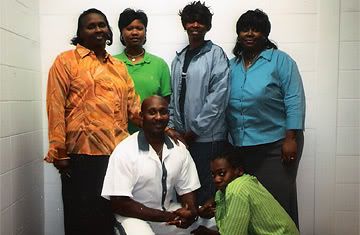
The pending execution of Troy Anthony Davis, scheduled to take place on July 17, is raising serious questions about his guilt — and about the Newt Gingrich-era federal law that has limited his appeals options and prevented him, say his supporters, from getting a fair shake.
Davis, 38, a former coach in the Savannah Police Athletic League who had signed up for the Marines, was convicted in the 1989 murder of Mark Allen MacPhail, a Savannah, Ga., police officer. MacPhail was off-duty when he was shot dead in a Savannah parking lot while responding to an assault. Davis was at the scene of the crime, and an acquaintance who was there with him accused Davis of being the shooter. Since his conviction in 1991, Davis has seen each of his state and federal appeals fail. But in the court of public opinion, Davis presents a compelling argument. Seven of the nine main witnesses whose testimony led to his conviction have since recanted. The murder weapon has never been found, and there is no physical evidence linking the crime to Davis, who has asserted his innocence throughout.
Earlier this month, two of the jurors who sentenced Davis to death signed sworn affidavits saying that based on the recanted testimony, he should not be executed. "In light of this new evidence," wrote one juror, "I have genuine concerns about the fairness of Mr. Davis' death sentence."
One of Davis' major obstacles has been the federal Antiterrorism and Effective Death Penalty Act (AEDPA), legislation championed by former House Speaker Newt Gingrich as part of his Contract with America and signed by former president Bill Clinton. The act was passed in 1996 as a way of reforming what Gingrich called "the current interminable, frivolous appeals process." Its major provisions reduced new trials for convicted criminals and sped up their sentences by restricting a federal court's ability to judge whether a state court had correctly interpreted the U.S. Constitution.
Facing political pressure one year after the Oklahoma City bombing and seven months before the presidential election, Clinton signed the bill, but inserted a somewhat incongruous signing statement that called for the federal courts to continue their oversight role.
That was wishful thinking, say many legal experts. "President Clinton was trying to have his cake and eat it, too," said George Kendall, senior counsel at Holland and Knight and a board member of the Death Penalty Information Center. The reality since 1996, legal analysts say, has been a U.S. Supreme Court that has narrowly interpreted the act, further restraining the ability of federal courts to grant new trials (on June 25, the U.S. Supreme Court refused to give Davis one last hearing). "The bottom line," said Dale Baich, an assistant federal public defender in Arizona, "is that the AEDPA is very harsh and unforgiving."
So now there are serious questions whether, as Gingrich famously said, justice delayed is justice denied. The system of appeals can still stretch out over decades, but in Davis' case, many of those appeals are now being denied for procedural reasons. In his 2004 petition to the federal district court in Savannah, Davis presented recanted testimony, most of which involves witnesses who say police coercion caused them to wrongly implicate Davis. He also presented nine individuals' affidavits that suggested that the real murderer was actually the former acquaintance who first accused Davis of the crime.
The federal judge rejected the petition since, under the current law, the evidence must first be presented in state court. But Tom Dunn, the executive director of the Georgia Resource Center, which helped represent Davis, says that funding trouble prevented the center from presenting the evidence in state court in the first place. Tracking down witnesses costs money, but in 1995, just as Dunn's colleagues had been preparing Davis' appeal, Congress eliminated $20 million in funding to post-conviction defender organizations like the Georgia center, which lost 70% of its budget. Six of the center's eight lawyers left, as well as three of its four investigators, and Davis' case became one of about 80 that Beth Wells, then executive director, had to handle with her co-director.
"The work conducted on Mr. Davis' case was akin to triage," Wells wrote in an affidavit, "where we were simply trying to avert total disaster rather than provide any kind of active or effective representation...There were numerous witnesses that we knew should have been interviewed, but lacked the resources to do so."
Georgia officials insist that Davis' failed 2004 federal court hearing is proof he has had his opportunity in court with the new evidence. "They've had a chance to challenge the conviction," said David Lock, chief assistant district attorney in Chatham County, where Savannah is located.
Davis' attorney has been filing a flurry of requests for a stay of execution until a new trial can be held. Meanwhile Davis' sister, Martina Correia, has helped assemble an diverse group of advocates — from Dead Man Walking author Sister Helen Prejean to South African Archbishop Desmond Tutu to former FBI director William S. Sessions (a death penalty supporter) — to petition the Georgia Board of Pardons and Paroles to commute Davis' sentence to life in prison when it meets on July 16, the day before he's scheduled to die by lethal injection.
Correia has watched her brother spend half his life in prison. This case is not only about him, she says, but it's also about a law that short-changes the convicted. "If for any reason [the last-minute appeal] doesn't go the right way, Georgia is going to be so shamed," she said. "I just don't want my brother to have to be executed to be the catalyst for change."
