No OK from Congress seen; Constitutional issues raised
The Boston Globe reports:
President Bush's plan to forge a long-term agreement with the Iraqi government that could commit the US military to defending Iraq's security would be the first time such a sweeping mutual defense compact has been enacted without congressional approval, according to legal specialists.
After World War II, for example - when the United States gave security commitments to Japan, South Korea, the Philippines, Australia, New Zealand, and NATO members - Presidents Truman and Eisenhower designated the agreements as treaties requiring Senate ratification. In 1985, when President Ronald Reagan guaranteed that the US military would defend the Marshall Islands and Micronesia if they were attacked, the compacts were put to a vote by both chambers of Congress.
By contrast, Bush and Iraqi Prime Minister Nouri Al-Maliki have already agreed that a coming compact will include the United States providing "security assurances and commitments" to Iraq to deter any foreign invasion or internal terrorism by "outlaw groups." But a top White House official has also said that Bush does not intend to submit the deal to Congress.
"We don't anticipate now that these negotiations will lead to the status of a formal treaty which would then bring us to formal negotiations or formal inputs from the Congress," General Douglas Lute, Bush's deputy national security adviser for Iraq and Afghanistan, said in November when the White House announced the plan.
Lute's disclosure initially attracted little scrutiny. Most of the attention has instead focused on whether the pact could make it more difficult for the United States to withdraw from Iraq after Bush leaves office. Although the next president could scrap the agreement, reneging on the compact would create diplomatic problems by showing that the nation does not live up to its obligations, specialists say.
But there is now also growing alarm about the constitutional issues raised by Bush's plan. Legal specialists and lawmakers of both parties are raising questions about whether it would be unconstitutional for Bush to complete such a sweeping deal on behalf of the United States without the consent of the legislative branch.
"There is literally no question that this is unprecedented," said Oona Hathaway, a Yale Law School professor who has written a forthcoming law journal article about the proposed Iraq agreement. "The country has never entered into this kind of commitment without Congress being involved, period."
At a House hearing on the pact on Wednesday, Representative Dana Rohrabacher, Republican of California and a former Reagan administration official, accused the Bush administration of "arrogance" for not consulting with Congress about the pact. If it includes any guarantees to Iraq, he said, Congress must sign off.
"We are here to fulfill the constitutional role established by the founding fathers," Rohrabacher said, adding, "It is not all in the hands of the president and his appointees. We play a major role."
Bush and Maliki have said they intend to complete the agreement by July 31. The two countries need to reach some kind of an agreement this year in order to create a legal framework for the continued presence of US troops in Iraq after Dec. 31, when a United Nations Security Counsel mandate is due to expire.
But the "long-term relationship of cooperation and friendship" outlined in November goes far beyond an ordinary status-of-forces agreement. It would include promises of debt forgiveness, economic and technical aid, facilitating "especially American investments" in Iraq - and the security commitments, according to Bush and Maliki's joint declaration last November.
Facing mounting criticism over its assertion that Bush can reach such an agreement on his own, the administration has sent mixed signals about whether it intends to follow through on the plan. The New York Times today reported that administration officials told a reporter that the final pact may not have security guarantees after all, but the article did not identify its sources.
Officially, the administration has not changed the plans it announced in November. Asked to respond to the critics who say that such a pact must be approved by Congress, White House National Security Council spokesman Gordon Johndroe and Secretary of Defense Robert Gates each said that it was premature to talk about the pact because its final text has not yet been negotiated.
"I haven't been involved in any discussions of what kind of form the agreement would take or anything else," Gates said at press conference yesterday. "I do know there's a strong commitment inside the administration to consult very closely with the Congress on this."
But Representative Bill Delahunt, Democrat of Massachusetts, who chaired the hearing on Wednesday, asked four top administration officials - Lute, Undersecretary of Defense for Policy Eric Edelman, and the State Department's top legal and Iraq advisers, John Bellinger and David Satterfield - to appear and explain the administration's intentions. All four declined.
However, Lute may have offered a clue to the administration's legal arguments during the November press conference when he noted that "We have about a hundred agreements similar to the one envisioned for the US and Iraq already in place, and the vast majority of those are below the level of a treaty." Johndroe, the White House spokesman, also mentioned the existence of such agreements in a Globe interview this week.
Legal specialists, however, say that the numerous pacts that were completed without congressional consent are not similar to the agreement Bush and Maliki outlined in November.
Other such "status-of-forces agreements" are far more limited contracts with countries that host US military bases, covering comparatively minor issues such as leasing arrangements and which country will prosecute any US soldiers accused of committing a crime.
By contrast, Senate Foreign Relations Committee Chairman Joe Biden told Bush in a letter released yesterday, "As a matter of constitutional law, and based on over 200 years of practice," Bush could not commit the US military to protecting Iraq's security without congressional consent.
"A commitment that the United States will act to assist Iraq, potentially through the use of our armed forces in the event of an attack on Iraq, could effectively commit the nation to engage in hostilities," Biden wrote. "Such a commitment cannot be made by the executive branch alone under our Constitution."
Biden said yesterday he had received no reply to the letter, which he sent late last month.
Adding to the pressure, Democratic presidential candidate Hillary Clinton has also repeatedly raised the topic in recent days. The New York senator has filed legislation that would block the expenditure of funds to implement any agreement with Iraq that was not submitted to Congress for approval. Her rival, Senator Barack Obama of Illinois, became a cosponsor to the bill on Tuesday.
"We've got to rein in President Bush," Clinton said Monday in a South Carolina debate. "We need legislation in a hurry."
Friday, January 25, 2008
| [+/-] |
Bush Plan For Iraq Would Be A First |
Friday, November 16, 2007
| [+/-] |
Iraq Bill With Fewer Strings Weighed |
At CQ, Josh Rogin writes:
Senate Democrats appear ready to omit Iraq withdrawal timelines from a supplemental spending bill in hopes of clearing in December funds for the troops — but House leaders have no intentions of following suit.
The next partial-year war funding bill, although by no means finalized, would still include the Democrats’ call for a change of mission in Iraq, but without controversial withdrawal dates — a move that is intended to draw enough Republican votes to advance legislation in the Senate.
That plan places Senate Democratic leaders in conflict with their House counterparts, who have gone to great lengths to assure rank-and-file members that no more war spending bills would be enacted before January.
Meanwhile, Republicans seem content to let the Democrats negotiate among themselves, waiting for them to move incrementally toward what they regard as the forgone conclusion that Congress eventually will send President Bush a “clean” supplemental bill without policy restrictions.
The Senate on Nov. 16 rejected two war funding bills — a Democratic proposal and a Republican alternative — sending leaders back to the drawing board for a plan to get money to the troops.
Two of the most powerful voices on Defense in the Senate — Armed Services Chairman Carl Levin, a Michigan Democrat, and Daniel K. Inouye, a Democrat representing Hawaii who is chairman of the Defense Appropriations subcommittee — both said Democrats would offer a less restrictive version of the their party’s bill in December.
“There’s going to be a modification of the bridge fund,” Levin said.
The war spending bill is often referred to as a “bridge fund” because it is only a down payment on the $196.4 billion Bush requested in war spending for fiscal 2008. The bridge fund is intended to keep money flowing to the troops until Congress considers the balance of Bush’s request.
Levin said one option being discussed was a bill that still would require a change of mission in Iraq but doesn’t include specific dates, something the Republicans have repeatedly focused on in their criticisms.
“These are possibilities, I’m not predicting outcomes,” Levin added.
Inouye said, “We’ve got to build another bridge.”
But the senior senator from Hawaii said he was uncertain that Republicans would buy it.
“We’ll see,” he said.
Proposals Rejected
On Nov. 16, two war funding bills fell well short of the 60 votes need to advance in the Senate.
First, a Republican bill (S 2340), which would provide $70 billion without restrictions, was rejected, 45-53.
Later, the supplemental spending bill (HR 4156) that had passed the House two days earlier fell on a 53-45 vote.
Speaker Nancy Pelosi, a Democrat from California, has said she would not bring another war funding bill to the floor this year, a concession she made to liberal caucus members in order to pass the House bill.
But Senate Majority Leader Harry Reid, D-Nev., pointedly refused to rule out a December war funding bill in the Senate when speaking to reporters Nov. 16.
“The House has made its position clear. Speaking for the Senate, we’re going to continue doing the right thing,” Reid said.
Ben Nelson, a Nebraska Democrat and member of the Senate Armed Services Committee, said he was aware there is a plan for the next war spending bill to lack a withdrawal timeline.
But he said his own proposal, which would provide the full $196.4 billion requested — but require a change of mission and calls for a series of reports in March — could come after that.
Nelson has been working with Susan Collins, R-Maine, on that language. He said he is waiting in line for Democratic leadership to support his idea, if and when the next plan goes down.
“Sometimes, everything else has to fail before something gets resolved,” Nelson said.
Nelson pitched his plan as a “starting point,” acknowledging that even more concessions might be necessary if Republicans reject his proposal, whenever it gets a hearing.
Democrats have been unable to strike the right tone in their legislative attempts to attract enough Republicans to achieve meaningful change to the president’s war policy.
“I don’t know what it really takes in this political, partisan environment right now to get ‘yes’ for an answer from enough people,” Nelson said.
The GOP Digs In
Senate Republicans, sensing vulnerability in the Democrats’ resolve, seemed ready to dig in their heels.
Ted Stevens of Alaska, the Senate Appropriations Defense Subcommittee ranking Republican, reacted harshly to the idea of a modified bill that would preserve some restrictions on the president.
“That’s a non-starter!” he exclaimed.
Stevens reiterated that Republicans would support no constraints on the power of the executive to execute military policy.
“We don’t negotiate missions. That’s for the commander in chief, and that’s all there is to it,” Stevens said.
Senate Minority Leader Mitch McConnell, R-Ky., declared that he would not let up on his pressure to debate and pass another war funding bill next month.
“That clearly must be done some time before we adjourn . . . for this session,” he said.
Jeff Sessions, R-Ala., a Senate Armed Services Committee member, indicated that Republicans would continue to point to recent successes on the ground in Iraq, attack the Democrats for seeking political gain at the expense of troops, and defer to the advice of the generals.
“We should not, as a group of politicians, take for ourselves the responsibility of mandating how we should be prosecuting this war,” Sessions said.
Meanwhile, moderates from both parties are left without support from their leadership as they try to find a middle ground that would lead to congressional unity regarding Iraq policy.
“We should be sitting down and working on a compromise,” said Olympia J. Snowe of Maine, one of only a few Republicans to vote for withdrawal timelines.
The environment on Capitol Hill is “so partisan, so polarizing, and so poisonous, that it’s impeding our ability to solve the problems of our nation, with monumental consequences,” she said.
Saturday, November 3, 2007
| [+/-] |
Bush Vetoes $23 Billion Water Bill |
Congress is expected to override the president next week in a bipartisan vote.
The LA Times reports:
President Bush delivered his threatened veto of a $23-billion water bill Friday, but Congress is virtually certain to reverse it in the first override of a Bush veto.
And Bush and the Democratic-controlled Congress are moving closer to a federal budget showdown that could result in more vetoes.
The House and Senate are expected to move swiftly next week to override Bush's veto of a bill loaded with water-related projects sought by members of both parties, from shoring up California's levees to protecting the Gulf Coast from hurricanes.
In a statement accompanying his veto, Bush said, "This bill lacks fiscal discipline."
On Capitol Hill, Sen. David Vitter (R-La.) said, "I am 100% confident that we can override this veto."
The defiant bipartisan response to the veto underscores the difficulty the president faces in his new zeal to hold down federal spending, especially when it affects highly visible construction projects cherished by lawmakers.
"This will be the first veto this Congress has overridden, and it was all about getting parochial water projects back to their home districts," said Steve Ellis of Taxpayers for Common Sense, a watchdog group.
The bill would authorize more than 900 projects, such as restoration in the Florida Everglades and the replacement of seven Depression-era locks on the Upper Mississippi and Illinois rivers that farm groups say is crucial for shipping grain.
For California, the bill authorizes $1.3 billion for 54 projects, including $106 million to strengthen the Sacramento-San Joaquin Delta levees, $25 million for revitalizing the concrete-bound Los Angeles River and $38 million for replenishing sand at Imperial Beach in San Diego County, a project that supporters say would protect coastal residents from storms.
It is the fifth bill that Bush has vetoed -- the fewest by any president since James A. Garfield, who was shot in 1881 after four months in office and died weeks later. Bush has vetoed two bills that would have expanded federal support for embryonic stem cell research, a bill to pay for the Iraq war that included a timeline for withdrawing troops, and a bill that would have expanded a children's health insurance program. The four vetoes were sustained.
The Water Resources Development Act passed the House 381-40 and the Senate 81-12, far more than the two-thirds needed to make the measure law over the president's objections. The override would be the first since 1998, when Congress reversed President Clinton's veto of $287 million worth of military construction projects from a spending bill.
"Nothing seems as dear to members of Congress as their water projects," said Robert L. Bixby, executive director of the Concord Coalition, a budget watchdog group.
Bixby expects that Bush, with support from congressional Republicans, will wield more influence over the appropriations bills. "Bush has a willing and sufficient minority with him to sustain his vetoes -- so long as it isn't a water project," he said.
Rep. Jeb Hensarling (R-Texas), leader of a group of House conservatives, said he expected the water-bill veto to be overridden. "I plan to vote to sustain the veto, and I assume it will be a very small group of us," he said. "When the appropriations bills come . . . that's where the real fight on fiscal responsibility will be, and my guess is we'll have enough Republicans to sustain" a veto.
The water bill is supported by a number of Bush's usual allies, including business and farm groups. The measure even brought together Sen. Barbara Boxer (D-Calif.), chairwoman of the Senate Environment and Public Works Committee, and Sen. James M. Inhofe (R-Olka.), the panel's ranking member, who rarely agree. Inhofe had appealed to Vice President Dick Cheney and White House Budget Director Jim Nussle to urge the president not to veto the bill, and he vowed to lead the fight to override the veto.
"I share the president's concerns on excessive spending," said Republican bill supporter Sen. Mel Martinez. "There are some things in this bill that are not pretty in terms of government spending. But at the end of the day, as a Floridian, Everglades restoration is such an integral part of this WRDA bill we have to take the good with the bad."
Democrats pounced on the veto to portray Bush as out of touch with domestic priorities.
"When we override this irresponsible veto, perhaps the president will finally recognize that Congress is an equal branch of government and reconsider his many other reckless veto threats," said Senate Majority Leader Harry Reid (D-Nev.).
Next week, the House is expected to take up the first of a string of spending bills that could face Bush vetoes: a $215-billion bill that combines Democratic-sought funding increases for health and education programs with spending for popular veterans programs.
Although the fiscal year began Oct. 1, Congress has yet to send Bush a spending bill.
Bush, signaling a new determination to erase the red ink in the budget, has complained that Congress added $22 billion to his budget and seemed addicted to earmarks. In the first six years of his administration, federal spending soared. Bush never vetoed a GOP-written spending bill. His administration inherited a budget surplus and has presided over six years of deficits, including a record $412.7 billion in fiscal 2004.
On Friday in his veto statement, Bush noted that the House originally approved a $15-billion water bill and the Senate approved a $14-billion measure, but instead of the customary splitting the difference during negotiations, they "emerged with a Washington compromise that costs over $23 billion."
"This is not fiscally responsible," he said.
The water bill authorizes projects, but the funds must be provided through the separate appropriations process.
Bush complained that some of the projects fall outside the main mission of the Army Corps of Engineers: "facilitating commercial navigation, reducing the risk of damage from floods and storms, and restoring aquatic ecosystems."
Wednesday, October 10, 2007
| [+/-] |
Debate On Troop Withdrawals Put On Hold |
The Associated Press reports:
Congressional Democrats have put on the back burner legislation ordering troops home from Iraq and turned their attention to war-related proposals that Republicans are finding hard to reject.
The legislative agenda marks a dramatic shift for party leaders who vowed repeated votes to end combat and predicted Republicans would eventually join them. But with Democrats still lacking enough votes to bring troops home, the party runs the risk of concluding its first year in control of Congress with little to show for its tough anti-war rhetoric.
"We can no longer approach the discussion on Iraq as a partisan issue," said Rep. John Tanner, a conservative Democrat from Tennessee. "Our soldiers, sailors, Marines, airmen and Guardsmen aren't fighting as Democrats or Republicans but as Americans."
In the past week, the House passed two bills intended to curb misconduct by contractors in Iraq and one proposal by Tanner and Rep. Neil Abercrombie, D-Hawaii, that requires updates on the Bush administration's plans for the eventual withdrawal of U.S. combat forces.
Following last week's rejection of a proposal by Sen. Russ Feingold, D-Wis., to cut off money for combat, the Senate is expected to follow suit with similar bipartisan measures.
Delayed until early next year is debate on the $190 billion the military says it needs to fund the war through September 2008.
There is little doubt that Democrats are biding their time and deliberating their next step. Democrats are divided on whether to continue paying for a war they oppose, or cut off the money and be attacked politically for refusing to support the troops.
They also hope that Republicans will grow increasingly nervous about the war's effect on the 2008 elections. Rep. John Murtha, D-Pa., who chairs the panel that oversees military funding, predicted last month that GOP lawmakers will jump ship after the primaries end.
"I see what happens to a Republican when they say we ought to start to get out," Murtha said. "They bash them. I mean they attack them viscerally and of course they're the ones that nominate them. Until that plays out we're going to have a problem."
Democrats calculate that the Pentagon has enough money for the war, through February or March, by borrowing against its annual budget. Military officials warn that doing so can disrupt vital programs, such as base support and training exercises, and cost more money in the long run.
Democrats say they are still challenging President Bush on the war. The House on Tuesday passed legislation by Abercrombie intended to make it easier to convict private contractors of fraud.
The bill, approved by a 375-3 vote, would create a federal criminal statute banning contracting abuse associated with military operations and reconstruction efforts. It also would ensure federal courts have jurisdiction in all cases, closing what Abercrombie says is a loophole in existing law that has let many contractors off the hook.
A similar measure by Sen. Patrick Leahy, D-Vt., was approved in April by the Senate Judiciary Committee. A spokesman for Leahy said Republican objections have prevented it from getting a quick floor vote.
Saturday, September 1, 2007
| [+/-] |
Zogby Poll: 54% Lack Confidence in Bush's Ability As Commander-in-Chief |
Survey shows just 3% of Americans approve of how Congress is handling the war in Iraq; 24% say the same for the President
Zogby International latest polling numbers:
A majority of American adults (54%) lack confidence in President Bush’s ability as Commander in Chief of the U.S. military, a new UPI/Zogby Interactive poll shows. A majority (60%) said they do not trust the president’s judgment when it comes to the war, while 38% say they have faith in his military decisions.
Just 24% give the president favorable ratings of his performance in handling the war in Iraq, but confidence in Congress is significantly worse – only 3% give Congress positive marks for how it has handled the war. This lack of confidence in Congress cuts across all ideologies. Democrats – some of whom had hoped the now Democrat-led Congress would bring an end to the war in Iraq – expressed overwhelming displeasure with how Congress has handled the war, with 94% giving Congress a negative rating in its handling specifically of that issue.
The online survey was conducted July 13–16, 2007, and included 7,590 respondents. It carries a margin of error of +/– 1.1 percentage points.
To best show support for the troops, 42% believe Congress should fully fund the war in Iraq to maintain current troop levels, while 34% would favor attaching requirements for phased withdrawal to Iraq war funding. Just 18% said cutting all funding for the war in Iraq to bring troops home would be the best showing of Congressional support. Congress has proposed a bill continuing funding the war in Iraq, but that would require the withdrawal of the majority of troops there by Spring of 2008 – a plan favored by 49% of Americans. But nearly as many (45%) are opposed to this plan.
Slightly more than half (54%) believe the U.S. should set a timeline for the withdrawal of U.S. troops from Iraq, and 55% believe the U.S. should begin the phased withdrawal of U.S. troops from Iraq by the end of this year. President Bush has threatened to veto any bill that funds the war in Iraq that also sets a date to begin withdrawing U.S. troops, but 52% would disagree with a presidential veto, while 44% would approve.
More than half (55%) believe if the U.S. withdraws from Iraq that it will be considered a defeat, while 41% disagree.
Half of Americans (51%) believe the presence of U.S. troops in Iraq incites anti-U.S. sentiment and creates a greater likelihood of a terrorist attack within the United States. But 44% believe the U.S. troops in Iraq are fighting terrorists within Iraq so that the U.S. does not have to fight terrorists here at home.
Overall, slightly more than half (55%) said they oppose the war while 44% say they support it. While the vast majority of Democrats are in opposition to the war (93%), slightly more than half of independents (55%) and just 14% of Republicans take the same stance. Self-described conservatives (87%) and very conservatives (93%) show strong support for the war, but support among moderates (25%) is significantly less.
Dissatisfaction with how the war in Iraq is being handled is also considerable among past or current members of the military and their families – nearly three in four (71%) give the president negative ratings on his handling of the war and than half (54%) said they don’t trust the President’s judgment when it comes to the Iraq war. Nearly half (47%) say they lack confidence in Bush’s ability as Commander in Chief – 41% said they have no confidence in him at all. The vast majority (96%) also have a negative view of how Congress has handled the war, but there is disagreement about what Congress should do to support the troops. While half said Congress should fully fund the war in Iraq to maintain current troop levels, 29% would favor attaching requirements for phased withdrawal to Iraq war funding and 16% believe Congress should cut all funding for the war in Iraq and bring the troops home.
Those with military ties are split over setting a timeline for withdrawal – 48% would favor withdrawal but 50% would oppose such a plan. There is a similar split when asked if the U.S. should begin the phased withdrawal of U.S. troops from Iraq by the end of the year – 50% agree while 46% disagree. Slightly more than half (57%) believe withdrawal from Iraq would be considered a defeat, but 38% disagree with that perspective. Two in five (40%) favor a proposal by Congress to continue finding the war in Iraq, but that would require the withdrawal of the majority of troops by the spring of 2008. Half (51%) would support a Presidential veto of a bill that funds the war by sets a timeline for withdrawing U.S. troops, although nearly as many (46%) would oppose a veto.
Those with military ties mirror the feelings of Americans overall. While half (51%) believe U.S. troops in Iraq are fighting terrorists within Iraq so that the U.S. does not have to fight the terrorists domestically, nearly as many (45%) believe the presence of U.S. troops in Iraq incites anti-U.S. sentiment and creates a greater likelihood of a terrorist attack here at home.
Bush also gets low ratings in dealing with veterans – two-thirds (67%) give Bush negative ratings for his performance in providing adequate health care for the veterans who have returned home from the ward in Afghanistan and Iraq. Among those who have or are currently serving in the military and their families, nearly as many agree (62%), while just 30% believe Bush has done a favorable job of providing health care for veterans.
For a complete methodological statement and a list of the questions asked on this survey, please visit: http://www.zogby.com/methodology/readmeth.dbm?ID=1203
Wednesday, August 29, 2007
| [+/-] |
Tauscher: "No Political Surge in Iraq" |
The San Jose Mercury News reports:
The surge of U.S. troops has produced pockets of relative security in a still-dangerous Iraq, Rep. Ellen Tauscher said Saturday in Baghdad, but has not led to a "political surge" of self-government and reconciliation.
"It is this conundrum of calamities, and I really think that at $330 million a day and 3,700 of our precious Americans fallen and tens of thousands devastatingly injured, there's nothing about what we have been able to produce with the surge that tells me there's a political surge in the offing that will cut the insurgency in half and lead to peace and stability for the Iraqis," she said.
She cited as an example al-Anbar province, where Sunni tribal leaders incensed at insurgents' Taliban-like religious crackdown have thrown their support to coalition forces, even as Sunni political leaders have walked away from participation in the central government. "It is a vexing, complicated, complex geometric problem. You take two steps backward and then you take five steps forward and then six steps backward," Tauscher said.
Tauscher, D-Alamo, chairwoman of the House Armed Services Strategic Forces subcommittee, is leading a bipartisan congressional delegation to gauge the progress in Iraq. With her on the trip are Rep. Jim Moran, D-Va., who serves on the Appropriations Defense Subcommittee, and Rep. Jon Porter, R-Nev., who serves on the Ways and Means and Budget committees.
Tauscher, in a telephone interview from Iraq, said the group met Saturday with the surge's architect, Gen. David Petraeus, and with U.S. Ambassador Ryan Crocker.
"They obviously are advocates for the surge, they have a lot of data that shows more American troops on the ground, in those places where they are, create more stability," she said. "Not surprisingly, when you have the finest fighting force in the world and you add more of them, you get more security."
But those tactical advances aren't producing strategic progress, she said she told Deputy Prime Minister Barham Salih, a Kurdish politician. "He is somebody that we really think is a pretty savvy guy ... but I delivered him a pretty stiff assessment," she said.
Based on what she has seen and heard before and during this trip, "we really don't think that they have used the time (provided by the surge) wisely or productively," Tauscher said she told Salih. "I tried to be as frank and as fair as I could be but also to deliver the message that we're deeply disappointed" with the Iraqi government's lack of progress on vital issues such as sharing oil revenues with the Iraqi people and implementing legislation on de-Ba'athification reform, she said.
"Not surprisingly, he blamed a lot on the Sunnis and their inability to coalesce around a leader and give that leader empowerment to make decisions that will stick," she said. "He made a very impassioned plea not to abandon them, to stick with them. ... These are all very sobering arguments, but in the end I told him I didn't support the surge because I didn't see enough political activity toward reconciliation."
Tauscher said she was still planning to meet with the Iraqi national security adviser, with Kurdish and Sunni regional leaders, and with Deputy President Adil Abdul-Mahdi, a Shiite, before flying out to Kuwait and then Washington.
A new, unclassified summary of a National Intelligence Estimate on Iraq released Thursday notes "measurable but uneven improvements" regarding the security situation in Iraq, but questions Prime Minister Nouri al-Maliki's ability to effect political reconciliation and unify Iraq.
Tuesday, August 21, 2007
| [+/-] |
Judge: Bush Officials Broke Law By Not Reporting On Warming |
From SFGate.com:
The Bush administration has violated a 2004 congressional deadline for presenting the latest scientific research about global warming to lawmakers and the public and must submit its report by next spring, a federal judge ruled today.
Federal officials have "unlawfully withheld action they are required to take,'' preparing a new scientific assessment by November 2004 and a research plan by July 2006, said U.S. District Judge Saundra Brown Armstrong of Oakland. "Congress has imposed clear-cut, unambiguous deadlines for compliance.''
A 1990 federal law requires the government to produce a scientific report every four years on climate change and its effects on the environment, including land, water, air, plant and animal life and human health.
The Clinton administration issued the first report in October 2000, warning of severe effects on different regions. The Bush administration has not issued a report and, according to environmental groups that filed the lawsuit last November, has tried to bury the Clinton report.
"This administration has denied and suppressed the science of global warming at every turn,'' said Brendan Cummings, an attorney with the Center for Biological Diversity.
Administration officials were unavailable for comment on the ruling. When the suit was filed, a spokesman for the National Oceanic and Atmospheric Administration said the government had chosen other means of complying with the law: a series of 21 mini-reports on various aspects of climate change, issued over a two-year period.
The first of those documents, in May 2006, discussed temperature trends in the lower atmosphere but did not describe any potential effects on the environment.
Armstrong ordered the administration to publish a summary of its climate research plan by March 1 and to submit the plan to Congress 90 days later after receiving public comments. She ordered Bush officials to publish the scientific assessment of global warming and its effects by May 31.
Armstrong was appointed in 1991 by President George H.W. Bush, who signed the 1990 law requiring the reports.
The ruling was the second legal defeat for the administration on global warming this year. The Supreme Court ruled in April that carbon dioxide and other greenhouse gases emitted from vehicle tailpipes were pollutants subject to federal regulation -- rejecting the government's position that it lacked such authority -- and said the voluntary measures promoted by the Bush administration were an inadequate substitute for regulation.
President Bush opposes mandatory emissions limits, saying they would damage the U.S. economy. In 2001 he pulled the United States out of the Kyoto Protocol, which requires curbs on greenhouse gases.
Government lawyers sought to dismiss the lawsuit over the scientific reports, arguing that the 1990 law was intended only to provide information to Congress and that private citizens had no right to sue over the deadlines. But Armstrong said the law also entitles the public to take part in the planning process by commenting on the government's disclosures.
If the research plan is delayed indefinitely, the judge said, the public participation intended by Congress "has no real value or substance.''
Wednesday, August 1, 2007
| [+/-] |
Democrats Cave To Automakers |
The Detroit Free Press reports:
In a victory for Detroit automakers, the main backer in the U.S. House of tougher fuel economy standards said late today that he would not push for his 35 mile-per-gallon standard this week.
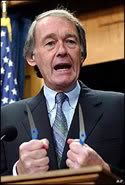 Representative Ed Markey, Democrat from Massachusetts
The move by Rep. Edward Markey, D-Mass., means automakers and the United Auto Workers now have the August recess to prepare for a larger debate in September, when Rep. John Dingell, D-Mich., plans to address fuel economy rules as part of his work on global warming. It also sidesteps what would have been a bruising floor flight between Markey and Dingell as the House Democrats speed through bills ahead of the August recess.
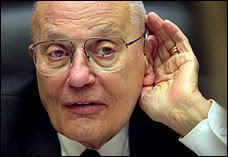 Representative John Dingell, Blue Dog Democrat from Michigan
For the past few weeks, Markey has declined to say whether he would try to attach his plan, which would force the industry to meet an average standard of 35 m.p.g. by 2019, to the energy bill the House is scheduled to consider Friday. Markey said in a statement today that while he believed he had enough votes to move his plan, he would instead back the mileage increase that passed the Senate in June.
That measure, part of a broad energy bill, sets standards of 35 m.p.g. by 2020, and was a significant defeat for the auto industry.
Today's move by Markey suggests that some of the obituaries about the automakers' lobbying power on Capitol Hill were premature.
"I am satisfied that our strength in both the House and the Senate is sufficient to ensure that the progress we have made already to update our fuel economy standards will win out in conference," Markey said. "The country cannot afford to accept less than a 35 m.p.g. standard if we are to wean ourselves off our addiction to imported oil."
Markey's retreat came after weeks of intensive lobbying by Detroit automakers, the UAW, Toyota Motor Co. and dozens of other groups against Markey's plan and for an alternative from Reps. Baron Hill, D-Ind., and Lee Terry, R-Neb. That bill would have required new cars and trucks to meet an average of 32 to 35 m.p.g. by 2022.
The industry has steadily racked up support for the Hill-Terry proposal, adding 141 co-sponsors since it was introduced a few weeks ago. Earlier today, the 47-member Democratic Blue Dog Coalition, a group of conservative Democrats, threw their support behind Hill-Terry.
Automakers maintained the Markey standards are unreachable and would cost thousands of jobs, while environmentalists say the Hill-Terry bill would save far less oil than Markey's plan. Industry executives said they would not push to have the House consider Hill-Terry if Markey's bill didn't make the House floor.
Environmental groups had responded to the automakers' efforts with a lobbying blitz of their own up until the last minute, with 13 state attorneys general weighing in today against the Hill-Terry bill. But those groups had also been preparing for a strategic retreat in recent days.
"If we don't end up with a House provision on Markey, we will have fought the auto industry to a stalemate in the House, and we will win the war in conference," said Daniel Becker, director of the Sierra Club's global warming program.
Friday, July 13, 2007
| [+/-] |
More Republican Politicians Embrace Scandalized U.S. Senator Vitter |
From NOLA.com:
The scandal surrounding Sen. David Vitter is sparking a partisan fight as the state Democratic Party chairman called Vitter an "embarrassment" and Republicans rallied behind their embattled senator.
For his part, Vitter remained out of sight Thursday, the third straight day of hiding since he acknowledged on Monday that his telephone number appeared on the list of a woman accused of running a prostitution ring.
"Rather than proving to be a leader, he's proving to be an embarrassment," Chris Whittington, the state Democratic chairman, said on Thursday night.
Whittington also said Vitter's "actions and remaining time in seclusion show his blatant disregard for his duties in the Senate by missing votes."
Julie Vezinot, Whittington's spokeswoman, said the state Democratic Party would start a petition calling for Vitter's resignation on Friday.
Meanwhile, several prominent Republicans came out in support of Vitter after largely keeping mum, although one of the party's most high-profile members, Rep. Bobby Jindal, R-La., was not among them. Jindal is running for governor.
Rep. Rodney Alexander, R-La., said Vitter was "doing the right thing taking some time to be with his family" and added that "we can't forget about all the positive things David has done for the state of Louisiana."
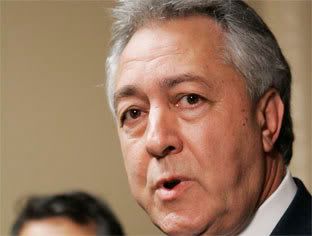 U.S. Representative Rodney Alexander (R.-LA)
Rep. Jim McCrery, R-La., sounded a similar forgiving tone and called Vitter "an effective senator." Statements in support also came from state Rep. Steve Scalise, R-Metairie, Jay Dardenne, the secretary of state, and Jim Donelon, the insurance commissioner.
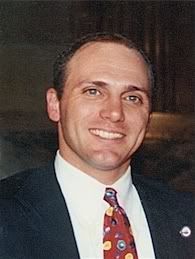 Louisiana state representative Steve Scalise
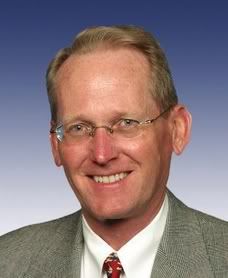 U.S. Representative Jim McCrery (R.-LA)
 Louisiana Secretary of State Jay Dardenne, wife Cathy McDonald Dardenne, and sons John and Matt
 Louisiana state insurance commissioner Jim Donelon
In the same batch of statements sent out by Republicans late Thursday, former Gov. David Treen, who once ran against Vitter in a bitter congressional race, stopped short of supporting the senator.
His read: "Any talk of David Vitter resigning or me being appointed to his Senate seat is ridiculous. It's just not going to happen."
Reached at home by telephone, Treen declined to elaborate on his terse statement.
Elliott Stonecipher, a political analyst, said partisanship is "the next leg of the story" because Vitter's indiscretions were well-known among operatives from both parties and now both factions will try to use the scandal to suit their ends.
Pearson Cross, a political science professor at the University of Louisiana-Lafayette, said that Vitter could benefit if his troubles turn into a partisan duel.
"That will clearly play in his favor because that would seem piling on," Cross said. But, he added, "the Democrats are clearly sensing blood in the water. There's an opening here if Vitter decided to resign."
| [+/-] |
Republican Politicians Embracing Scandalized Senator David Vitter |
From NOLA.com:
U.S. Rep. Bobby Jindal, the front-runner for governor and one of the state's best-known and most popular Republicans, broke his silence Friday over the call-girl scandal surrounding GOP Sen. David Vitter, issuing a cautious statement of support.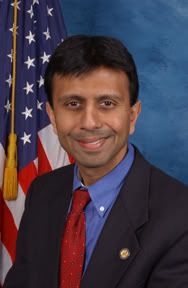
"While we are disappointed by Senator Vitter's actions, Supriya and I continue to keep David and his family in our prayers," Jindal said, referring to his wife. "This is a matter for the Senator to address, and it is our hope that this is not used by others for their own political gain."
Jindal had stayed mum Thursday as other Louisiana Republicans rallied to Vitter's defense. Jindal waited until late Friday afternoon before issuing the two-sentence release regarding the embattled congressional colleague whose 1st District seat he assumed when Vitter ran for the U.S. Senate in 2004.
Pollster Bernie Pinsonat said that the Vitter scandal is unwelcome news to Jindal, who will officially launch his gubernatorial bid Monday and was expecting Vitter to play an active role campaigning, particularly in north Louisiana.
"It is the best you can expect out of Jindal because he is running for governor," Pinsonat said. "This is not something he wants to deal with right now. It couldn't come at a worse time for him."
Vitter rocked the Louisiana political establishment on Monday night when he acknowledged that his number appeared on the billing records of a Washington call girl service whose owner is charted with running a prostitution ring. Records show the number appeared at least five times between 1999 and 2001, a period during which he served in the U.S. House.
In his only public statement, Vitter acknowledged a "very serious sin," and in an e-mail to supporters sent out early this week, offered a separate apology. He assured his backers that he and his family "will be fine."
"I will live every day always striving to fully honor that friendship and those prayers," Vitter wrote.
The e-mail was sent before a former New Orleans brothel owner said Vitter had been a customer of her operation and a prostitute said then-state Rep. Vitter was a regular client of hers during the mid-1990s. Vitter has not addressed the most recent allegations, but denied them in 2004.
Louisiana Republicans said little at first as each day brought new revelations. In a concerted push Thursday to offer some support for the most prominent Republican statewide elected official, the state GOP organized the release of a flurry of supportive statements. Most urged personal support for Vitter and his family and focused on the legislative work Vitter has done in his eight years on Capitol Hill.
Few were as expansive as the statement released Friday by Rep. Richard Baker, R-Baton, who not only defended Vitter's character but also warned the news media to tread carefully before it prints any more stories.
Baker said Vitter's behavior was serious and disappointing, "but it does not define the whole of the man and it is not irredeemable." He urged the news media to "demonstrate some restraint and professionalism."
Baker took aim at critics who labeled Vitter a hypocrite for promoting conservative views, talking about family values and advocating sexual abstinence at a time when he was in a touch with an alleged call girl service.
"If a man has values and standards, but does not live up to them, it does nothing to discredit the validity or those values and standards, and he is far preferable to those timid souls who, without values and standards, cannot fall short of them nor ever run the risk of being charged with hypocrisy," Baker said.
Rep. Charles Boustany, R-Lafayette, by contrast, issued a statement more in keeping with the reserved tone of the one issued by Jindal.
"David and his family are going through a difficult time and my thoughts and prayers are with him," Boustany said.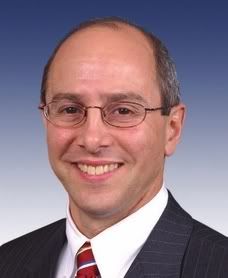
As in the rest of the South, the Republican Party has been ascendant in Louisiana over the past 10 years. The loss of a senate seat, should Vitter resign or lose reelection in 2010, would be a major blow.
Pinsonat, the pollster, said most Republicans are offering guarded support for their standard bearer because they aren't sure of all the details surrounding the current allegations or what else might come out.
"They are sticking their toe in the water very carefully because they don't know how hot it will get," Pinsonat said.
Louisiana Democrats sought to turn up the heat Friday by launching a petition drive calling on Vitter to resign because of his "immoral, unlawful and hypocritical behavior."
"We really have been getting lots of phone calls from all over the country," said Julie Vezinot, spokeswoman for the party. "People are fed up with his hypocritical behavior and he is not doing his job in Washington."
Friend and colleague Sen. Jim DeMint, R-S.C., told the Associated Press that he has been in touch with Vitter by e-mail and that Vitter plans to return to Capitol Hill next week for votes on Tuesday. He said Vitter was contrite in their exchange.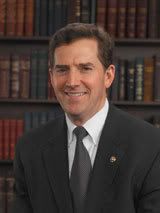
"It's a huge moral failure that reflects on the whole body. And for that he's very sorry," DeMint told the AP. "Obviously he has a lot of remorse. He seems to want to address it head on and not try to hide it."
Monday, July 9, 2007
| [+/-] |
What Is 'Contempt Of Congress'? |
The Washington Post reports:
Congress and the White House appear headed for a showdown over President Bush's decision to invoke executive privilege to deny documents to House and Senate committees and prevent former aides from testifying about the firing of U.S. attorneys.
Lawmakers, in turn, have threatened to hold subpoenaed officials in contempt of Congress.
Here are some questions and answers about the contempt of Congress process:
Q: What is contempt of Congress, and why would Congress want to use this power?
A: Congress can hold a person in contempt if that person obstructs proceedings or an inquiry by a congressional committee. Congress has used contempt citations for two main reasons: (1) to punish someone for refusing to testify or refusing to provide documents or answers, and (2) for bribing or libeling a member of Congress.
Q: Where in the Constitution does it say Congress can hold someone in contempt for not testifying?
A: It's not in the Constitution. It is an implied power of Congress, just like executive privilege is an implied power of the presidency.
Q: Is there any legal underpinning for a contempt of Congress citation?
A: Yes. The Supreme Court said as early as 1821 that without the power to hold people in contempt of Congress, the legislative branch would be "exposed to every indignity and interruption that rudeness, caprice, or even conspiracy, may mediate against it."
Q: What is the process for holding someone in contempt of Congress?
A: The procedure can start in either the House or the Senate. The two chambers do not work together on contempt citations. It only takes one chamber to refer a person to be prosecuted for contempt. A contempt citation can start with a subcommittee, a full committee or in the full House or Senate.
If it starts at the committee level and a person refuses to comply with a committee subpoena, the committee has to vote to move a criminal contempt citation forward. It takes a majority vote for the citation to move to the full House or Senate.
Q: What happens next?
A: Once the full House or Senate has a contempt citation, it must be debated by the full chamber like any other resolution. It is subject to the same filibuster and procedural rules as any other House or Senate resolution. It takes a majority vote to be approved.
Once approved, the House speaker or the Senate president pro tem then turns the matter over to the U.S. attorney for the District of Columbia, "whose duty it shall be to bring the matter before the grand jury for its action," according to the law.
Q: Is the U.S. attorney required to prosecute?
A: Depends on whom you ask. The law says the U.S. attorney "shall" bring the matter to a grand jury.
However, the House voted 259-105 in 1982 for a contempt citation against EPA Administrator Anne Gorsuch but the Reagan-era Justice Department refused to prosecute the case.
The Justice Department also sued the House of Representatives, saying its attempt to force Gorsuch to turn over documents interfered with the executive branch. The court threw the case out and urged negotiation between the executive and the legislative branches. The Justice Department did not appeal the ruling, and the Reagan administration eventually agreed to turn over the documents.
Q: When was the last time a contempt of Congress citation was brought to the House or the Senate floor?
A: The last contempt of Congress prosecution was of former Environmental Protection Agency official Rita Lavelle in 1983. The House voted 413-0 to cite her for contempt of Congress for refusing to appear before a House committee. Lavelle was later acquitted in court of the contempt charge, but was convicted of perjury in a separate trial.
Q: What is the punishment upon conviction for contempt of Congress?
A: Contempt of Congress is a federal misdemeanor, punishable by a maximum $100,000 fine and a maximum one-year sentence in federal prison.
Q: Is the contempt of Congress power used often in fights between the legislative branch and the executive branch?
A: Since 1975, 10 Cabinet level or senior executive officials have been cited for contempt for failure to produce subpoenaed documents. The 10 officials are Secretary of State Henry Kissinger and Commerce Secretary Rogers C. B. Morton in 1975; Health, Education, and Welfare Secretary Joseph A. Califano, Jr., in 1978; Energy Secretary Charles Duncan in 1980; Energy Secretary James B. Edwards in 1981; Interior Secretary James Watt in 1982; EPA Administrator Anne Gorsuch, known as Anne Gorsuch Burford after a 1983 marriage, and Attorney General William French Smith in 1983; White House Counsel John M. Quinn in 1996; and Attorney General Janet Reno in 1998.
The White House and Congress came to negotiated agreements in each case before criminal proceedings could begin.
Q: Does the president's executive privilege trump Congress' contempt citation?
A: That's the big question that both sides really don't want answered. In the past, neither side has been willing to let the matter go up to the Supreme Court for fear that their side would lose.
If Congress loses, then it would have a hard time investigating future presidents, Republican and Democrat. If the White House loses, the current president and future ones can expect numerous requests from a reinvigorated Congress, whether controlled by the Democrats or Republicans.
Q: Is there anything the president can do once someone has been convicted of contempt of Congress?
A: Contempt of Congress is a federal crime like any other. The sitting president has the authority as chief executive to commute or pardon anyone of any federal crime.
Sunday, July 8, 2007
| [+/-] |
The Debate Over Agriculture Subsidies |
 Who gets what? Large subsidies used to go to farms that grow corn, piled high in Minnesota, above, while growers of fruit, like California cherries, get none.
This year is different.
The New York Times reports:
Every five years the farm bill comes up for renewal and, usually, the only people paying attention are the farmers, their lobbyists and a few outraged groups who think subsidies are a big waste of taxpayers’ money.
Increasingly, people are blaming the farm bill, and the longstanding agriculture policy it embodies, for some of the problems afflicting the country: the growth in obesity, the increase in food poisonings, and the disappearance of the family farm. Payments for farmers were started in the 1930s during the Depression to help save family farms; now the program costs billions and benefits about one-third of the nation’s farmers.
Changes in the farm bill are being supported by the Bush administration and an unusual alliance that includes the American Heart Association, Environmental Defense, Taxpayers for Common Sense and GMA/FPA, a food industry association. They agree that some subsidies should be cut and money spent instead to help fruit and vegetable growers, protect farmland, support small farmers and promote healthier eating.
For the first time, lobbyists for farm subsidies are facing off in the halls of Congress against hundreds of activists.
There is still formidable opposition to the proposed changes, particularly among representatives in the 19 districts that received half the crop subsidies in 2005, according to Ken Cook, president of the Environmental Working Group, a nonprofit group which has just released details of who receives what payments, drawn from Agriculture Department computer files. But many experts think this new alliance, which spans the political spectrum, could bring about significant changes in the bill.
“I am more optimistic this year that we can see significant reform for farm policy because of a coalition of diverse interests,” said Cal Dooley, president of GMA/FPA. Senator Tom Harkin, Democrat of Iowa and chairman of the Senate Agriculture Committee, said: “This is not just a farm bill. It’s a food bill, and Americans who eat want a stake in it.”
The 2002 farm bill provided $143.3 billion for nutrition programs like Food Stamps, $16.8 billion for conservation and $67.6 billion to subsidize the planting of certain crops. Almost all of the subsidies usually go to growers of five commodities: soybeans, corn, rice, wheat and cotton. Fruit and vegetable farmers do not get subsidies.
Supporters say the subsidies have kept food affordable for Americans. Critics disagree and say the subsidies lead to cheap snack foods and soft drinks, made from ingredients like high fructose corn syrup and partially hydrogenated soybean oil. Meanwhile, the lack of subsidies for fruits and vegetables makes them expensive by comparison.
Between 1985 and 2000 the cost of fresh fruits and vegetables increased nearly 40 percent while the price of soft drinks decreased by almost 25 percent, adjusted for inflation, according to a study done by the Institute for Agriculture and Trade Policy, a group in Minneapolis set up to help save family farms and rural communities.
Health professionals say calories from those subsidized foods are partly responsible for the epidemic of childhood obesity and the increased incidence of diabetes.
Some of the bills before Congress are aimed at helping growers of fruits and vegetables and adding to the supply of local food.
One goal is helping to pay for new processing plants and slaughterhouses so that small farms could more easily market their products in their regions rather than sending them long distances. Many regional plants went out of business when the food industry became more concentrated.
Another is setting up more farmers’ markets and helping farmers sell to nearby schools, hospitals and other institutions, and helping low-income older people buy from small farmers.
Other ideas include giving grants, loans and technical assistance to beginning, immigrant and minority farmers to start new farms or to keep small struggling farms in business, and providing money for farmers who want to convert to organic methods.
Spending money on researching the cultivation of fruits and vegetables would help farmers find more efficient ways to irrigate and fertilize crops and deal with pests while cutting back on pesticides. Greenhouses would also be built to extend growing seasons.
Food Stamp benefits would be increased so that a family of three would receive $317 a month, up by $10.
Some bills would expand farm and ranchland preservation programs, restore and protect more wetlands, grasslands and watersheds, and improve water quality by cutting back on pesticides and preventing nutrients and pesticides from washing off farms and into streams and lakes.
Others include money for research and incentives for renewable energy on farms and ranches for wind power, biofuels from crops other than corn and for equipment to capture the methane from manure and turn it into an energy source.
The House requires that any new program be paid for either by cutting an existing program or specifying a new source of revenue, both difficult prospects.
On Friday, Representative Collin Peterson, Democrat of Minnesota and chairman of the House Agriculture Committee, is expected to announce two bills: the first will propose marginal cuts in subsidies and call for a number of proposals, including some money for fruits and vegetables, organic farming, farmers’ market promotions, novice farmers, and additional energy and conservation programs. It would retain current levels of funding for nutrition programs. But supporters of those programs say the bill does not provide enough funding for them.
The second bill will propose programs for which no money has been allocated, including some additional funds for nutrition programs and conservation money to reward farmers who are already using what are considered the best environmental practices.
The House leadership has already indicated it doesn’t want a floor fight and may try to force both sides to compromise on the depth of cuts in subsidies and on the level of new spending.
Whatever the House passes has to be reconciled with the Senate bill. Senator Harkin wants to cut some subsidies. The most likely cuts are what are called “fixed direct payments,” $5.2 billion per year paid to farmers even if they grow nothing, based on what they had raised in the past.
“You don’t have to sit on a tractor seat, visit the tractor seat, you don’t even have to be alive to get a fixed payment,” said Mr. Cook of the Environmental Working Group. “We have fixed payments to dead people all over the place. It’s ridiculous.”
Tom Buis, president of the National Farmers Union, the second largest organization for farmers in the country, said, “It is hard to defend direct payments.” But he added, “You can write a safety net that protects farmers and ranchers when times are tough.”
The Bush administration, as well as many alliance members, wants to eliminate subsidy payments for farmers who have an adjusted gross income of more than $200,000 a year. And some in Congress want to limit subsidies entirely. House Speaker Nancy Pelosi has supported limits on subsidies in the past and some Congressional bills would prohibit any farmer from getting more than $200,000 a year in subsidies.
According to the subsidy data from the Environmental Working Group, one giant cotton farm collected $2.95 million through crop subsidies in 2005, nearly as much money as the federal government spent on its primary research program for organic agriculture last year — $3 million.
Mary Kay Thatcher, a policy specialist with the American Farm Bureau Federation, the largest farm lobbying group, said current subsidies, which the federation supports, might be tweaked, but added, “I think it is highly unlikely that we will see huge changes.”
That may depend on whether the new activists can counteract the power of lobbyists who make large campaign contributions.
“Congress and the administration have a unique opportunity to begin reforms providing a sustainable, community-linked food system,” said Gus Schumacher, a consultant to the Kellogg Foundation for its food and society initiative and a former under secretary of agriculture. “Will they take this opportunity to start or will it be business as usual?”
Wednesday, June 13, 2007
| [+/-] |
Earmarks Gone Wild |
 The White Holly cutter approaching the Golden Gate Bridge.
The New York Times reports:
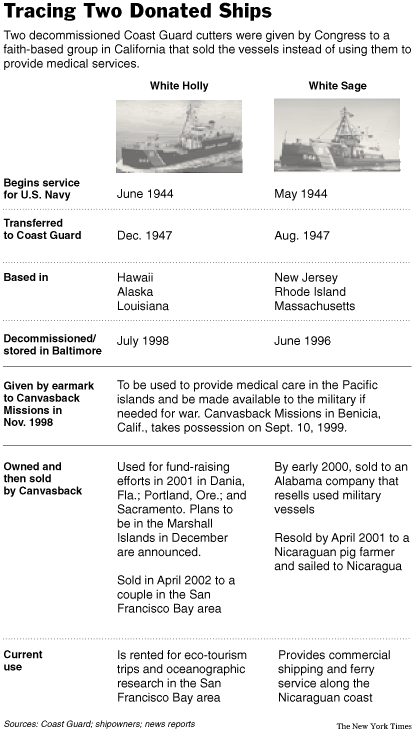
In theory, it was simple: Congress gave two decommissioned Coast Guard cutters to a faith-based group in California, directing that the ships be used only to provide medical services to islands in the South Pacific.
Coast Guard records show that the ships have been providing those services in the South Pacific since the medical mission took possession of them in 1999.
In reality, the ships never got any closer to the South Pacific islands than the San Francisco Bay. The mission group quickly sold one to a maritime equipment company, which sold it for substantially more to a pig farmer who uses it as a commercial ferry off Nicaragua. The group sold the other ship to a Bay Area couple who rent it for eco-tours and marine research.
The gift of the two cutters was one of almost 900 grants Congress has made to faith-based organizations since 1987 through the use of provisions, called earmarks, that are tucked into bills to bypass normal government review and bidding procedures.
Skipping those safeguards can generate more than accusations of political favoritism. As the case of the Coast Guard cutters shows, it also can give rise to grants that never achieve their intended purpose, with the government never even realizing it.
Canvasback Missions, in Benicia, Calif., took ownership of the cutters, the White Sage and the White Holly, in Baltimore in September 1999. This was the first time such ships had been given away through an earmark, the Coast Guard said.
Pressed for cash, Canvasback sold the White Sage a few months later for about $85,000. Two years later, the struggling mission sold the White Holly to the Bay Area couple for $330,000. The mission did not inform the Coast Guard property office about the sales.
Typically, decommissioned Coast Guard vessels are sold at auction, are included in foreign aid packages or are added to the nation’s mothball fleet.
If the two cutters had been sold at auction, the General Services Administration would have monitored their use for five years. But the Canvasback earmark required no such monitoring, and Coast Guard officials said they did not know about the sales until The New York Times asked about them.
The fate of the White Holly and the White Sage comes as a surprise to people who supported the Canvasback earmark.
Former Representative Frank D. Riggs, Republican of California, whose staff drafted the earmark, said it “would raise concerns” if the ships were “not used as intended.”
 Former California Congressman Frank Riggs
Senator Olympia J. Snowe, Republican of Maine, was also credited by Canvasback with working on the earmark. But David Snepp, Ms. Snowe’s spokesman, said she had merely voted for it. Mr. Snepp called Canvasback’s actions troubling and said the senator had asked her staff to research what is now a gray area: whether selling the two ships was legal.
 Maine Senator Olympia Snowe
“If they were not used in Micronesia, they were definitely not used in the spirit of the way this was written,” Mr. Snepp said. The text of the earmark gave the government the right to reclaim the ships, he added. While that was perhaps unlikely, he continued: “They were supposed to retain the vessels in case the Coast Guard needed them back. The charity does not have the option to sell.”
A harsher assessment came from Steve Ellis, vice president of Taxpayers for Common Sense, a watchdog group that opposes earmarks, and a former Coast Guard officer. “They are flipping the property,” Mr. Ellis said.
Jamie W. Spence, president and founder of Canvasback Missions, said all the sales proceeds supported the organization’s work in the Marshall Islands, where it has provided eye and dental care and counseling on diabetes prevention to thousands of people since it was founded in 1981.
 Jacque Spence, left, and her husband, Jamie, at their Canvasback Missions office in Benicia, Calif.
“We did everything in our power to put these ships into service,” Mr. Spence said. But when the group could not raise the money to repair and maintain the vessels, it sold them instead, using the proceeds to cope with its financial difficulties, he said.
Mr. Spence said he had consulted with Canvasback’s legal advisers and was confident the sales were ethical and legal.
Coast Guard officials were surprised at the cutters’ fate. “The White Holly and the White Sage are in the South Pacific,” Lynn Brown, the personal property manager in the decommissioning office, said in March. She affirmed recently that her office had not known that Canvasback sold the ships.
Mr. Spence acknowledged that he did not give notice to Ms. Brown’s office. But he said he told Coast Guard employees in the Bay Area about the White Holly sale and mentioned the White Sage sale to the Coast Guard officer in charge of the Baltimore yard before the deal and to civilian Coast Guard officials afterward. He did not respond to requests to identify those people.
While all earmarks are troublesome to critics like Mr. Ellis, who called the Canvasback gift an “utter indictment of earmarks,” those made for faith-based groups involve special questions about the constitutional borders between church and state.
 Vince Backen with students and teachers after giving them a cruise on the White Holly, a former Coast Guard cutter sold to him by Canvasback Missions.
[photo: Jim Wilson/NYT]
The Coast Guard ships were given to Canvasback for a secular purpose, providing medical services. But Mr. Spence said Canvasback did not isolate the sales proceeds; instead it mingled them with its general revenues, which also cover activities that include evangelism. And under most court decisions, evangelism cannot be paid for with federal grants.
Mr. Spence said no constitutional violations occurred. “I’m very certain that the proceeds were used for supporting our medical program,” he said, “and I’m absolutely sure they were not used for evangelism.” He said Canvasback, a nondenominational Christian mission, raises donations separately for its evangelism activities, which included donating Bibles translated into local languages and constructing a chapel.
Mr. Spence and his wife, Jacque, established their medical mission 26 years ago, using a 71-foot catamaran, the Canvasback, to navigate the shallow coasts of the poorer, more remote islands of Micronesia. As the ministry grew, it mobilized medical professionals to volunteer for short stints in the islands and delivered donated medical equipment and supplies.
When they sought the Congressional earmark, the Spences were hoping the two cutters would allow them to expand their medical ministry, Mr. Spence said. But the mission acquired and then sold those vessels, and a third vessel that was privately donated, because Canvasback determined that maintaining and operating the ships was too big a financial burden, he explained. But few of these details can be found in the annual statements Canvasback files with the Internal Revenue Service. Two leading nonprofit accounting experts examined the statements and found them to be incomplete and internally inconsistent.
“There is no clear audit trail for the boats,” said Julie L. Floch of Eisner L.L.P. in Manhattan, a member of the I.R.S.’s national advisory panel on nonprofits. Her view was echoed by Jody Blazek of Blazek & Vetterling L.L.P. in Houston, the author of six books on nonprofit tax law and accounting.
William J. MacLean, the accountant in Seaside, Ore., who prepared the filings, declined to comment.
These days, Canvasback has redirected its efforts from ship-based medical care in the remote islands to land-based clinics on the more populated islands, Mr. Spence said.
That work has won praise from health officials in the Marshall Islands — and fresh support from Congress. The tiny mission is now the lead contractor on a diabetes research program being financed through two $1 million Defense Department contracts. Those grants were directed to Canvasback by Congress through a pair of earmarks.
Wednesday, May 23, 2007
| [+/-] |
Members of Congress Try To Live On Food Stamps For One Week |
 U.S. Rep. Tim Ryan, D-Ohio, shops for food on a $21-a-week budget at a grocery store in Washington. Ryan later said he made some poor shopping choices.
The Washington Post reports:
A pork chop and a bag of peanuts proved too tempting for Rep. Tim Ryan, D-Ohio, one of four members of Congress who has struggled for the past week to subsist on $21 worth of food — the equivalent of benefits received by the average food-stamp recipient.
Last Friday night, in New Hampshire to deliver a commencement speech, Ryan succumbed to a pork chop in the hotel restaurant because he feared he would otherwise be too weak to give the address.
Afterward, as he rushed to catch a flight back to Washington, airport-security officials confiscated jars of peanut butter and jelly from his carry-on luggage, leaving him with nothing but a small bag of cornmeal to eat in the final days of the "Food Stamp Challenge," which ended Tuesday.
"It just showed me that when you're living on food stamps, you're really one event away from disaster," he said. "If you drop a jar of sauce or jam, you can lose an opportunity to eat. Some people are constantly living on that edge."
So Monday, in the Cleveland airport on his way back to Washington from a funeral, Ryan bought a bag of peanuts. "I feel bad I couldn't do it the whole time, but I certainly got the point," said the lawmaker, who lost four pounds during the week and ended his test early, with dinner at a Washington restaurant Monday night.
He said he came away with two conclusions: He made some poor choices when he shopped for the $21 worth of food, and the country's food-stamp program is not sufficient for the 26 million Americans who rely on it.
Reps. Jim McGovern, D-Mass., and Jo Ann Emerson, R-Mo., co-chairmen of the House Hunger Caucus, called on lawmakers to join them in taking the challenge to raise awareness of hunger and what they say are inadequate benefits for food-stamp recipients. Only Jan Schakowsky, D-Ill., and Ryan took them up on it.
"I've been a little low on energy, but I feel guilty about complaining about anything," said McGovern, who took the challenge with his wife; each lost about five pounds. "For us, this is an exercise that ends Tuesday. For millions of people, this is their life."
Food-stamp benefits are roughly $1 a meal, or $3 a day. With that budget, the lawmakers said, they found that starchy foods are attractively priced and that there was little chance for variety.
"No organic foods, no fresh vegetables — we were looking for the cheapest of everything," McGovern said. "We got spaghetti and hamburger meat that was high in fat — the fattiest meat on the shelf. ... It's almost impossible to make healthy choices on a food-stamp diet."
McGovern said he faced down many temptations at several receptions and fundraisers — duck rolls, crab cakes, red wine. "Every time I thought, 'I wish I could have that scallop wrapped in bacon,' at the back of mind I thought, 'Why are you complaining? This is the way people live every day.' "
McGovern and Ryan blogged about their experiences and received hundreds of comments from people nationwide, including food-stamp recipients who offered recipes and tricks to stretch meals.
"I was so deeply touched by the comments," said McGovern's wife, Lisa. "I was even struck by the angry remarks. One person was dismissive, but he gave a recipe for a biscuit. That was remarkable. ... It showed me there are people out there who are struggling, and it's neighbors and friends. You don't have to look to some faraway place to see it."
McGovern and Emerson have introduced legislation that would add $4 billion to the annual federal food-stamp budget, which was $33 billion last year. The proposal could be incorporated into the new farm bill.
McGovern said Monday that he had not given a lot of thought to what he will eat as he returns to his more typical diet. "I want a cup of coffee — or five," he said. "... And not lentils. I've had enough lentils for three years."
Monday, May 21, 2007
| [+/-] |
Bush Calls Vote on Gonzales, "Pure Political Theater" |
Bloomberg.com reports:
President George W. Bush said Attorney General Alberto Gonzales continues to have his full support and called an attempt by Senate Democrats to hold a no-confidence vote on the embattled Justice Department chief ``pure political theater.''
``He has got my confidence, he has done nothing wrong,'' Bush said today in response to a question during a news conference at his Texas ranch. ``I stand by Al Gonzales.''
The Senate and House Judiciary committees are investigating whether the firings of eight federal prosecutors last year were the result of improper political influence. At least six Republicans have joined with Democrats in calling for Gonzales to step down because of the way the situation was handled.
Democratic Senators Charles Schumer of New York and Dianne Feinstein of California are proposing the Senate vote on a no- confidence resolution as soon as this week.
``It is this kind of political theater that has caused the American people to lose confidence in how Washington operates,'' Bush said today. He didn't directly address a question about whether he wants Gonzales to stay through the end of his term.
Schumer, responding to Bush's comments, said Gonzales should be replaced to restore the public's faith in the Justice Department.
``The president should understand that while he has confidence in Attorney General Gonzales, very few others do,'' Schumer said in a statement.
While a largely symbolic gesture, a vote of no confidence would add to the political pressure on Gonzales, 51, a longtime adviser to Bush who the president appointed as attorney general in 2005.
Senator Arlen Specter, the ranking Republican on the Judiciary Committee, said yesterday that Gonzales may resign rather than face a ``very substantial'' no-confidence vote. Specter is among the Republicans who have questioned whether Gonzales can continue to be effective in his job as the nation's chief law enforcement officer.
Monday, November 6, 2006
| [+/-] |
Judge Dismisses Budget Bill Lawsuit |
Detroit Judge Dismisses House Democrats' Lawsuit Over $39 Billion Budget Bill
ABCnews.com reports:
A federal judge on Monday dismissed a lawsuit filed by U.S. House Democrats trying to stop a $39 billion budget bill because the House and Senate did not approve identical versions.
House Democrats accused GOP leaders of abusing the legislative process and contend they were denied their right to vote on legislation signed into law by President Bush in February. Rep. John Conyers, D-Mich., the ranking member of the House Judiciary Committee, sued in April along with 10 other House members to prevent the law from being implemented.
The Senate version of the bill said Medicare can pay to rent some types of medical equipment for 13 months. A clerk erroneously wrote down 36 months before the bill was sent back to the House for a final vote, and the language was approved by the House on Feb. 1.
When the bill was sent to Bush for his signature, the number was back to 13 months. The lawsuit said the oversight amounted to an additional $2 billion in spending, and the plaintiffs claimed that because they never had the chance to vote on the version signed into law, the law was invalid.
The Department of Justice had sought the lawsuit's dismissal, claiming the 11 House members lacked standing because they are not renters of medical equipment and were not in "any way personally affected or injured."
Messages seeking comment were left Monday night with Conyers' office and the Justice Department.
The White House and Republican leaders in Congress have said the matter is settled because the mistake was technical and top House and Senate leaders certified the bill before transmitting it to the White House.
