Michael Moore writes:Friends,
It's a wrap! My new film, "Sicko," is all done and will have its world premiere this Saturday night at the Cannes Film Festival. As with "Bowling for Columbine" and "Fahrenheit 9/11," we are honored to have been chosen by this prestigious festival to screen our work there.
My intention was to keep "Sicko" under wraps and show it to virtually no one before its premiere in Cannes. That is what I have done and, as you may have noticed if you are a recipient of my infrequent Internet letters, I have been very silent about what I've been up to. In part, that's because I was working very hard to complete the film. But my silence was also because I knew that the health care industry -- an industry which makes up more than 15 percent of our GDP -- was not going to like much of what they were going to see in this movie and I thought it best not to upset them any sooner than need be.
Well, going quietly to Cannes, I guess, was not to be. For some strange reason, on May 2nd the Bush administration initiated an action against me over how I obtained some of the content they believe is in my film. As none of them have actually seen the film (or so I hope!), they decided, unlike with "Fahrenheit 9/11," not to wait until the film was out of the gate and too far down the road to begin their attack.
Bush's Treasury Secretary, Henry Paulson, launched an investigation of a trip I took to Cuba to film scenes for the movie. These scenes involve a group of 9/11 rescue workers who are suffering from illnesses obtained from working down at Ground Zero. They have received little or no help with their health care from the government. I do not want to give away what actually happens in the movie because I don't want to spoil it for you (although I'm sure you'll hear much about it after it unspools Saturday). Plus, our lawyers have advised me to say little at this point, as the film goes somewhere far scarier than "Cuba." Rest assured of one thing: no laws were broken. All I've done is violate the modern-day rule of journalism that says, "ask no questions of those in power or your luncheon privileges will be revoked."
This preemptive action taken by the Bush administration on the eve of the "Sicko" premiere in Cannes led our attorneys to fear for the safety of our film, noting that Secretary Paulson may try to claim that the content of the movie was obtained through a violation of the trade embargo that our country has against Cuba and the travel laws that prohibit average citizens of our free country from traveling to Cuba. (The law does not prohibit anyone from exercising their first amendment right of a free press and documentaries are protected works of journalism.)
I was floored when our lawyers told me this. "Are you saying they might actually confiscate our movie?" "Yes," was the answer. "These days, anything is possible. Even if there is just a 20 percent chance the government would seize our movie before Cannes, does anyone want to take that risk?"
Certainly not. So there we were last week, spiriting a duplicate master negative out of the country just so no one from the government would take it from us. (Seriously, I can't believe I just typed those words! Did I mention that I'm an American, and this is America and NO ONE should ever have to say they had to do such a thing?)
I mean, folks, I have just about had it. Investigating ME because I'm trying to help some 9/11 rescue workers our government has abandoned? Once again, up is down and black is white. There are only two people in need of an investigation and a trial, and the desire for this across America is so widespread you don't even need to see the one's smirk or hear the other's sneer to know who I am talking about.
But no, I'm the one who now has to hire lawyers and sneak my documentary out of the country just so people can see a friggin' movie. I mean, it's just a movie! What on earth could I have placed on celluloid that would require such a nonsensical action against me?
Ok. Scratch that.
Well, I'm on my way to Cannes right now, a copy of the movie in my bag. Don't feel too bad for me, I'll be in the south of France for a week! But then it's back to the U.S. for a number of premieres and benefits and then, finally, a chance for all of you to see this film that I have made. Circle June 29th on your calendar because that's when it opens in theaters everywhere across the country and Canada (for the rest of the world, it opens in the fall).
I can't wait for you to see it.
Yours,
Michael Moore
P.S. I will write more about what happens from Cannes. Stay tuned on my website, MichaelMoore.com.
Thursday, May 17, 2007
| [+/-] |
Michael Moore: "Sicko" is Completed and We're Off to Cannes! |
Tuesday, May 15, 2007
| [+/-] |
Michael Moore Challenges Alleged Presidential Wannabe Fred Thompson |
Letter from Michael Moore to ex-Senator Fred Thompson:May 15, 2007
Senator Fred Thompson
American Enterprise Institute
1150 Seventeenth Street, N.W.
Washington, DC 20036
Dear Senator Thompson,
Given that it has been publicly reported in The Weekly Standard, a leading neo-conservative publication, that you support Fidel Castro and the Cuban regime by being a purveyor of fine Cuban exports despite the trade embargo, I was surprised to see your recent op ed in a more traditional conservative outlet, The National Review, regarding my trip to Cuba (I suspect you choose The National Review in an effort to pander to an outlet that had criticized you for your opposition to medical malpractice legislation).
In your May 2, 2007 National Review article, “Paradise Island,” you specifically raised concerns about whether my trip to Cuba with 9/11 heroes, who have suffered serious health problems as a result of their exposure to toxic substances at Ground Zero that have gone untreated, was somehow going to support Castro and the Cuban government:“It always leaves me shaking my head when I read about some big-time actor or director going to Cuba and gushing all over Castro.”
Putting aside the fact that you, like the Bush Administration, seem far more concerned about the trip to Cuba than the health care of these 9/11 heroes, I was struck by the fact that your concerns (including comments about Castro's reported financial worth) apparently do not extend to your own conduct, as reported in The Weekly Standard's April 23, 2007 story, “From the Courthouse to the White House Fred Thompson auditions for the leading role” (emphasis added):“Thompson's work space looks just like what the home office of a successful politician or CEO should look like--though a little messier: a large desk, dark wood, leather furniture, lots of books and magazines and newspapers, a flat-screen TV, and box upon box of cigars--Montecristos from Havana.”
In light of your comments regarding Cuba and Castro, do you think the “box upon box of cigars – Montecristos from Havana” that you have in your office have contributed to Castro's reported wealth?
While I will leave it up to the conservatives to debate your hypocrisy and the Treasury Department to determine whether the “box upon box of cigars” violates the trade embargo, I hereby challenge you to a health care debate.
Survey after survey has indicated that health care is one of the top issues to the American voters. Today, more than 46 million people lack health care coverage, including 9 million children. We pay significantly more than any other country in the world - and get less back. Americans life expectancy is lower than other developed countries and our infant mortality rates are higher. And our heroic Ground Zero 9/11 workers live in a society where the Bush Administration has shown more concern about their travel than about their health.
Our debate would provide you an opportunity to appeal to the right wing of the Republican Party by continuing to attack me; it would give me a chance to discuss health care and tell you exactly what happened in Cuba, given your apparent interest; and it would provide the American people an opportunity to see just how serious Hollywood can be, with a purported conservative and an avowed progressive Hollywood personality on stage.
Over the course of the debate, we could specifically address the following issues:
(1) Your work as a lobbyist in light of the fact that the health care and insurance industries have maintained the current health care system through their effective control of the political establishment.
(2) The fact that you raised hundred of thousands of dollars in campaign contributions from the health care and insurance industries.
(3) Discuss the fact, highlighted in yet another conservative outlet The New York Sun, that you inexplicably wanted to cut funding for AIDS research.
(4) Your relationship with the Frist family and by extension HCA, one of the nation's largest for-profit hospital chains. It has been reported that former Senate Majority Leader Bill Frist (who was renowned for his over-the-television-screen Schiavo diagnosis) is serving as one of your confidantes on your potential presidential campaign. The Frist family has historically controlled HCA, which paid a record $1.7 billion in civil and criminal fines, including a $631 million penalty for Medicaid fraud – in other words, ripping off the taxpayers.
(5) Discussing whether Arthur Branch, as the District Attorney of Manhattan, supports a woman's right to choose, gun safety reforms, gay marriage, the trans fat ban and anti-smoking laws (which would impact Cuban cigars, including your Montecristos).
Like American Idol, we could even have the country vote to determine which one of us wins the debate. Though in the spirit of full disclosure, I feel obligated to forewarn you that I was the winner of the 1971-72 Detroit Free Press Debate Award for the state of Michigan.
The winner of our health care debate could even light a victory cigar with one of your Montecristos (though we may want to consider shipping them to the safe house where I have put a master copy of SiCKO in the event that the Bush Administration tries to seize the film).
Sincerely,
Michael Moore
Thursday, May 10, 2007
| [+/-] |
Michael Moore Faces U.S. Treasury Probe |
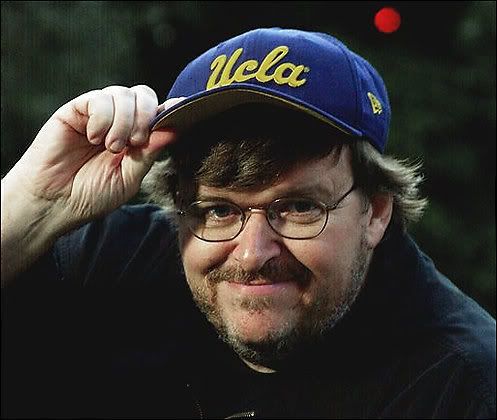
The Washington Post reports:
The investigation provides another contentious lead-in for a provocative film by Moore, a fierce critic of President Bush. In the past, Moore's adversaries have fanned publicity that helped the filmmaker create a new brand of opinionated blockbuster documentary.
"Sicko" promises to take the health-care industry to task the way Moore confronted America's passion for guns in "Bowling for Columbine" and skewered Bush over his handling of Sept. 11 in "Fahrenheit 9/11."
The Treasury Department's Office of Foreign Assets Control notified Moore in a letter dated May 2 that it was conducting a civil investigation for possible violations of the U.S. trade embargo restricting travel to Cuba. A copy of the letter was obtained Tuesday by the AP.
"This office has no record that a specific license was issued authorizing you to engage in travel-related transactions involving Cuba," Dale Thompson, OFAC chief of general investigations and field operations, wrote in the letter to Moore.
In February, Moore took about 10 ailing workers from the Ground Zero rescue effort in Manhattan for treatment in Cuba, said a person working with the filmmaker on the release of "Sicko." The person requested anonymity because Moore's attorneys had not yet determined how to respond.
Moore, who scolded Bush over the Iraq war during the 2003 Oscar telecast, received the letter Monday, the person said. "Sicko" premieres May 19 at the Cannes Film Festival and debuts in U.S. theaters June 29.
Moore declined to comment, said spokeswoman Lisa Cohen.
After receiving the letter, Moore arranged to place a copy of the film in a "safe house" outside the country to protect it from government interference, said the person working on the release of the film.
Treasury officials declined to answer questions about the letter. "We don't comment on enforcement actions," said department spokeswoman Molly Millerwise.
The letter noted that Moore applied Oct. 12, 2006, for permission to go to Cuba "but no determination had been made by OFAC." Moore sought permission to travel there under a provision for full-time journalists, the letter said.
According to the letter, Moore was given 20 business days to provide OFAC with such information as the date of travel and point of departure; the reason for the Cuba trip and his itinerary there; and the names and addresses of those who accompanied him, along with their reasons for going.
Potential penalties for violating the embargo were not indicated. In 2003, the New York Yankees paid the government $75,000 to settle a dispute that it conducted business in Cuba in violation of the embargo. No specifics were released about that case.
"Sicko" is Moore's followup to 2004's "Fahrenheit 9/11," a $100 million hit criticizing the Bush administration over Sept. 11. Moore's "Bowling for Columbine" won the 2002 Oscar for best documentary.
A dissection of the U.S. health-care system, "Sicko" was inspired by a segment on Moore's TV show "The Awful Truth," in which he staged a mock funeral outside a health-maintenance organization that had declined a pancreas transplant for a diabetic man. The HMO later relented.
At last September's Toronto International Film Festival, Moore previewed footage shot for "Sicko," presenting stories of personal health-care nightmares. One scene showed a woman who was denied payment for an ambulance ride after a head-on collision because it was not preapproved.
Moore's opponents have accused him of distorting the facts, and his Cuba trip provoked criticism from conservatives including former Republican Sen. Fred Thompson, who assailed the filmmaker in a blog at National Review Online.
"I have no expectation that Moore is going to tell the truth about Cuba or health care," wrote Thompson, the subject of speculation about a possible presidential run. "I defend his right to do what he does, but Moore's talent for clever falsehoods has been too well documented."
The timing of the investigation is reminiscent of the firestorm that preceded the Cannes debut of "Fahrenheit 9/11," which won the festival's top prize in 2004. The Walt Disney Co. refused to let subsidiary Miramax release the film because of its political content, prompting Miramax bosses Harvey and Bob Weinstein to release "Fahrenheit 9/11" on their own.
The Weinsteins later left Miramax to form the Weinstein Co., which is releasing "Sicko." They declined to comment on the Treasury investigation, said company spokeswoman Sarah Levinson Rothman.
Wednesday, May 2, 2007
| [+/-] |
Fred Thompson On Cuban Medical Care |
At ABC radio networks, Fred Thompson writes, "The Myth of Cuban Health Care":You might have read the stories about filmmaker Michael Moore taking ailing workers from Ground Zero in Manhattan to Cuba for free medical treatments. According to reports, he filmed the trip for a new movie that bashes America for not having government-provided health care.
Now, I have no expectation that Moore is going to tell the truth about Cuba or health care. I defend his right to do what he does, but Moore's talent for clever falsehoods has been too well documented. Simply calling his movies documentaries rather than works of fiction, I think, may be the biggest fiction of all.
While this PR stunt has obviously been successful -- here I am talking about it -- Moore's a piker compared to Fidel Castro and his regime. Moore just parrots the story they created -- one of the most successful public relations coups in history. This is the story of free, high quality Cuban health care.
The truth is that Cuban medical care has never recovered from Castro's takeover -- when the country’s health care ranked among the world's best. He won the support of the Cuban people by promising to replace Batista’s dictatorship with free elections, and to end corruption. Once in power, though, he made himself dictator and instituted Soviet-style Communism. Cubans not only failed to regain their democratic rights, their economy plunged into centrally planned poverty.
As many as half of Cuba's doctors fled almost immediately -- and defections continue to this day. Castro won't allow observers in to monitor his nation's true state, but defectors tell us that many Cubans live with permanent malnutrition and long waits for even basic medical services. Many treatments we take for granted aren't available at all -- except to the Communist elite or foreigners with dollars.
For them, Castro keeps "show" clinics equipped with the best medicines and technologies available. It was almost certainly one of these that Moore went to, if the stories in the NY Post and The Daily News are true.
Nothing about this story inspires doubt, though. Elements in Hollywood have been infatuated with the Cuban commander for years. It always leaves me shaking my head when I read about some big-time actor or director going to Cuba and gushing all over Castro. And, regular as rain, they bring up the health care myth when they come home.
What is it that leads people to value theoretically "free" health care, even when it's lousy or nonexistent, over a free society that actually delivers health care? You might have to deal with creditors after you go to the emergency ward in America, but no one is denied medical care here. I guarantee even the poorest Americans are getting far better medical services than many Cubans.
According to Forbes magazine, by the way, Castro is now personally worth approximately $900 million. So when he desperately needed medical treatment recently, he could afford to fly a Spanish surgeon, with equipment, on a chartered jet to Cuba. What does that say about free Cuban health care?
The other thing that irks me about Moore and his cohort in Hollywood is their complete lack of sympathy for fellow artists persecuted for opposing the Castro regime. Pro-democracy activists are routinely threatened and imprisoned, but Castro remains a hero to many here. According to human rights organizations, these prisoners of conscience are often beaten and denied medical treatment, sanitation or even adequate nutrition.
If Moore wants a subject for a real documentary, I would suggest looking into the life of Cuban painter and award-winning documentarian Nicolás Guillén Landrián. He was denied the right to practice his art for using the Beatles' song, "The Fool on the Hill," as background music behind footage of Castro climbing a mountain. Later, he was given plenty of free Cuban health care when he was confined for years in a "mental institution" and given devastating, repeated electroshock "treatments."
There are many other artists and activists who have enjoyed similar treatment. I suspect we'll see movies with sympathetic portrayals of terrorists held in Guantanamo before we ever hear about the torture of true Cuban heroes. Even Andy Garcia's brilliant fictionalized movie about the real Cuban experience, "The Lost City," was given the Hollywood silent treatment. My bet, though, is that we'll hear lots about how Michael Moore showed that Cuba's socialized medicine is better than ours.
So go ahead and start working on the Oscar speech, Michael.
Tuesday, December 31, 2002
| [+/-] |
Not Just Salsa and Cigars |
In the Psychiatric Bulletin, "Mental Health Care in Cuba" (S.R. Collinson, Lecturer, Bartholomew's and the London Medical School, West Smithfield, EC1A 7BE, T. H. Turner, Consultant Psychiatrist and Honorary Senior Lecturer, Homerton Hospital):
Given the marginal nature of psychiatry in terms of Western health priorities, it is always worth reviewing how countries with clearly different political systems treat their mentally ill. The 40-year economic embargo imposed by the USA on Cuba, the effects of which have been compounded by the hardships suffered during the ‘Special Period’ from 1989 onwards when the collapse of the Soviet Union left the island's economy in ruins (Pilling, 2001), is one of the most stringent of its kind. It prohibits the sale of food, and sharply restricts the sale of medicines and medical equipment, which, given the USA's pre-eminence in the pharmaceutical industry, effectively bars Cuba from purchasing nearly half of the new world class drugs on the market (Rojas Ochoa, 1997). Between 1989 and 1993, Cuba's gross domestic product fell by 35% and exports declined by 75% (Pan American Health Organisation, 1999). This has reduced the availability of resources and has adversely affected some health determinants and certain aspects of the population's health status. Despite this, however, Cuba has developed a system prioritised to primary and preventive care, with an infant mortality rate half that of the city of Washington, DC (World Health Organization & Pan American Health Organization, 1997; Casas et al, 2001). Furthermore, biotechnology and family medicine are being developed by Cuba as a human resource for other developing countries. Cuban medical schools also train physicians specifically for many developing countries around the world (Waitzkin et al, 1997).
The Cuban constitution makes health care a right of every citizen and the responsibility of the government. The national health system is based on universal coverage and comprehensive care, with free preventive, curative and rehabilitation services. Drugs and medical aids are charged for, but prices are low and subsidised by the state. Despite the imposition of the US embargo in 1961, Castro's Government has consistently invested both human and financial resources in the health care system. Thus, the doctor per population ratio has risen steadily during the past 25 years, with 60 000 now in practice: one doctor for every 214 Cubans, the world's best doctor—patient ratio (Garfield & Santana 1997). Family medicine specialists practising in the local community serve more than 90% of the population. There are currently 272 hospitals and 442 poly-clinics. New health projects for 2001 include the development of four mental health centres and a psychiatric occupational health therapy complex. In general, and in keeping with the tenets of ‘revolutionary medicine’ (Guevara, 1987), mental health services are oriented not only toward the biomedical aspects of mental health, but also toward promotion of health, prevention of mental illness and, importantly, social rehabilitation. It was against this context that in January 2001 we accepted an invitation to visit the Hospital Psiquiátrico de la Habana (HPH), known locally as Mazorra, located in a western suburb of the capital, Havana.
Historical background
The original hospital was founded in 1853 and, as with European asylums, was designed to be outside the city. On our arrival, we approached the hospital along a wide avenue that led to the main building, which was dated 1930, and displayed the legend Casa de Dementes above the entrance door. The hospital itself covers some 7 hectares and consists in the main of single storey buildings surrounded by spacious lawns and flowerbeds. A band was playing underneath a pergola, and apparently practises there regularly, although its members are not part of the patient population. The layout of the hospital is reminiscent of the ‘pavilion’ system of, for example, the Bethlem Royal Hospital in England, and of colonial asylums around the world.
Until 1959, HPH was the only public psychiatric hospital in Cuba. Prior to that time the only other psychiatric facilities were private clinics. The doctors we met were reluctant to talk about the pre-1959 era, as this was considered a dark time, when the hospital was compared to a lunatic house, or even a concentration camp. We were, however, shown around an extensive archive of the hospital's history, and photographs and artefacts from this time certainly bore out these statements. The photographs of the hospital from 1859 onwards formed an anthology that moved from images of colonial paternalism, through the neglect and despair of the Batista years, to the humanitarian transformation that took place under Castro's régime. The photographs from 1959 onwards show clean, white-clothed patients helping to build their own new hospital.
The transformation of the hospital was deemed a priority by the new Castro Government, and the current Director, Dr Eduardo B. Ordaz Ducungè (now aged 78), was chosen for this task because of his ‘very humane behaviour’. Originally an anaesthetist, he had been fighting with Che Guevara in the jungles of the Sierra Maestra, and the day after arriving in Havana with the victorious guerrillas, after the collapse of the Batista régime, Fidel Castro put him in charge of the hospital. When the Director and his team arrived at the hospital on 9 January 1959, they found 6000 ‘unclassified’ patients, that is to say, none of them had a clear diagnosis. Furthermore, these 6000 patients were incarcerated in a 2000-bed hospital, with the result that many of them were living on the floors of the wards and corridors. As was evident from the photographs in the archive, conditions were clearly atrocious. Patients were tied to beds with ropes and manacles, and most of the beds were iron-framed and without mattresses. Many patients were locked away behind iron bars. Few had adequate clothing; some had none. A range of physical disorders, including leprosy, were endemic, and there was, of course, a wide mix of psychiatric presentations (learning disability, neurological conditions, psychosis, etc). There was also a special ward for the children of patients (who were actively procreating).
Under the leadership of Dr Ducungè, a team of psychiatrists and psychologists set about trying to classify the patients and reform the hospital, and in the 1960s a group went to Europe, to acquire expertise in new treatment approaches. A particular innovation they picked up on was the rehabilitation model, principally because of their experiences in France and Spain. It is clear that these are the two European countries that have developed the closest professional contacts with psychiatrists in Cuba. There is in fact a Cuban—French Psychology and Psychiatry Association, which holds regular meetings to promote exchanges between specialists in the two countries, and to encourage scientific cooperation.
The current situation
We were told that today HPH has some 2000 in-patients, and about another 2000 attending on a day or community basis. It is one of the three major psychiatric hospitals in Cuba, the others (in Camaguey and Santiago de Cuba) both having about 500-600 beds each. Each of Cuba's 14 regions also have a psychiatric unit, attached to the general hospital, and usually with about 20-30 beds. Most of the patients in HPH had long-term schizophrenic illnesses, requiring rehabilitation, and that was very much the kind of patient we saw.
Altogether, there are about 1000 psychiatrists in Cuba, about 200 of whom are child psychiatrists. The training programme involves 6 years as a medical student, 3 years of general medicine (internships), followed by 3 years of specialist psychiatric training. There are also a number of grades among the psychiatrists themselves, and presently there are eight professors of psychiatry in Cuba, with two senior ‘titular’ professors based in Havana. There are 150 doctors working in HPH, 50 of whom are non-psychiatrists. It was noteworthy that the hospital had its own ‘somatic’ clinic. Facilities included X-ray, electrocardiogram, electroencephalogram and other physical assessments, but patients needing an operation required transfer to a general hospital. The psychiatric hospital itself covers all specialities, including acute and emergency, as well as forensic and rehabilitation. It does not take older patients (over 65), but does quite clearly receive a significant forensic load. Our senior guide was actually a forensic psychiatrist.
In terms of the general treatment approach, it seems that most patients in the hospital were there on a non-voluntary basis (brought in under the Cuban version of the Mental Health Act), although there were some voluntary patients. The reverse is true for the psychiatric units attached to the general hospitals, in which most of the patients are voluntary. The process of bringing someone into hospital is very similar to that in the UK. It requires the signatures of two psychiatrists, one of whom must be the psychiatrist in the receiving hospital, and a family member. Initially an order is for 72 hours. A commission reviews those patients detained for a longer period every third month. The last Cuban Mental Health Act was passed in 1983, with an enhancement in 1984. Our guides mentioned that their process was modelled on the Canadian system. They also talked about the ethical background to their legislation, and referred to a list of patients' rights and the principle of consent.
Therapeutic approaches
Treatment was generally eclectic, combining rehabilitation, social therapies, occupational therapy and medication (Pan American Health Organization & World Health Organization, 1998). Our guides talked of ‘social therapy linked to the pharmacotherapies’, as well as socialist transformation and other Marxist accounts that informed their understanding of mental illness. They felt that their occupational therapy, for example, went beyond mere ‘ergotherapy’, and was aimed at generating both emotional and social benefits, a major improvement, in their view, over the more limited approaches used in North America or Europe. They also use electroconvulsive therapy (ECT), considering it to be a very effective therapy, although they agreed that the profession in Cuba was quite divided about ECT (‘50/50’), not unlike the profession elsewhere.
The drugs available to them seem to be general (e.g. standard antipsychotics and antidepressants), but they have only a very limited number of atypicals. They mentioned olanzapine, but seem to have to rely on help from certain hospitals and institutions in France and Spain, who channel medications to them. They do seem to have fluoxetine regularly available as an antidepressant, as well as the usual tricyclics. It should also be noted that the hospital has a high staff—patient ratio with, in total, about 2000 members of staff. These seemed to be well-trained and interacting enthusiastically with the patients. We saw occupational therapists and nurses engaged in a range of activities, including sports, music therapy (psycho-ballet), hair-dressing, language and numeracy classes, foot massage and handicrafts. We also attended a musical show put on by the patients.
In relation to other diagnoses apart from the psychoses, they see little anorexia or bulimia nervosa. The hospital has a drug dependency unit (DDU), but this is largely for foreigners. Most of the patients in the DDU are Spanish speakers, from countries such as Venezuela and Colombia. This seems to be a way of bringing in an additional income. There is apparently not much drug misuse in Cuba (antidrug laws are very severe), but recently the doctors have begun to see cocaine-dependent patients. Inevitably, their biggest problem is alcohol, as rum is widely available and quite cheap. The regimen in the DDU is based on intensive group therapy, a model used elsewhere in the world.
Social impact
In terms of community outreach, a number of patients go home at the weekends, and many others come in as day patients, for occupational therapy and other activities. There was also a ‘night ward’, where patients who went off site during the day — often because they had jobs — would return to sleep. It seems that there are community-based teams throughout the Havana region (consisting of some 3 million people) who do most of the community care. Each patient does have an assigned social worker, but it was difficult to clarify the actual training of these. It is also of note that medical students come and live on site for 2 months, in one of the pavilions, when they do their psychiatry firm. Typically, however, psychiatry is not a high status specialism within the medical profession.
When asked about ‘untoward incidents’ in the community, the doctors said that these were not really a problem for psychiatrists. They said at first that this was because ‘we don't have lawyers to attack the psychiatrists’. They conceded that there might be a problem if a forensic patient was let out without full consultation with the whole team, and in defiance of the legal ruling. They mentioned the notion of a patient not being evaluated correctly, and of the importance of ethical practices. They felt there was a difference between their approach and that of psychiatrists in a capitalist society, in so far as in the latter any decision about discharge implied some sort of ‘responsibility’.
They discharge patients into the community, and the community organises follow-up and tries to prevent relapse in the usual way. They mentioned a recent famous case that had involved a well-known actress killing her daughter and then killing herself while actually being ‘evaluated’ (presumably while in hospital). She was, it emerged, suffering from a psychotic illness. However, these tragic events did not provoke a huge outbreak in the press. They gave as reasons for this: first the fact that their press ‘does not want that, and it's not a big scandal’; but also that there was a sense that they did not let ‘the media take power’ in terms of what happens. Thus, it simply was not ‘a matter of news’.
Health tourism
While at HPH, we walked past a half-built building, originally planned as a new forensic unit. The money for this had, however, run out, and the building was going to be completed, at a reduced cost, as a theatre for the patients' use. There is a visible lack of resources throughout Cuba, but the Cuban government has begun to address this with great resourcefulness. It has realised the marketable value of a highly trained medical workforce situated in a beautiful location. Cubanacan, the state tourism company, has openly developed a thriving health tourism service, which has turned into a tourist sub-system in itself. It provides primary care in the form of physicians at hotels and international clinics; secondary care in clinics and hospitals offering specialised medical care in a wide range of disciplines, including surgery and dentistry; and a large number of goods in the field of medical products, pharmacology and optics.
Among the clinics and centres promoted by Cubanacan are several that specialise in the treatment of drug and alcohol misuse; and of degenerative and neurological conditions. The health tourism industry also offers ‘centres to improve the quality of life’. These include `thermal centres, aesthetic centres and thalassotherapy centres, where tourists can receive ‘executive checkups, stress control, general biological restoration, and sleeping disorders control’. Although a majority of the health tourists are from Spanish speaking countries, an increasing number are arriving from North America.
Summary
Our general impression from the visit to HPH was of a positive attitude towards mental health, with much work being done in order to destigmatise those with mental illness. However, it was agreed by the doctors that some families did still cover up mental illness, and that others would resort to traditional remedies if they felt that conventional medicine was not working. The doctors themselves were enthusiastic about their work, although biologically orientated. The sceptical Westerner might consider whether we were being presented with a ‘show piece’, but the overall feel of the hospital was of a caring and well-organised institution. Fidel Castro's 42-year régime has been notable for its drive to eradicate poverty, hunger and disease through a comprehensive social welfare programme. For this psychiatric hospital, having one of Castro's oldest comrades as Director may well have further ensured that vital resources were forthcoming. A lesson perhaps in realpolitik for mental health workers of the world?
References
CASAS, J. A., DACHS, J. N. W. & BAMBAS, A. (2001). Health disparities in Latin America and the Caribbean: the role of social and economic determinants. In Equity and Health: Views from the Pan American Sanitary Bureau. Occasional Publication No. 8. Washington, DC: PAHO.
GARFIELD, R. & SANTANA, S. (1997) The impact of the economic crisis and the US embargo on health in Cuba. American Journal of Public Health, 87(1), 15-20.[Abstract]
GUEVARA, E. C. (1987) Speech on ‘Revolutionary Medicine’ given in Havana, August 19, 1960. In Che Guevara and the Cuban Revolution: Writings and Speeches of Ernesto Che Guevara. New York: Pathfinder/Pacific & Asian Press.
PAN AMERICAN HEALTH ORGANIZATION (1999) Improving the health of the peoples of the Americas. Epidemiological Bulletin, 21(4), 206-219.
PAN AMERICAN HEALTH ORGANIZATION & WORLD HEALTH ORGANIZATION (1998) Health in the Americas: Improving the Health of the Peoples of the Americas. Technical Report. Washington, DC: PAHO & WHO.
PILLING, D. (2001) Cuba's medical revolution. Financial Times Weekend, January 13-14, p. 10.
ROJAS OCHOA, F. (1997) Economy, politics and health status in Cuba. International Journal of Health Services, 27(4), 791-807.[Medline]
WAITZKIN, H., WALD, K., KEE, R., et al (1997) Primary care in Cuba: low- and high-technology developments pertinent to family medicine. Journal of Family Practice, 45(3), 250-258.[Medline]
WORLD HEALTH ORGANIZATION & PAN AMERICAL HEALTH ORGANIZATION (1997) American Association for World Health Report Executive summary. Denial of food and medicine: the impact of the US embargo on the health and nutrition in Cuba. American Association for World Health Quarterly, 1-11.
Tuesday, July 31, 2001
| [+/-] |
Life in Cuba |
For Online Newshour,
Alexia Elejalde-Ruiz reports:
The Cuban government, controlled exclusively by President Fidel Castro's Cuban Communist Party (PCC), has allowed some market-style reforms in an attempt to control an economic crisis that has plagued the country since the Soviet Union's collapse in 1989.
The USSR's fall eliminated the sizable subsidies that Cuba had received from its communist benefactor. Between 1989 and 1993, the country's gross domestic product declined by 35 percent. The health care system, long praised for providing universal coverage, has suffered as medicines and basic supplies became scarce.
Since 1993, the economy has expanded 26.2 percent, but living conditions remain well below 1989 levels. The unemployment rate was down to 5.8 percent in 2000, the lowest in ten years, and the average monthly wage climbed by six percent. Seventy percent of employees on the budgeted payroll received wage hikes of between 15 and 50 percent, and labor productivity rose six percent.
Among Cuba's recent economic reforms was official dollarization in August 1993, legalizing the possession and use of American currency. But the move widened the economic gap between those with access to dollars and those without. When the government set up state-run dollar stores to sell food, clothing and household items, the amount and variety of goods available at state-run peso stores declined.
The new reliance on dollars has caused people to covet jobs that earn dollar salaries or tips. It is not uncommon for doctors, engineers and other professionals to work for restaurants or as taxi drivers, because such occupations can be more lucrative than their peso-based professions. Dollarization has also reportedly caused growth of the informal dollar-based economy -- a flourishing black market and an increase in workplace theft and prostitution.
Investing in Cuba
The opening of the Cuban economy has prompted a significant investment, particularly in the tourism industry. In 370 joint ventures, businesses from countries such as Spain, Canada and Italy have invested over $4 billion in international tourism, nickel and oil production and telecommunications. The U.S. maintains its 40-year-old embargo on trade and financial transactions.
In 2000 there was an 11 percent increase in exports of goods and services, mostly due to larger sales of traditional sugar and nickel products and to the growing popularity of tourism. There were 1.6 million visitors to Cuba in 2000, up 10 percent from the year before.
But investors are constrained by the 1996 U.S. Cuban Liberty and Solidarity Act, more commonly known as the Helms-Burton Act. One of the act's components provides sanctions against those businessmen who traffic in property once owned by American citizens, but federalized when Castro took power. Over a dozen companies have pulled investments out of Cuba due to threatened action under the Helms-Burton Act.
Yet still investment grows, and so does the number of legally registered self-employed individuals. Artists, real estate lessors, small-scale sugar producers and tobacco farmers are among the 150 occupations that the government has allowed people to pursue privately. For example, 90 percent of Cuba's tobacco is now grown by 30,000 private farmers.
Despite the legality of private enterprise, the government maintains certain controls. Castro's government sets monthly fees that must be paid regardless of income and conducts frequent inspections. Critics of the government say they use these efforts to squeeze people out of private business and back to the public sector.
Three quarters of the labor force is still employed by the state, and social expenditure continues to be a large share of total spending. Twenty-three percent of the GDP goes to funding welfare programs, education, housing, community services, defense, and public order.
Despite the government's dedication to social services, little new housing has been built in Cuba since the 1960s, when Castro solidified his control over the island. Often, three generations live in one apartment, and multi-family occupation of unsafe housing is common. It is believed that these housing shortages may contribute to the remarkably high divorce rate among Cubans.
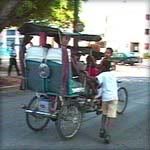
Transportation has reportedly suffered similar neglect. Few new vehicles have been brought into Cuba since the 1960s, so most people who have cars drive pre-Castro American relics or build cars from old parts. Old buses, called guaguas, and new buses, called camellos, navigate the island crammed with passengers. Bicycles and taxi-bikes are common, and in the cities some people still use horse-drawn carriages. The 30 percent of the population that lives in rural areas usually ride oxen, donkeys or mules. And 100-year-old steam trains carry sugar cane between towns.
Ideology and education
Success in Cuba often depends on an individual's devotion to the Castro government. High-level official positions are typically reserved for those who demonstrate a loyalty to the Communist Party, the sole legal party.
The Cuban constitution states all legally recognized civil liberties can be denied to anyone who opposes "the decision of the Cuban people to build socialism," while the Ley de la Peligrosidad, or Endangerment Law, says anyone who poses a threat to the system can be arrested and incarcerated without due process. There are reportedly between 300 and 500 "prisoners of conscience" currently being held in Cuban jails.
The government routinely monitors people's level of "ideological and political integration." Groups organized by city block, known as Committees for the Defense of the Revolution, supervise such socialized tasks as recycling, health campaigns and street night patrol.
Men are required to perform two years of military service between the ages of 16 and 30, although he government has recently added the option of doing agricultural work instead. Throughout their lives, Cuban citizens are encouraged to join government organizations that require them to perform voluntary work in the fields.
The educational system, long hailed as a great advancement of the socialist society, provides universal education and boasts a 95 percent literacy rate, the highest among the Latin American countries.
In addition to evaluating students according to traditional academic standards, teachers assess students and their parents according to their level of political and ideological integration. Any blot on the Cumulative Academic Record means they can be refused access to higher education or the right to freely choose a career.
The government also monitors the population through a Labor Record, which documents ideological conduct, and through mandatory identification cards. Citizens must obtain government permission in order to change homes or jobs.
Exiting the island
Many people who are unhappy with the government's tight control over their daily lives have tried to flee the island. Since Castro overthrew dictator Fulgencio Batista in 1959, over one million Cubans have gone into exile legally.
Many have tried to make the journey to the U.S., just 90 miles across the Florida Straits, in makeshift boats or rafts. Thousands have died in the shark-infested waters, been recaptured by the Cuban government, or turned back by the United States. Between 25 - 33 percent of people who have tried to escape have succeeded.
In August 1994, Castro gave his consent to allow anyone to leave the island. Thirty-five thousand people attempted the trip. In the summer of 1999, the de facto U.S. embassy in Havana held a lottery to provide 15,000 people with immigration visas for the United States. Over 540,000 people, out of a population of 11 million, applied.
Wednesday, July 18, 2001
| [+/-] |
Blaming The Blockade |
Online NewsHour reports:
PAUL SOLMAN: Dr. Erminia Valenzuela is a cardiac surgeon with a message.
PAUL SOLMAN: The blockade.
DR. ERMINIA VALENZUELA: The blockade.
PAUL SOLMAN: The embargo.
DR. ERMINIA VALENZUELA: The blockade, the embargo. So I'm asking the people of the United States to help us to end the blockade.
PAUL SOLMAN: She runs this ward at Havana's top pediatric hospital, where children with serious heart defects come for surgery they can't get in the provinces. The care tops anything in the third world, she says, but could be much broader.
DR. ERMINIA VALENZUELA: If we are able to operate on 500 patients in a year, it would be enough in order not to have a waiting list.
Cuban health care
PAUL SOLMAN: They used to do 500 operations a year back when the Soviet Union subsidized the Cuban economy, including its medical care. They don't, however, blame the Russian pullout for the waiting list, but the U.S. blockade, or "block."
DR. ERMINIA VALENZUELA: With all these difficulties of the block, we had less money, and we had to decrease the number of operations to 50 percent or 60 percent.
PAUL SOLMAN: "Stop the blockade." It's a refrain we heard at almost every stop in Cuba, including Lenin High School.
STUDENT: Cuba is open to the world, and the world is almost open to Cuba, but we have, how can I say, a door closed for us.
PAUL SOLMAN: But isn't it socialism that prevents Cuba from becoming richer, we asked.
STUDENT: We got education, hospitals, medicines, all free, and if we want to be richer, we don't have to stop to get all of that. We only have to... You only have to stop this blockade.
The U.S. position
PAUL SOLMAN: We could go on, but you get the point: Even though Cuba now gets goods from all over the world, the U.S. embargo is still the number one excuse for Cuba's economic failings. Now, Cuba has actually lived with the embargo about as long as it's lived with socialism. In fact, the two are inseparable. When Fidel Castro first descended from the hills and toppled the Batista dictatorship in 1959, the Republican Eisenhower administration never imagined Cuba would soon be sleeping with the ideological enemy.
But within a year, Castro began nationalizing U.S. businesses. President Eisenhower-- a longtime friend of Batista-- retaliated by severing diplomatic relations, while the CIA initiated plans to assassinate Castro and invade Cuba. Eisenhower also set in motion an embargo on trade, made law by President Kennedy and Congress in 1962.
There have been opponents, like Jimmy Carter and the UN, which condemned it just last year by a vote of 163 to 3. But Miami's Cuban exile community and its allies in Congress have always prevailed. In 1996, Congress passed, and President Clinton reluctantly signed, the Helms-Burton Act, which among other provisions extended the penalties on trade with Cuba to companies and nations outside the U.S.
SEN. PHIL GRAMM: Our position has always been a commitment to isolation, the isolation of Cuba, and a commitment to overthrowing Fidel Castro. Today, with this bill, we go back to that policy and we hit Fidel Castro where it hurts the most. We hit him in the pocketbook.
PAUL SOLMAN: It's been a 40-year campaign, then, of U.S. economic pressure to topple Castro and install democratic capitalism, a campaign Castro has used for dramatic effect.
FIDEL CASTRO (Translated): What the imperialists want for us is nothing but capitalism, and worse still, the capitalism of the third world, of Guatemala and Honduras. But we'll defend our socialism at any cost.
PAUL SOLMAN: And defend it he has. But if Castro isn't quitting, neither is his opposition. (Crowd chanting) The key, according to anti- Castro forces outside Cuba, is to support anti-Castro forces inside the country-- build an anti-socialist opposition, like solidarity in Poland.
REP. LINCOLN DIAZ-BALART: There is a growing internal opposition movement that is being oppressed and repressed, thrown in dungeons on a day-in and day-out basis, and yet it has demonstrated extreme courage and is growing. That has to be the focus of our policy.
PAUL SOLMAN: To find out what the internal opposition itself makes of this approach, we went to see Cuba's best-known dissident. Elizardo Sanchez spent eight years in prison for crimes against the state. And yet, this is what he said:
ELIZARDO SANCHEZ (Translated): For 15 years, I have been in a group that has opposed these sanctions. They're unilateral actions of Washington against Cuba. For a long time, I was alone among dissidents in this view, but now nearly all of us oppose the U.S. policy.
PAUL SOLMAN: Arrested at gunpoint in the middle of the night for opposing Castro, Sanchez also opposes the policy on which his U.S. supporters pin their hopes.
ELIZARDO SANCHEZ (Translated): I believe the embargo is the best ally this totalitarian government has, because it justifies its failures. When there's no medicine or transport, or food, everyone says, "it's Washington's fault."
Blaming the embargo
PAUL SOLMAN: Indeed, the embargo is widely blamed for many, if not all of the country's economic woes. We heard that argument, among other places, at Cuba's version of the Federal Reserve, its Central Bank, where revolutionary hero Che Guevara once presided as the country's first Alan Greenspan. Francisco Soberon is now in charge, and maintains the embargo has cost Cuba decades of development.
FRANCISCO SOBERON: It's a terrible cost, you see. It has to be measured in hundreds of billions, already.
PAUL SOLMAN: Hundreds of billions, you mean cumulatively?
FRANCISCO SOBERON: Accumulated during these 40 years.
PAUL SOLMAN: Soberon reorganized the bank to help implement market reforms after the Soviet Union-- and its huge subsides-- vanished in the early '90s. But he's still a devout socialist who blames the embargo for crippling Cuba's economy.
FRANCISCO SOBERON: We cannot go to an American bank to ask for a loan. But not only that, foreign banks, a lot of them have very close links with the American markets, and a lot of them feel that if they do business with Cuba, it could hamper their relations with the United States, and then they don't want to do business with us.
PAUL SOLMAN: Finance from abroad is key, says Soberon, because Cuba's own major investments have been in health care and in education; investments, that is, in "human capital," in Cuba's people, an asset of professional talent just waiting for the financial capital to make it world-class productive.
FRANCISCO SOBERON: 700,000 professionals, we have.
PAUL SOLMAN: 700,000 professionals.
FRANCISCO SOBERON: 700,000. And when I say "professionals," I mean people who have a university degree, you see?
PAUL SOLMAN: At a baseball game one night in Havana, we got yet another example of the embargo's cost.
MAN (Translated): You know, we've got this fight with the U.S. to buy oil, we have to get it all the way from Russia. Imagine if we could just get it from you, 90 miles away, how much easier and cheaper it would be.
PAUL SOLMAN: So then, the embargo would seem to be working, just as its supporters claim. But when we trekked to a far-off Havana neighborhood to interview another dissident, we again heard the message that the embargo is letting socialism off the hook and that trade with the U.S., according to Marta Beatriz Roque, would actually speed economic and political reform.
MARTA BEATRIZ ROQUE: I'm against the embargo. I would like that the embargo will be lifted.
PAUL SOLMAN: Because?
MARTA BEATRIZ ROQUE (Translated): Because I believe Cuban society needs contact with North American society. We need to be in touch with capitalism.
Supporting the economy
PAUL SOLMAN: To the extent that Cuba is changing, many think, it's because of contact with the capitalist U.S., for better, or sometimes worse. And certainly, says Roque, economic contact with U.S. capitalism keeps the dissident community alive.
MARTA BEATRIZ ROQUE (Translated): I have family outside. I have support. Many friends in the U.S., especially in Miami, help us.
PAUL SOLMAN: As it happens, it's not just dissidents who get help from friends and family in the U.S. In Miami's Little Havana neighborhood, business at Western Union is brisker than ever these days.
MAN (Translated): With Western Union, you can send up to $100 a month to any one person.
PAUL SOLMAN: This Cuban exile, who preferred not to give his name, came to the states 12 years ago and has been sending dollars back home ever since.
MAN (Translated): I sent money to my parents so they could come and visit, and they did. Now I have to wait three more months before I can send any more.
PAUL SOLMAN: Again, back in Havana, dissident Elizardo Sanchez:
ELIZARDO SANCHEZ (Translated): I would say that 20 percent to 30 percent of what Cubans manage to get to survive comes from remittances -- my family included.
PAUL SOLMAN: What percent of your income-- family income-- comes from remittances?
MAN (Translated): Eighty percent. It's been that way for 20 years.
PAUL SOLMAN: Remittances-- what the Cubans call ramesas-- may actually be the single biggest source of dollars in what's becoming a dollarized country. You can use them to buy your own car, or to take a taxi instead of waiting for the so-called "camels," the trucks modified to haul people that most Cubans are forced to rely on.
If you pay in dollars at Coppelia's ice cream parlor, you can skip the long peso line and sit in comfort with the tourists. The burgeoning well-stocked supermarkets are dollars-only, which relegates those without dollars to the state's own meager food stores, where the pickings are generally slim and where they wouldn't let us take pictures. What's more, the dissidents say, the government itself relies indirectly on remittances, via heavy taxes on the dollar economy, to help finance, among other things, the costly Cuban safety net in health care and education.
PAUL SOLMAN: Do you think remittances are keeping the government in business?
ELIZARDO SANCHEZ (Translated): Definitely. Remittances coming from the U.S. have substituted in part for the huge subsidy we got from the Soviet Union. Today the remittances represent more than sugar exports and tourism. They're the principle source of income for the government. The total now comes to between $800 million and a billion dollars a year.
PAUL SOLMAN: Moreover, exile economic support doesn't stop with wiring dollars from the U.S. While some who fled have vowed never to return, many do come back, as tourists, and tourism now makes up fully 5 percent of the Cuban economy. And furthermore, when the exiles return, they bring not just first world cash, but bundles of first world stuff for their families-- TV's, toasters, VCR's.
When you add it all up-- the purchases, the care packages, the tourism, the remittances-- it seems the exile community is tossing a lot of money over the wall they themselves helped build-- between 5 percent and 10 percent, by some estimates, of the entire Cuban economy. So Castro's foes outside Cuba support the embargo politically while perhaps undermining it economically. And Castro's supporters inside Cuba condemn the embargo, though it arguably serves as their best excuse.
ELIZARDO SANCHEZ (Translated): For decades, the government has liked to present an image of itself as a little David against a giant Goliath. The day they lift the embargo and normalize relations as you've done with Hanoi, for example, or China, that will be the beginning of the end for this government.
PAUL SOLMAN: Now, it's possible that dissidents like Sanchez may be wrong about the embargo's effects, that the government's efforts to end the blockade are genuine. At the same time, the message we kept hearing-- from street level to the highest ranks of government-- was that the policy intended to bring Cuba to its knees may in fact have done quite the opposite.
FRANCISCO SOBERON: The blockade, or the economic war of the United States, has been terrible for us, no? But the good part of it is that it has made us stronger, because we have... When you have to fight, when you have to face more big challenges, then you become stronger.
PAUL SOLMAN: A sobering thought on a U.S. policy that Cuba, after four decades, appears not only to have survived, but to have turned to at least rhetorical advantage.
JIM LEHRER: On Tuesday, President Bush announced he would not enforce a section of the 1996 Helms-Burton Act. It allows Americans to sue foreigners who invest in properties confiscated by the Cuban government.


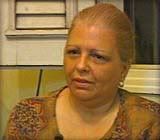


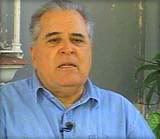
Tuesday, July 17, 2001
| [+/-] |
Capitalism in Cuba |
Paul Solman reports from Cuba on the growing role of capitalism in the country's socialist system:
PAUL SOLMAN: For the newcomer, Cuba, and especially Havana, is a surprise. Yes, there are plenty of the expected third-world vignettes: The make-work jobs, the makeshift travel arrangements, a public transportation system bursting at the seams, the occasional beggar in the street-- this one was deaf. Reminders that as recently as a decade ago when the Soviet Union collapsed and its subsidies vanished, people were nearly starving here. But today a major makeover is in progress.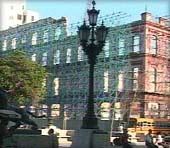
Cuba has decided to sell its culture, its climate, its beaches to foreigners, and so tourists are pouring in all over the country, from all over the world. Hotels abound, especially in Havana, and new ones are going up, built by everyone from the Spanish to the Chinese. Joint ventures with the Japanese and Koreans have brought in household gear you might see at Electronic Eddie's or Home Depot, and supermarkets offer an almost all-Cuban clientele everything from Brazilian diet Jell-O to Jack Daniels and Johnnie Walker Red. This year's sales at the Super Mercado...
ALBERTO LOTTI, Supermarket Manager (Translated ): Up to this moment, they are $6,324,000. The average bill per customer is $17.36.
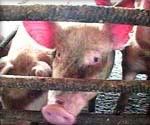
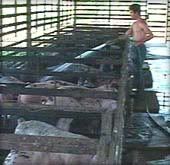
PAUL SOLMAN: That's right. Here you pay not in Cuban pesos but in U.S. dollars, officially allowed after the Russians pulled out. Tourism and foreign investment contribute to dollars now reaching, it's estimated, more than half the Cuban population. In short, it seems like capitalism is taking root. (Pig snorting) on the other hand, many Cubans still think capitalists are pigs, business is dirty, and that all production should be sold to and through the state as these real pigs will be as soon as they fatten up.
PIG FARMER (Translated ): The state gives me everything I need-- the grain, the breeding stock-- so my commitment is to them. Sometimes the private guys show up, but I don't trust their scale. With the state, I always have confidence.
PAUL SOLMAN: The state, meanwhile, still tries to command the economy. Every family gets subsidized food with a national ration book. Fidel Castro has banned billboard advertising, making Havana look like some sort of Soviet throwback featuring Che Guevara, and slogans like "This is the socialist revolution right under the nose of the U.S." And when we tried to interview a would-be emigrant, the police stopped us, took our documents, and wanted to take us downtown. We sneaked these shots from our van. True, the government itself didn't object to our interviewing prominent dissidents like Elizardo Sanchez, but the dissidents themselves insisted Cuba's less free than ever.
ELIZARDO SANCHEZ, Dissident (Translated ): What we have here is closer to the Soviet totalitarian system, an absolute state monopoly that controls virtually everything down to the barbershops.
PAUL SOLMAN: In Cuba, then, an economics correspondent can feel whipsawed. At some moments you think Castro has saved Socialism, and right under Uncle Sam's nose. At other times it seems clear the free market is burrowing irresistibly from within. This elite Lenin High School, we figured, might be one place to sort things out. Only one in 100 is admitted here in a country with a whopping 99 percent literacy rate. At Cuba's training ground for the next generation, a group of English speakers awaited them.
STUDENT: Schoolmates, I tell you, you're welcome, and I hope you get satisfied with our school, with out students, with us. Thank you.
PAUL SOLMAN: Well, thank you.
PAUL SOLMAN: We got the red carpet treatment and it kept getting redder.
STUDENT: We don't want capitalism. We have... We want socialism, because we want equality to all the people.
STUDENT: We don't want to be like the United States because right now we have fewer children in streets... I mean, I would say, almost anywhere, almost no kids in street asking for money.
STUDENT: We are the same people. We have the same clothes, the same things. It's not that the other countries that you're better than me because you have a new Adidas and I don't.
PAUL SOLMAN: The kids at Lenin High seem determined to sustain socialist equality at almost any cost. As for the market changes Cuba has made?
STUDENT: We don't want those changes. We have to put them there... They're there because we need them. When we don't... If we don't need them anymore, we will fade it.
PAUL SOLMAN: Fade it.
PAUL SOLMAN: They will fade it-- that is, phase out the market reforms of the post-Soviet special period. Now maybe the reforms are temporary, and schools like this will restore Cuba's purist past, or maybe instead Cuba's many private markets are already beyond a point where anyone can fade them. Food production has exploded, for instance, because of free market incentives that let farmers sell privately some of what they produce. So incentives work.
MAN (Translated): Clearly, yes. It's obvious. That's the way it works everywhere.
Stark contrast in ideologies
PAUL SOLMAN: Incentives not only mean more food more available without waiting on line, they also mean better food at the private markets.
SALESMAN (Translated): It's better quality. This is what people are looking for. There's less fat. There's less bone. Do you understand?
PAUL SOLMAN: The more we saw of Cuba, the starker the contrast between capitalist experiment and socialist ideology. Alberto Lotti, for instance, who runs this state-owned dollar store, plays by market rules like pursuing profits in competition with similar stores.
ALBERTO LOTTI (Translated): Competition exists, and it's good for the consumer. Competition is about who offers the best product, the best quality, at the best price in the battle to lower costs. That's what satisfies consumers' needs.
PAUL SOLMAN: But of course, needs are always being redefined more broadly in an economy where there's more to buy. Do you worry that you'll become too much of a consumer society if you have more and more of these things?
ALBERTO LOTTI (Translated): I think this is not a consumer society. Economic development itself requires monetary mercantile exchange.
PAUL SOLMAN: Muchas gracias.
PAUL SOLMAN: So not capitalist, but not really socialist either; in fact, a distinctly Cuban straddle concluded with a distinctly Cuban sendoff. Meanwhile, in Lotti's parking lot, there was more evidence that Cuba may become a consumer society as soon as it can afford to. In Cuba's famous health care system, we heard a similar mixed message. On the one hand, the head of the country's national cancer hospital says he devoutly believes in socialized medicine.
DR. ROLANDO CAMACHO, Cancer Specialist: Health is something that is the right of a human being. If you put it in the hands of the one depending of your pocket, that's terrible.
PAUL SOLMAN: Free health care and free education were recently hailed by the World Bank-- no friend of Castro's-- as model investments, yet this doctor thinks the forced move to the free market was good economic medicine.
DR. ROLANDO CAMACHO: In that sense, I believe it's a good thing. It starts to make people to face the reality and not to... Because we were so accustomed that the government provided everything. You just have to ask, 'I need this, I need this.' And we don't know from where it comes, how it costs, nothing like that.
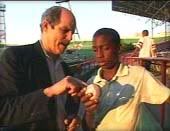
PAUL SOLMAN: You even see socialism versus capitalism down at the old ballpark. Omar Linares is a slugging superstar who's had million dollar offers from U.S. teams, but turned them all down. Why?
OMAR LINARES, Baseball Player (Translated ): I prefer to stay in Cuba because this is my country. Everything I've accomplished I owe to the revolution.
PAUL SOLMAN: On the field, the socialist party line; in the stands, however, entrepreneurship run rampant. Get a load of this transaction.
PAUL SOLMAN: Donde?
SALESMAN: Cuanto? Five dollars.
PAUL SOLMAN: Five dollars.
SALESMAN: Omar Linares?
PAUL SOLMAN: No, it doesn't say Linares. There's a different name.
SALESMAN: ( Speaking Spanish ) ( translated ): It's the way he signs. He does it real fast.
PAUL SOLMAN: He signs with another name?
SALESMAN: ( Translated ): I don't know. Maybe he was in a hurry.
Encouraging and resisting capitalism
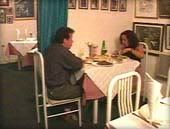
PAUL SOLMAN: In fact, capitalists were budding everywhere we looked. Bottle collectors moonlighting from state jobs who wouldn't talk on camera, stilt walkers who wouldn't tell us what they earned. It's about art, they sniffed, not commerce; then complained when we made a donation that we'd underpaid them. And then there was this paledar, one of the small private dollar-only restaurants that dot Havana. When it comes to moving the merchandise here, Cuba's favorite cocktail, say, the mojito, owner Juan Carlos uses very clear market incentives.
JUAN CARLOS (Translated ): If my waiters sell more mojitos, they get paid more money. But if they bring the mojito to the table and it's not properly prepared, I fine them.
PAUL SOLMAN: You could call this capitalism with a vengeance. The government tolerates it, but puts legal hurdles in the paledar's path to protect the many state-owned restaurants.
JUAN CARLOS (Translated ): A private restaurant can only sell certain things. You can't sell beef or lobster. You can only have 12 seats.
PAUL SOLMAN: Some paledars like this one, whose identity we promised not to reveal, have responded with hidden rooms. Others have simply given up. And that makes Elizardo Sanchez believe the capitalist experiment in Cuba is about to end.
ELIZARDO SANCHEZ: Ahora. (Translated ) Today there's less free enterprise than there was three years. Paledars are closing down. They can't survive. Their workers are unemployed or working for the state.
PAUL SOLMAN: Sanchez spent eight years in prison for his politics. He's sure Cuba won't let capitalism do its thing.
ELIZARDO SANCHEZ (Translated ): The situation has changed in Cuba, but sadly it has changed for the worse rather than the better-- especially with regard to human rights.
PAUL SOLMAN: But you're now not in prison...
ELIZARDO SANCHEZ (Translated ): True. There have been some small steps, but nobody can be sure that tomorrow things won't change back.
PAUL SOLMAN: And yet capitalism continues to make inroads, it seems, almost everywhere; even in Cuba's creaky sugar industry, with nearly half a million workers, the country's largest. Having arrived in 1511, the Spanish decided to satisfy Europe's sweet tooth by transplanting sugar cane from the East Indies and slaves from Africa.
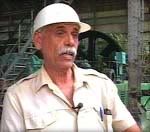
At this factory they lived in these very barracks. Sugar has been the backbone of the Cuban economy ever since. At this mill outside Havana, the propaganda was as abundant as the cane, but here, too, they've changed to market practices like incentive pay. They just insist the changes won't change them.
JOSE ANTONIO SANCHEZ, Sugar Mill Foreman (Translated}): The more we produce, the more we can offer salary and other benefits to our workers.
PAUL SOLMAN: This sounds like capitalism.
JOSE ANTONIO SANCHEZ (Translated ): Hey, we're surrounded by capitalism. We don't have much choice but to apply some of the formulas of capitalism to resolve our problems.
PAUL SOLMAN: Do you worry that the more capitalist techniques you use, the less socialism you'll have?
JOSE ANTONIO SANCHEZ (Translated): No. These are just methods of organizing production. We still have our benefits: Social equality, health care and education for all. We are not making any concessions to capitalism; all we're doing is applying certain techniques.
PAUL SOLMAN: But can social equality hold out as the market marches in? Our search for an answer brings us back to the émigré we were trying to interview when the police stopped us. Medical Dr. Giselle Castro-- no relation-- lost her job when she applied to leave for the U.S. Lord knows she's no fan of Socialism. But what did she complain to us about? Growing market inequality in Cuba.
DR. GISELLE CASTRO, Physician (Translated ): What's happening here is that those who have now have more, and those that don't continue to slide. Right here on this block you can see the inequality. Look at the differences between that house across the street and the one down the block-- that house and that house, they're different classes.
PAUL SOLMAN: You can see the inequalities, says Giselle Castro, and we could and did. In the end, this new fact of Cuban life-- the growing gulf between those with access to dollars and those without-- may well prove to be the core of the country's dilemma. It's a dilemma now so widespread it provides the punch line to what may be Cuba's hottest joke, about a girl who dumps her boyfriend. "He swore he'd struck it rich at the Hotel Nacional," she gripes, "claimed he'd actually landed the job of doorman." But she dropped him when she learned the bitter truth, that he was just another Cuban neurosurgeon -- a state job, that is, with no ties to the dollar economy.
So, in the end we were left with one big question: can Cuba, or any planned economy for that matter, encourage the free market and resist it at the same time? The only sure bet is that Cuba will grapple with that question for some time to come.



Monday, July 16, 2001
| [+/-] |
The Helms-Burton Act |
Today, President Bush enacted a six-month waiver of provisions of the 1996 Helms-Burton Act that would allow lawsuits against foreign companies who deal with Cuban businesses once claimed by U.S. nationals.
The Online NewsHours reports:
The act, sponsored by U.S. Sen. Jesse Helms (R-N.C.) and Rep. Dan Burton (R-Ind.), also formalized the U.S. trade embargo of the island nation, in effect by presidential order since the Kennedy administration.
Helms-Burton's lawsuit provision has been one of the act's most controversial components. It was meant to keep foreign investors away from nearly 6,000 formerly American-owned companies in Cuba brought under government control following the 1959 Cuban revolution. Those companies are now valued at over $6 billion.
President Clinton signed the legislation less than a month after Cuban air force jets shot down two American planes over international waters - dealing yet another blow to U.S. relations with Cuba. Four Cuban exile activists died in the incident.
Despite the broad powers in Helms-Burton, no one has ever filed suit under the law because former President Clinton suspended that portion of the legislation before it took effect in Aug. 1996. He renewed his suspension every six months, as the law allows, until the end of his term.
Opposition
Clinton's decision to hold off on the lawsuit proposals came after the European Union and Canada announced their opposition to the act. They argued the provisions violate international trade treaties by punishing foreign companies for business conducted outside U.S. borders. The E.U. brought its case to the World Trade Organization, but dropped its legal challenge in 1998. The U.S. and E.U. are still working toward an agreement on the issue.
Among the companies that could be affected are some Mexican and Italian firms with a stake in Cuba's telephone network -- originally built by an American company in the 1950s. Some executives from Canada's Sherritt International Corp., that invested in a nickel mine once operated by an American mining company, have already been prohibited from traveling to the U.S. in accordance with the act.
Large-scale foreign investment in Cuba is a relatively recent development. Canadian, Mexican and European firms moved in after Cuban President Fidel Castro opened the island nation to foreign investment in 1991. Foreign companies have invested billions of dollars in Cuba, much of it going into hotels, utilities, and other businesses formerly once controlled by Americans or Cubans now living in the U.S.
Provisions of the 1996 Helms-Burton Act
Title I: Formalizes the U.S. embargo on trade and financial transactions.
Title II: Outlines American policy and economic assistance towards a future transition or democratic Cuban government.
Title III: Allows lawsuits in American courts against foreign companies who invest in businesses once owned by Americans or by Cubans now living in the U.S. The president can suspend the lawsuit provision for 6-month periods.
Title IV: Authorizes the banning of executives of the foreign companies targeted in Title III from entering the U.S. Also allows denial of entry to the executives' families and the companies' shareholders.
Sunday, December 31, 2000
| [+/-] |
The Impact of the Economic Crisis and the US Embargo on Health in Cuba |
In the American Journal of Public Health, "The impact of the economic crisis and the US embargo on health in Cuba," R Garfield and S Santana, Columbia University School of Nursing, New York, NY 10032, USA:
OBJECTIVES: This paper examines the combined effects of a severe economic decline since 1989 and a tightening of the US embargo in 1992 on health and health care in Cuba.
METHODS: Data from surveillance systems for nutrition, reportable diseases, and hospital diagnoses were reviewed. These sources were supplemented with utilization data from the national health system and interviews with health leaders.
RESULTS: Changes in Cuba include declining nutritional levels, rising rates of infectious diseases and violent death, and a deteriorating public health infrastructure. But despite these threats, mortality levels for children and women remain low. Instead, much of the health impact of the economic decline of Cuba has fallen on adult men and the elderly.
CONCLUSIONS: To be consistent with international humanitarian law, embargoes must not impede access to essential humanitarian goods. Yet this embargo has raised the cost of medical supplies and food rationing, universal access to primary health services, a highly educated population, and preferential access to scarce goods for women and children help protect most Cubans from what otherwise might have been a health disaster.
Thursday, April 27, 2000
| [+/-] |
What's Life Really Like In Cuba? |
The BBC reports:
Ever since his arrival in the US, Elian Gonzalez - the six-year old Cuban boy at the centre of an international custody battle - has been stuck in a war of words over whether it is better to live in Florida or Cuba.
So what does await him on the island?
In Cuba, the island's defenders say, Elian will have free education and healthcare.
Now 73, Fidel Castro may not be in charge when Elian grows up
He is highly unlikely to get attacked, abducted or shot on his way home from school, although rising crime rates mean that it is now quite likely that his house would get burgled or his bicycle would get stolen.
Almost all Cuban teenagers go to boarding schools in the countryside where they have to do some farm work.
The education system does not encourage free thought outside the framework of Cuba's Communist system.
US influence
However, in practice the influence of the latest US fashions from peers is as strong as revolutionary politics.
Nike trainers and the Back Street Boys dominate many teenagers' tastes.
Boarding school can only be avoided by getting into a local arts school.
Many parents push their children to learn music so they will not have to go away.
Two economies
The difficulties start when it comes to earning a living.
Elian's father, Juan Miguel Gonzalez, works in Cuba's lucrative tourism industry
Since circulation of the dollar was legalised in 1994, Cuba has had two economies.
A minimum food ration, gas, electricity, water and housing are massively subsidised in Cuban pesos.
However, many other basic products like cooking oil and soap are offered at US prices and charged in dollars.
The average Cuban peso salary converts to less than $10 a month, which buys very little.
So Cubans spend a great deal of their time trying to "resolve" their shortages.
Many Cubans get dollars sent by family abroad, usually Florida. The division in Elian's family is the exception, not the rule.
Careers in tourism
The state is finding it harder to attract Cuban students to become doctors, teachers or other professionals with peso salaries.
Instead many want to work in jobs with access to dollars - especially tourism. Elian's father worked in a tourist resort.
A day's tips for a waiter can be many times a doctor's monthly salary.
Only a limited number of self-employed trades are allowed.
No private businesses are permitted where one Cuban employs another.
There are strict controls against Cubans moving from one province to another.
Many looking for work in tourist areas marry a local for convenience, to get around the rules.
If Elian were to decide one day that he wants to change Cuba's politics, his options are limited.
Opposition parties are banned and organising public protest is illegal.
Fidel Castro is, of course, now 73-years-old. His opponents hope that by the time Elian grows up, there will be a new, more open, leadership.
