The Quad City Times reports:
Republican presidential candidate Mike Huckabee defended his failure to read the National Intelligence Estimate on Iran in early December, joking in an interview Monday that President Bush didn’t read intelligence reports for four years.
Huckabee came under fire in early December when, in response to a reporter’s question about the Iran report, Huckabee said he wasn’t aware of it. Huckabee’s lack of familiarity with the National Intelligence Estimate — a report that showed Iran had discontinued its nuclear program — provided fuel for his critics who said he was a lightweight on foreign policy.
“The whole perception was based on an ambush question on the NIE report,” Huckabee said in an interview Monday with the Quad-City Times. “From there, it was like, ‘Wow.’ That was released at 10 o’clock in the morning. At 5:30 in the afternoon, somebody says, ‘Have you read the report?’ Maybe I should’ve said, ‘Have you read the report?’ President Bush didn’t read it for four years; I don’t know why I should read it in four hours.”
His comment about President Bush appears to be a reference to allegations made by Bush’s critics that Bush didn’t pay close enough attention to intelligence reports, particularly in the early years of his presidency.
When asked to clarify, Huckabee said this:
“The point I’m trying to make is that, on the campaign trail, nobody’s going to be able, if they’ve been campaigning as hard as we have been, to keep up with every single thing, from what happened to Britney last night to who won ‘Dancing with the Stars.’ ”
He said the campaign learned from the criticism related to the Iran report and now he gets regular briefings about developments in foreign policy.
Monday, December 31, 2007
| [+/-] |
Huckabee Pokes Fun At Bush Over Reading Intelligence Reports |
Thursday, October 4, 2007
| [+/-] |
Phone-Jamming Scandal May Finally Be Solved |
At the Huffington Post, Thomas B. Edsall writes:
One of the long-standing mysteries of the Bush presidency is whether the White House and Justice Department were involved in a 2002 New Hampshire voter suppression scandal that produced three criminal convictions but never touched the administration.
Now, with Democrats back in control of Congress, this mystery may finally get cleared up. John Conyers Jr. (D-Mich.), chairman of the House Judiciary Committee, and subcommittee chairs, plan to investigate the controversial role of the Justice Department in the case.
There are two key issues questions involving Justice:
First, whether top officials there blocked a New Hampshire prosecutor from pursuing leads involving the White House and both the Republican National and Senatorial Committees.
Second, whether the Department purposely delayed prosecution of the one defendant with ties to the RNC and NRSC until after the 2004 election. The Department did attempt on October 15, 2004, just over two weeks before the election, to block depositions of key witnesses in a civil suit brought by the New Hampshire Democratic Party.
The vote suppression/phone jamming operation was dreamed up in 2002 by Charles McGee, executive director of the New Hampshire Republican Party, who obtained phone numbers of Democratic support groups offering Election Day rides to the polls, according to McGee's court testimony.
McGee then hired an Idaho telemarketing company to flood those numbers with phony calls, blocking all legitimate requests for help getting rides to the polls.
Initially, McGee's plan worked perfectly. For two hours, the Idaho firm tied up Democratic Party and pro-Democratic union phone lines, preventing seniors and others needing a lift to their voting places from being able to request rides.
"The phones were starting to ring, and as I would pick up one phone, it automatically bumped over to another line," testified Manchester firefighter Jeffery S. Duval, who was working the phones at his union's headquarters. "There was nobody on any of the phones. The phone lines were dead once we went to pick them up... We gave the police department a call."
Realizing there could be criminal implications, Republican leaders quickly ordered the telemarketing company to stop the jamming, according to court testimony. The FBI and the Justice Department were then called in because the allegations involved violations of federal telecommunications law.
The effort helped John E. Sununu (R) beat Jeanne Shaheen (D) in a tight Senate race by 51 to 47 percent, a 19,151-vote margin.
In addition to the questions about the role of the Justice Department, there were strong indications of involvement on the part of the White House and other D.C.-based pro-Republican groups:
* Over the course of 4 hours on Election Day, just as New Hampshire police began investigating the scheme to jam the phones, James Tobin, Northeast Regional Director for the Republican National and Senatorial Committees, made 22 phone calls to the White House political office, according to court records.
* Later, when Tobin was tried, the Republican National Committee paid $2.8 million to cover his legal fees. Tobin was found guilty, but an appeals court threw out the verdict on the grounds that the judge's orders to the jury were inadequate, and ordered a new trial. No date has been set.
* Another defendant in the case testified that when the phone-jamming operation was brought to a halt, an American Gas Association lobbyist, Darrell Henry, said he would get the Chamber of Commerce to take over the effort to disrupt the Democratic get out the vote undertaking. When Henry was deposed, he refused to answer questions, asserting his Fifth Amendment right not to incriminate himself.
Danny Diaz, a RNC spokesman, contends a congressional inquiry into the New Hampshire case is unjustified: "The questions regarding the New Hampshire issue have been answered time and again. Additional activity on this front is solely for political purposes and is a questionable usage of taxpayer dollars."
In a letter to Acting Attorney General Peter D. Keisler, Conyers and the subcommittee chairs, Robert C. Scott (D-VA), Jerrold Nadler (D-NY), and Linda Sánchez (D-CA), detailed the Tobin-White House calls, the payment by the RNC of Tobin's legal fees, and then stated:
"Despite this compelling evidence of Washington involvement in the election day jamming of Democratic phone lines, however, the FBI Special Agent working this matter allegedly was instructed not to follow investigative leads back to Washington.
"In addition, the attorney for one of the phone jamming defendants has stated that he was told by a federal prosecutor that 'all decisions in this case had to be made subject to the approval of the Attorney General himself, who had to sign off on all actions in this case,' an unusual state of affairs for a criminal prosecution."
The prime mover behind the congressional inquiry is freshman Representative Paul Hodes (D-NH) who has been pressing both the House and Senate to take action.
Sunday, July 22, 2007
| [+/-] |
Ron Paul, The 'Anti'-Candidate |
The Antiwar, Anti-Abortion, Anti-Drug-Enforcement-
Administration, Anti-Medicare Candidacy of Dr. Ron Paul
Whipping westward across Manhattan in a limousine sent by Comedy Central’s “Daily Show,” Ron Paul, the 10-term Texas congressman and long-shot Republican presidential candidate, is being briefed. Paul has only the most tenuous familiarity with Comedy Central. He has never heard of “The Daily Show.” His press secretary, Jesse Benton, is trying to explain who its host, Jon Stewart, is. “He’s an affable gentleman,” Benton says, “and he’s very smart. What I’m getting from the pre-interview is, he’s sympathetic.”
Paul nods.
“GQ wants to profile you on Thursday,” Benton continues. “I think it’s worth doing.”
“GTU?” the candidate replies.
“GQ. It’s a men’s magazine.”
“Don’t know much about that,” Paul says.
Thin to the point of gauntness, polite to the point of daintiness, Ron Paul is a 71-year-old great-grandfather, a small-town doctor, a self-educated policy intellectual and a formidable stander on constitutional principle. In normal times, Paul might be — indeed, has been — the kind of person who is summoned onto cable television around April 15 to ventilate about whether the federal income tax violates the Constitution. But Paul has in recent weeks become a sensation in magazines he doesn’t read, on Web sites he has never visited and on television shows he has never watched.
Alone among Republican candidates for the presidency, Paul has always opposed the Iraq war. He blames “a dozen or two neocons who got control of our foreign policy,” chief among them Vice President Dick Cheney and the former Bush advisers Paul Wolfowitz and Richard Perle, for the debacle. On the assumption that a bad situation could get worse if the war spreads into Iran, he has a simple plan. It is: “Just leave.” During a May debate in South Carolina, he suggested the 9/11 attacks could be attributed to United States policy. “Have you ever read about the reasons they attacked us?” he asked, referring to one of Osama bin Laden’s communiqués. “They attack us because we’ve been over there. We’ve been bombing Iraq for 10 years.” Rudolph Giuliani reacted by demanding a retraction, drawing gales of applause from the audience. But the incident helped Paul too. Overnight, he became the country’s most conspicuous antiwar Republican.
Paul’s opposition to the war in Iraq did not come out of nowhere. He was against the first gulf war, the war in Kosovo and the Iraq Liberation Act of 1998, which he called a “declaration of virtual war.” Although he voted after Sept. 11 to approve the use of force in Afghanistan and spend $40 billion in emergency appropriations, he has sounded less thrilled with those votes as time has passed. “I voted for the authority and the money,” he now says. “I thought it was misused.”
There is something homespun about Paul, reminiscent of “Mr. Smith Goes to Washington.” He communicates with his constituents through birthday cards, August barbecues and the cookbooks his wife puts together every election season, which mix photos of grandchildren, Gospel passages and neighbors’ recipes for Velveeta cheese fudge and Cherry Coke salad. He is listed in the phone book, and his constituents call him at home. But there is also something cosmopolitan and radical about him; his speeches can bring to mind the World Social Forum or the French international-affairs periodical Le Monde Diplomatique. Paul is surely the only congressman who would cite the assertion of the left-leaning Chennai-based daily The Hindu that “the world is being asked today, in reality, to side with the U.S. as it seeks to strengthen its economic hegemony.” The word “empire” crops up a lot in his speeches.
This side of Paul has made him the candidate of many people, on both the right and the left, who hope that something more consequential than a mere change of party will come out of the 2008 elections. He is particularly popular among the young and the wired. Except for Barack Obama, he is the most-viewed candidate on YouTube. He is the most “friended” Republican on MySpace.com. Paul understands that his chances of winning the presidency are infinitesimally slim. He is simultaneously planning his next Congressional race. But in Paul’s idea of politics, spreading a message has always been just as important as seizing office. “Politicians don’t amount to much,” he says, “but ideas do.” Although he is still in the low single digits in polls, he says he has raised $2.4 million in the second quarter, enough to broaden the four-state campaign he originally planned into a national one.
Paul represents a different Republican Party from the one that Iraq, deficits and corruption have soured the country on. In late June, despite a life of antitax agitation and churchgoing, he was excluded from a Republican forum sponsored by Iowa antitax and Christian groups. His school of Republicanism, which had its last serious national airing in the Goldwater campaign of 1964, stands for a certain idea of the Constitution — the idea that much of the power asserted by modern presidents has been usurped from Congress, and that much of the power asserted by Congress has been usurped from the states. Though Paul acknowledges flaws in both the Constitution (it included slavery) and the Bill of Rights (it doesn’t go far enough), he still thinks a comprehensive array of positions can be drawn from them: Against gun control. For the sovereignty of states. And against foreign-policy adventures. Paul was the Libertarian Party’s presidential candidate in 1988. But his is a less exuberant libertarianism than you find, say, in the pages of Reason magazine.
Over the years, this vision has won most favor from those convinced the country is going to hell in a handbasket. The attention Paul has captured tells us a lot about the prevalence of such pessimism today, about the instability of partisan allegiances and about the seldom-avowed common ground between the hard right and the hard left. His message draws on the noblest traditions of American decency and patriotism; it also draws on what the historian Richard Hofstadter called the paranoid style in American politics.
Financial Armageddon
Paul grew up in the western Pennsylvania town of Green Tree. His father, the son of a German immigrant, ran a small dairy company. Sports were big around there — one of the customers on the milk route Paul worked as a teenager was the retired baseball Hall of Famer Honus Wagner — and Paul was a terrific athlete, winning a state track meet in the 220 and excelling at football and baseball. But knee injuries had ended his sports career by the time he went off to Gettysburg College in 1953. After medical school at Duke, Paul joined the Air Force, where he served as a flight surgeon, tending to the ear, nose and throat ailments of pilots, and traveling to Iran, Ethiopia and elsewhere. “I recall doing a lot of physicals on Army warrant officers who wanted to become helicopter pilots and go to Vietnam,” he told me. “They were gung-ho. I’ve often thought about how many of those people never came back.”
Paul is given to mulling things over morally. His family was pious and Lutheran; two of his brothers became ministers. Paul’s five children were baptized in the Episcopal church, but he now attends a Baptist one. He doesn’t travel alone with women and once dressed down an aide for using the expression “red-light district” in front of a female colleague. As a young man, though, he did not protest the Vietnam War, which he now calls “totally unnecessary” and “illegal.” Much later, after the United States invaded Iraq in 2003, he began reading St. Augustine. “I was annoyed by the evangelicals’ being so supportive of pre-emptive war, which seems to contradict everything that I was taught as a Christian,” he recalls. “The religion is based on somebody who’s referred to as the Prince of Peace.”
In 1968, Paul settled in southern Texas, where he had been stationed. He recalls that he was for a while the only obstetrician — “a very delightful part of medicine,” he says — in Brazoria County. He was already immersed in reading the economics books that would change his life. Americans know the “Austrian school,” if at all, from the work of Friedrich Hayek and Ludwig von Mises, two economists who fled the Nazis in the 1930s and whose free-market doctrines helped inspire the conservative movement in the 1950s. The laws of economics don’t admit exceptions, say the Austrians. You cannot fake out markets, no matter how surreptitiously you expand the money supply. Spend more than you earn, and you are on the road to inflation and tyranny.
Such views are not always Republican orthodoxy. Paul is a harsh critic of the Federal Reserve, both for its policies and its unaccountability. “We first bonded,” recalls Barney Frank, the Massachusetts Democrat, “because we were both conspicuous nonworshipers at the Temple of the Fed and of the High Priest Greenspan.” In recent weeks, Paul’s airport reading has been a book called “Financial Armageddon.” He is obsessed with sound money, which he considers — along with the related phenomena of credit excess, bubbles and uncollateralized assets of all kinds — a “sleeper issue.” The United States ought to link its currency to gold or silver again, Paul says. He puts his money where his mouth is. According to Federal Election Commission documents, most of his investments are in gold and silver and are worth between $1.5 and $3.5 million. It’s a modest sum by the standards of major presidential candidates but impressive for someone who put five children through college on a doctor’s (and later a congressman’s) earnings.
For Paul, everything comes back to money, including Iraq. “No matter how much you love the empire,” he says, “it’s unaffordable.” Wars are expensive, and there has been a tendency throughout history to pay for them by borrowing. A day of reckoning always comes, says Paul, and one will come for us. Speaking this spring before the libertarian Future of Freedom Foundation in Reston, Va., he warned of a dollar crisis. “That’s usually the way empires end,” he said. “It wasn’t us forcing the Soviets to build missiles that brought them down. It was the fact that socialism doesn’t work. Our system doesn’t work much better.”
Under the banner of “Freedom, Honesty and Sound Money,” Paul ran for Congress in 1974. He lost — but took the seat in a special election in April 1976. He lost again in November of that year, then won in 1978. On two big issues, he stood on principle and was vindicated: He was one of very few Republicans in Congress to back Ronald Reagan against Gerald Ford for the 1976 Republican nomination. He was also one of the representatives who warned against the rewriting of banking rules that laid the groundwork for the savings-and-loan collapse of the 1980s. Paul served three terms before losing to Phil Gramm in the Republican primary for Senate in 1984. Tom DeLay took over his seat.
Paul would not come back to Washington for another dozen years. But in the time he could spare from delivering babies in Brazoria County, he remained a mighty presence in the out-of-the-limelight world of those old-line libertarians who had never made their peace with the steady growth of federal power in the 20th century. Paul got the Libertarian Party nomination for president in 1988, defeating the Indian activist Russell Means in a tough race. He finished third behind Bush and Dukakis, winning nearly half a million votes. He tended his own Foundation for Rational Economics and Education (FREE) and kept up his contacts with other market-oriented organizations. What resulted was a network of true believers who would be his political base in one of the stranger Congressional elections of modern times.
A Lone Wolf
In the first days of 1995, just weeks after the Republican landslide, Paul traveled to Washington and, through DeLay, made contact with the Texas Republican delegation. He told them he could beat the Democratic incumbent Greg Laughlin in the reconfigured Gulf Coast district that now included his home. Republicans had their own ideas. In June 1995, Laughlin announced he would run in the next election as a Republican. Laughlin says he had discussed switching parties with Newt Gingrich, the next speaker, before the Republicans even took power. Paul suspects to this day that the Republicans wooed Laughlin to head off his candidacy. Whatever happened, it didn’t work. Paul challenged Laughlin in the primary.
“At first, we kind of blew him off,” recalls the longtime Texas political consultant Royal Masset. “ ‘Oh, there’s Ron Paul!’ But very quickly, we realized he was getting far more money than anybody.” Much of it came from out of state, from the free-market network Paul built up while far from Congress. His candidacy was a problem not just for Laughlin. It also threatened to halt the stream of prominent Democrats then switching parties — for what sane incumbent would switch if he couldn’t be assured the Republican nomination? The result was a heavily funded effort by the National Republican Congressional Committee to defeat Paul in the primary. The National Rifle Association made an independent expenditure against him. Former President George H.W. Bush, Gov. George W. Bush and both Republican senators endorsed Laughlin. Paul had only two prominent backers: the tax activist Steve Forbes and the pitcher Nolan Ryan, Paul’s constituent and old friend, who cut a number of ads for him. They were enough. Paul edged Laughlin in a runoff and won an equally narrow general election.
Republican opposition may not have made Paul distrust the party, but beating its network with his own homemade one revealed that he didn’t necessarily need the party either. Paul looks back on that race and sees something in common with his quixotic bid for the presidency. “I always think that if I do things like that and get clobbered, I can excuse myself,” he says.
Anyone who is elected to Congress three times as a nonincumbent, as Paul has been, is a politician of prodigious gifts. Especially since Paul has real vulnerabilities in his district. For Eric Dondero, who plans to challenge him in the Republican Congressional primary next fall, foreign policy is Paul’s central failing. Dondero, who is 44, was Paul’s aide and sometime spokesman for more than a decade. According to Dondero, “When 9/11 happened, he just completely changed. One of the first things he said was not how awful the tragedy was . . . it was, ‘Now we’re gonna get big government.’ ”
Dondero claims that Paul’s vote to authorize force in Afghanistan was made only after warnings from a longtime staffer that voting otherwise would cost him Victoria, a pivotal city in his district. (“Completely false,” Paul says.) One day just after the Iraq invasion, when Dondero was driving Paul around the district, the two had words. “He said he did not want to have someone on staff who did not support him 100 percent on foreign policy,” Dondero recalls. Paul says Dondero’s outspoken enthusiasm for the military’s “shock and awe” strategy made him an awkward spokesman for an antiwar congressman. The two parted on bad terms.
A larger vulnerability may be that voters want more pork-barrel spending than Paul is willing to countenance. In a rice-growing, cattle-ranching district, Paul consistently votes against farm subsidies. In the very district where, on the night of Sept. 8, 1900, a storm destroyed the city of Galveston, leaving 6,000 dead, and where repairs from Hurricane Rita and refugees from Hurricane Katrina continue to exact a toll, he votes against FEMA and flood aid. In a district that is home to many employees of the Johnson Space Center, he votes against financing NASA.
The Victoria Advocate, an influential newspaper in the district, has generally opposed Paul for re-election, on the grounds that a “lone wolf” cannot get the highway and homeland-security financing the district needs. So how does he get re-elected? Tim Delaney, the paper’s editorial-page editor, says: “Ron Paul is a very charismatic person. He has charm. He does not alter his position ever. His ideals are high. If a little old man calls up from the farm and says, ‘I need a wheelchair,’ he’ll get the damn wheelchair for him.”
Paul may have refused on principle to accept Medicare when he practiced medicine. He may return a portion of his Congressional office budget every year. But his staff has the reputation of fighting doggedly to collect Social Security checks, passports, military decorations, immigrant-visa extensions and any emolument to which constituents are entitled by law. According to Jackie Gloor, who runs Paul’s Victoria office: “So many times, people say to us, ‘We don’t like his vote.’ But they trust his heart.”
In Congress, Paul is generally admired for his fidelity to principle and lack of ego. “He is one of the easiest people in Congress to work with, because he bases his positions on the merits of issues,” says Barney Frank, who has worked with Paul on efforts to ease the regulation of gambling and medical marijuana. “He is independent but not ornery.” Paul has made a habit of objecting to things that no one else objects to. In October 2001, he was one of three House Republicans to vote against the USA Patriot Act. He was the sole House member of either party to vote against the Financial Antiterrorism Act (final tally: 412-1). In 1999, he was the only naysayer in a 424-1 vote in favor of casting a medal to honor Rosa Parks. Nothing against Rosa Parks: Paul voted against similar medals for Ronald Reagan and Pope John Paul II. He routinely opposes resolutions that presume to advise foreign governments how to run their affairs: He has refused to condemn Robert Mugabe’s violence against Zimbabwean citizens (421-1), to call on Vietnam to release political prisoners (425-1) or to ask the League of Arab States to help stop the killing in Darfur (425-1).
Every Thursday, Paul is the host of a luncheon for a circle of conservative Republicans that he calls the Liberty Caucus. It has become the epicenter of antiwar Republicanism in Washington. One stalwart member is Walter Jones, the North Carolina Republican who during the debate over Iraq suggested renaming French fries “freedom fries” in the House dining room, but who has passed the years since in vocal opposition to the war. Another is John (Jimmy) Duncan of Tennessee, the only Republican besides Paul who voted against the war and remains in the House. Other regulars include Virgil Goode of Virginia, Roscoe Bartlett of Maryland and Scott Garrett of New Jersey. Zach Wamp of Tennessee and Jeff Flake, the Arizonan scourge of pork-barrel spending, visit occasionally. Not all are antiwar, but many of the speakers Paul invites are: the former C.I.A. analyst Michael Scheuer, the intelligence-world journalist James Bamford and such disillusioned United States Army officers as William Odom, Gregory Newbold and Lawrence Wilkerson (Colin Powell’s former chief of staff), among others.
In today’s Washington, Paul’s combination of radical libertarianism and conservatism is unusual. Sometimes the first impulse predominates. He was the only Texas Republican to vote against last year’s Federal Marriage Amendment, meant to stymie gay marriage. He detests the federal war on drugs; the LSD guru Timothy Leary held a fundraiser for him in 1988. Sometimes he is more conservative. He opposed the recent immigration bill on the grounds that it constituted amnesty. At a breakfast for conservative journalists in the offices of Americans for Tax Reform this May, he spoke resentfully of being required to treat penurious immigrants in emergency rooms — “patients who were more likely to sue you than anybody else,” having children “who became automatic citizens the next day.” (Paul champions a constitutional amendment to end birthright citizenship.) While he backs free trade in theory, he opposes many of the institutions and arrangements — from the World Trade Organization to Nafta — that promote it in practice.
Paul also opposes abortion, which he believes should be addressed at the state level, not the national one. He remembers seeing a late abortion performed during his residency, years before Roe v. Wade, and he maintains it left an impression on him. “It was pretty dramatic for me,” he says, “to see a two-and-a-half-pound baby taken out crying and breathing and put in a bucket.”
The Owl-God Moloch
Paul’s message is not new. You could have heard it in 1964 or 1975 or 1991 at the conclaves of those conservatives who were considered outside the mainstream of the Republican Party. Back then, most Republicans appeared reconciled to a strong federal government, if only to do the expensive job of defending the country against Communism. But when the Berlin Wall fell, the dormant institutions and ideologies of pre-cold-war conservatism began to stir. In his 1992 and 1996 campaigns, Pat Buchanan was the first politician to express and exploit this change, breathing life into the motto “America First” (if not the organization of that name, which opposed entry into World War II).
Like Buchanan, Paul draws on forgotten traditions. His top aides are unimpeachably Republican but stand at a distance from the party as it has evolved over the decades. His chief of staff, Tom Lizardo, worked for Pat Robertson and Bill Miller Jr. (the son of Barry Goldwater’s vice-presidential nominee). His national campaign organizer, Lew Moore, worked for the late congressman Jack Metcalf of Washington State, another Goldwaterite. At the grass roots, Paul’s New Hampshire primary campaign stresses gun rights and relies on anti-abortion and tax activists from the organizations of Buchanan and the state’s former maverick senator, Bob Smith.
Paul admires Robert Taft, the isolationist Ohio senator known during the Truman administration as Mr. Republican, who tried to rally Republicans against United States participation in NATO. Taft lost the Republican nomination in 1952 to Dwight Eisenhower and died the following year. “Now, of course,” Paul says, “I quote Eisenhower when he talks about the military-industrial complex. But I quote Taft when he suits my purposes too.” Particularly on NATO, from which Paul, too, would like to withdraw.
The question is whether the old ideologies being resurrected are neglected wisdom or discredited nonsense. In the 1996 general election, Paul’s Democratic opponent Lefty Morris held a press conference to air several shocking quotes from a newsletter that Paul published during his decade away from Washington. Passages described the black male population of Washington as “semi-criminal or entirely criminal” and stated that “by far the most powerful lobby in Washington of the bad sort is the Israeli government.” Morris noted that a Canadian neo-Nazi Web site had listed Paul’s newsletter as a laudably “racialist” publication.
Paul survived these revelations. He later explained that he had not written the passages himself — quite believably, since the style diverges widely from his own. But his response to the accusations was not transparent. When Morris called on him to release the rest of his newsletters, he would not. He remains touchy about it. “Even the fact that you’re asking this question infers, ‘Oh, you’re an anti-Semite,’ ” he told me in June. Actually, it doesn’t. Paul was in Congress when Israel bombed Iraq’s Osirak nuclear plant in 1981 and — unlike the United Nations and the Reagan administration — defended its right to do so. He says Saudi Arabia has an influence on Washington equal to Israel’s. His votes against support for Israel follow quite naturally from his opposition to all foreign aid. There is no sign that they reflect any special animus against the Jewish state.
What is interesting is Paul’s idea that the identity of the person who did write those lines is “of no importance.” Paul never deals in disavowals or renunciations or distancings, as other politicians do. In his office one afternoon in June, I asked about his connections to the John Birch Society. “Oh, my goodness, the John Birch Society!” he said in mock horror. “Is that bad? I have a lot of friends in the John Birch Society. They’re generally well educated, and they understand the Constitution. I don’t know how many positions they would have that I don’t agree with. Because they’re real strict constitutionalists, they don’t like the war, they’re hard-money people. . . . ”
Paul’s ideological easygoingness is like a black hole that attracts the whole universe of individuals and groups who don’t recognize themselves in the politics they see on TV. To hang around with his impressively large crowd of supporters before and after the CNN debate in Manchester, N.H., in June, was to be showered with privately printed newsletters full of exclamation points and capital letters, scribbled-down U.R.L.’s for Web sites about the Free State Project, which aims to turn New Hampshire into a libertarian enclave, and copies of the cult DVD “America: Freedom to Fascism.”
Victor Carey, a 45-year-old, muscular, mustachioed self-described “patriot” who wears a black baseball cap with a skull and crossbones on it, drove up from Sykesville, Md., to show his support for Paul. He laid out some of his concerns. “The people who own the Federal Reserve own the oil companies, they own the mass media, they own the International Monetary Fund, the World Bank, they’re part of the Bilderbergers, and unfortunately their spiritual practices are very wicked and diabolical as well,” Carey said. “They go to a place out in California known as the Bohemian Grove, and there’s been footage obtained by infiltration of what their practices are. And they do mock human sacrifices to an owl-god called Moloch. This is true. Go research it yourself.”
Two grandmothers from North Carolina who painted a Winnebago red, white and blue were traveling around the country, stumping for Ron Paul, defending the Constitution and warning about the new “North American Union.” Asked whether this is something that would arise out of Nafta, Betty Smith of Chapel Hill, N.C., replied: “It’s already arisen. They’re building the highway. Guess what! The Spanish company building the highway — they’re gonna get the tolls. Giuliani’s law firm represents that Spanish company. Giuliani’s been anointed a knight by the Queen. Guess what! Read the Constitution. That’s not allowed!”
Paul is not a conspiracy theorist, but he has a tendency to talk in that idiom. In a floor speech shortly after the toppling of the Taliban in Afghanistan, he mentioned Unocal’s desire to tap the region’s energy and concluded, “We should not be surprised now that many contend that the plan for the U.N. to ‘nation-build’ in Afghanistan is a logical and important consequence of this desire.” But when push comes to shove, Paul is not among the “many” who “contend” this. “I think oil and gas is part of it,” he explains. “But it’s not the issue. If that were the only issue, it wouldn’t have happened. The main reason was to get the Taliban out.”
Last winter at a meet-the-candidate house party in New Hampshire, students representing a group called Student Scholars for 9/11 Truth asked Paul whether he believed the official investigation into the Sept. 11 attacks was credible. “I never automatically trust anything the government does when they do an investigation,” Paul replied, “because too often I think there’s an area that the government covered up, whether it’s the Kennedy assassination or whatever.” The exchange was videotaped and ricocheted around the Internet for a while. But Paul’s patience with the “Truthers,” as they call themselves, does not make him one himself. “Even at the time it happened, I believe the information was fairly clear that Al Qaeda was involved,” he told me.
“Every Wacko Fringe Group In the Country”
One evening in mid-June, 86 members of a newly formed Ron Paul Meetup group gathered in a room in the Pasadena convention center. It was a varied crowd, preoccupied by the war, including many disaffected Democrats. Via video link from Virginia, Paul’s campaign chairman, Kent Snyder, spoke to the group “of a coming-together of the old guard and the new.” Then Connie Ruffley, co-chairwoman of United Republicans of California (UROC), addressed the crowd. UROC was founded during the 1964 presidential campaign to fight off challenges to Goldwater from Rockefeller Republicanism. Since then it has lain dormant but not dead — waiting, like so many other old right-wing groups, for someone or something to kiss it back to life. UROC endorsed Paul at its spring convention.
That night, Ruffley spoke about her past with the John Birch Society and asked how many in the room were members (quite a few, as it turned out). She referred to the California senator Dianne Feinstein as “Fine-Swine,” and got quickly to Israel, raising the Israeli attack on the American Naval signals ship Liberty during the Six-Day War. Some people were pleased. Others walked out. Others sent angry e-mails that night. Several said they would not return. The head of the Pasadena Meetup group, Bill Dumas, sent a desperate letter to Paul headquarters asking for guidance:
“We’re in a difficult position of working on a campaign that draws supporters from laterally opposing points of view, and we have the added bonus of attracting every wacko fringe group in the country. And in a Ron Paul Meetup many people will consider each other ‘wackos’ for their beliefs whether that is simply because they’re liberal, conspiracy theorists, neo-Nazis, evangelical Christian, etc. . . . We absolutely must focus on Ron’s message only and put aside all other agendas, which anyone can save for the next ‘Star Trek’ convention or whatever.”
But what is “Ron’s message”? Whatever the campaign purports to be about, the main thing it has done thus far is to serve as a clearinghouse for voters who feel unrepresented by mainstream Republicans and Democrats. The antigovernment activists of the right and the antiwar activists of the left have many differences, maybe irreconcilable ones. But they have a lot of common beliefs too, and their numbers — and anger — are of a considerable magnitude. Ron Paul will not be the next president of the United States. But his candidacy gives us a good hint about the country the next president is going to have to knit back together.
Friday, July 13, 2007
| [+/-] |
More Republican Politicians Embrace Scandalized U.S. Senator Vitter |
From NOLA.com:
The scandal surrounding Sen. David Vitter is sparking a partisan fight as the state Democratic Party chairman called Vitter an "embarrassment" and Republicans rallied behind their embattled senator.
For his part, Vitter remained out of sight Thursday, the third straight day of hiding since he acknowledged on Monday that his telephone number appeared on the list of a woman accused of running a prostitution ring.
"Rather than proving to be a leader, he's proving to be an embarrassment," Chris Whittington, the state Democratic chairman, said on Thursday night.
Whittington also said Vitter's "actions and remaining time in seclusion show his blatant disregard for his duties in the Senate by missing votes."
Julie Vezinot, Whittington's spokeswoman, said the state Democratic Party would start a petition calling for Vitter's resignation on Friday.
Meanwhile, several prominent Republicans came out in support of Vitter after largely keeping mum, although one of the party's most high-profile members, Rep. Bobby Jindal, R-La., was not among them. Jindal is running for governor.
Rep. Rodney Alexander, R-La., said Vitter was "doing the right thing taking some time to be with his family" and added that "we can't forget about all the positive things David has done for the state of Louisiana."
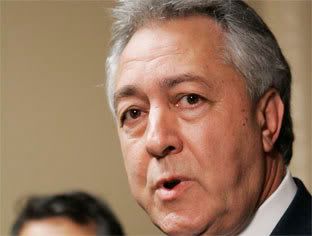 U.S. Representative Rodney Alexander (R.-LA)
Rep. Jim McCrery, R-La., sounded a similar forgiving tone and called Vitter "an effective senator." Statements in support also came from state Rep. Steve Scalise, R-Metairie, Jay Dardenne, the secretary of state, and Jim Donelon, the insurance commissioner.
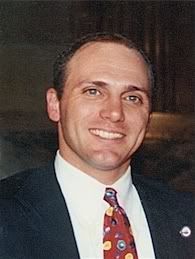 Louisiana state representative Steve Scalise
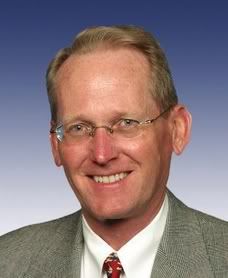 U.S. Representative Jim McCrery (R.-LA)
 Louisiana Secretary of State Jay Dardenne, wife Cathy McDonald Dardenne, and sons John and Matt
 Louisiana state insurance commissioner Jim Donelon
In the same batch of statements sent out by Republicans late Thursday, former Gov. David Treen, who once ran against Vitter in a bitter congressional race, stopped short of supporting the senator.
His read: "Any talk of David Vitter resigning or me being appointed to his Senate seat is ridiculous. It's just not going to happen."
Reached at home by telephone, Treen declined to elaborate on his terse statement.
Elliott Stonecipher, a political analyst, said partisanship is "the next leg of the story" because Vitter's indiscretions were well-known among operatives from both parties and now both factions will try to use the scandal to suit their ends.
Pearson Cross, a political science professor at the University of Louisiana-Lafayette, said that Vitter could benefit if his troubles turn into a partisan duel.
"That will clearly play in his favor because that would seem piling on," Cross said. But, he added, "the Democrats are clearly sensing blood in the water. There's an opening here if Vitter decided to resign."
| [+/-] |
Republican Politicians Embracing Scandalized Senator David Vitter |
From NOLA.com:
U.S. Rep. Bobby Jindal, the front-runner for governor and one of the state's best-known and most popular Republicans, broke his silence Friday over the call-girl scandal surrounding GOP Sen. David Vitter, issuing a cautious statement of support.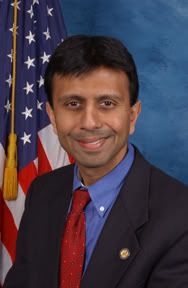
"While we are disappointed by Senator Vitter's actions, Supriya and I continue to keep David and his family in our prayers," Jindal said, referring to his wife. "This is a matter for the Senator to address, and it is our hope that this is not used by others for their own political gain."
Jindal had stayed mum Thursday as other Louisiana Republicans rallied to Vitter's defense. Jindal waited until late Friday afternoon before issuing the two-sentence release regarding the embattled congressional colleague whose 1st District seat he assumed when Vitter ran for the U.S. Senate in 2004.
Pollster Bernie Pinsonat said that the Vitter scandal is unwelcome news to Jindal, who will officially launch his gubernatorial bid Monday and was expecting Vitter to play an active role campaigning, particularly in north Louisiana.
"It is the best you can expect out of Jindal because he is running for governor," Pinsonat said. "This is not something he wants to deal with right now. It couldn't come at a worse time for him."
Vitter rocked the Louisiana political establishment on Monday night when he acknowledged that his number appeared on the billing records of a Washington call girl service whose owner is charted with running a prostitution ring. Records show the number appeared at least five times between 1999 and 2001, a period during which he served in the U.S. House.
In his only public statement, Vitter acknowledged a "very serious sin," and in an e-mail to supporters sent out early this week, offered a separate apology. He assured his backers that he and his family "will be fine."
"I will live every day always striving to fully honor that friendship and those prayers," Vitter wrote.
The e-mail was sent before a former New Orleans brothel owner said Vitter had been a customer of her operation and a prostitute said then-state Rep. Vitter was a regular client of hers during the mid-1990s. Vitter has not addressed the most recent allegations, but denied them in 2004.
Louisiana Republicans said little at first as each day brought new revelations. In a concerted push Thursday to offer some support for the most prominent Republican statewide elected official, the state GOP organized the release of a flurry of supportive statements. Most urged personal support for Vitter and his family and focused on the legislative work Vitter has done in his eight years on Capitol Hill.
Few were as expansive as the statement released Friday by Rep. Richard Baker, R-Baton, who not only defended Vitter's character but also warned the news media to tread carefully before it prints any more stories.
Baker said Vitter's behavior was serious and disappointing, "but it does not define the whole of the man and it is not irredeemable." He urged the news media to "demonstrate some restraint and professionalism."
Baker took aim at critics who labeled Vitter a hypocrite for promoting conservative views, talking about family values and advocating sexual abstinence at a time when he was in a touch with an alleged call girl service.
"If a man has values and standards, but does not live up to them, it does nothing to discredit the validity or those values and standards, and he is far preferable to those timid souls who, without values and standards, cannot fall short of them nor ever run the risk of being charged with hypocrisy," Baker said.
Rep. Charles Boustany, R-Lafayette, by contrast, issued a statement more in keeping with the reserved tone of the one issued by Jindal.
"David and his family are going through a difficult time and my thoughts and prayers are with him," Boustany said.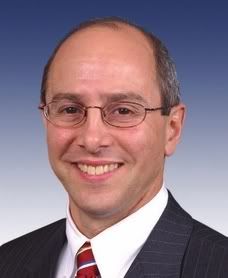
As in the rest of the South, the Republican Party has been ascendant in Louisiana over the past 10 years. The loss of a senate seat, should Vitter resign or lose reelection in 2010, would be a major blow.
Pinsonat, the pollster, said most Republicans are offering guarded support for their standard bearer because they aren't sure of all the details surrounding the current allegations or what else might come out.
"They are sticking their toe in the water very carefully because they don't know how hot it will get," Pinsonat said.
Louisiana Democrats sought to turn up the heat Friday by launching a petition drive calling on Vitter to resign because of his "immoral, unlawful and hypocritical behavior."
"We really have been getting lots of phone calls from all over the country," said Julie Vezinot, spokeswoman for the party. "People are fed up with his hypocritical behavior and he is not doing his job in Washington."
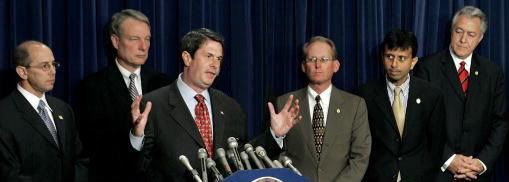
Friend and colleague Sen. Jim DeMint, R-S.C., told the Associated Press that he has been in touch with Vitter by e-mail and that Vitter plans to return to Capitol Hill next week for votes on Tuesday. He said Vitter was contrite in their exchange.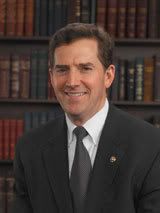
"It's a huge moral failure that reflects on the whole body. And for that he's very sorry," DeMint told the AP. "Obviously he has a lot of remorse. He seems to want to address it head on and not try to hide it."
Tuesday, June 12, 2007
| [+/-] |
President's Dinner Tonight Proves Bush Is No Money Magnet |
The Hill reports:
Financial projections for the President’s Dinner tonight confirm that Republican confidence in the president is in a state of collapse.
The National Republican Congressional Committee’s (NRCC) fundraising goal is $7.5 million, which is half what was raised last year. But to reach this lesser goal, each individual lawmaker has been asked to raise the same amount as 12 months ago. In other words, the NRCC is assuming lawmakers won’t be either willing or able to hit the targets they managed last year.
A source close to the NRCC said it expects to meet its target.
Senior GOP members of the Ways and Means Committee have been asked to raise $100,000 each for the dinner, the same as in 2006, according to a memo distributed by House Minority Whip Roy Blunt (R-Mo.) and Rep. Joe Wilson (R-S.C.), the dinner’s organizers.
Blunt acknowledged that Bush’s relationship with congressional Republicans is rocky. “Every president in his second term has difficulty working with the legislature, and President Bush is no different,” Blunt said, but disputed that the lowered financial goals reflected disenchantment with Bush.
Instead, Blunt said, it was due to donor fatigue after the midterm elections. (In 2005, the last non-election year, House Republicans set a $14 million goal for the dinner.)
Bush visited the Senate Republicans’ weekly luncheon yesterday for the first time since September to build support for immigration reform. Lingering concerns about the president’s stubbornness and his stance on the controversial issue may undermine his outreach effort.
Sen. Olympia Snowe (R-Maine) said she thinks her former GOP colleagues Sens. Mike DeWine (Ohio) and Lincoln Chafee (R.I.) lost reelection because of Bush’s unpopularity.
“It’s definitely because of the president and his policies, more from the standpoint of immovability and not being willing to adjust policies in response to real-time circumstances,” she said. “It wasn’t just the fact that things weren’t working well in Iraq, it was the president wasn’t willing to adjust his policy to recognize and acknowledge that.”
Last year’s losses at the polls have shaped her Republican colleagues’ view of the president in 2007, she said, adding, “All of that had manifested itself in ways this year, leading to concerns about the president’s policies.”
Snowe said that during yesterday’s meeting, her thought was that Republicans would still be the majority if not for Bush’s failures.
“What’s disconcerting is that Republicans shouldn’t be in the position of having lost the majority,” she said, adding that because of the president Republicans had an “uphill battle” running for reelection in New England last year.
In the fundraising talking points he distributed to Republican lawmakers for tonight’s dinner, Blunt said Republican candidates face difficulties in 2008.
“The odds are against Republicans as we take up the fight to strengthen and rebuild our majority,” he said.
In the same memo, Blunt focuses only on Bush’s commitment to helping Republicans and does not mention any presidential accomplishments.
Republicans, even one from New England, where Bush is highly unpopular, said they have only themselves to blame for last year’s losses. “We’ve done it to ourselves,” said Rep. Christopher Shays (Conn.), the only House Republican representing a district in New England. “We were blind to our spending, we were infatuated with our power.”
Republican confidence in Bush is mixed. Lawmakers who oppose his policies in Iraq and on immigration are much more critical.
Rep. Walter Jones (R-N.C.), an outspoken opponent of the war, criticized the president’s efforts to work with congressional Republicans.
“We had better relationships with the [White House] legislative affairs shop when Clinton was the president — even after we impeached him,” said Jones.
Jones then told an anecdote of the time “a year or two years ago” when his chief of staff printed out a picture of Candida Wolff, the assistant to the president for legislative affairs, and asked his boss about her identity. After confessing his ignorance, Jones tested five Republican colleagues in similar fashion. Only one of them, Rep. Jack Kingston (R-Ga.), knew who Wolff was.
White House spokeswoman Emily Lawrimore defended Bush’s record of working with Congress.
“From immigration to energy to Iraq, the president and the White House Office of Legislative Affairs work around the clock with members of Congress to address important issues facing our country,” she said. “Not a day goes by when representatives from our office of legislative affairs aren’t in contact with members of Congress in some way, and they consistently strive to be responsive to their concerns.”
A White House official questioned the usefulness of Jones’s quiz, saying, “We would hope that a member of Congress would have better things to do with his time than to walk around with a picture just to make a point. If they wanted to speak to [Wolff] they could just call her.”
Rep. Mike Pence (R-Ind.), former chairman of the conservative Republican Study Committee, gave Bush a mixed review. “I think there’s great admiration for the president’s leadership on foreign policy and social issues but much less confidence on spending and immigration,” said Pence, who played a leading role opposing the House Republican leadership on spending bills in the last Congress.
Pence, who has become more outspoken on immigration reform, recommended that Bush keep a low profile on the issue.
“I think the president is out of step with his party on immigration,” Pence said. “I think his credibility among most Americans and members of his party [on immigration] is so low that those who would like to see an immigration bill would like to see [Bush’s] role to be muted.”
